Medha Bisht

Author
Medha Bisht

Blogs
Medha is a technical writer and recent graduate who blends curiosity, creativity, and a love for stories. When not writing, she’s exploring long treks, diving into books, or rewatching her favorite anime.
author’s Articles

Insights & Stories by Medha Bisht

Discover Medha’s crisp breakdowns on tech, writing, and the ideas that inspire her - shaped by books, anime, and everyday adventures.
Clear all
Thank you! Your submission has been received!
Oops! Something went wrong while submitting the form.
Filter
Filter

Recruitment Software Guide Generation

The evolution of online recruitment software

The global talent acquisition landscape is currently navigating a period of profound structural realignment, driven by the convergence of advanced artificial intelligence, shifting workforce demographics, and a fundamental transition toward skills-based hiring. As organizations enter 2026, the reliance on traditional, manual recruitment processes has become a significant liability, often resulting in missed hiring goals and increased time-to-hire. For the modern human resources generalist, the challenge is no longer just about filling vacancies but about orchestrating a complex ecosystem of software that balances administrative efficiency with a deeply humanized candidate experience. 

The architectural shift from applicant tracking to talent orchestration

For decades, the applicant tracking system (ATS) served as the primary digital filing cabinet for human resources departments, focused almost exclusively on compliance and the management of active applicants. However, in 2026, the boundaries between the ATS, candidate relationship management (CRM) platforms, and proactive sourcing tools have largely dissolved into unified talent orchestration systems.

The traditional ATS remains essential for its role in maintaining a system of record and ensuring compliance with labor laws, yet its reactive nature makes it insufficient for a market where 75% of qualified candidates are passive. To address this, organizations have increasingly integrated recruitment CRMs, which focus on the long-term nurturing of talent before a specific role even opens. This shift represents a transition from "hiring for today" to "building for tomorrow," where the candidate database is treated as a living, strategic network rather than a static list of names.

System category Primary function Workflow stage Key value proposition
Applicant tracking system (ATS) Compliance and organization Post-application System of record; administrative efficiency
Candidate relationship management (CRM) Relationship building Pre-application Pipeline warmth; long-term engagement
Sourcing and outreach platforms Proactive talent discovery Top of funnel Access to passive talent; market mapping
Unified talent platforms End-to-end orchestration Full lifecycle Data continuity; reduced manual handoffs

Table 1: The functional taxonomy of recruitment software in 2026.

The integration of these systems is critical to preventing "identity drift," a common failure mode in which candidate data becomes fragmented across multiple platforms. When an ATS and CRM share a unified data layer, recruiters gain a comprehensive view of every interaction, from the initial sourcing touchpoint to the final offer acceptance, eliminating the need for manual data entry and reducing the risk of administrative errors.

The rise of the AI co-pilot and autonomous recruiting agents

In 2026, artificial intelligence has moved beyond simple automation to become a strategic co-pilot for recruitment teams. While early iterations of AI in HR focused on basic keyword matching, modern systems leverage deep learning and natural language processing to conduct complex talent mapping and competency analysis.

Autonomous agents and time reclamation

One of the most significant trends in 2026 is the rapid deployment of autonomous AI recruiting agents. Unlike traditional chatbots that require constant human prompting, these agents operate independently to complete tasks such as sourcing, initial screening, and interview scheduling. Approximately 52% of talent leaders plan to integrate these agents into their workflows by the end of 2026, driven by the potential to save an average of 20% of the work week. This reclamation of over eight hours per week allows recruiters to shift their focus from administrative minutiae to high-value human activities, such as relationship building and cultural assessment.

The productivity paradox in AI adoption

Despite the clear benefits, the implementation of AI has created a "productivity paradox" within some organizations. While 76% of C-suite executives believe AI saves them significant time, 40% of front-line workers report that it saves them no time at all, often due to a lack of proper training and the "noisy" nature of automated workflows. Furthermore, as candidates also begin using generative AI to polish their application materials, the industry is witnessing a "signal-to-noise" crisis where resumes are becoming less reliable as indicators of actual skill.

AI capability Impact on HR workflow Strategic benefit
Automated sourcing Continuous pipeline building Reduction in manual outreach; faster time-to-fill
Autonomous screening 95% automation of initial reviews Consistency in evaluation; bias mitigation
Predictive analytics Skills gap detection Proactive workforce planning; retention forecasting
Voice and chat agents Real-time candidate support Improved candidate experience; 24/7 engagement

Skills-first hiring: the new standard for talent evaluation

The traditional reliance on university degrees and previous job titles is fading in 2026, replaced by a "skills-first" methodology. This transition is fueled by the realization that credentials often fail to predict on-the-job performance and frequently exclude highly capable candidates from non-traditional backgrounds.

Moving beyond the resume

AI-powered assessment tools now allow organizations to evaluate candidates based on their demonstrable competencies rather than the words on their CVs. These systems use standardized coding challenges, logic tests, and gamified neuroscience assessments to provide a "talent signal" that is far richer than a GPA or employer brand name. In technical fields, platforms like HackerEarth and iMocha have become essential for neutralizing "pedigree bias" and focusing purely on a candidate's ability to solve problems.

The decline of the traditional job description

This shift also necessitates a redesign of the job description itself. In 2026, effective job postings lead with the outcomes a person will achieve and the specific capabilities required to reach them, rather than a laundry list of previous titles. Recruiters are increasingly using "skills taxonomies" to map internal talent and identify where existing employees can be re-skilled to fill new roles, thereby reducing the pressure on external hiring.

Evaluation method Traditional focus Skills-first focus
Screening criteria Degrees, titles, and years of experience Demonstrable competencies and potential
Assessment tool Resume review and initial phone screen Gamified tests and coding simulations
Job requirement "5+ years in a similar role" "Ability to execute complex data modeling"
Diversity impact High risk of pedigree bias Increased access for non-traditional talent

Ethical recruitment in the age of algorithms

As AI becomes more deeply embedded in the recruitment process, the need for ethical governance and transparency has moved to the forefront of the HR agenda. Organizations in 2026 are increasingly held accountable for the impact of their algorithms, driven by new regulations such as the EU AI Act.

Bias mitigation and algorithmic transparency

Modern diversity recruiting software focuses on "bias interruption" throughout the hiring lifecycle. This includes "masked assessments" that hide personally identifiable information such as name, gender, and graduation date, during the initial screening phases to ensure that candidates are evaluated solely on merit. Leading platforms now undergo regular algorithmic audits to ensure their scoring logic is transparent and does not inadvertently reproduce historical biases.

The human-in-the-loop model

Despite the power of AI, the "human-in-the-loop" model remains critical for ensuring fairness and maintaining candidate trust. Research suggests that candidates are wary of being evaluated by "opaque systems" and are more likely to engage with companies that combine automated efficiency with meaningful human interaction. In 2026, the recruiter's role has evolved into that of an "ethics guardian," responsible for monitoring AI outputs and ensuring that the final hiring decisions reflect a holistic view of the candidate.

DE&I software feature Mechanism of action Compliance benefit
PII masking Hides name, photo, and age Reduces unconscious affinity bias
Augmented writing Identifies gendered or restrictive language Increases diverse applicant pools
Structured scorecards Mandates consistent question kits Ensures objective, defensible decisions
Bias detection dashboards Real-time monitoring of funnel conversion Supports EEOC and EU AI Act reporting

Comprehensive market comparison: top recruitment platforms and pricing in 2026

The market for recruitment software is segmented into all-in-one HR suites, specialized applicant tracking systems, and advanced AI point solutions. For the HR generalist, choosing the right "stack" involves balancing core functionality with the need for specialized intelligence.

Leading human capital management (HCM) platforms

Rippling and BambooHR remain the top choices for organizations seeking integrated solutions that manage everything from payroll to performance. Rippling is noted for its powerful workflow automation, while BambooHR is favored by smaller teams for its ease of use and user-friendly interface.

Platform Target market Key strength
Rippling Mid-to-large / Multi-state Cross-functional automation
BambooHR Small-to-mid businesses Ease of use and reporting
Gusto Startups / New businesses Payroll-first HR tools
ADP Workforce Now Mid-size to enterprise Scalable, deep compliance
SAP SuccessFactors Large global enterprises Complex global operations
Deel Global contractors / Remote Seamless global hiring

Specialized applicant tracking systems and AI tools

For organizations with high-volume or specialized technical hiring needs, standalone ATS and AI-native platforms offer more robust features than generic HR suites. Platforms like Greenhouse and Lever are industry standards for data-driven teams, while newer entrants like MokaHR and Eightfold.ai provide advanced AI matching capabilities.

Recruitment tool Best for Standout feature
Greenhouse Process governance Structured interview kits
JuggleHire Small business value 10-minute setup; no per-user fees
Workable Growing companies All-in-one AI suite
Eightfold.ai Talent intelligence Skills-graph matching
MokaHR Global scale 87% screening accuracy
Manatal Startups and budget AI AI candidate scoring
SeekOut Diversity and tech sourcing Non-LinkedIn profile discovery

Table 6: Comparison of specialized recruitment and AI-driven sourcing tools.

Avoiding system failures and audit panic

The most sophisticated software will fail if the underlying processes are broken or if the implementation is not managed as a strategic project. In 2026, "system failures" are more common than "model failures," meaning the technology works as intended, but the human-system interface does not.

The risks of unowned rules and identity drift

Implementation often stalls when organizations automate steps without deciding where the "truth" lives. This leads to "identity drift," where candidate records are duplicated and inconsistent across systems, causing recruiters to lose trust in the automation and revert to manual workarounds. To prevent this, recruitment operations teams must be the designated owners of "rules, versions, and drift control," ensuring that every change in the hiring workflow is logged and analyzed for its impact on performance.

Audit panic and compliance reporting

With the rise of the EU AI Act and local regulations like NYC Law 144, the ability to provide proof of fair hiring has become a critical operational requirement. Organizations that treat evidence as a byproduct rather than a requirement often face "audit panic"—the inability to retrieve the exact inputs and rules that led to a specific screening decision. Leading HR teams now build "exportable decision packages" for every hire, ensuring that they can demonstrate compliance without manual heroics when an audit occurs.

Implementation pitfall Operational symptom Mitigation strategy
Unowned rules Workflow "drift" and inconsistent outcomes Centralize rule ownership in Recruiting Ops
Identity drift Duplicate candidate records; broken reporting Enforce a single "candidate story" and writeback
Passive demos Software doesn't solve real-world problems Require vendors to demo specific user stories
Lack of training Team uses only 10% of software features Role-specific, hands-on training sessions
No ROI measurement Costs don't align with hiring objectives Establish KPIs (e.g., time-to-hire) before rollout

Table 7: Common recruitment software implementation failures and solutions.

The path to 2030: from automated steps to orchestrated journeys

As we look toward the end of the decade, the evolution of recruitment software will continue toward "AI workforce orchestration". In this future state, AI will not just handle isolated tasks but will manage end-to-end hiring journeys independently, coordinating across recruiters, managers, and employees to ensure a seamless experience.

Personalization at scale

Hyper-personalization will become the standard, with AI understanding individual candidate communication styles, skill trajectories, and career patterns to deliver tailored messaging and job recommendations. This will move recruitment from a transactional process to a relationship-driven one, where the software acts as a facilitator for meaningful human connection.

The enduring value of human skills

Despite the rise of automation, the most valuable skills for recruiters in 2026 and beyond remain distinctly human: critical thinking, strategic talent management, and building trust. AI is excellent at processing volume and identifying patterns, but it cannot evaluate growth potential, cultural contribution, or the nuanced signals that distinguish a truly great hire. The HR generalist of the future will be an "architect of adaptability," using technology to remove the administrative noise and focusing their energy on the human decisions that ultimately drive organizational success.

In conclusion, the selection and implementation of online recruitment software in 2026 is a complex but essential task for any organization looking to thrive in a competitive talent market. By prioritizing skills-first evaluation, ethical AI governance, and a frictionless candidate experience, HR professionals can transform their hiring workflows from a point of friction into a strategic engine for growth. The path forward requires a disciplined approach to technology, where data is clean, rules are owned, and the human remains at the center of every decision.

Agentic AI Trends for 2026

Agentic AI Trends in 2026

The tech world moves fast, but the leap we have taken into 2026 feels different. Just a few years ago, we were amazed that a chatbot could write a decent poem or summarize a meeting. Today, that feels like ancient history. As a technical recruiter or engineering leader, you are no longer just looking for people who can "prompt" an AI; you are looking for the architects of an autonomous AI workforce.

This shift is driven by agentic AI. If generative AI were the engine, agentic AI would be the driver. It is the difference between a tool that waits for your every command and a partner that understands your goal and goes out to achieve it. In this article, we will break down the biggest agentic AI trends of 2026 and what they mean for your hiring pipelines and development teams.

What is agentic AI? 

At its heart, agentic AI refers to systems that can act independently to reach a goal. Unlike traditional software that follows a rigid script, agentic AI uses reasoning to figure out the best path forward.

The core architecture Plan, act, observe, reflect

To understand how these agents work, think of them as having a four-step brain cycle. First, they plan by breaking a complex request into smaller tasks. Then, they act by using digital tools like searching the web, writing code, or calling an API. Next, they observe the results of that action. Finally, they reflect. If something went wrong, they don't just stop; they learn from the error and try a different approach.

Agentic AI vs. Generative AI

It is easy to get these two confused. Generative AI is like a very talented writer who sits in a room and waits for you to ask for a story. Agentic AI is like a project manager who takes that story, finds a publisher, negotiates the contract, and manages the book tour. Generative AI creates content; agentic AI executes workflows.

Why agentic AI exploded in 2025 and why 2026 is the inflection point

In 2025, companies realized that simply having a "GPT for enterprise" wasn't moving the needle on productivity as much as they hoped. The friction was always the human in the middle who had to copy-paste data between apps. 2026 is the inflection point because we have finally solved the "reliability gap." With better frameworks and more powerful models, agents can now handle hours of work without human intervention, making them a core part of the digital workforce.

10 Agentic AI trends defining 2026

1. Multi-agent systems go mainstream

We are moving away from "one agent to rule them all." Instead, companies are deploying multi-agent systems where specialized agents collaborate. One agent might be a security expert, another a database specialist, and a third a front-end designer. They communicate in the background to build entire features.

2. Agent frameworks mature into production-grade platforms

The days of "experimental" agent code are over. Tools like LangGraph, CrewAI, and AutoGen have matured into enterprise-grade platforms. They now offer the security, logging, and scalability that big companies need to run agents 24/7.

3. Agentic AI moves into recruiting and HR

Agentic AI in recruiting is a massive trend. Agents can now autonomously source candidates by analyzing niche technical forums, conduct initial skills-gap assessments, and even handle the complex back-and-forth of interview scheduling. This isn't just automation; it is "intelligent" coordination.

4. Agentic workflows replace linear automation

Old automation was a straight line: if A happens, do B. Agentic automation is a loop. It can handle "if A happens, try B, but if B fails because of C, then try D." This makes business processes much more resilient.

5. The rise of "agent-native" developer roles

We are seeing a surge in "agentic AI hiring." Companies are looking for developers who understand how to give agents "memory," how to limit their permissions safely, and how to orchestrate their logic. The "agent engineer" is the new must-hire role.

6. Enterprise guardrails and agent governance become non-negotiable

As agents get more power, the risk of them "going rogue" (or just making expensive mistakes) increases. In 2026, every agentic AI platform must have built-in guardrails strict rules that keep agents from accessing sensitive data or spending over a certain budget.

7. Agentic AI rewires the developer workflow

The way engineers work has changed. Instead of writing every line of code, developers are becoming "agent orchestrators." They spend their day reviewing the work of autonomous AI agents and guiding the system's high-level architecture.

8. Vertical-specific AI agents emerge

We are seeing a shift from general-purpose agents to specialists. There are now agents built specifically for healthcare compliance, legal research, or cloud infrastructure management. These agents come "pre-trained" on the specific jargon and rules of those industries.

9. Agent evaluation and observability become a discipline

You can't just "test" an agent like a piece of normal software because its behavior changes. "Agentic AI tools" for observability are now essential. These tools track an agent's "thought process" so humans can understand why it made a specific decision.

10. Open-source agent ecosystems accelerate innovation

The open-source community is moving faster than big tech. Many of the most advanced "autonomous AI agents" are being built on open-source frameworks, allowing smaller companies to compete with tech giants without massive budgets.

What does this mean for hiring teams?

Hiring in 2026 requires a new lens. You are no longer just checking for Python or React skills; you are looking for people who can manage an AI-driven ecosystem.

New skills to assess when hiring agentic AI developers

  • Framework proficiency: Look for experience with LangGraph, CrewAI, or AutoGen.
  • Agentic orchestration: Can they design a workflow where multiple agents work together without getting stuck in a loop?
  • Evaluation & testing: How do they ensure an agent is actually doing its job correctly?
  • Security mindset: Do they know how to prevent "prompt injection" or unauthorized data access by an agent?

Conclusion

Agentic AI trends are not just about "cooler" technology; they represent a fundamental shift in how work gets done. In 2026, the most successful companies won't just be the ones with the best AI but the ones with the best people to build and manage that AI. For technical recruiters and engineering leaders, the mission is clear: start looking for the builders of autonomous systems today, or risk being left behind in the manual world of yesterday.

AI Video Interview Software

10 best AI video interview software to consider for 2026

Why video interviews are crucial in modern hiring

The recruitment landscape in 2026 has reached a critical inflection point where the traditional resume and the manual phone screen are no longer sufficient to navigate the complexities of a globalized, high-volume labor market. Modern hiring is characterized by an unprecedented surge in application volumes, up by as much as 51% in some sectors, driven largely by the proliferation of generative AI tools that allow candidates to apply for hundreds of roles with minimal effort. This "application avalanche" has placed an unsustainable burden on human recruiters, who can realistically only review 100 to 150 resumes per day. Consequently, video interview software has transitioned from a supplementary tool to the primary mechanism for establishing an efficient, scalable, and fair screening process.

The necessity of video interviewing is fundamentally rooted in the decoupling of the interview process from the limitations of synchronous time and geography. In a 2026 enterprise environment, the ability to conduct 24/7 screening is vital. Asynchronous video interviews (AVI) allow candidates to record responses to standardized prompts at their convenience, whether they are navigating time zone differences or balancing current employment commitments. This flexibility directly impacts the candidate funnel; organizations utilizing asynchronous scheduling report significantly higher show rates and completion percentages because the platform accommodates the candidate's life rather than demanding they adhere to a recruiter's calendar.

From a strategic perspective, the shift toward video-first hiring is synonymous with the rise of "skills-first" recruitment. Resumes have historically been poor predictors of actual job performance, and in 2026, they are viewed with increasing skepticism. Video interviews allow hiring teams to observe communication clarity, problem-solving approaches, and behavioral indicators early in the process, providing a much richer signal than a static text document. For technical roles, the integration of live coding environments and interactive diagram boards within the video platform ensures that a candidate’s proficiency is verified in real-time, reducing the risk of a "bad hire" that can cost an organization upwards of $33,000 in direct remediation and lost productivity.

Metric Traditional Hiring Impact AI Video Interview Impact
Time-to-shortlist Weeks Hours/Days
Cost-per-hire High (Manual Labor) 30% reduction
Time-to-hire Industry standard 33% to 90% reduction
Quality-of-hire Subjective 20% improvement
Application Volume Handling Limited by staff size Unlimited/Scalable

The financial justification for these platforms is stark. Mid-sized organizations making approximately 100 hires annually can realize over $140,000 in savings by reducing the time recruiters spend on manual coordination and first-round screens. By automating the "screen-score-recommend" loop, companies eliminate the core bottleneck of human review time, allowing talent acquisition teams to evolve from administrative coordinators into strategic decision-makers who focus only on the top 10% to 20% of the applicant pool.

Trends in video interviewing software for 2026

The technological trajectory of video interview software in 2026 is defined by a move toward autonomy, transparency, and "human-like" interaction. The most dominant trend is the shift from single-purpose automation tools to multi-agent systems (MAS). In these systems, a suite of task-specific AI agents manages the entire recruitment workflow. One agent may handle the initial screening of 10,000 resumes, while a second agent, often appearing as a lifelike video avatar conducts a deep, conversational interview, and a third agent manages the backend logistics of scheduling follow-up rounds with human panels. This shift is predicted to affect 40% of all enterprise applications by the end of 2026, providing a resolution speed that is 45% faster than legacy tools.

A critical secondary trend is the emergence of "Interview Intelligence," where platforms do not merely record a session but analyze it in real-time. These systems use natural language processing (NLP) and computer vision to evaluate speech patterns, emotional engagement, and communication fluency. This provides recruiters with structured insights such as a candidate's confidence level or their ability to stay on topic seconds after an interview concludes. This trend is closely linked to the demand for explainable AI (XAI). As regulatory scrutiny increases, "black box" scoring is being replaced by AI that provides a narrative rationale for its evaluations, showing exactly which qualifications or responses influenced a candidate’s ranking.

2026 Technology Trend Underlying Mechanism Strategic Advantage
Multi-Agent Recruiting Collaborative AI agents (Sourcing, screening, and Scheduling) 60% more accurate outcomes
Conversational AI Loops Adaptive questioning based on candidate responses Eliminates assumptions; verifies depth
Predictive Analytics Modeling turnover risk and job fit 95% accuracy in attrition forecasting
Explainable AI (XAI) Narrative justification for candidate scoring Compliance with EU AI Act and bias laws
Agentic Proctoring Real-time identity verification and fraud detection Prevents proxy candidates and AI-cheating

Furthermore, the industry is witnessing the maturation of conversational AI. Early video tools were often criticized for being cold and mechanical, leading to high drop-off rates. Modern platforms in 2026 use agents that can probe for depth, asking follow-up questions such as "You mentioned managing a budget of $1M; how did you handle unexpected cost overruns?" This creates a more empathetic, natural dialogue that treats candidates like partners rather than inventory, significantly improving completion rates and overall candidate sentiment.

Selecting the right video interviewing software: Features to look for

When navigating the crowded 2026 market, organizations must prioritize features that provide both operational efficiency and legal security. A fundamental requirement for any enterprise-grade platform is workflow governance. This allows a central HR team to enforce consistent question sets, evaluation rubrics, and compliance standards across different departments and global regions. Without this consistency, the data generated by the platform is fragmented and potentially biased, making it impossible to compare candidates objectively on a global scale.

Integration depth is another non-negotiable feature. The best video interview software functions as a seamless extension of the organization's existing tech stack. This includes native, two-way integrations with major Applicant Tracking Systems (ATS) like Workday, Greenhouse, or Lever, as well as calendar synchronization with Outlook and Google. The ability to trigger an interview invitation automatically when a candidate reaches a certain stage in the ATS is a primary driver of hiring velocity. Furthermore, Single Sign-On (SSO) and robust API support are essential for maintaining security and data integrity.

Feature Category Critical Capabilities to Verify Business Impact
Technical Assessment Real-time coding, IDE support, and diagram boards Verification of hard skills in engineering roles
Integrity & Proctoring Browser lockdown, ID verification, deepfake detection Prevention of interview fraud and proxy hiring
Reporting & Analytics Diversity metrics, time-to-hire, source effectiveness Data-driven optimization of the hiring funnel
Compliance Tools Bias audits, transcript retention, GDPR/CCPA support Legal defensibility under new AI hiring laws
Collaboration Shared scorecards, time-stamped comments, and panel rooms Faster consensus-building among hiring teams

For organizations hiring in the technology sector, specific features such as collaborative code editors that support 40+ languages and "Smart Browser" technology are vital. These features prevent plagiarism and ensure that a candidate's problem-solving skills are their own, rather than the result of a hidden chatbot. Additionally, for high-volume roles, "agentic proctoring" that uses machine learning to detect suspicious behavioral patterns (such as eye movement or background voices) provides a necessary layer of security that traditional video calls lack.

What are the pros and cons of using video interview platforms?

The benefits of video interviewing software are transformative, but the 2026 landscape requires a balanced understanding of the inherent risks. On the positive side, the efficiency gains are nearly unparalleled in HR tech. By shifting to an autonomous screening model, organizations report a 50% reduction in the total hiring cycle. This speed is a competitive advantage in a "candidate's market" where the best talent is often off the market within 10 days. Moreover, the standardization provided by these platforms is the most effective tool for mitigating unconscious bias. When every candidate is asked the same questions and evaluated against the same rubric, the influence of a recruiter's personal preference or mood is minimized.

However, the "black box" nature of early AI tools has led to significant candidate distrust. Approximately 66% of job seekers express a desire to avoid companies that use AI for hiring decisions, fearing that an algorithm might reject them for reasons they do not understand. This sentiment has led to a major push for transparency and human oversight. If a vendor cannot provide evidence for why a candidate received a specific score, the organization faces significant legal exposure under the EU AI Act and New York City’s Local Law 144, both of which require that AI decisions be auditable and explainable.

Pros of Video Interview Software Cons and Challenges
Scalability: Handle 1,000+ applicants with ease Algorithmic Bias: Risk of baked-in bias if data is skewed
Standardization: Identical conditions for all candidates Candidate Drop-off: Some may feel "processed" and quit
Data Integrity: Permanent recordings and transcripts Technical Friction: Occasional lag or browser issues
Speed: Elimination of scheduling back-and-forth Regulatory Burden: High cost of compliance audits

Another potential downside is the "human element" loss. While automation kills wasted hours, it can also make the initial stages of recruitment feel transactional. If not implemented correctly, video interviews can alienate top talent who value personal connection. To counter this, leading firms are using "Human-in-the-loop" (HITL) strategies, where AI handles the screening but a human recruiter is responsible for the final "white-glove" interaction, ensuring that the technology augments the human relationship rather than replacing it.

Reviewing the best video interview platforms for tech and non-tech hiring in 2026

The market for AI video interview software has bifurcated into specialized tools for technical roles and broad enterprise platforms for general hiring. As organizations refine their tech stacks in 2026, the following ten platforms represent the current "gold standard" based on their feature sets, market reliability, and AI sophistication.

HackerEarth: the premier solution for technical engineering

HackerEarth has established itself as the indispensable tool for technical recruitment, particularly through its FaceCode and AI Interview Agent modules. FaceCode is a real-time collaborative coding platform that allows developers to write, edit, and compile code in over 40 programming languages within a shared interview session. Its primary strength lies in its ability to simulate a real developer's workflow, including support for system design through interactive diagram boards and multi-file project questions.

The HackerEarth AI Interview Agent represents the 2026 shift toward autonomous technical screening. It uses a lifelike video avatar to conduct deep, adaptive technical interviews, probing for architectural knowledge and problem-solving depth. 

Spark Hire: Mid-market leader for asynchronous screening

Spark Hire continues to dominate the small-to-midsize business (SMB) market by prioritizing simplicity and accessibility. It is built for teams that need to implement video screening quickly without the complexity of deep AI analytics. Spark Hire focuses on "one-way" asynchronous interviews where candidates record responses on their own time, but it also offers live interview rooms for later stages. 

HireVue: The enterprise standard for global scale

HireVue remains the largest player in the 2026 enterprise landscape, particularly following its acquisition and integration of Modern Hire. HireVue is designed for global corporations that require rigorous governance and predictive validity. Its suite includes one-way and live video, game-based cognitive assessments, and technical coding tests, all powered by an AI engine that provides "match scores" with detailed narrative reasoning. 

VidCruiter: Customization and structured interview science

VidCruiter is the choice for organizations that need a highly configurable, legally defensible workflow. It is widely used in the public sector, healthcare, and education, where adherence to structured rating guides and non-negotiable compliance standards are required. VidCruiter’s platform is unique in its "partnership" approach, where they work with clients to build a digital version of their specific, existing hiring process rather than forcing them into a pre-defined template. It supports multi-stage processes, from automated reference checks to onboarding, and offers a support team that is consistently rated as the best in the industry.

Willo: Lightweight and mobile-first

Willo is a 2026 standout for its "zero-friction" candidate experience. It is a browser-based platform that requires no app downloads, making it ideal for the mobile-first workforce in industries like retail and hospitality. Willo focuses on speed and branding; hiring teams can quickly create branded question sets and share "reels" of top candidates with decision-makers. 

myInterview: Modern UX with behavioral context

myInterview focuses on combining video with behavioral analysis to provide a more holistic view of candidates. The platform is designed for small and midsize teams that want additional "signal" beyond the basic video recording. It includes features like "feedback tools" and "interview scheduling" within a very modern, accessible interface. myInterview’s value proposition is its affordability and the ability to process unlimited recordings, which is particularly attractive for recruitment agencies that handle varying candidate volumes.

Talview: Security-first with agentic proctoring

In 2026, Talview has carved out a niche as the most secure platform for technical and high-stakes hiring. Its "7-layer security framework" is specifically designed to combat the rise of "proxy developers" and deepfake video fraud. Talview features two major AI agents: Ivy (the AI Interviewer) and Alvy (the AI Proctor). Alvy uses computer vision and LLMs to detect eye movement, hidden devices, or secondary people in the room, while Ivy conducts human-like behavioral and technical interviews. It is the preferred choice for IT consulting, certification bodies, and government-regulated programs.

Jobma: Budget-friendly and globally accessible

Jobma is recognized as a leader in "affordable automation," providing a complete staffing solution that includes one-way video, live interviews, and multi-format assessments. In 2026, it is used across 50+ countries and supports 16+ languages, offering transcripts in over multiple languages to support borderless hiring. Jobma is particularly well-reviewed for its "brand promotion" feature, which allows companies to showcase their culture through video prompts. For businesses that need a robust set of features without the enterprise price tag of HireVue, Jobma is a consistently top-rated alternative.

Implementing video interview software: Best practices

The successful deployment of video interview software in 2026 is measured by "momentum." rather than just the removal of manual tasks. The most effective implementation strategies prioritize speed, moving from the initial setup to a live, 24/7 triggering environment within days. This is achieved through a structured four-step pattern: intake (defining role competencies), configuration (building standardized question sets), activation (enabling automated triggers), and iteration (refining the process based on first-week candidate sentiment).

A primary best practice is the use of an autonomous "schedule-interview-score" loop. In this model, the software triggers an interview invite as soon as a candidate meets the minimum qualifications. This eliminates the "dead time" where candidates might lose interest or be picked up by a competitor. Furthermore, organizations should provide "practice questions" at the start of every session. This not only reduces candidate anxiety but also allows them to test their audio and video settings, resulting in a higher-quality "signal" for the reviewers.

Implementation phase Strategic action Business outcome
Discovery Audit current time-to-hire bottlenecks Justification for automation ROI
Design Create structured, role-specific rubrics Reduced bias and consistent scoring
Engagement Implement 24/7 flex scheduling Increased funnel velocity and completion
Review Mask candidate PII during initial scoring Objective, skills-first evaluations
Audit Review AI scoring rationales manually Compliance with NYC/EU AI regulations

Human oversight remains critical. The best systems allow recruiters to adjust AI scores with documented reasoning, ensuring that the technology is a co-pilot rather than an autonomous decision-maker. To maintain high standards, organizations should also "flag" low-confidence scores such as those where a candidate has a heavy accent or there is significant background noise for mandatory human review. This proactive approach prevents the technology from unfairly penalizing qualified candidates due to technical or demographic variables.

Enhancing candidate experience with video interviews

Candidate experience in 2026 is no longer a "soft" metric; it is a primary factor in employer brand strength and offer acceptance rates. Transparency is the single most important factor in a positive experience. Candidates should be informed immediately that AI is part of the process, how their data will be protected, and what specific criteria the AI will be analyzing, whether it is communication clarity, technical depth, or problem-solving logic.

The "empathy advantage" is also becoming a key differentiator. Modern AI agents are being designed to adjust their tone and pacing based on the candidate's responses, offering a conversational loop that feels like a dialogue rather than an interrogation. For example, if a candidate takes a long time to answer a complex question, the AI can offer a supportive bridge before moving to the next topic. Furthermore, closing the loop with candidates is essential. Automated, personalized feedback summaries sent within minutes of the interview’s conclusion signal respect for the candidate’s time and effort, even if they are not moving forward in the process.

Selection criteria for video interviewing software

Organizations evaluating platforms in 2026 must look beyond marketing claims and demand proof of performance and compliance. The following five criteria form the bedrock of a modern vendor evaluation:

  1. Workflow Governance and Scalability: Can the system enforce a consistent process across 1,000+ concurrent interviews without latency? 
  2. Explainability and Compliance: Does the platform provide a clear narrative for every score, and is it compliant with the EU AI Act, GDPR, and NYC’s AEDT laws? 
  3. Integration Depth: Does it offer native, two-way sync with the existing ATS and calendar systems, or does it create a "data silo"? 
  4. Security and Fraud Prevention: Does the platform have built-in defenses against "proxy" candidates and deepfake technology, particularly for high-value technical roles? 
  5. Candidate Experience Metrics: What are the documented completion rates and G2 candidate sentiment scores for the platform? 

Choosing the right video interview platform

The "best" video interview software is ultimately determined by the organization's unique hiring process. For enterprises that view recruitment as a volume game where risk management and predictive accuracy are the primary goals, HireVue and Modern Hire remain the logical choices. These platforms offer the depth of I-O psychology and global compliance infrastructure that larger organizations demand.

However, for organizations in the "tech-first" world, HackerEarth has redefined the category by blending deep technical assessment with autonomous AI interviewing. It is the only platform that effectively addresses the dual challenge of verifying a developer's skill while also scaling the screening process through an intelligent, adaptive agent.

In 2026, the competitive dividing line in recruitment is no longer who can find talent, but who can screen and secure it fastest while maintaining a fair and engaging process. Those who leverage these AI-powered platforms will not only reduce their hiring costs but will also build a more resilient, high-quality workforce that is prepared for the challenges of the late 2020s.

Crafting Hackathon Problem Statements

Hackathon problem statements that actually test real developer skills

Technical hackathons have changed from informal meetups to serious events where developers prove their skills. As more companies focus on skill-based hiring, both organizers and participants need to be able to create and solve strong problem statements. Simple prompts like "build a better app" are no longer enough. Top events now require complex challenges that test architecture, security, and the use of new protocols such as the model context protocol or agentic orchestration.

What makes a hackathon problem statement actually good?

A good problem statement gives clear direction but still leaves room for creative solutions. What separates a simple project from a standout one is real-world difficulty. This challenge often comes from things like strict data limits, the need to work with old systems, or having to consider ethical and security issues.

A strong problem statement follows the SMART framework: specific, measurable, achievable, relevant, and time-bound. For example, instead of asking for a general "sustainability app," a better prompt would ask for a way to reduce data center water use by fifteen percent using an AI-powered cooling system. This level of detail lets judges measure solutions with clear metrics instead of just going by feel.

Feature Toy problem statement Professional problem statement
Scope Vague ("Build a social app") Specific ("Create a latency-optimized social platform for remote workers")
Constraints None or minimal Strict (e.g., must use MCP, must handle 10k concurrent users, must be secure-by-design)
Data Mock/Dummy data Real-world datasets or high-fidelity simulated enterprise patterns
Evaluation Subjective "innovation" Quantitative (F1 score, semantic similarity, load test results)
Goal Prototype Scalable, maintainable, and deployable MVP

Adding an "agentic layer" or "security layer" is a key part of today’s advanced challenges. When developers have to build features like automated triage or vulnerability scanning, they start thinking more like systems architects than just feature builders. Since 92% of developers now use AI tools, the real test is not just using them, but using them responsibly and at scale.

How to write a problem statement (step-by-step)

Writing a good problem statement is a special skill. It takes empathy for the end-user and a solid grasp of the technology involved. Start by finding the root cause of the problem, not just the obvious symptoms, to uncover the real business or social issue.

Step 1: Identify the stakeholder pain points

Before writing anything, organizers should do primary research and talk to people affected by the problem. This could mean visiting a production floor to see equipment issues or looking at support tickets to spot common customer complaints. In company hackathons, big tech problems like technical debt—which takes up 42% of developer time often make the best problem statements.

Step 2: Define the five Ws and the baseline data

A strong problem statement answers the five Ws: who is affected, what the problem is, when and where it happens, and why it matters. It should also include data. For example, instead of saying "support tickets are slow," say "IT support tickets for database access take an average of 48 hours to resolve, affecting 500 engineers’ productivity."

Step 3: Contrast current and future states

The best challenges clearly show the difference between the current state and the desired future state. This gap sets the goal for developers. The future state should be clear but not overly detailed—it should describe the result, like "automated ticket resolution with 90% accuracy," without telling developers which tools to use.

Step 4: Layer in technical requirements and evaluation criteria

To really test developer skills, the problem statement should list required technologies and quality standards. This might mean asking for modular code, a full set of tests (like at least 70 test cases), and following industry coding standards.

Gen AI hackathon problem statements (3 levels)

Generative AI has raised the bar for hackathon projects. A basic chatbot, once a big achievement, is now just a starting point. To challenge today’s developers, gen AI problem statements should focus on details like retrieval, grounding, and safety.

Level 1: Contextual prompt engineering and basic RAG

The objective here is to move beyond simple "zero-shot" prompting. Developers are challenged to build a system that utilizes a local knowledge base to provide grounded answers.

  • Problem: A university's student handbook is a 300-page PDF that is difficult to search, leading to repetitive questions for administrative staff.
  • Task: Build a "Handbook Copilot" that uses a vector database to retrieve relevant sections and provide cited answers to student queries.
  • Goal: Demonstrate an understanding of embeddings, chunking strategies, and basic retrieval-augmented generation (RAG).

Level 2: Multimodal integration and agentic reasoning

At this stage, developers need to work with different types of data and build logic that can handle multi-step tasks.

  • Problem: Fashion researchers spend hundreds of hours manually tagging social media images to identify emerging trends.
  • Task: Create a "Style Weaver" that extracts visual elements (colors, textures, styles) from images using computer vision and synthesizes these with text analysis (hashtags, captions) to predict the next season's trending palette.
  • Goal: Integrate vision-language models with clustering algorithms to provide actionable business intelligence.

Level 3: Enterprise-grade reliability and sentinel auditing

The toughest gen AI challenges focus on trust, transparency, and preventing AI from making things up.

  • Problem: Financial institutions cannot deploy LLMs for customer-facing advice due to the high risk of hallucinated data causing regulatory breaches.
  • Task: Develop a "Sentinel AI" system that runs two independent LLMs in parallel for every query. A third "Audit Agent" must cross-validate their outputs, perform a consistency check, and flag any discrepancy or toxic content before it reaches the user.
  • Goal: Build a self-auditing architecture that meets enterprise compliance and safety standards.

Agentic AI hackathon problem statements (3 levels)

Many are calling 2025 the "year of AI agents," as we move from passive models to active assistants that can plan and carry out complex tasks. Problem statements here should focus on teamwork between agents and the model context protocol (MCP).

Level Problem theme Technical focus
Beginner Intelligent task automation Intent recognition, basic tool-use, single-agent workflows
Intermediate Multi-agent research and synthesis Agent orchestration, state machines, self-reflective RAG
Expert Autonomous supply chain/industrial resilience MCP servers, multi-modal sensor integration, ethical governance

Level 1: The digital assistant for repetitive workflows

The aim is to automate one clear business process using a digital skill.

  • Problem: HR teams spend 20% of their time manually responding to emails about leave policies and updating internal trackers.
  • Task: Build an agent that monitors a specific inbox, answers policy questions using a provided wiki, and—upon receiving a formal request—automatically updates a mock HR database.
  • Goal: Demonstrate basic agentic orchestration and "tool-call" capabilities.

Level 2: The deep research meta-agent

This stage tests whether you can manage a team of specialized sub-agents working together, either in a group chat or as part of a state machine.

  • Problem: Professional analysts require structured research reports that draw from diverse web sources, academic papers, and financial filings.
  • Task: Design an agent called "Apollo" that manages two sub-agents: "Athena" (the search engine) and "Hermes" (the analyzer). Athena gathers data using advanced web-search APIs, while Hermes checks for knowledge gaps and requests more information until the research itinerary is complete.
  • Goal: Implement a two-stage synthesis process where section-specific content is generated before a final, cited report is assembled.

Level 3: The industrial "risk-wise" orchestrator

The most advanced level asks agents to work with real-world systems and unpredictable market data.

  • Problem: Global supply chains are susceptible to port delays, geopolitical shifts, and sudden tariff changes that cost companies billions annually.
  • Task: Build a "Supply Chain Risk Analysis System" that leverages AI agents to monitor shipping schedules and news feeds in real-time. The system must use MCP to interact with SQL databases containing historical tariff data and Azure AI services to predict potential disruptions before they occur.
  • Goal: Create a professional, dashboard-driven system that provides "explainable" risk scores and automated mitigation strategies.

AI ML hackathon problem statements (3 levels)

Traditional AI and machine learning are still important for predictive analytics and computer vision, especially where text-based deep learning isn’t the main focus. These challenges test the basics: data prep, model training, and deploying as a scalable API.

Level 1: Predictive analytics for health and wellness

This level is about classic regression and classification tasks with structured sensor data.

  • Problem: Rising sedentary lifestyles have led to an increase in preventable workplace injuries and chronic fatigue.
  • Task: Develop a system that analyzes heart rate variability and motion data from wearable devices to predict "fatigue warnings" and suggest adaptive routines.
  • Goal: Implement a clean ML pipeline using Scikit-learn or TensorFlow Lite for edge devices.

Level 2: Computer vision for industrial or agricultural automation

At the intermediate level, challenges involve image processing and specialized classification.

  • Problem: Agricultural researchers in rural regions struggle with the manual classification of cattle and buffalo breeds, which is essential for genetic improvement and disease control.
  • Task: Build an "Auto Recording of Animal Type Classification System" that uses images to extract body structure parameters (length, height, rump angle) and generates objective classification scores.
  • Goal: Deploy a robust CNN model capable of handling diverse environmental backgrounds and lighting conditions.

Level 3: Real-time anomaly detection for fraud and cybersecurity

At the expert level, you need to process streaming data quickly and with high accuracy.

  • Problem: Financial institutions face "sophisticated fraud" that evolves faster than traditional rule-based systems can detect.
  • Task: Create a "Real-Time Intrusion Detection Dashboard" that processes network traffic and transaction logs to detect anomalies such as brute-force attempts or unauthorized access patterns using ensemble methods and transfer learning.
  • Goal: Build a system that visualizes alerts with severity scores and recommends immediate defensive actions.

Web development hackathon problem statements (frontend, backend, full-stack)

Web development hackathons have grown from simple one-page projects to complex full-stack events that require professional standards. These challenges test if developers can build systems that are scalable, maintainable, and secure.

Frontend: Immersive experiences and state management

Frontend challenges now focus on performance and using modern UI frameworks like React 19.

  • Problem: Global data centers consume massive amounts of energy, partially driven by inefficient "infinite scroll" designs that download data the user never sees.
  • Task: Create a "Slow Your Scroll" web application that uses advanced virtualization and lazy-loading techniques to minimize data download while maintaining a smooth user experience.
  • Goal: Demonstrate mastery of the DOM, accessibility (A11y), and energy-efficient web design.

Backend: Scalable infrastructure and api orchestration

Backend challenges are at the core of the app: security, database logic, and API performance.

  • Problem: Small businesses struggle with "invoice reconciliation," manually matching bank payments to thousands of outstanding bills across different currencies.
  • Task: Build a "Seamless Invoicing & Reconciliation API" that handles bulk uploads, automates the matching process using fuzzy logic, and integrates with third-party payment gateways like UPI or Stripe.
  • Goal: Architect a system using Node.js or Python that emphasizes security (JWT), scalability, and robust error handling.

Full-stack: The "full-stack forge" battle for supremacy

Full-stack challenges ask you to build a complete system, often with strict requirements for lines of code and testing.

  • Problem: Remote villages lack access to specialized medical advice, and existing telemedicine apps are too heavy for low-bandwidth environments.
  • Task: Develop a "Lightweight Telemedicine Platform" that includes a responsive React/Next.js frontend and a Node.js/FastAPI backend. The system must support asynchronous messaging, low-res image uploads for diagnosis, and a "doctor's portal" for managing patient files.
  • Goal: Deliver a project with at least 5,000 LOC and 70+ test cases, following a modular "separation of concerns" architecture.
Stack layer Preferred tools (2025/2026) Developer skill tested
Frontend Next.js 15, TypeScript, Tailwind CSS UI/UX, server components, type-safety
Backend Bun 1.2+, Python 3.12+ (FastAPI), Go Concurrency, API design, performance tuning
Database PostgreSQL (pgvector), Neo4j, MongoDB Data modeling, vector search, and semantic relationships
DevOps Docker, GitHub Actions, Terraform Infrastructure as code, CI/CD automation

How to pick the right problem statement

For developers, picking the right challenge is a key decision that affects how visible and successful their project will be. For organizers, it can mean the difference between a great event and lots of unfinished projects.

For developers: The impact vs. feasibility matrix

Developers should choose an idea they can finish within the hackathon’s time limit (usually 48 hours) and that has real-world value.

  • Validation: Spend time brainstorming. Make sure your team understands all the dependencies, bottlenecks, and priorities before you start coding.
  • The MVP approach: Aim to deliver a minimum viable product that solves the main problem, instead of building a large, unfinished system.

For organizers: The "innovation moat" check

Organizers should make sure their problem statement creates an "innovation moat" something that pushes teams to go beyond common solutions.

  • Feasibility check: Can the problem be reasonably solved or prototyped in the given timeframe?
  • Business value: Does the solution have the potential to boost earnings or transform access to a critical service?
  • AI-First thinking: Is the use of AI core to the solution, or is it merely an "after-thought" or a simple wrapper?

Conclusion: The future of hackathons is autonomous and ethical

Looking ahead to 2025 and 2026, hackathon problem statements show that coding will be just one part of a developer’s role. As AI agents get smarter, the focus will shift to system orchestration, ethics, and responsible deployment. Developers will be judged not only on how efficient their code is, but also on how transparent their AI’s reasoning is and how strong their security measures are.

For organizers, the real challenge is building vibrant communities that can address big issues like climate change and financial inclusion through open-source teamwork and secure coding. By offering strong, data-driven problem statements with professional structure, hackathons can keep driving both personal growth and industry-wide innovation.

Reducing Hiring Costs in 2026

Strategic Frameworks for Reducing Recruitment Costs in 2026

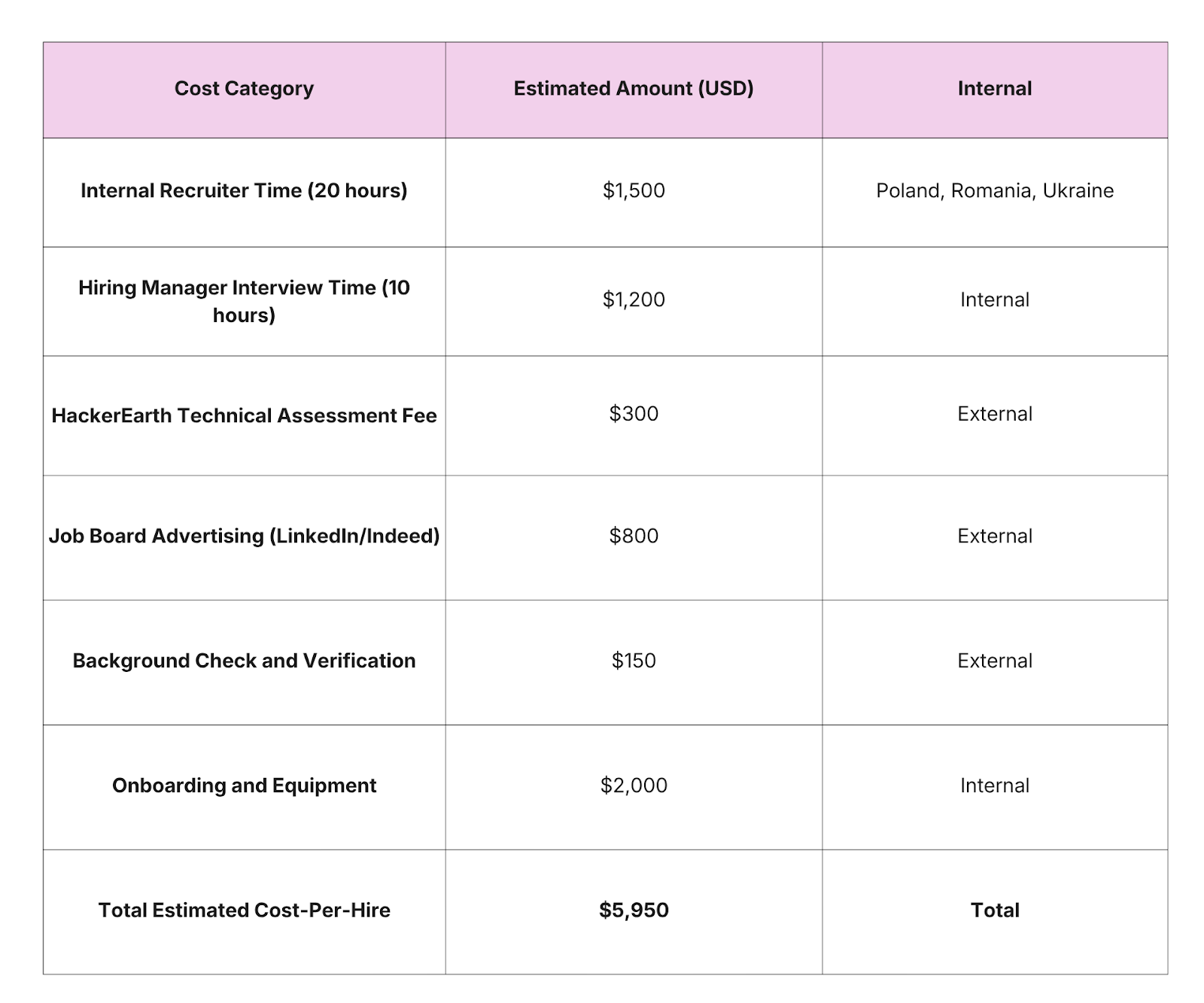
In 2026, the global labor market is shaped by widespread use of artificial intelligence and tighter recruitment budgets. The average cost-per-hire in the U.S. is about $4,800, but this can be much higher for technical and executive roles. With job board and advertising costs rising, companies need to focus more than ever on optimizing their hiring spend. The most successful organizations are shifting from high-volume recruitment to a more targeted approach that values quality hires and long-term retention over speed.

Recruitment in 2026 is shaped by an "AI-on-AI" trend, where candidates use generative tools to apply for many jobs at once. This increases application numbers and puts pressure on traditional screening methods. In response, employers are using advanced recruitment technologies like those from HackerEarth to automate skill assessments and focus on the most qualified candidates. This article explores the different aspects of hiring costs this year and offers a detailed guide to the strategies, metrics, and technologies needed to reduce recruitment spending while staying competitive.

Understanding hiring costs in the modern economy

In 2026, recruitment costs include all resources used to find, assess, and bring new talent into a company. These costs cover the whole process, from approving a job opening to when a new hire becomes fully productive. To truly understand these expenses, companies need to see recruitment as an ongoing process with both internal and external financial impacts, not just a set of separate steps.

The strategic significance of cost visibility

Tracking costs accurately is the first step to reducing them. In 2026, many companies underestimate their internal costs by 30% to 50% because they don't include the time spent by recruiters and hiring managers. When these hidden costs are added, the real impact of hiring is often higher than it seems. For instance, a small business might think its cost-per-hire matches the $4,800 national average, but without economies of scale and with higher administrative overhead, the actual cost is often greater.

Direct vs. indirect expenditures

Hiring costs usually fall into two groups: direct (external) and indirect (internal). Direct costs cover things like job board fees, background checks, and agency commissions, which are often 15% to 25% of a candidate's first-year salary. Indirect costs mostly come from the time spent by the internal hiring team and the lost productivity from open positions. In 2026, each vacant role costs about $500 per day in lost output, so speeding up hiring directly improves financial efficiency.

The components of hiring costs

To break down recruitment spending, it's important to look at each stage of the process and the tools used at every step.

Sourcing and advertising expenses

Sourcing is still one of the most unpredictable costs in 2026. Basic job postings are common, but programmatic advertising has become more expensive, so companies need to be more careful about where they post jobs. Those who post everywhere often get too many unqualified applicants, which increases the workload for recruiters and leads to lower returns.

Recruitment agency fees

Using external agencies is still the most costly way to hire. For example, hiring a technical employee with a $100,000 salary through an agency can cost $15,000 to $25,000. Agencies can reach passive candidates, but in 2026, AI-powered sourcing tools let in-house teams find similar talent for much less—sometimes just $119 to $200 per month for access.

Employee referral programs

Referral programs are usually the cheapest and most effective way to find new hires. By using employees' networks, companies avoid high advertising and agency fees. While referral bonuses of $1,000 to $5,000 are an internal cost, they are much more affordable than outside options and lead to hires who stay 34% longer.

Interviewing and assessment costs

Most costs during the selection phase come from labor. In 2026, the time hiring managers and interviewers spend is a major internal expense, especially for specialized roles that need several rounds of technical interviews. While remote work has lowered travel costs, these expenses still matter for executive and senior hires. Tools for skills assessments, like HackerEarth’s platform, are a fixed cost but help reduce the risk and cost of hiring the wrong person.

Onboarding and training costs

The costs of hiring don't stop once an offer is accepted. In 2026, onboarding costs average about $1,830 per employee, including equipment, software, and administrative tasks. For technical roles, the need for special equipment and training can push the total cost to more than 1.3 times the employee’s base salary.

Technology and recruitment infrastructure

Recruitment technology in 2026 is more connected than before. Costs now include Applicant Tracking Systems (ATS), Recruitment CRM platforms, and AI-powered sourcing tools. Enterprise-level AI platforms can cost between $30,000 and $180,000 per year, plus setup fees. While these are high upfront costs, they help lower long-term operating expenses.

Calculation and benchmarking frameworks

To measure recruitment efficiency in 2026, companies use standard formulas that make it easy to compare with others in the industry and track their own progress over time.

How to calculate your recruitment costs

The best way to calculate recruitment costs is to add up all internal and external expenses and divide by the total number of hires.

image.png

Internal costs include recruiter salaries, employee referral bonuses, and internal software licenses. External costs include agency fees, job board subscriptions, background check fees, and recruitment marketing events.

Real-world example: hiring a software engineer

For example, here’s a breakdown of the costs involved in hiring a mid-level software engineer in 2026 with a $120,000 annual salary.

In this case, using an agency with a 20% commission would add $24,000, making the total cost for one hire almost $30,000.

Key metrics for measuring success

Beyond the main cost-per-hire number, talent leaders in 2026 track other key metrics to identify waste and improve.

Time to Fill and Time to Hire

Although people often mix them up, these metrics track different parts of the hiring process. Time to Fill measures how long it takes from approving a job opening to when an offer is accepted, showing how quickly a company can act. In 2026, the average time to fill is still high at 63.5 days, which leads to high vacancy costs. Cutting this down to 22 days can lower recruitment costs by 20% to 30%. Time to Hire looks at how fast a candidate moves from first contact to accepting an offer, showing how efficient the interview and selection steps are.

Quality of Hire (QoH)

The most important metric for long-term financial health is Quality of Hire. Filling a job quickly doesn't help if the new hire leaves within six months—a bad hire can cost five to 27 times the employee's salary when you include disruption and rehiring costs.6 Quality of Hire is usually measured as a combined score:

image.png

Companies that focus on Quality of Hire instead of just hiring volume see 2.5 times more positive business results from their recruitment efforts.

Strategies to reduce hiring costs

To cut costs in 2026, companies need to use several strategies, including adopting new technology, improving sourcing methods, and strengthening their employer brand.

Strategy 1: Optimize Sourcing Channels

How much it costs to find candidates depends directly on how efficient your sourcing methods are.

  • Maximized Employee Referrals: Referral hires remain the most cost-effective and high-retention source. Successful firms in 2026 utilize structured programs with incentives such as cash bonuses or extra vacation time to encourage proactive participation.
  • Utilization of Niche Platforms: Shifting spend from massive general boards to niche communities (e.g., GitHub or Stack Overflow for developers) reduces the volume of irrelevant applications and lowers the cost-per-qualified-lead.
  • AI-Powered Talent Sourcing: AI agents can now scan professional networks and talent databases in minutes, identifying candidates who match specific role requirements. This reduces sourcing time from an average of six hours to under five minutes per role, drastically lowering the labor cost of top-of-funnel activities.

Strategy 2: Streamline the Interview Process

Problems in the interview stage are a main reason for higher indirect costs and losing candidates.

  • Asynchronous Video Interviews: By allowing candidates to record responses to standardized questions, recruiters can screen more applicants in less time without the need for live coordination.
  • Standardized Assessments: Using objective skills tests early in the process, such as HackerEarth’s technical evaluations, ensures that interviewers only spend time with candidates who possess the required competencies.
  • Interviewer Efficiency Training: Training hiring managers to use structured scorecards and behavioral rubrics prevents "gut-feel" hiring and compresses the time between the final interview and the offer letter.

Strategy 3: Enhance Employer Branding and EVP

A strong employer brand makes your recruitment budget go further.

  • Employer Value Proposition (EVP): A clear, compelling EVP attracts talent directly, reducing the need for expensive outbound sourcing and agency intervention.
  • Content Marketing: Highlighting company culture through employee testimonials, blog posts, and video content builds a talent pipeline of candidates who are already aligned with the organization's mission.
  • Social Media Engagement: Maintaining an active presence on platforms where talent lives allows for organic engagement, reducing reliance on paid job advertisements.

Strategy 4: Invest in Specialized Recruitment Technology

In 2026, technology is essential for hiring efficiently and keeping costs down.

  • Applicant Tracking Systems (ATS): Modern ATS platforms automate administrative overhead—such as rejection emails and interview scheduling—recovering up to 24 hours of recruiter time per week.
  • AI Screening and Matching: AI tools analyze resumes contextually to identify transferable skills and predict role fit, ensuring that the strongest candidates are prioritized immediately.
  • Recruitment Analytics Dashboards: Real-time data visualization allows businesses to identify high-cost, low-yield channels and reallocate budget instantly.

Strategy 5: Prioritize Internal Mobility and Remote Staffing

The best long-term way to lower hiring costs is to promote from within or widen your search to new locations.

  • Internal Mobility Programs: Promoting from within is 1.7 times cheaper than external hiring and eliminates sourcing costs entirely.1 Organizations that invest in internal career pathways see 31% lower turnover.
  • Remote and Offshore Staffing: In 2026, remote hiring has moved from a perk to a strategic performance decision. Offshoring certain roles can result in 40% to 70% cost savings compared to domestic payrolls.30 Furthermore, remote work can save an organization approximately $11,000 per employee per year in office-related overhead.

Conclusion

Looking ahead to 2027, recruiters are moving from simply managing processes to acting as talent advisors. With AI handling most of the routine tasks, recruiters can focus more on the human side of hiring. The companies that will succeed are those that use integrated technology, build a strong employer brand, and invest in developing their own people.

To succeed in the 2026 job market, businesses should consider end-to-end recruitment solutions like those from HackerEarth. These tools help reduce assessment costs and enable recruiters to make quicker, better decisions, leading to a stronger, more cost-effective organization.

Remote Hiring: 2026 Roadmap

How to Hire Remote Developers: The 2026 Roadmap

The transformation of the global labor market has reached a critical inflection point in 2026, where the traditional, geography-bound hiring model has been largely superseded by a decentralized, remote-first paradigm. This shift is particularly evident in software engineering, a field uniquely suited to asynchronous collaboration and digital-native workflows. For engineering managers, CTOs, and HR leaders at growing technology firms, remote hiring is no longer a peripheral strategy for cost-cutting but a fundamental requirement for securing the specialized talent necessary to maintain a competitive edge.

The contemporary developer workforce increasingly views flexibility as a non-negotiable component of employment, with data indicating that a significant majority of job seekers prioritize remote options over traditional perks. Organizations that fail to adapt to this borderless reality find themselves restricted to localized talent pools that are rapidly shrinking, while competitors leveraging global sourcing strategies access a diverse array of experts across multiple continents.

The strategic imperative of global engineering talent

The transition toward distributed teams is underpinned by a confluence of economic and technological drivers that have matured significantly by 2026. The primary motivation for remote hiring has evolved from simple cost arbitrage to a comprehensive search for talent density. In the current landscape, the ability to hire the best engineer for a specific role, regardless of their physical location, allows organizations to solve complex technical challenges that were previously insurmountable due to regional skill shortages.

This strategic access is vital for scaling high-impact teams in specialized domains such as artificial intelligence, cloud architecture, and cybersecurity, where the demand for expertise far outstrips the supply available in any single metropolitan hub. Productivity metrics in 2026 continue to support the viability of remote models. Research indicates that remote workers often exhibit a notable increase in productivity compared to their in-office counterparts. This boost is attributed to the elimination of daily commutes, which saves employees an average of significant hours annually, and the reduction of office-based interruptions that frequently disrupt the deep-work cycles required for high-quality software development.

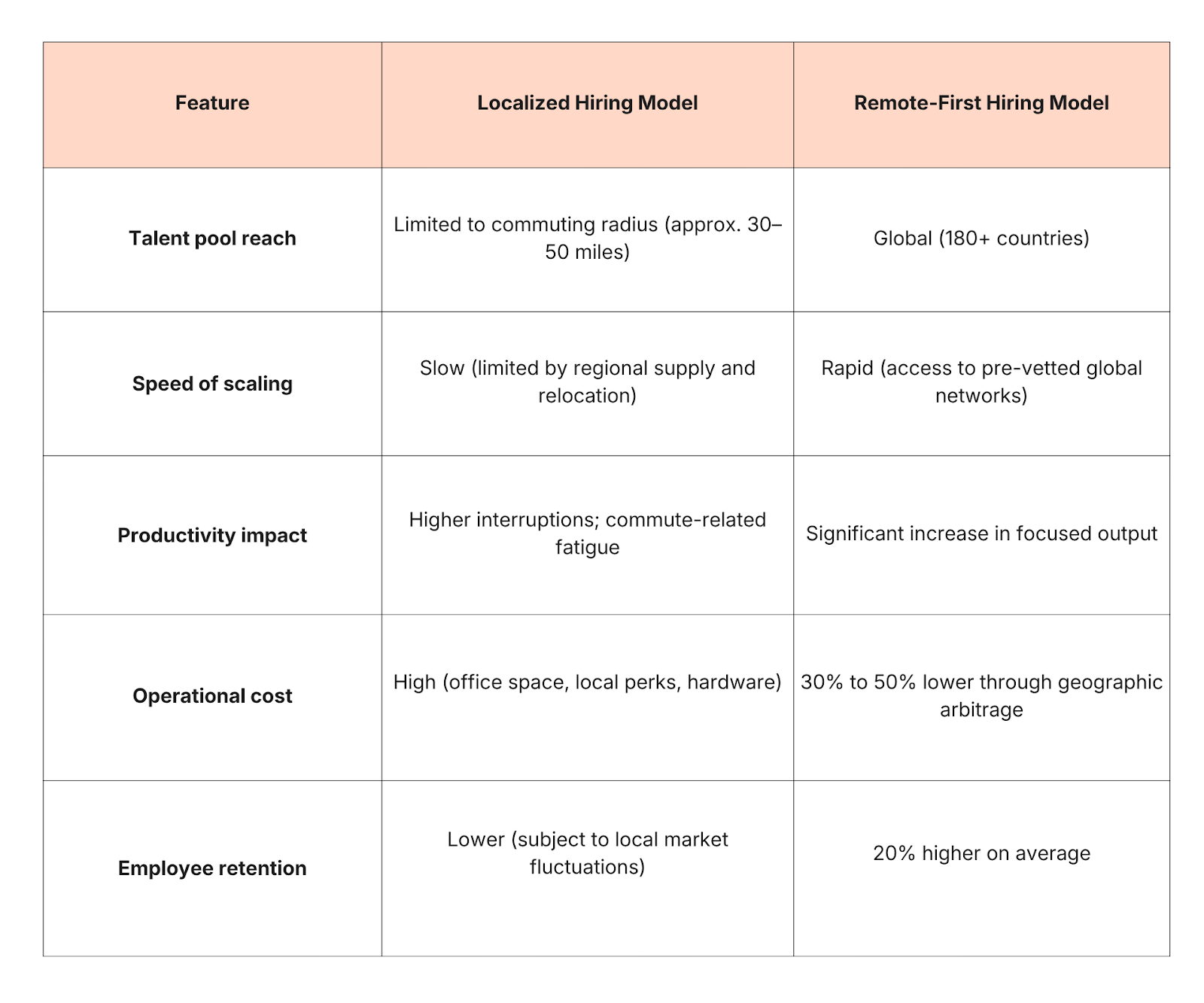
Furthermore, the financial benefits for the employer are substantial, with companies realizing average savings of approximately 10,000 to 15,000 per employee through reduced real estate overhead and infrastructure costs. The following table outlines the comparative advantages of the remote-first hiring model against the traditional localized approach as observed in 2026 market data.

Defining technical and operational roles in a distributed context

The foundation of a successful remote hiring process is the meticulous definition of the role, a task that carries greater weight in a distributed environment than in a centralized office. In the absence of physical proximity, ambiguity in job requirements often leads to misaligned expectations and costly hiring errors. Clarity must be established across technical proficiencies, autonomy levels, and collaboration protocols before the sourcing phase commences.

Technical requirements must be specified with precision, moving beyond generic titles like "Full-Stack Developer." Instead, descriptions should detail the specific languages, frameworks, and cloud infrastructures that are essential for the project's success. By 2026, proficiency in modern stacks such as React, Next.js, and Node.js, combined with expertise in containerization tools like Docker and Kubernetes, have become a standard requirement for many remote roles. Furthermore, as AI integration becomes ubiquitous, developers are increasingly expected to demonstrate "AI-adjacent" skills, which include the ability to work alongside automated agents and supervise AI-generated code.

Seniority and autonomy are perhaps the most critical indicators of success for a remote hire. The analysis suggests that remote developers must possess a higher degree of self-management than their in-office counterparts. Successful candidates in 2026 are those who can independently manage their development environments, debug complex issues without immediate supervision, and maintain momentum during asynchronous work cycles. This requirement for independence is particularly pronounced for junior-level roles, where the traditional "hand-holding" provided in an office setting is more difficult to replicate over digital channels.

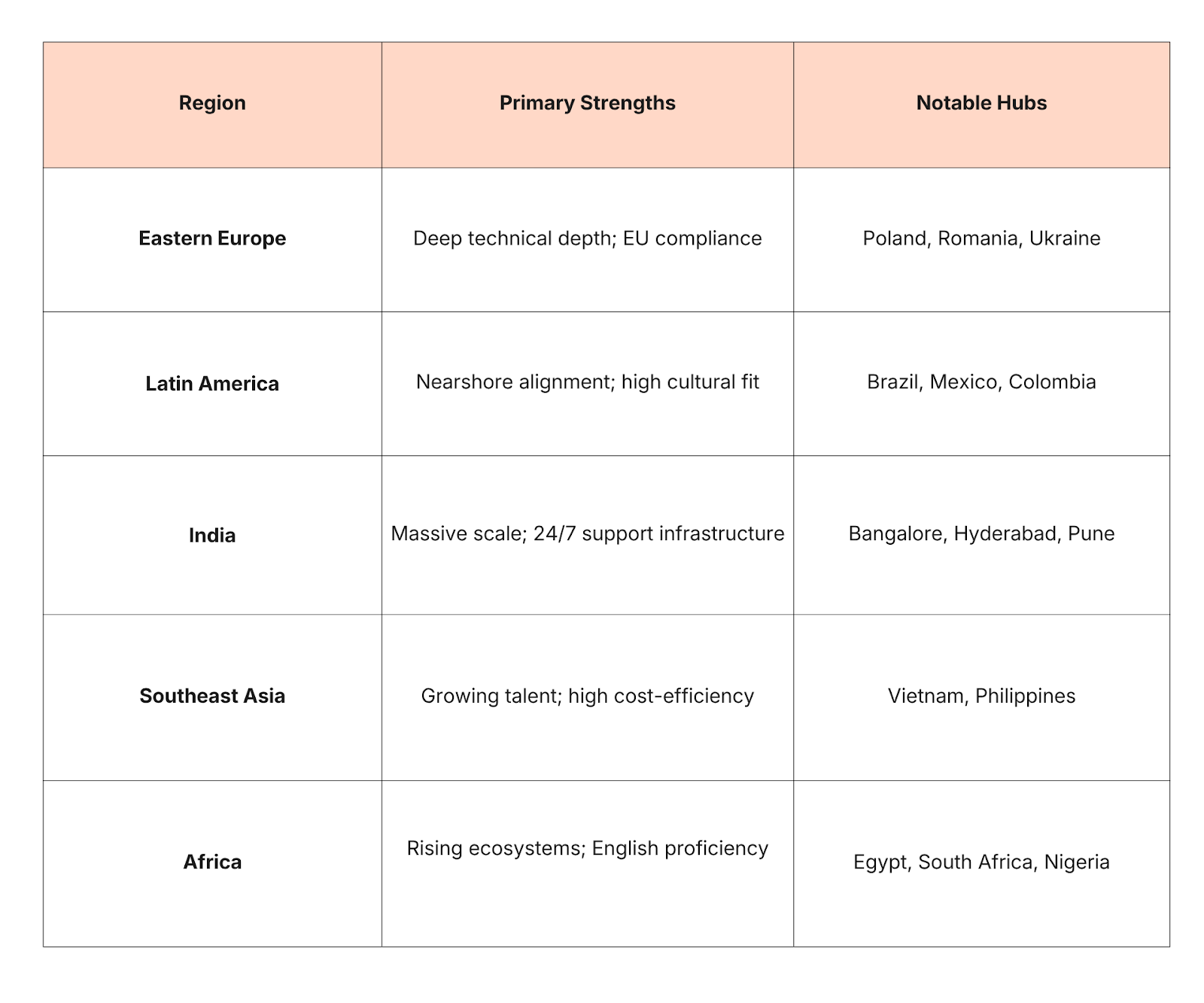
Strategic Sourcing and the Taxonomy of Global Talent Hubs

Finding the right developers requires a multi-channel sourcing strategy that balances reach with candidate quality. In 2026, the sourcing landscape is divided between broad-reach job boards, specialized developer communities, and geographically targeted regional hubs. Organizations must select channels based on the specific technical niche and the desired level of experience.

Remote-focused job boards such as We Work Remotely and Remote OK remain the primary destination for companies seeking a wide pool of applicants who are already committed to the remote lifestyle. These platforms offer a global reach but require robust screening mechanisms to manage the high volume of applications. Conversely, developer communities like GitHub, GitLab, and Stack Overflow provide a more targeted approach. By reviewing public repositories and contributions, hiring managers can gain direct insight into a candidate's code quality, documentation style, and collaborative history before an initial interview is even scheduled.

Regional hubs offer distinct advantages based on an organization's specific needs, such as cost efficiency, engineering depth, or time zone alignment. Latin America has emerged as a preferred destination for North American companies due to the minimal time zone difference, which facilitates real-time collaboration during core business hours. Countries like Brazil, Mexico, and Colombia are notable for their large talent pools and growing tech ecosystems. In contrast, Eastern Europe, particularly Poland, Romania, and Ukraine, is recognized for its deep engineering education and high proficiency in complex fields like fintech and cybersecurity.

Technical Assessment in a Remote Environment

The primary challenge in remote hiring is the verification of technical skills without the benefit of in-person interaction. Technical assessment have become a highly structured, multi-stage process that leverages AI to ensure fairness and accuracy. The assessment process begins with an asynchronous screening phase, followed by automated interviews and live collaborative coding sessions.

Asynchronous screening is used to filter high volumes of candidates efficiently. These tests typically focus on core language proficiency, algorithmic thinking, and practical problem-solving. To maintain the integrity of these remote exams, organizations employ advanced proctoring suites. These systems use AI to monitor for suspicious activities, such as navigating away from the test window, glancing off-screen, or receiving audio assistance. Features like the "Smart Browser" lock down the candidate's environment, preventing the use of virtual machines or screen-sharing tools to cheat.

The emergence of AI Interview Agents in 2026 has transformed the middle of the recruitment funnel. These agents conduct initial technical interviews using life-like video avatars, asking role-specific questions and adapting their follow-up queries based on the candidate's responses. This technology ensures that every candidate is evaluated against the same standard, significantly reducing the impact of unconscious bias. Furthermore, AI evaluation can save engineering managers up to 15 hours of manual interviewing per week, allowing them to focus on high-value architectural discussions with only the top-tier candidates.

Navigating Global Compliance and Employment Structures

International hiring requires a nuanced understanding of the legal and administrative frameworks that govern employment in different jurisdictions. Organizations must choose between three primary models: engaging independent contractors, partnering with an Employer of Record (EOR), or establishing a local legal entity. The decision hinges on the organization's headcount trajectory, risk tolerance, and long-term commitment to a specific region.

Engaging independent contractors is often the fastest way to onboard global talent. This model is ideal for short-term projects or for testing a new market before committing to a more permanent structure. However, the risk of "misclassification" is a significant concern in 2026. Regulatory bodies in countries like France and Italy have intensified their scrutiny of contractor relationships that mirror full-time employment. Misclassification can lead to substantial liabilities, with some estimates suggesting that the cumulative tax and penalty burden for a single misclassified worker can exceed 50,000 over three years.

Partnering with an Employer of Record (EOR) has become a standard strategy for mid-sized tech companies seeking to build stable, compliant teams across multiple countries. An EOR acts as the legal employer, managing payroll, local tax withholdings, and statutory benefits, while the client organization retains day-to-day operational direction. This model provides a "compliance-as-a-service" layer that shields the company from the complexities of local labor laws and enables them to offer competitive local benefits packages.

Compensation strategies and the 2026 salary landscape

Compensating remote developers fairly is a complex endeavor that requires balancing local market rates with global standards. In 2026, the trend has shifted toward "precision compensation," where salary budgets are surgically allocated to high-impact roles and specialized skills. Organizations generally adopt one of three compensation philosophies: location-based pay, role-based pay, or a hybrid model.

Location-based pay adjusts salaries based on the local cost of living and regional market benchmarks. This model allows companies to remain cost-effective and competitive within a specific geographic area. However, it can create internal resentment if developers in lower-cost regions feel their contributions are undervalued relative to peers in urban hubs. Role-based pay, conversely, standardizes compensation for a specific role regardless of the employee's location. This approach promotes equity and simplifies administration but can make it difficult for companies to compete for talent in high-cost cities like San Francisco or London.

A notable development in 2026 is the emergence of the "Presence Premium" and the "Flexibility Discount." As some organizations attempt to mandate a return to the office, roles requiring physical presence are commanding a 15% to 25% premium to offset commuting costs. Meanwhile, fully remote roles often reflect a flexibility discount, as many workers indicate they would accept a slight pay cut in exchange for the ability to work from anywhere. Furthermore, the value of AI literacy is quantified by a wage premium for developers who can demonstrate advanced skills in AI-assisted development.

Structural onboarding for distributed teams

Onboarding is the most frequent point of failure in the remote hiring lifecycle. Without the natural social integration provided by a physical office, remote onboarding must be engineered to provide clarity, connection, and a structured ramp-up period. The process should be divided into distinct phases, beginning well before the employee's first day and extending through their first 90 days of employment.

Before day one, the focus should be on logistics and information access. This includes shipping hardware to the employee's location at least a week in advance and ensuring all software licenses, VPN credentials, and system permissions are provisioned. Providing an "Onboarding Wiki" that details team hierarchies, communication protocols, and architectural documentation allows the new hire to begin absorbing context immediately. A "buddy system," where a peer is assigned to guide the new hire through the first few weeks, is essential for facilitating social connection and providing a low-pressure channel for asking critical questions.

The first week should focus on achieving "early wins" to build confidence. Assigning small, well-defined tasks that can be completed and shipped to production within the first few days provides the new hire with immediate feedback and a sense of accomplishment. Regular check-ins, ideally on a daily basis during the first week, prevent isolation and allow managers to address any early roadblocks. By the end of the first 90 days, the developer should be fully integrated into the team's rituals, contributing to major features, and operating with a high degree of autonomy.

Trust-based management and productivity in 2026

The long-term success of remote engineering teams depends on a shift from surveillance-based management to trust-based frameworks that prioritize output over activity. In 2026, traditional metrics such as "lines of code" or "hours logged" have been largely discredited as they fail to capture the true value delivered by a developer. Instead, leading organizations employ frameworks like SPACE and DORA to assess engineering health and individual performance.

The SPACE framework provides a multi-dimensional view of productivity, accounting for Satisfaction, Performance, Activity, Communication, and Efficiency. Similarly, DORA metrics focus on the velocity and stability of the software delivery pipeline, tracking indicators such as deployment frequency and the lead time for changes. These metrics are used to identify systemic bottlenecks rather than to rank individual developers, thereby protecting the psychological safety essential for high-performing teams.

Communication in 2026 is governed by "async-first" principles. This involves defaulting to written documentation, threaded discussions, and recorded video demos to ensure that information is accessible across all time zones without requiring real-time presence. Real-time meetings are reserved for complex problem-solving, strategic planning, or social bonding, ensuring that developers can maintain the large blocks of uninterrupted time—minimum 2 hours—required for deep-work focus.

The Future of Distributed Software Development

As the global workforce continues its digital transformation, the competitive advantage will lie with organizations that can effectively harness the power of distributed engineering. The most successful teams will be those that embrace "strategic talent density," hiring the best individuals regardless of zip code and empowering them with the tools and culture necessary to thrive in an asynchronous environment.

The shift toward remote work is not merely a logistical adjustment but a fundamental reimagining of the relationship between talent and opportunity. In this borderless era, the role of the engineering manager has evolved from a supervisor of presence to a facilitator of outcomes and a builder of global culture. Organizations that prioritize clarity in role definition, rigors in technical assessment, and trust in management will be best positioned to lead the next wave of technological innovation.