Medha Bisht

Author
Medha Bisht

Blogs
Medha is a technical writer and recent graduate who blends curiosity, creativity, and a love for stories. When not writing, she’s exploring long treks, diving into books, or rewatching her favorite anime.
author’s Articles

Insights & Stories by Medha Bisht

Discover Medha’s crisp breakdowns on tech, writing, and the ideas that inspire her - shaped by books, anime, and everyday adventures.
Clear all
Thank you! Your submission has been received!
Oops! Something went wrong while submitting the form.
Filter
Filter

How to Create a Structured Interview Process: Step-by-Step Guide for Hiring Managers

How to Create a Structured Interview Process: A Step-by-Step Guide for Hiring Managers

Most interview processes feel broken

You’ve seen it before. One interviewer digs into technical details, another chats about career goals, and a third just vibes out “culture fit.” At the end, you’re left with a pile of inconsistent notes, gut-feel opinions, and a decision that’s more art than science. Maybe you miss out on a great hire or worse, bring on someone who just doesn’t work out. Meanwhile, your engineers grumble about wasted time, and your hiring process drags on for weeks.

If this sounds familiar, you’re not alone. Even at top tech companies, interview outcomes can hinge on which interviewer happens to be in the room or what questions someone happens to ask. The result? Inconsistent hiring, unconscious bias, and a process that drains resources with little to show for it.

But there’s a better way. Decades of research and the experience of the world’s best hiring teams point to one approach that consistently improves hiring quality, reduces bias, and saves time: the structured interview process.

In this article, you’ll get more than just theory. You’ll walk away with a strategy to standardize your interviews and make every hire count.

What is a structured interview?

A structured interview is more than just having a list of questions. It’s a systematic approach to interviewing, built on three core pillars:

  1. Predetermined, job-relevant questions: Every question is carefully crafted to assess specific competencies required for the role.
  2. Consistent process for all candidates: Every candidate is asked the same questions, in the same order, by every interviewer.
  3. Standardized evaluation criteria: Every answer is scored against a clear, pre-defined rubric, eliminating gut-feel decisions.

What sets structured interviewing apart is not just the questions, but the discipline: every candidate, every time, measured by the same yardstick. This enables apples-to-apples comparison and exposes true differences in candidate ability, not just who “clicked” with which interviewer.

Structured vs. semi-Structured vs. unstructured Interviews

Many hiring managers think they’re “structured” because they have some questions prepared. But there’s a spectrum:

Unstructured interviews:

  • Ad-hoc, resume-driven.
  • Each interviewer goes their own way, following threads that feel interesting.
  • Evaluation is based on overall impressions or “gut feel.”
  • Feels natural, but leads to bias, inconsistency, and poor predictive power.

Semi-structured interviews:

  • Some questions are prepared, but interviewers deviate with follow-ups.
  • Evaluation criteria are vague or flexible.
  • Better than nothing, but bias creeps back in through unplanned questions and subjective scoring.

Structured interviews (the gold standard):

  • All questions and follow-ups are predetermined.
  • Scoring is based on anchored rubrics, not impressions.
  • Consistency is enforced across all interviewers and candidates.
  • More upfront work, but dramatically better outcomes.

Key insights:
Most organizations get stuck in the “semi-structured” middle ground. The biggest gains come from going the last mile, fully standardizing both questions and scoring.

Why structured interviews work: The science behind it

Cognitive bias reduction
Unstructured interviews are breeding grounds for confirmation bias (“they went to my college, must be good”), halo effect (“they’re confident, so they must be smart”), and similarity bias (“they’re just like me!”). Structured interviews force interviewers to focus on evidence, not impressions, mitigating these biases at every stage.

Predictive validity
Structured interviews do a better job of predicting who will succeed. Multiple studies show that when you standardize questions and scoring, your interview scores correlate much more strongly with on-the-job performance than unstructured approaches. 

Legal protection
Standardization means every candidate is evaluated on the same criteria, supporting compliance with anti-discrimination laws. This isn’t just about risk avoidance. It’s about fairness and consistency.

Candidate experience
Contrary to the myth that structure feels robotic, candidates actually appreciate a fair, transparent process. They’re more likely to trust your decision even when rejected, when they see everyone is held to the same standards.

Step-by-step guide to building a structured interview process

Step 1: Conduct a job analysis and define success criteria

Structure starts before the interview.
The foundation of a great structured interview isn’t a question bank. It’s a clear understanding of what success in the role actually looks like.

How to identify key competencies:

  • Interview your top performers. What do they do differently?
  • Analyze actual job tasks. What skills and behaviors are required daily?
  • Consult hiring managers. What distinguishes high performers from average ones?
  • Distinguish must-haves from nice-to-haves. Focus on what’s truly essential.

Define success across time:

  • What should a new hire accomplish in the first 30, 90, and 180 days?
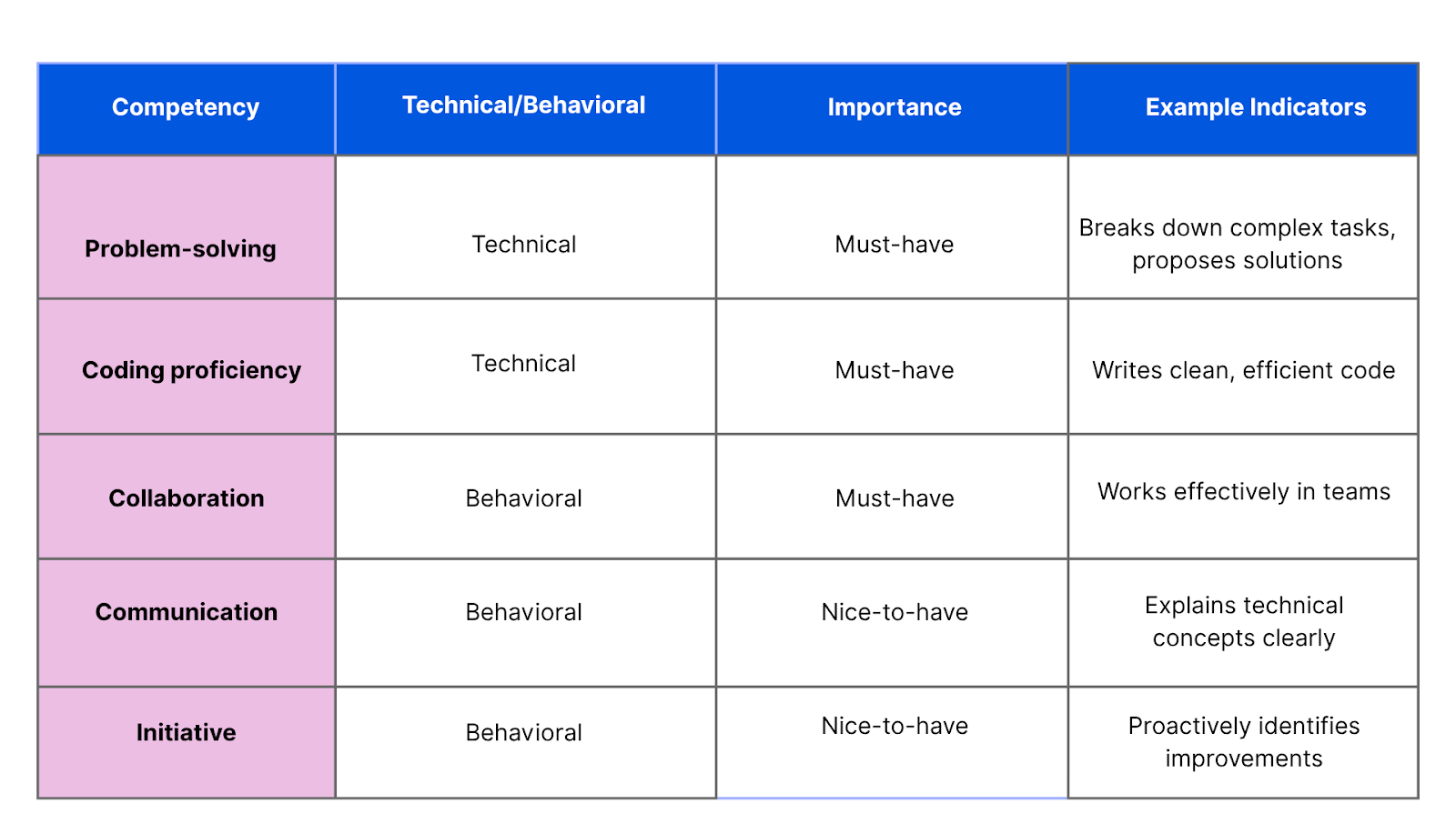
Every question, rubric, and evaluation should map back to these competencies. Get this step wrong, and everything that follows is compromised.

Step 2: Design job-relevant interview questions

Every question must tie directly to a competency. If you can’t explain what skill a question evaluates, cut it.

Types of questions:

  • Behavioral: “Tell me about a time you debugged a complex system.”
    Assesses past performance and approach to problems.
  • Situational: “What would you do if your code review revealed a major bug right before release?”
    Assesses judgment and decision-making.
  • Technical/Job Knowledge: “How does garbage collection work in Java?”
    Assesses expertise.
  • Problem-Solving: “Here’s a code sample with a hidden bug. Can you find and fix it?”
    Assesses analytical approach.

What makes a question effective?

  • Specific: Elicits detailed, job-relevant responses.
  • Open-ended: Allows for different valid approaches.
  • Consistent: Can be asked verbatim to every candidate.

Follow-up questions: Predetermine your follow-ups. Unplanned probing (“Can you elaborate?”) reintroduces bias. Prepare 1-2 clarifying prompts per question.

Legal considerations: Avoid asking questions about age, marital status, family plans, or anything not directly job-relevant.

It’s not the questions themselves that drive value. It’s that every candidate gets exactly the same questions, enabling true comparison.

Step 3: Create a standardized scoring rubric

Most teams with “standard questions” still get inconsistent results because they lack a rubric.

Anchored Rating Scales: Ditch vague rubrics (“1 = poor, 5 = excellent”). Instead, define what each score actually means for each question.

How to build behavioral anchors

  • Strong answer (5): Candidate describes a complex bug, details their systematic approach, explains trade-offs, and shares results.
  • Average answer (3): Candidate gives a general description, some steps, but lacks depth or specifics.
  • Weak answer (1): Candidate struggles to recall an example, focuses on blame, or skips steps.

Weighting Competencies: Not all competencies matter equally. For a software engineer, “coding proficiency” might be weighted twice as heavily as “initiative.”

Red Flags and Knockouts: Define criteria that indicate an automatic concern (e.g., “Refused to seek help when stuck,” “Breached security protocols”).
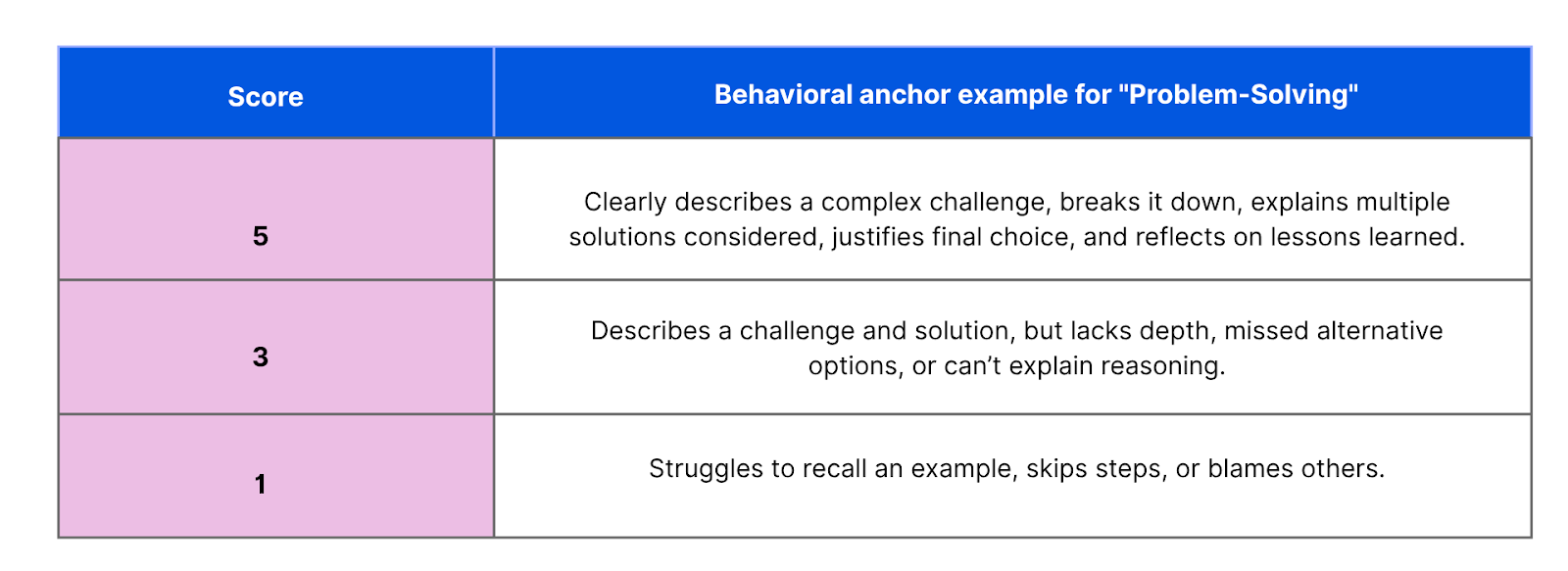
A good rubric makes scoring obvious. If interviewers are debating what score to give, your rubric isn’t specific enough.

Step 4: Train your interviewers

Even the perfect process fails if interviewers aren’t trained to use it. Many experienced interviewers feel structure constrains them or implies a lack of trust. The truth is, structure is about consistency, not micromanagement.

What training should cover:

  • Consistent delivery: Ask questions verbatim, no leading or significant rephrasing.
  • Scoring rubric: How to use anchors, not impressions.
  • Evidence-based notes: Document what was said, not how you “felt.”
  • Bias recognition: Train interviewers to spot and mitigate their own biases.
  • Legal boundaries: What’s off-limits in questioning.
  • Calibration exercises: Regular practice sessions to align scoring standards.

Ongoing vs. one-time training: Calibration isn’t a “set and forget” task. Run sessions regularly, especially when adding new questions or interviewers.

Key insight: Training builds interviewer confidence. Structured processes free up bandwidth to focus on evaluation, not improvisation.

Step 5: Standardize the interview day experience

Consistent format: Same interview duration, structure, and number of interviewers for every candidate in the same role.

Interview flow:

  1. Rapport building (5 min): Brief introduction, outline the process.
  2. Core questions (30-40 min): Ask predetermined questions in order.
  3. Candidate questions (10-15 min): Allow the candidate to ask about the role, team, or company.
  4. Close (5 min): Explain next steps and timeline.

Handling candidate Q&A: While not scripted, interviewers should prep standard answers to common questions for consistency.

Panel interviews: Assign questions in advance to avoid overlap. Ensure smooth handoffs and avoid cross-talk.

Sample interview flow

Segment Time Allocation
Welcome & rapport 5 min
Core questions 35 min
Candidate questions 10 min
Close & next steps 5 min

Key insight: A structured, organized interview experience not only improves evaluation quality but also boosts your employer brand.

Step 6: Evaluate candidates using evidence, not gut feeling

Each interviewer completes their scorecard independently, before any group discussion. This prevents groupthink and anchoring.

Running effective debriefs:

  • Each interviewer shares scores and evidence.
  • Discussion focuses on what was observed, not impressions.
  • Discrepancies are discussed in terms of evidence (“What led you to rate that answer as a 5?”), not opinions.

Common pitfalls to avoid:

  • Vague language (“great culture fit”) without behavioral examples.
  • Letting one strong opinion dominate.
  • Comparing candidates to each other rather than to the rubric.
  • Failing to document the rationale for the final decision.

Documentation: Capture key evidence and the reasoning behind each decision. This is crucial for legal defensibility and process improvement.

You can have the world’s best questions and rubrics, but if the decision at the end is based on “vibes,” you’re back where you started.

Common mistakes to avoid during structured interviews

  • Going off-script with follow-ups: Unplanned probing reintroduces bias. Prepare follow-ups in advance.
  • Skipping training (or retraining): Without reinforcement, interviewers revert to old habits.
  • Using generic questions: Role-specific questions are a must. Generic banks defeat the purpose.
  • Never refreshing questions: Candidates share questions. Rotate regularly to maintain effectiveness.
  • Discussing candidates before scoring: Even a casual pre-scoring chat can anchor opinions.
  • Treating structure as a one-time setup: Ongoing calibration, updates, and audits are essential.

These are common organizational patterns that quietly undermine the process of structured interviews.

How to measure structured interview effectiveness

Structured interviews generate consistent, comparable data.  But the implementation is just the start. How do you know it’s actually working?

Key metrics to track

  • Time-to-hire: Structure may feel slower at first, but decisions come faster once implemented.
  • Quality of hire: Are structured hires performing better than previous cohorts? Track interview scores against performance reviews.
  • Interviewer consistency: Compare scoring patterns across interviewers. Wide discrepancies signal calibration gaps.
  • Candidate experience: Survey both successful and rejected candidates. Are they reporting a fair, positive process?
  • Offer acceptance rates: Structured, transparent interviews can improve candidate trust and acceptance.
  • Pipeline diversity: Are you seeing improved representation at each hiring stage?

Automate structured interviews with HackerEarth

HackerEarth’s suite of tools is designed to help tech hiring teams implement structured interviews at scale without sacrificing quality.

AI Interview Agent

  • Delivers structured, role-specific interviews with consistent questions and rubrics
  • Masks candidate's personal information for bias-free evaluation
  • Evaluates technical depth across programming languages and skill areas
  • Generates detailed, comparable evaluation reports
  • Frees engineering time for high-value work instead of repetitive interviews

Supporting Products

  • FaceCode: Live coding interviews with real-time evaluation
  • Technical and non-technical assessments: Pre-built and custom skills tests
  • Soft skills assessments: Evaluate behavioral competencies alongside technical ones

With these tools, you can standardize your interview process end-to-end, ensure fairness, and scale your hiring without losing rigor.

Conclusion 

A structured interview process is the single most effective way to reduce bias, improve hiring outcomes, and build high-performing teams, especially in technical roles. The right technology makes it achievable at any scale.

FAQs

How long does it take to implement a structured interview process?
Implementation can take as little as a few weeks for a single role, but expect a few months for full rollout and calibration—especially in larger organizations.

Can structured interviews be used for all roles?
Yes, though the competencies and questions will differ by role. The framework applies to technical, behavioral, and leadership positions alike.

Do candidates dislike structured interviews?
Most candidates appreciate the fairness and transparency. Even rejected candidates report a better experience when the process is consistent.

How do structured interviews reduce bias specifically?
By standardizing questions, order, and scoring, structured interviews eliminate many opportunities for unconscious bias to slip in—such as going off-script or relying on impressions.

What's the difference between a structured interview and a behavioral interview?
A behavioral interview is a type of question (“Tell me about a time…”). A structured interview is a process: every candidate gets the same questions (behavioral, technical, etc.) and is scored by the same rubric.

How often should we update our interview questions?
Refresh questions at least once a year, or whenever you see evidence that candidates are sharing them widely. Regular audits help maintain effectiveness and fairness.
Improving Candidate Experience Strategies

How To Improve Candidate Experience: 15 Proven Strategies

In 2026, a poor candidate experience is no longer just an HR "oops" it is a major business risk. Recent data suggests that nearly 60% of candidates have abandoned a recruitment process purely because it was too long or disrespectful of their time.

In tech and finance, candidate frustration is at an all-time high. Top developers and engineers want more than just a paycheck they judge your company’s culture and professionalism based on your hiring process. If your application button doesn’t work or interviewers don’t respond, candidates will think your company is disorganized.

Making the candidate experience better can set you apart from the competition. This guide explains what candidate experience is and shares 15 practical ways to help you hire faster and keep top talent interested.

What is candidate experience?

Candidate experience includes every interaction a job seeker has with your company. It begins when they first see your LinkedIn ad and ends when they finish onboarding or get a final rejection.

Many people think candidate experience is just about being friendly, but it’s really about respect, clarity, and professionalism. This matters even more in technical hiring. Engineers care about fairness and efficiency. If your coding test is outdated or hard to use, you lose credibility right away.

Why is candidate experience important?

If you want leadership to support better hiring tools, highlight these business benefits:

  • Higher offer acceptance: Candidates who feel respected are significantly more likely to say "yes," even if a competitor offers slightly more money.
  • Brand reputation: Rejected candidates will talk about their experience. If it’s positive, even those who don’t get the job may still recommend your company to others.
  • Cost efficiency: A smooth process means fewer candidates drop out, so you spend less on finding new applicants to replace those who leave.
  • Quality of hire: Top candidates have choices. They prefer companies that are organized and communicate clearly.

15 Ways to improve candidate experience in recruitment

1. Write clear, realistic job descriptions

Avoid posting long wish lists for “rockstar” developers. Clearly state what the job involves, include a salary range, and list what’s required versus what’s optional. Being transparent helps candidates decide if they’re a good fit, saving time for everyone.

2. Simplify the application process

If your application takes over 10 minutes or asks candidates to create a new username and password, you’ll lose good applicants. Make it easy to apply with one click through LinkedIn and make sure your form works well on mobile devices.

3. Communicate frequently and transparently

Silence can quickly discourage candidates. Send a confirmation email right after they apply and give them a clear timeline. Even a short message like, "We are still reviewing applications and will update you by Friday," makes a big difference.

4. Be Transparent about the hiring process

Don’t leave candidates guessing. Explain the whole process at the start: "There will be one technical assessment, two 45-minute interviews, and a final culture fit chat."

5. Create a seamless technical assessment experience

For technical jobs, the assessment is often the deciding factor. Use a platform that lets candidates code in the language they’re most comfortable with.

Pro Tip: HackerEarth’s platform provides a familiar IDE with features like syntax highlighting and auto-complete, making the test feel like real work rather than a high-pressure exam.

6. Provide a designated contact person

Don’t use a generic email like "noreply@company.com." Give candidates the name and email of a real recruiter. This builds trust and makes the process feel more personal.

7. Help candidates prepare for interviews

Helping candidates prepare isn’t unfair. Let them know the interview format and who they’ll be meeting.

HackerEarth tie-in: You can even point candidates toward an AI Practice Agent to help them shake off pre-interview jitters.

8. Conduct fair, structured interviews

Unstructured interviews can cause bias and inconsistency. Use standard questions and clear scoring guides. For technical interviews, use tools that let you see how candidates think and solve problems in real time.

9. Reduce time-to-hire

Speed matters. The best candidates are often hired within 10 days. Review your process to find slow spots and use automation to schedule interviews quickly.

10. Personalize communications

Even if you use automation, add a personal touch. Mention a project from their portfolio or a skill they listed. This shows you took the time to review their profile.

11. Provide feedback to all candidates

Ghosting is the top complaint in hiring. Every candidate who interviews should get a response and closure.

HackerEarth tie-in: Use detailed assessment reports to provide constructive, data-backed feedback that helps the candidate grow, even if they didn't get the job.

12. Ensure fair, bias-free evaluations

Candidates notice when a process isn’t fair. Use tools like blind resume screening and standard technical tests so everyone is judged only on their skills.

13. Create an engaging career website

Your careers page should be more than just job listings. Add real photos of your office, share employee stories, and explain your company values. Make sure it’s easy to use on a phone.

14. Optimize the onboarding experience

The candidate experience continues after the contract is signed. Send a welcome kit, prepare their hardware before their first day, and assign a buddy to help them during their first week.

15. Collect and act on candidate feedback

You can’t improve what you don’t measure. After the process, send a Candidate Net Promoter Score (cNPS) survey. Ask, "How likely are you to recommend our hiring process to a friend?" and use the feedback to make changes.

How to measure candidate experience

To see if your improvements are working, track these important metrics:

  1. cNPS (Candidate Net Promoter Score): Survey candidates at different stages.
  2. Drop-off Rate: Find out where candidates are leaving your hiring process. This is often during the technical assessment.
  3. Application Completion Rate: Check if candidates are starting your application form but not finishing it.
  4. Offer Acceptance Rate: If few candidates accept your offers, your selling process or candidate experience may need improvement.

Improve your candidate experience with HackerEarth

Candidate experience should be a top priority, not something you think about later. In technical hiring, how you assess and interview candidates shapes your employer brand.

HackerEarth helps you make hiring more personal. With developer-friendly assessments, AI-powered structured interviews (FaceCode), and detailed analytics, you can give every candidate a great experience and hire faster than your competitors.

Guide to reduce hiring costs in 2026

Guide to reduce hiring costs in 2026

Hiring has become more expensive than ever. In 2026, companies are spending more on job ads, tools, interviews, and onboarding. At the same time, competition for skilled talent is also high. This makes it important for businesses to control hiring costs without compromising on quality.

The good news is that reducing hiring costs does not mean lowering standards. With the right strategy, companies can attract the right candidates while spending less. Using smarter processes, better tools, and data-driven decisions can make a big difference. Platforms like HackerEarth also help companies simplify hiring. They offer tools for assessments, screening, and analytics, which reduce manual effort and unnecessary spending.

In this guide, we will understand what hiring costs are, how to calculate them, and practical ways to reduce them.

Understanding hiring costs

Hiring costs include all the money a company spends to find, evaluate, and onboard a new employee. These costs can vary based on the role, industry, and hiring method.

Some companies spend more on external agencies, while others invest in internal teams and tools. No matter the approach, hiring costs usually cover multiple stages of the process.

These stages include sourcing candidates, conducting interviews, running assessments, and training new hires. Even small inefficiencies at each stage can significantly increase the total cost.

Components of hiring costs

Hiring costs are not just about job postings. They are made up of several smaller expenses that add up over time.

  • Sourcing and advertising are two of the biggest contributors. Posting jobs on multiple platforms, running ads, and promoting listings can quickly increase spending. Choosing the right platforms instead of using all available ones helps reduce waste.
  • Recruitment agency fees can also be high. While agencies can speed up hiring, they often charge a percentage of the candidate’s salary. This can be expensive, especially for senior roles.
  • Employee referral programs are usually more cost-effective. Employees refer candidates from their network, which reduces the need for external sourcing. However, companies may still offer referral bonuses.
  • Interviewing and assessment also add to the cost. Time spent by hiring managers, scheduling interviews, and using assessment tools all contribute. In some cases, travel and logistics costs are also involved.
  • Onboarding and training are other important areas. Companies invest in equipment, training sessions, and time to help new hires settle in. These costs are often overlooked but are important to consider.

Technology and recruitment tools also play a role. Tools like applicant tracking systems, coding platforms, and analytics software require investment but can reduce long-term costs if used well.

How to calculate hiring costs

Calculating hiring costs helps companies understand where their money is going. A simple way to calculate is:

Recruitment costs = advertising + agency fees + technology + salaries +onboarding costs

For example, imagine hiring a software engineer. A company spends on job postings, uses an agency, pays for assessment tools, and spends time on interviews and onboarding. When all these costs are added, the total hiring cost becomes clear. Tracking this regularly helps companies identify areas where they can save money.

Key metrics to measure

Companies should track the following key metrics:

  • Cost per hire is one of the most important metrics. It shows how much money is spent to hire one employee. A lower cost per hire usually means a more efficient process.
  • Time to fill is another important metric. It measures how long it takes to fill a position. Longer hiring cycles increase costs because teams spend more time and resources.
  • Quality of hire is also important. Hiring quickly at a low cost does not help if the candidate is not a good fit. A high-quality hire improves productivity and reduces future hiring needs.

Strategies to reduce hiring costs

Reducing hiring costs requires a combination of better planning, smarter tools, and improved processes.

Optimize sourcing channels

Using the right sourcing channels can reduce unnecessary spending. Instead of posting on every platform, focus on channels that bring relevant candidates.

Employee referral programs are a great way to lower sourcing costs. Employees often refer people who fit the company culture, which leads to better hires. Using niche job boards and professional networks also helps. For example, developers are more active on platforms like GitHub, while professionals connect on LinkedIn. Targeting such platforms improves results.

AI-powered sourcing tools can also help. They match candidates to roles faster and reduce manual effort.

Streamline the interview process

A long and complex interview process increases costs. Simplifying this process can save both time and money. Asynchronous video interviews allow candidates to record responses at their convenience. This reduces scheduling conflicts and saves time for hiring teams.

Standardizing interview questions and assessments ensures consistency. It also makes evaluation faster and more reliable. Training interviewers is equally important. Well-trained interviewers make quicker decisions, which reduces the time to hire.

Enhance employer branding

A strong employer brand attracts candidates without heavy spending on ads. When candidates already know about a company, they are more likely to apply. Content marketing is another effective strategy. Sharing blogs, videos, and employee stories gives candidates a real view of the company.

Engaging on social media also helps build connections with potential candidates. This reduces dependency on paid platforms.

Invest in recruitment technology

Using the right technology can reduce manual work and improve efficiency. An applicant tracking system helps organize applications and track candidates easily. This reduces administrative effort and speeds up the hiring process.

AI tools can screen resumes and match candidates to roles. This saves time and improves the quality of shortlisted candidates. Analytics tools provide insights into hiring performance. Platforms like HackerEarth offer detailed analytics that help companies identify inefficiencies and improve decision-making.

Focus on internal mobility

Hiring from within the company is often more cost-effective than external hiring. Promoting employees reduces the need for sourcing and training. Existing employees already understand the company’s culture and processes. Career development programs also help. When employees see growth opportunities, they are more likely to stay, reducing turnover and future hiring costs.

Measuring and monitoring hiring costs

Regularly tracking hiring costs is important for long-term success. Companies should monitor key metrics like cost per hire, time to hire, and quality of hire.

Using dashboards and reporting tools makes this easier. These tools provide real-time data and help teams make quick adjustments.

Benchmarking against industry standards is also useful. It helps companies understand if they are spending more or less than others and identify areas for improvement.

Conclusion

Reducing hiring costs in 2026 is not about cutting corners. It is about making smarter decisions at every stage of the hiring process. By optimizing sourcing channels, improving interview processes, investing in technology, and focusing on internal talent, companies can significantly reduce costs while maintaining quality.

A balanced approach that combines strategy, tools, and data can lead to better hiring outcomes. Ultimately, the goal is to hire the right people at the right time without overspending.

Online Recruitment Software: How to Choose the Right Platform in 2026

Online Recruitment Software

Hiring in 2026 feels different. There is more technology than ever, but making real connections is still tough. Many HR generalists feel buried under endless resumes and manual tasks. If you are feeling overwhelmed, you are not alone. Last year, most companies missed their hiring goals because their systems could not keep up. Picking the right online recruitment software is not just about technology anymore. It is about making your job easier and letting you focus on people, not paperwork. This article will help you choose the right platform without confusing technical terms.

What is online recruitment software?

Online recruitment software is the main place where you manage your whole hiring process. It is a central spot to find, attract, screen, and hire new team members. In the past, these tools were just for storing resumes. Now, they are much more advanced. They help you with everything from building your employer brand to understanding why people stay at your company.

Definition and core purpose

This software is designed to keep everything in one place. You no longer need to track candidates in emails, interviews in spreadsheets, and background checks in another app. For HR generalists, this means no more entering the same information twice or losing track of emails. The software takes care of tasks like posting jobs to many boards at once or scheduling interviews across time zones. It helps make hiring more organized and predictable.

How modern recruitment software has evolved

Recruitment technology has changed quickly. Not long ago, software just waited for people to apply. Now, we have what feels like a digital teammate. Modern platforms use smart assistants that work all the time. They can transcribe interview notes, update candidate records automatically, and even search your old database for strong candidates who did not get hired before but might be a good fit now. The goal is no longer just to fill a job quickly, but to find someone who will stay and succeed.

Era Primary focus Technology shift Candidate experience
2010-2018 Compliance and storage Cloud-based databases Transactional and slow
2019-2023 Efficiency and volume Automated resume parsing Improved but often robotic
2024-2026 Quality of hire and skills Agentic AI and skills-mapping Personalized and high-touch

Types of recruitment software: ATS Vs. CRM Vs. End-to-End platforms

When you begin searching for tools, you will come across many three-letter acronyms. Knowing what each one means will help you find what fits your needs.

Applicant Tracking Software (ATS)

The ATS is the main tool for managing people who have already applied for your job. It helps you stay organized and follow hiring rules. The process is simple: someone applies, gets interviewed, and is either hired or not. If you get many applications for each job, a good ATS is important for handling all that information.

Recruitment CRM (Candidate Relationship Management)

A CRM helps you with the proactive part of hiring. It is made for people who have not applied yet but could be a good fit later. You find someone promising, stay in touch over time, and build a relationship so they are interested when a job opens. CRMs are especially useful for hard-to-fill jobs in fields like healthcare or technology.

End-To-End recruitment platforms

By 2026, most companies are choosing all-in-one systems. These end-to-end platforms combine the CRM and the ATS. This is often the best option for HR teams because everything is in one place. You do not have to worry about data being separated between tools. It lets you manage the entire process, from when someone first learns about your company to when they accept a job offer.

10 must-have features in online recruitment software

When you are looking at new tools, check that they have these ten features. They will help you save time and make your work easier.

  1. Job Posting and Multi-Board Distribution: You should be able to post a job once and have it appear on LinkedIn, Indeed, and dozens of other sites instantly.
  2. Applicant Tracking And Pipeline Management: You need a clear, visual board that shows where every candidate is.
  3. Resume Screening And Parsing: The software should be able to read a resume and automatically pull out important details such as skills and experience.
  4. Candidate Screening and Skills Assessment: Built-in skills tests show you what a person can really do, not just what they claim.
  5. Interview Scheduling and Automation: Good software lets candidates pick their own interview times based on your calendar.
  6. Collaboration and Team Evaluation Tools: You need a place where every interviewer can leave their notes and scores.
  7. Recruitment Workflow Automation: Automation should take care of reminders, such as asking hiring managers to review candidates.
  8. Analytics and Reporting Dashboards: You need to know what is working and where your best hires are coming from.
  9. Candidate Communication and Experience: The software should make it easy to text or email candidates with mobile-friendly forms.
  10. Integrations and API Access: Your recruitment tool needs to talk to your other systems, like your payroll or your Slack channels.

How to evaluate and choose the right recruitment platform

Choosing the right platform is important, but it does not have to be difficult. Here are five steps to help you.

  • Step 1: Audit your current hiring workflow. Review your current hiring process and identify where things slow down.
  • Step 2: Define your company's size, hiring volume, and budget. Be realistic about your needs. Costs usually range from $15 per user for basic tools to several hundred dollars for advanced systems.
  • Step 3: Shortlist based on must-have features. Choose the tool that fits your workflow, not just the one with the most features.
  • Step 4: Run real-world demos and trials. Always request a trial. Use one of your current open roles to test the system.
  • Step 5: Assess vendor support, Security, and Scalability. Make sure the vendor offers strong support and follows current data security and privacy laws.

Common mistakes HR teams make when choosing recruitment software

It is easy to get distracted by new features. Here are some common mistakes to avoid.

  • Choosing based on feature count alone: A tool with many features is not helpful if it is too complicated to use.
  • Ignoring the candidate experience: If the software makes it hard for people to apply, the best candidates will just go somewhere else.
  • Overlooking integration needs: If your new recruitment software does not connect with your payroll system, you will have to do more manual work.
  • Skipping internal stakeholder buy-in: Get a few hiring managers to try it out so they are likely to actually use the tool.
  • Underestimating implementation time: Changing systems takes time and effort. Plan for several weeks of setup and training.

Online recruitment software trends to watch in 2026

The world is changing, so your software needs to be prepared for the future.

  • AI-Powered Screening and Matching: AI can quickly find the best matches, but a person should always make the final decision.
  • Skills-Based Hiring Over Resume-Based Hiring: More companies now focus on what a person can do instead of where they went to school.
  • DEI-Focused Features: The best tools now include diversity and inclusion features, such as hiding names or photos on resumes.
  • Mobile-first recruitment: Almost half of all job seekers apply on their phones.

Final conclusions and strategic recommendations

Choosing the right online recruitment software helps you work better. It lets you save time and focus on the people who make your company strong. When technology takes care of repetitive tasks, you can focus on being a strategic HR leader. The best time to find a new system is before you feel overwhelmed. Start by reviewing your current process, talk with your team, and look for a partner who understands your goals. By 2026, the most successful teams will not be those with the biggest budgets, but those with the smartest and most people-focused systems.

Recruitment Challenges and Solutions

Global recruitment challenges in 2026

In 2026, recruiting is shaped by a mix of ongoing talent shortages, the rise of autonomous AI, and major changes in how employers and workers relate. Attracting and keeping talent has now become central to business strategy. It’s no longer just an administrative task. This analysis looks at the main challenges for talent acquisition and offers a practical framework to help organizations build a resilient workforce in a fast-changing environment.

Talent scarcity and demographic shifts

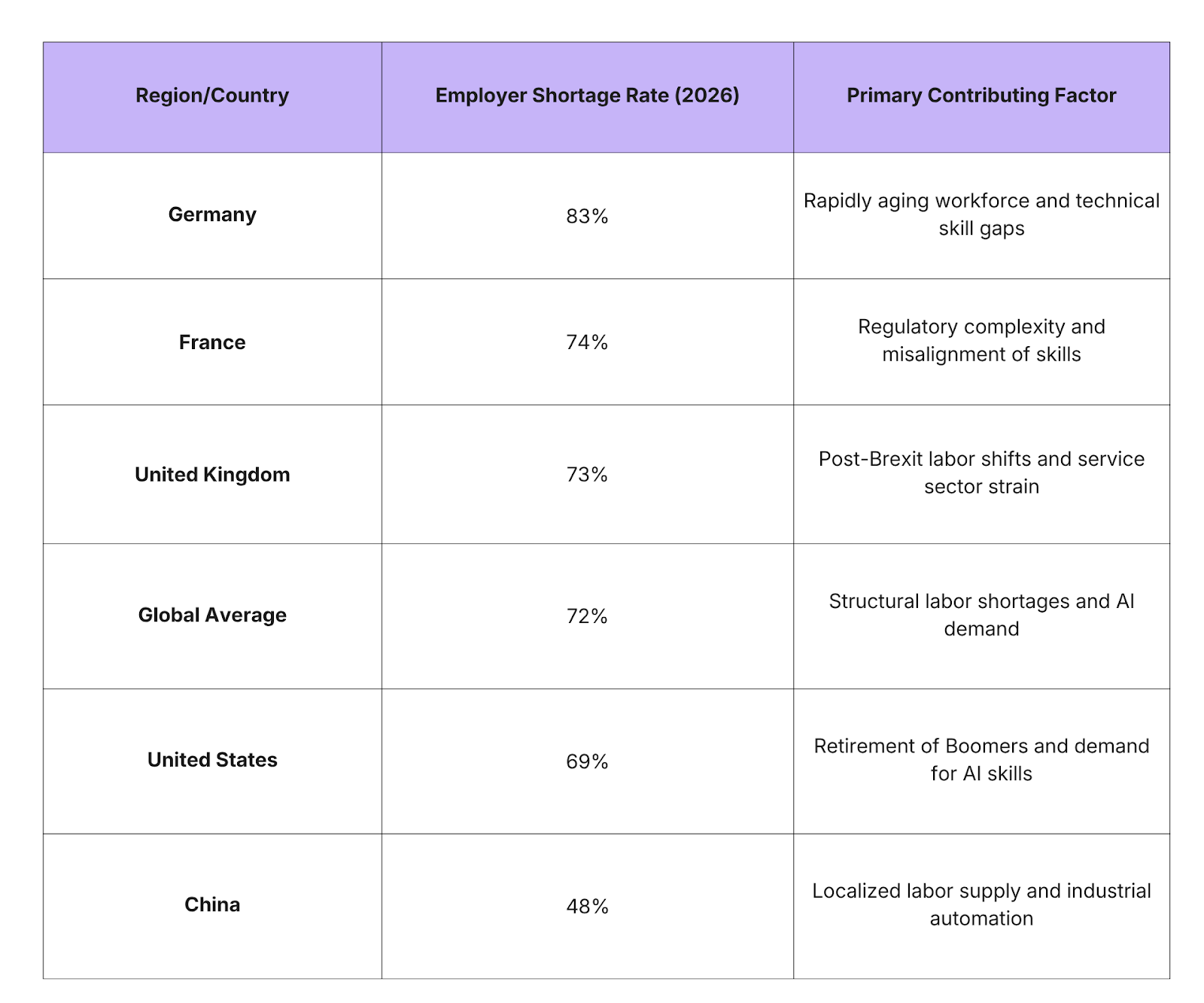
In 2026, the global talent shortage has hit a critical point. Data shows that 72% of employers worldwide struggle to fill roles, and this number remains high even as the overall job market cools. This shortage is not just a short-term issue. It is caused by the rapid retirement of the Baby Boomer generation, with 10,000 people leaving the workforce each day, and by a growing gap between what traditional education provides and what an AI-driven economy needs.

Sectoral volatility and specialized talent gaps

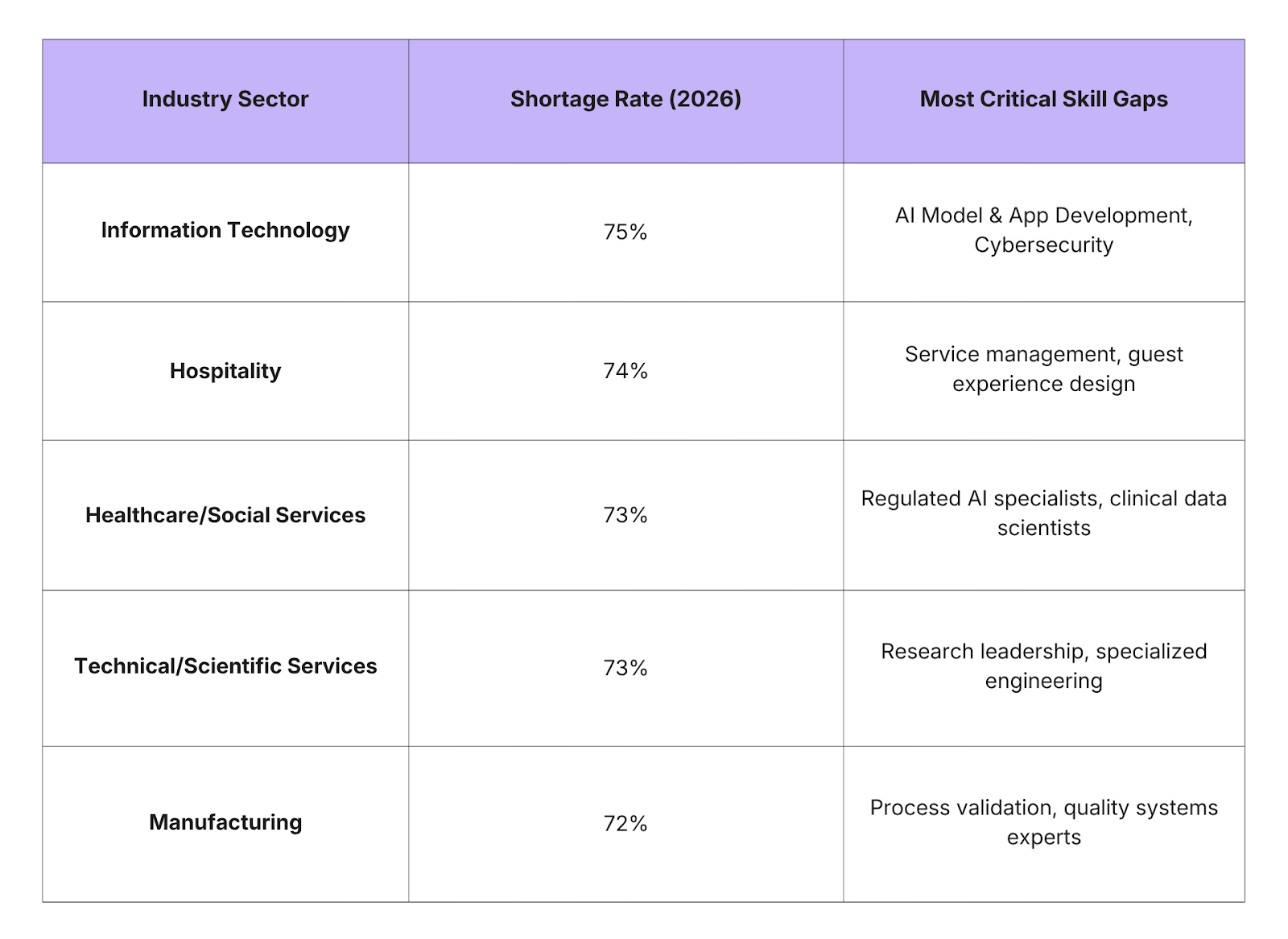
The information technology sector still has the highest shortage rate at 75%. This is mainly because AI skills are now harder to find than traditional software or data analysis skills. Other key sectors, like hospitality and the public sector including healthcare and social services also report high shortage rates at 74%.

The artificial intelligence inflection point in talent acquisition

Artificial intelligence is now being used in all HR tasks, with adoption growing from 26% in 2024 to 43%. The biggest trend is the use of autonomous AI agents. Unlike older chatbots, these agents work on their own to handle sourcing, screening, scheduling, and analyzing the job market.

Research indicates that 52% of talent leaders plan to integrate autonomous AI agents into tResearch shows that 52% of talent leaders plan to add autonomous AI agents to their teams by late 2026. This change is reshaping the recruiter’s job. Recruiters can now spend less time on resume screening and more time on building relationships, assessing culture fit, and giving strategic advice. Companies using AI-assisted messaging have seen a 9% improvement in hire quality, showing that AI works best when it supports human judgment. Challenges in tech recruiting often stem from the proliferation of AI-generated solutions being used by candidates during the evaluation process. To overcome this, organizations are adopting advanced online proctoring suites, such as those provided by HackerEarth.

HackerEarth’s online proctoring uses AI-powered, all-around monitoring to keep technical assessments fair and secure. The platform includes several advanced features to protect test integrity in remote settings:

  • Smart browser technology: This feature creates a sealed-off testing environment by blocking unauthorized software, Virtual Machines (VMs), and screen-sharing tools while disabling copy-paste and drag-and-drop functionality.
  • AI-driven video proctoring: The system provides continuous real-time surveillance, capturing high-resolution snapshots and employing eyeball movement analysis to detect anomalies or external assistance.
  • Logic validation and bluff detection: To ensure candidates truly understand their code, the platform prompts surprise questions after submission, requiring an explanation of the logic and approach used.
  • Behavioral pattern detection: Machine learning algorithms identify suspicious gestures, such as covering the mouth or looking off-screen, providing recruiters with an objective "proctoring score".

Using these tools, organizations can cut time-to-hire by up to 70% and make sure only qualified candidates reach the final interview stages. This is especially important in 2026, since only 26% of applicants trust AI to judge them fairly. Clear and transparent proctoring tools help build trust and give companies an edge.

Navigating the risks of cultural debt and bias

Even with greater efficiency, quickly adding AI can lead to "cultural debt" problems like misalignment, distrust, and ignored workplace norms if organizations do not carefully design how people and AI work together. Leaders need to clarify who is responsible when both humans and machines make hiring decisions. Making decision-making a strategic focus helps ensure AI supports, rather than replaces, human judgment.

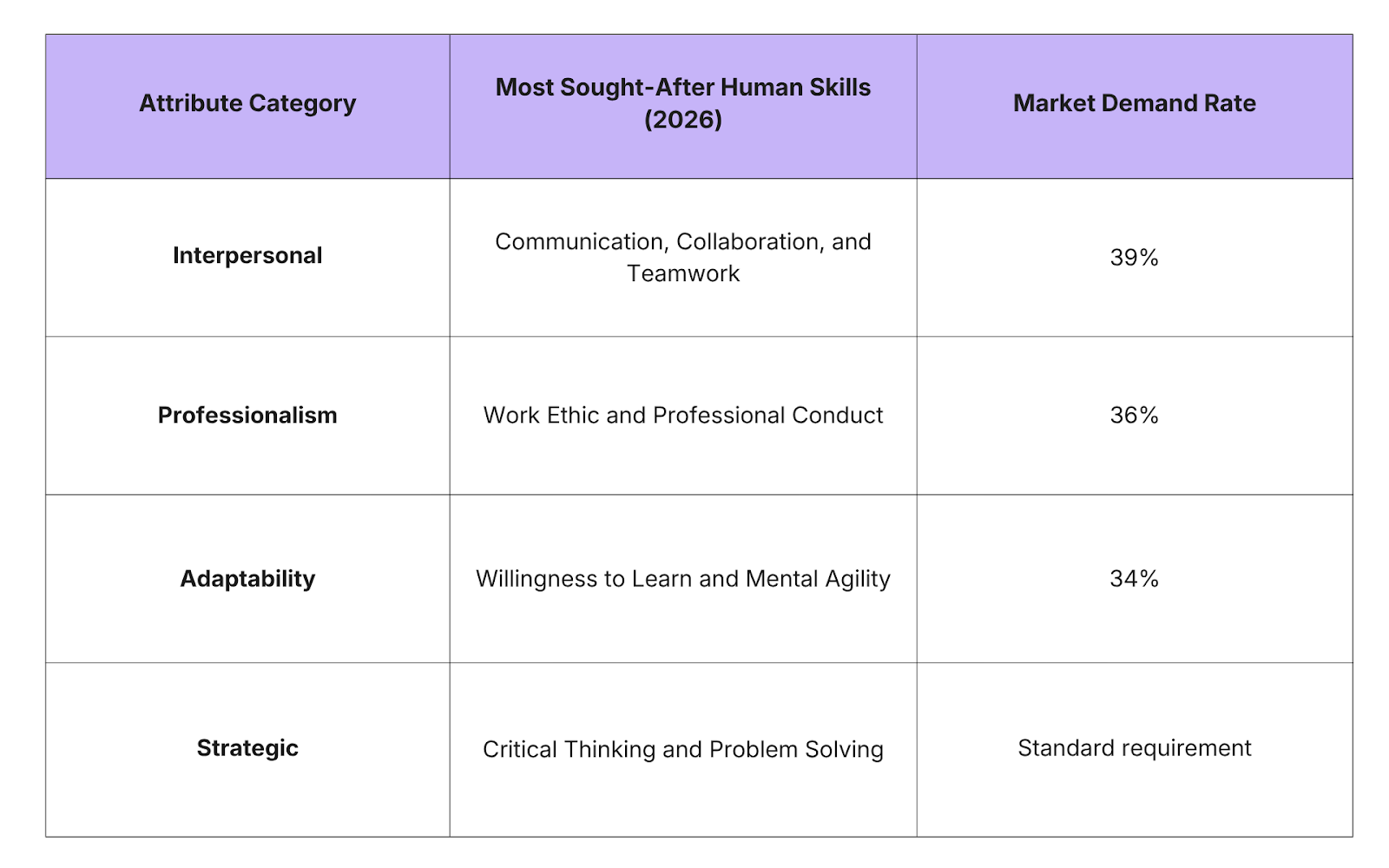
As AI handles more routine tasks, the "Human Edge" skills like empathy, teamwork, and strategic thinking—grows in importance. Organizations are using talent intelligence tools to spot skills in resumes and work history, helping employees move into high-demand AI and tech roles by finding related skills.

Upskilling and internal mobility as business continuity

Because of the talent shortage, companies are moving from quick hiring to building skills within their teams. By 2026, 69% of employers plan to invest in reskilling, seeing internal mobility as key to business continuity. This not only fills skill gaps but also boosts engagement and loyalty. Employees with good experiences and clear growth paths are 68% less likely to leave.

Strategic workforce planning now means identifying skills that can be used in different roles across the company. In manufacturing, for example, workers are learning AI basics to manage new automated systems. This helps experienced employees whose old skills are being replaced by technology stay productive and valuable.

Candidate expectations and the experience mandate

In 2026, candidates are more selective and intentional. Most apply to just one to ten jobs per week and look for employers who are transparent, trustworthy, and share their values. The problem of "ghosting"—candidates dropping out without notice remains, with 41% of organizations seeing more cases.

The shift in work-life priorities

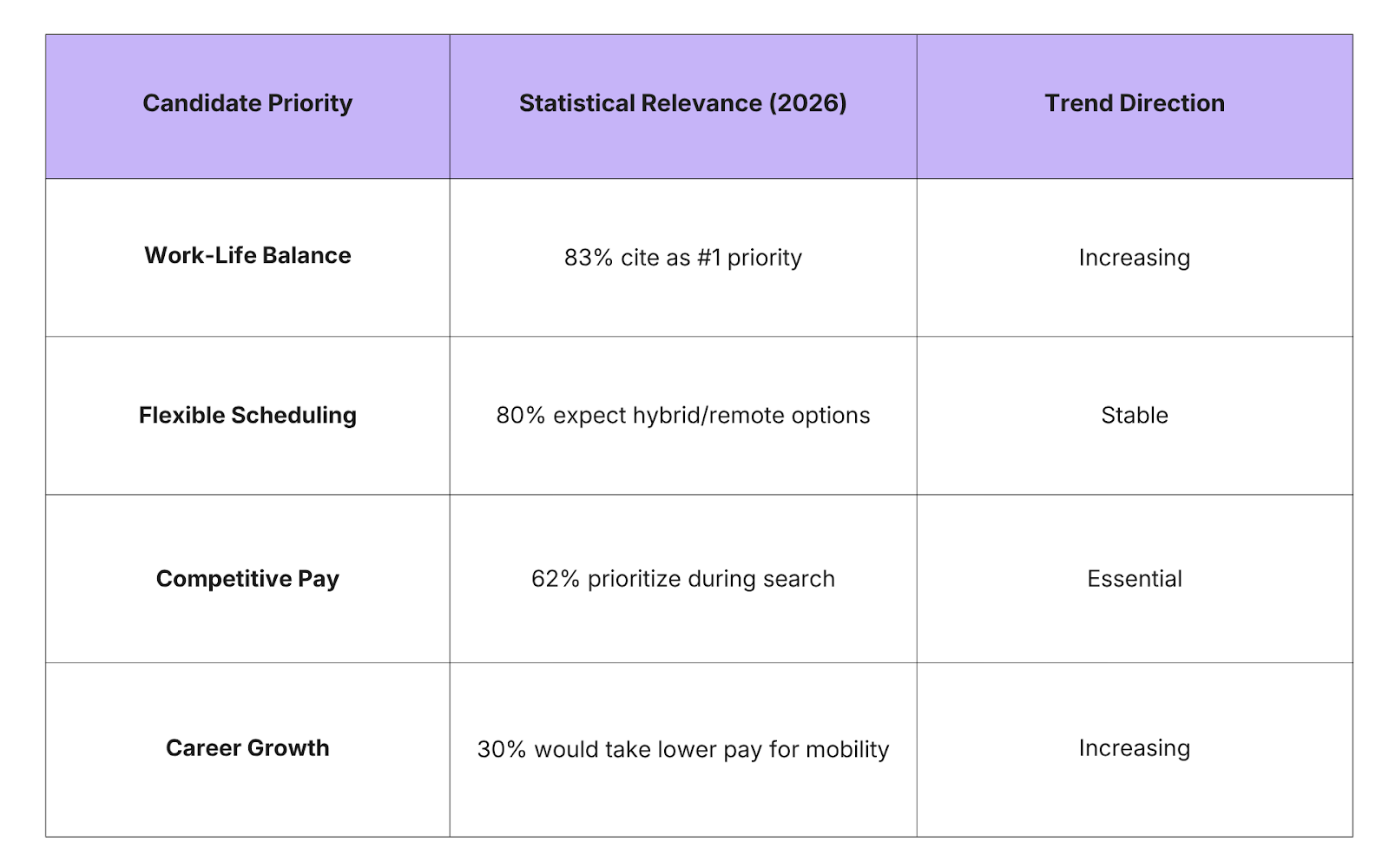
For the first time in more than 20 years, work-life balance is now the top factor for job seekers, ahead of salary. While 62% still see pay as important, 83% say balance matters most. Flexible work is now expected, not a perk. In fact, 62% would not give up remote work, even for higher pay.

Companies that do not offer hybrid or remote work for suitable roles are less attractive to job seekers. In fact, 55% say hybrid work is their top choice.

Reducing application friction and improving responsiveness

It still takes an average of 42 days to fill a job, which leads to lost productivity and higher costs per hire in the U.S. Top organizations are fixing this by making their hiring process simpler. In fact, 92% of candidates quit if the application is too complicated. Cutting application time to under 10 minutes greatly increases the number of people who finish and apply.

To overcome these common recruiting challenges, organizations are adopting several key strategies:

  • Self-scheduling tools: Implementing automated interview scheduling respects the candidate’s time and reduces administrative friction.
  • Pay transparency: Including accurate salary ranges and benefit details in job postings allows candidates to self-select, preventing wasted time for both parties and building initial trust.
  • Prompt communication: Responding to applications and providing updates within 48 hours of key stages helps maintain engagement and reduces drop-off.
  • Structured interviews: Using predetermined questions and consistent evaluation criteria ensures a fair process and reduces the risk of "gut-feeling" decisions that lead to mis-hires.

Managing the global and distributed workforce

With more remote and hybrid work, managing teams across time zones is now standard in 2026 hiring. Companies are adopting "remote-first" policies that focus on results and asynchronous communication instead of time spent at a desk.

Asynchronous workflows and nearshoring strategies

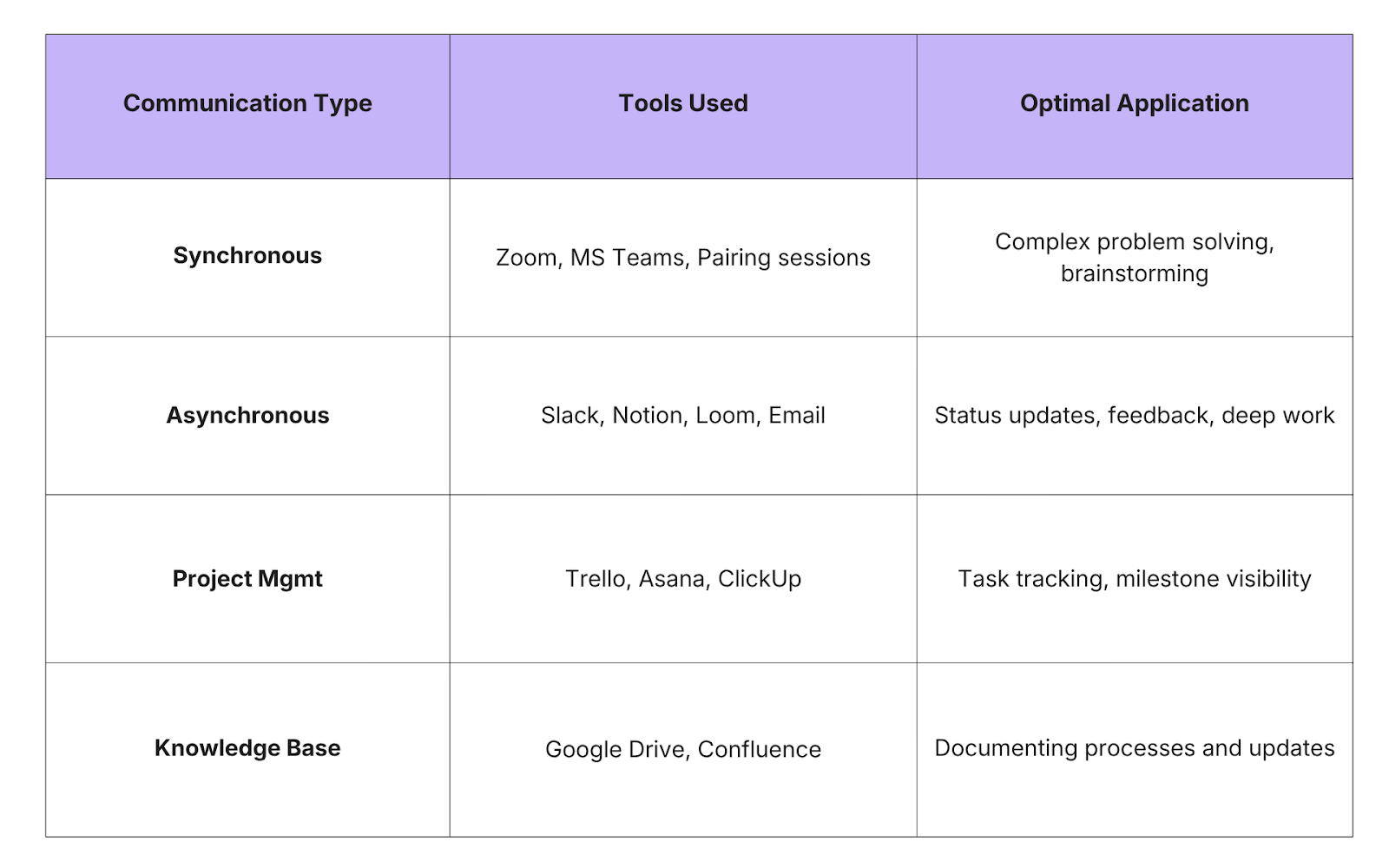
Effective management of distributed teams requires a clear "communication playbook" that defines when to use synchronous (real-time versus asynchronous communication. Top organizations aim for about 75% asynchronous and 25% real-time communication to help people focus and avoid too many meetings. This approach offers four to eight hours of daily overlap, simpler scheduling, and stronger cultural alignment while maintaining global flexibility.

To keep a strong virtual culture, leaders need to actively build connections. They can do this by holding virtual town halls, setting up peer recognition programs, and having "no-meeting days" to support employee well-being and prevent burnout.

High-volume recruiting challenges and predictive planning

A huge increase in applications, partly because candidates use AI to automate job searches, has created a lot of "noise" for hiring teams. The number of applications per job has doubled since 2022, but the share of qualified candidates is still low.

To handle high-volume recruiting, companies are shifting from reacting to problems to using predictive strategies. Predictive analytics help leaders spot talent shortages and plan hiring months in advance, cutting down on last-minute, expensive hires. In 2026, workforce planning is about quickly adjusting skills and team sizes, giving an edge to firms that can adapt fast.

The cost of mis-hires and the value of total rewards

The financial impact of a bad hire can be three to four times the employee’s annual salary, esA bad hire can cost three to four times the employee’s yearly salary, especially for executives. To avoid this, companies are rethinking their "total rewards" approach. In 2026, candidates want more than salary, they seek financial wellness support, mental health benefits, and home-office budgets. Offering a competitive pay package that matches local living costs is key to attracting top international talent. Organizations that thrive in this environment are those that treat talent as a "renewable resource" rather than a fixed one. By blending "high-tech tools with high-touch leadership," firms can build the resilience necessary to adapt to technological shifts and demographic decline.

To overcome the top recruitment challenges of 2026, talent leaders should prioritize the following actions:

  1. Embrace the Human-AI Partnership: Deploy autonomous AI agents for operational tasks like sourcing and scheduling, while utilizing advanced platforms like HackerEarth to ensure the integrity of technical evaluations through AI-driven proctoring.
  2. Transition to Skills-First Models: Remove unnecessary degree requirements and focus on demonstrable competencies. Invest in talent intelligence to identify internal skill adjacencies and promote upskilling as a core retention strategy.
  3. Optimize the Candidate Experience: Reduce application friction by ensuring processes can be completed in under 10 minutes. Provide transparency in pay and flexibility from the outset to build trust and reduce candidate drop-off.
  4. Operationalize Inclusion: Move DEI from a moral imperative to a business mechanic. Conduct regular bias audits of AI tools and address the "broken rung" in management through data-driven development and mentorship programs.
  5. Build a Predictive Workforce Strategy: Shift from reactive vacancy filling to data-backed resource planning. Use predictive modeling to anticipate skill gaps and adopt flexible "portfolio" workforce structures to remain agile in a volatile market.

By aligning workforce data, engagement strategies, and role forecasting, organizations can move from observing trends to acting on them. When organizations align workforce data, engagement strategies, and role planning, they can act on trends rather than just watch them. The future of recruiting is not about picking people or technology it is about combining both to build a skilled, resilient workforce ready for the challenges ahead.

Blind hiring process: a step-by-step guide to bias-free technical recruitment

In 1952, the Boston Symphony Orchestra realized they had a problem: they were hiring almost no women. To fix this, they started using a screen during auditions so the judges couldn't see the musicians. Surprisingly, the results were still skewed male. The judges could hear the "click" of high heels on the uncarpeted floor. Once they asked musicians to remove their shoes or installed carpets to muffle the sound, the number of women hired jumped by 25% to 46%.

This story is the classic example of blind hiring. It is the practice of removing personal details from the recruitment process so that candidates are judged only on their skills. In 2026, this is no longer just a nice idea—it is a vital strategy for tech teams that want to find the best engineers without letting unconscious bias get in the way.

Why blind hiring matters in tech

We like to think we are objective, but research shows otherwise. A famous Yale study found that even trained scientists preferred a male candidate over an identical female candidate, offering the man a starting salary that was about $4,000 higher.

Racial bias is just as persistent. Research from the National Bureau of Economic Research (NBER) found that resumes with "white-sounding" names received 50% more callbacks than those with "black-sounding" names, even when the qualifications were exactly the same. In technical hiring, where skills are highly testable, there is no reason to let these biases win.

A step-by-step guide to implementation

Building a bias-free process does not happen overnight. Here is how to do it in four clear steps.

Step 1: Fix your job descriptions

Bias starts with the words you use. Terms like "coding ninja" or "rockstar" can accidentally discourage women from applying. Use tools like Textio or DataPeople to scan your job ads for gendered language. Simple changes, like swapping "aggressive" for "growth-oriented," can increase your pool of underrepresented candidates by up to 50%.

Step 2: Anonymize applications

The goal here is to remove "noise" like names, photos, and even school names. Pedigree bias—the habit of favoring graduates from elite universities—often hides great talent from non-traditional backgrounds. Software like Pinpoint or blendoor can automatically redact this information in your applicant tracking system (ats).

Step 3: Use objective skills assessments

Instead of guessing if someone can code based on their resume, let them prove it. Platforms like Hackerearth allow you to send technical tests where the candidate's identity is completely masked. With PII (personally identifiable information) masking turned on, recruiters only see the candidate's score and their code, not their gender or ethnicity. Organizations using these validated tests often see a 20% boost in employee performance.

Step 4: conduct structured, blind interviews

Interviews are the hardest stage to keep blind. However, you can use "structured interviews" where every candidate is asked the same set of questions in the same order. For tech roles, tools like FaceCode offer an anti-bias feature that masks a candidate’s name with an alias during live coding sessions. This keeps the focus on the diagram board and the logic, rather than the person's identity.

The business case for diversity

Diversity is not just about fairness; it is a competitive advantage. McKinsey’s research shows that companies with diverse executive teams are 39% more likely to be more profitable than their competitors. Furthermore, for every 1% increase in racial diversity, companies have seen sales revenue grow by approximately 9%. Diverse teams solve problems faster because they avoid "groupthink" and bring more creative solutions to the table.

Measuring your success

To know if your blind hiring program is working, you need to track the right metrics.

  • Quality of hire: Are the people you hire performing well and staying with the company?
  • Candidate net promoter score (CNPS): Do candidates feel the process was fair and transparent?
  • Adverse impact: Use the "four-fifths rule" to check if any specific group is being accidentally filtered out.

Conclusion

Blind hiring is about giving everyone a fair shot based on what they can actually do. By 2026, automation and AI tools have made this process easier than ever to scale. When you remove the click of the high heels and the bias of a name, you find the talent you’ve been missing.