Medha Bisht

Author
Medha Bisht

Blogs
Medha is a technical writer and recent graduate who blends curiosity, creativity, and a love for stories. When not writing, she’s exploring long treks, diving into books, or rewatching her favorite anime.
author’s Articles

Insights & Stories by Medha Bisht

Discover Medha’s crisp breakdowns on tech, writing, and the ideas that inspire her - shaped by books, anime, and everyday adventures.
Clear all
Thank you! Your submission has been received!
Oops! Something went wrong while submitting the form.
Filter
Filter

7 key Recruiting Metrics every Talent Acquisition team should track: A strategic guide

Why recruitment metrics are important

Recruitment metrics are measurable data points that provide a clear, quantitative view into the efficiency and effectiveness of the hiring process. These metrics act as a "GPS for your hiring process," providing direction and real-time feedback that helps teams stay on course toward their goals. By moving beyond gut feelings and subjective impressions, organizations can leverage these metrics to diagnose problems, identify opportunities, and validate the impact of their talent acquisition efforts on the broader business.

As companies navigate persistent talent shortages and a highly dynamic market for top professionals, the traditional approach to hiring is no longer sufficient. 

Success now hinges on a strategic, data-driven framework that enables proactive decision-making and continuous process improvement. This evolution signifies a fundamental shift in the role of talent acquisition, transforming it from a mere administrative function into a critical pillar of business strategy. According to recent data, 87% of recruiting professionals agree that talent acquisition has become a more strategic function over the past year, underscoring this change.

The importance of tracking recruitment metrics cannot be overstated. They enable organizations to make more informed hiring decisions, pinpoint and resolve bottlenecks in the recruitment funnel, and optimize costs. Most critically, metrics provide a direct line of sight into the quality of new hires, which is arguably the most significant factor in long-term organizational success. 

A study from LinkedIn's business resources highlights that poor hiring decisions can lead to higher turnover, increased training costs, and missed opportunities, demonstrating how metrics directly impact a company’s performance, productivity, and profitability. Therefore, understanding and leveraging recruiting metrics is no longer optional; it is the definitive roadmap for building a resilient and high-performing talent acquisition function.

Part I: The core pillars of recruiting metrics

For any talent acquisition team to operate effectively, a foundational understanding of key metrics is essential. These metrics can be broadly categorized into three pillars: efficiency and velocity, financial and ROI, and outcome and quality. Each provides a unique perspective on the health of the hiring process and contributes to a comprehensive, data-driven strategy.

1. Efficiency and velocity metrics

These metrics focus on the speed and fluidity of the hiring process, providing a measure of how quickly a team can move from an open role to a new employee.

Time-to-Fill

Time-to-Fill is a macro-level metric that measures the total duration from when a job requisition is approved to the day a candidate accepts the job offer. This metric provides a broad view of the entire recruitment process's efficiency.

Time−to−Fill = Date of Offer Acceptance − Date of Requisition Approval 

  • A shorter Time-to-Fill is a strong indicator of an efficient hiring process. 
  • A lengthy Time-to-Fill suggests significant delays, which can result in lost productivity and revenue from prolonged vacancies. 

Time-to-Hire

While often used interchangeably with Time-to-Fill, Time-to-Hire is a more granular and focused metric. It tracks the duration from the moment a specific candidate first applies for a job to when they accept a formal offer.

Time−to−Hire = Date of Offer Acceptance − Date of Candidate Application 

  • This metric directly measures the internal recruiting team's efficiency and how quickly they can move an identified, qualified candidate through the funnel. 
  • Tracking both Time-to-Fill and Time-to-Hire provides a powerful diagnostic tool.
  • A prolonged Time-to-Hire indicates delays in the candidate's journey, such as slow resume screening, long interview scheduling, or a protracted decision-making process. 

Interview-to-Hire Ratio

The Interview-to-Hire Ratio is a crucial metric for evaluating the effectiveness of a team's pre-screening and candidate qualification processes. It is calculated by dividing the total number of candidates interviewed by the number of hires made from that pool.

Interview−to−Hire Ratio = Total Interviews ÷ Total Hires 

  • A low ratio indicates that the team's initial screening is highly effective at identifying well-suited candidates, reducing the time and resources spent on interviewing unqualified individuals.
  •  A high ratio, on the other hand, can signal a need to improve the initial stages of the funnel, whether through refining job descriptions, using better sourcing channels, or implementing more rigorous pre-screening assessments.

2. Financial and ROI metrics

Recruitment is a significant investment, and financial metrics are essential for demonstrating its return on investment (ROI).

Cost-per-Hire

Cost-per-Hire is a fundamental financial metric that measures the total expenses incurred to fill a single position.

Cost−per−Hire=Total Recruiting Costs÷Number of Hires 

  • The average Cost-per-Hire in the United States is approximately $4,129, though this can vary significantly based on the role, industry, and seniority level.
  • A comprehensive calculation includes both internal and external costs. Internal costs encompass recruiter salaries, employee referral bonuses, and the labor costs associated with interviews and onboarding. External costs include advertising fees on job boards, agency commissions, technology subscriptions, and travel or relocation expenses for candidates.

Tracking this metric is vital for budgeting, resource allocation, and identifying opportunities to optimize recruitment spending without compromising the quality of hires.

3. Outcome and quality metrics

These metrics move beyond efficiency and cost to assess the actual value and long-term success of the hiring process.

Quality of Hire (QoH)

Quality of Hire is widely regarded as the most important recruiting metric, as it evaluates the long-term performance and contribution of new employees. Unlike other metrics, QoH is a composite index, not a single data point.

It is calculated by combining several post-hire indicators into a single score. A comprehensive Quality of Hire index often includes:

  • Performance score: Based on formal performance reviews, typically conducted at 3, 6, or 12-month intervals.
  • Hiring manager satisfaction: Gauged through surveys that ask managers to rate the new hire's performance, cultural fit, and overall contribution.
  • New hire retention rate: The percentage of new hires who remain with the company for a specific period, such as one year.
  • Time to productivity: The duration it takes for a new hire to become fully effective in their role.

The formula for the Quality of Hire Index is:

Quality of Hire Index = (Performance Score+Manager Satisfaction+New Hire Retention Rate+Time to Productivity)÷4 

A high Quality of Hire is directly linked to business success, leading to increased team productivity and innovation. Conversely, a low QoH can result in wasted training costs, high turnover, and reduced employee morale.

Offer acceptance rate

The offer acceptance rate is a clear indicator of the competitiveness and appeal of an organization's job offers. It measures the percentage of job offers extended that are ultimately accepted by candidates. 

Offer Acceptance Rate=(Offers Accepted÷Total Offers Made)×100 

  • A low Offer Acceptance Rate suggests that the company's offers—whether due to salary, benefits, company culture, or the overall candidate experience—are not competitive enough to secure top talent.
  • Benchmarks suggest that an offer acceptance rate above 90% is considered excellent, indicating a highly effective and appealing recruitment process.

New hire retention rate

This metric, a key component of the Quality of Hire index, focuses on the stability of a company's new workforce. It is calculated as the percentage of new employees who are still employed after a set period, typically their first year.

New Hire Retention Rate = (Number of New Hires at End of Period÷Number of New Hires at Start of Period)×100 

  • A high new hire retention rate signifies that the hiring and onboarding processes are effective at finding individuals who are a good long-term fit for the role and the company culture.
  • A high rate of first-year attrition, in contrast, is a red flag that points to potential issues with the hiring process, the accuracy of job descriptions, or the new hire onboarding experience.

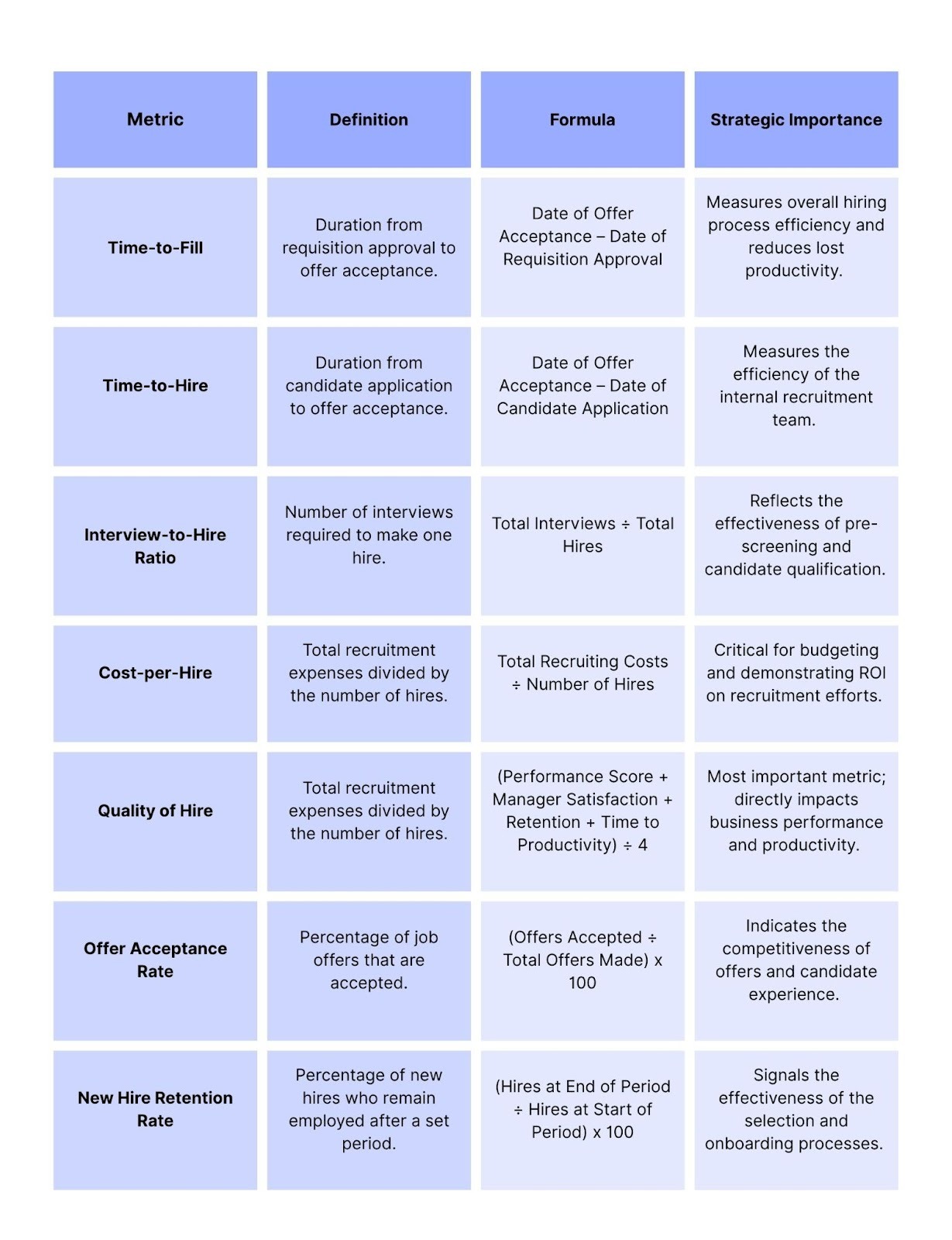
Essential recruiting metrics, formulas, and impact
Best practices for tracking and optimizing your metrics

Collecting data is only the first step; the real value lies in using it to inform strategy and drive continuous improvement. A modern, expert-level talent acquisition team relies on technology to automate data collection, integrate systems for a holistic view, and leverage advanced tools to enhance the quality of hire.

1. Automate data collection

Manual data collection, often performed through spreadsheets, is a significant drag on efficiency and is highly susceptible to human error. Automation is not a luxury but a necessity for accurate and timely reporting, especially in high-volume environments. AI and machine learning tools are transforming this process by automating tedious tasks like resume screening, interview scheduling, and candidate communication. This frees up recruiters to focus on high-value, human-centric activities such as candidate engagement and strategic planning. AI-driven platforms can process large volumes of applications, identify top matches based on skills, and handle routine inquiries with chatbots, ensuring candidates are kept informed and engaged without constant manual intervention from the recruitment team.

2. Leverage your ATS for deeper insights

An Applicant Tracking System (ATS) is the foundational technology for a metrics-driven recruitment team. It serves as a centralized data hub, automating the tracking of candidate movement through the funnel and providing real-time analytics. The true power of an ATS is realized through its ability to integrate seamlessly with other tools. By connecting to job boards, HRIS systems, and assessment platforms, an ATS creates a unified data pipeline. This eliminates data silos and provides a comprehensive view of the entire hiring process, from initial application to final onboarding. A robust ATS provides dashboards that allow for a quick, visual understanding of key metrics, enabling swift and data-informed decision-making.

3. Enhance quality of hire with skill-based assessments

The rise of skill-based hiring represents a significant evolution in recruitment, prioritizing a candidate's abilities over traditional credentials. This approach directly addresses the challenge of improving Quality of Hire by providing an objective, data-driven evaluation of a candidate's potential.

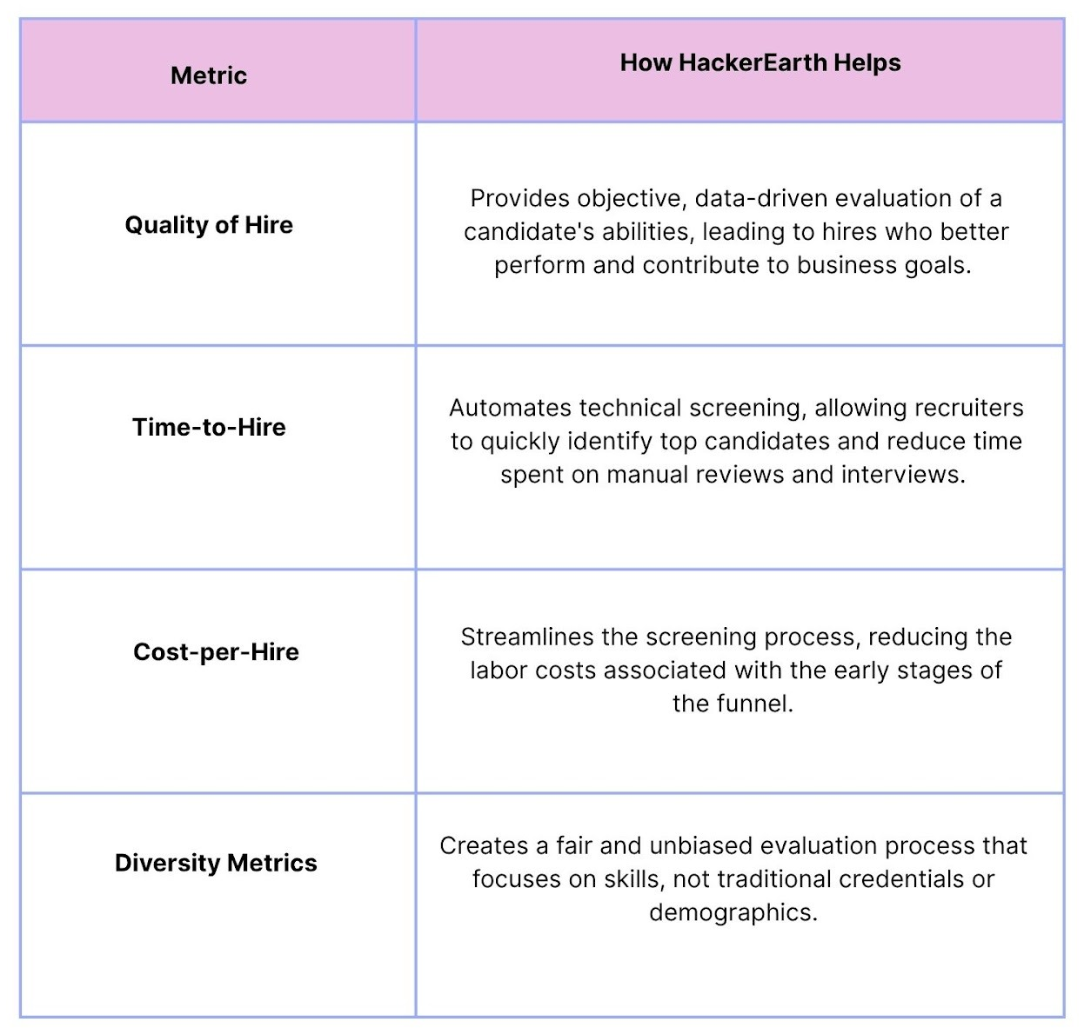
HackerEarth provides a suite of AI-powered skill-based assessments that directly impact key recruiting metrics. By moving beyond traditional resume screening, these platforms offer a clear, objective view of a candidate's technical abilities through coding tests, hackathons, and project-based questions. This approach helps companies hire top performers who might not have a conventional background, thereby enhancing Quality of Hire.26 The objective nature of these assessments also helps to reduce unconscious bias, creating a more equitable evaluation ground for every candidate.

Furthermore, HackerEarth's solution significantly impacts efficiency metrics. Automating the technical screening process allows recruiters to quickly filter out unqualified candidates, reducing the time spent on manual resume reviews and unnecessary interviews. This directly contributes to a shorter Time-to-Hire and a lower Cost-per-Hire by streamlining the labor-intensive early stages of the recruitment funnel.

How skill-based assessments impact your metrics
Strategic analysis: from data to decision-making

Collecting metrics is the baseline; the true hallmark of an expert-level talent acquisition function is the ability to use that data to drive a strategic, proactive approach. Metrics are not static numbers to be reported on but dynamic tools for continuous improvement.

A fundamental best practice is to engage in continuous analysis and benchmarking. This means regularly reviewing metrics to identify emerging trends and predict future needs. A talent acquisition team should compare its performance against both internal and external benchmarks. For example, while the average Time-to-Fill is 42 days, a company might find that its internal benchmark for a specific role is 60 days. This internal comparison immediately signals a need for process optimization in that area.

Moreover, a sophisticated team understands the importance of building a comprehensive recruitment metrics dashboard. This dashboard provides real-time visibility into key performance indicators, enabling leaders to identify bottlenecks, reallocate resources, and make swift, data-driven decisions. By tracking and analyzing metrics, a team can move beyond a reactive stance, anticipating talent needs and building a talent pipeline before a position even becomes vacant.

Conclusion

The modern talent acquisition function requires a strategic, data-driven approach to navigate a competitive and complex landscape. By systematically tracking and analyzing key recruiting metrics, organizations can gain the necessary clarity and control to build a more efficient, cost-effective, and successful hiring process.

This report has detailed the core pillars of recruiting metrics, from the foundational measures of Time-to-Fill and Cost-per-Hire to the critical outcome-based metric of Quality of Hire. It has also explored the specialized metrics required for high-volume and DEI hiring, demonstrating how a tailored approach to data can solve complex, modern challenges. The central message is one of interconnectedness: no single metric tells the whole story. Instead, true success is achieved by understanding the entire recruitment funnel, identifying the cause-and-effect relationships between its stages, and leveraging data to create a feedback loop of continuous improvement.

For any organization seeking to transform its recruitment function, the path forward is clear: embrace technology and data as a strategic imperative. HackerEarth offers an essential tool for this transformation. Simplifying the process of tracking and improving key recruiting metrics through automated, skill-based technical assessments saves valuable time and costs while enhancing the quality of hire. With the correct data and the right technology, any talent acquisition team can build a more efficient, effective, and equitable hiring process, ensuring it not only meets the business's current needs but also fuels its long-term growth.

How Recruiting Automation is changing the talent game

Hiring has always been a challenge, but in today’s competitive market, it feels tougher than ever. The best candidates often juggle multiple offers, and companies that move too slowly lose out. On top of that, recruiters spend hours on repetitive work — scanning resumes, coordinating interviews, chasing paperwork.

Why recruiting automation matters today

Hiring has always been a challenge, but in today’s competitive market, it feels tougher than ever. The best candidates often juggle multiple offers, and companies that move too slowly lose out. On top of that, recruiters spend hours on repetitive work — scanning resumes, coordinating interviews, chasing paperwork.

This is where recruiting automation steps in. What was once considered a niche HR tool has now become a business essential. Done right, automation doesn’t replace human recruiters. Instead, it makes them more effective by freeing them from manual tasks so they can focus on building relationships and making smarter hiring decisions.

What recruiting automation really means

At its core, recruiting automation uses technology to handle tasks that recruiters traditionally did by hand. Think of activities like sourcing candidates, screening resumes, scheduling interviews, sending reminders, or even creating onboarding documents.

This idea is part of a bigger trend called hyperautomation, where multiple technologies like AI, machine learning, and robotic process automation come together to streamline entire workflows. In recruiting, it means integrating tools so that everything from finding talent to managing employee records connects smoothly. The real power lies in building an end-to-end system where data flows seamlessly across HR and business platforms. This way, hiring isn’t just a standalone process but part of the organization’s larger growth strategy.

How AI recruiting automation delivers results

The business case for AI recruiting automation isn’t just about saving effort — it’s about measurable returns.

Cutting time-to-hire

Speed is critical. The average time-to-hire in 2025 is 36 days, which leaves plenty of room for improvement. Companies like United HR Solutions showed how AI platforms reduced time-to-hire by 45% and time-to-fill by 47%. In many cases, automation slashes hiring time by 30–50%.

When candidates receive faster responses and quick offers, companies avoid losing them to competitors. This also reduces the cost of vacant positions and boosts candidate satisfaction.

Reducing cost-per-hire

Hiring is expensive. Globally, the average cost per hire is around $4,683 when factoring in ads, recruiter hours, and agency fees. Manual scheduling alone can eat up five hours per candidate.

Automation cuts these costs significantly. Studies show administrative overhead can drop by up to 80%. Some reports estimate that AI recruiters can save as much as $16,000 per hire, thanks to faster shortlisting and reduced manual screening.

Another advantage: while manual costs rise with the number of hires, automated systems stay stable, making them ideal for fast-growing companies.

Improving candidate quality

Automation also raises the bar on candidate quality. AI tools focus on skills and experience, reducing unconscious bias and creating a fairer process. Resume-screening accuracy can reach 85–95%, far higher than manual reviews.

Case studies show a 40% boost in candidate quality scores and a 36% rise in sourcing quality after automation. Hiring better-fit employees lowers turnover, saving money and building stronger teams.

Enhancing candidate experience

Today’s candidates expect fast, transparent communication. Automation ensures they get it. Chatbots answer questions 24/7, automated emails provide updates, and scheduling tools let candidates book interviews at their convenience.

Companies using these tools report a 49% drop in candidate drop-off and a 44% increase in satisfaction. For example, the American Heart Association doubled its sourcing activity and boosted recruiter engagement by 50% after cutting administrative work with automation.

Smarter tools: the HackerEarth example

Automation isn’t one-size-fits-all. Some platforms are designed for specific industries. HackerEarth, for instance, specializes in tech hiring.

Best practices for recruiting automation

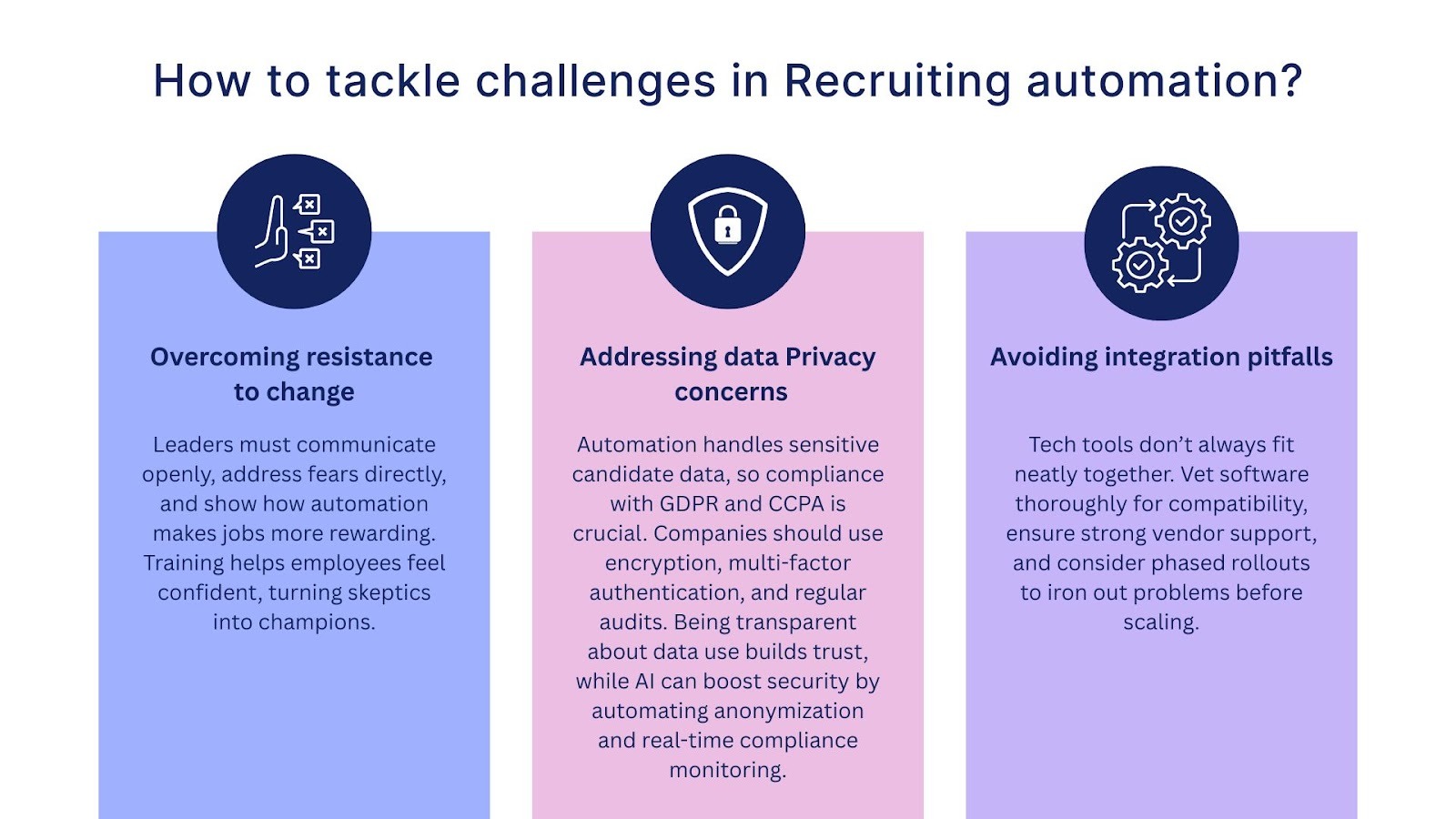
Adopting recruiting automation requires more than just buying software. Success depends on strategy and people.

Choosing the right platform

Pick tools that are scalable, easy to use, and able to integrate with your HR stack. 

Building seamless integrations

An Applicant Tracking System (ATS) often serves as the hub. The best setups integrate with CRMs, payroll, and learning platforms. Tools like Zapier help connect different apps into a unified workflow.

Managing change and training teams

Resistance is common. Recruiters may worry about losing relevance or struggling with new tools. The solution is open communication and involvement. Bringing teams into the process early can increase adoption success rates. Hands-on training and continuous learning opportunities ease fears and ensure recruiters can fully use the new system.

The future of recruiting automation

The new Role of recruiters

Contrary to fears, AI will not replace recruiters. Instead, it will reshape their role. The best outcomes will come from a human-AI hybrid model. Recruiters will be able to focus more on relationship-building, candidate engagement, and employer branding, while automation provides efficiency and insights. Those who embrace this partnership will be the most successful in the talent market of the future.

Conclusion: The smarter way forward

Recruiting automation is no longer optional. It speeds up hiring, cuts costs, improves candidate quality, and enhances the overall experience. It’s about creating a partnership where automation handles the repetitive work, and recruiters focus on what they do best: building connections and making smart, strategic choices.

As competition for talent grows, the companies that thrive will be the ones that adopt automation thoughtfully and use it to empower their people. The message is clear: the future of hiring is human and automated — working together to create stronger, smarter organizations.

FAQs on recruiting automation

How does automation improve candidate experience?

By giving faster responses, consistent updates, and convenient scheduling. Chatbots answer questions anytime, and candidates can book interviews without delays. This respect for their time builds trust and strengthens employer branding.

Can automation replace human recruiters?

No. Automation is great for repetitive, high-volume tasks like screening or scheduling. But recruiters bring empathy, judgment, and cultural insight that machines can’t replicate. The future is about working together, not replacement.

Future Trends in Campus Recruiting for 2025

The next tech leaders are already on campus. But are you prepared to bring them to your offices? Campus recruiting lets you tap into fresh, creative talent straight from the colleges. To build a diverse team with high potential, you need to stay ahead of the game and understand the future trends in campus recruitment for 2025.

The hiring landscape in 2025 is deeply influenced by the wave of layoffs that swept across the tech industry in 2023 and 2024. With AI becoming more advanced, many traditional jobs are getting easier and cheaper to do. Job descriptions are changing to reflect this shift, with roles increasingly focused on AI-related skills. Technology is evolving rapidly, and more companies are turning to AI in recruitment. Meanwhile, candidate expectations are also shifting with the ripple effects of the recent hiring freeze and layoffs.

Market dynamics

Market dynamics in campus recruitment
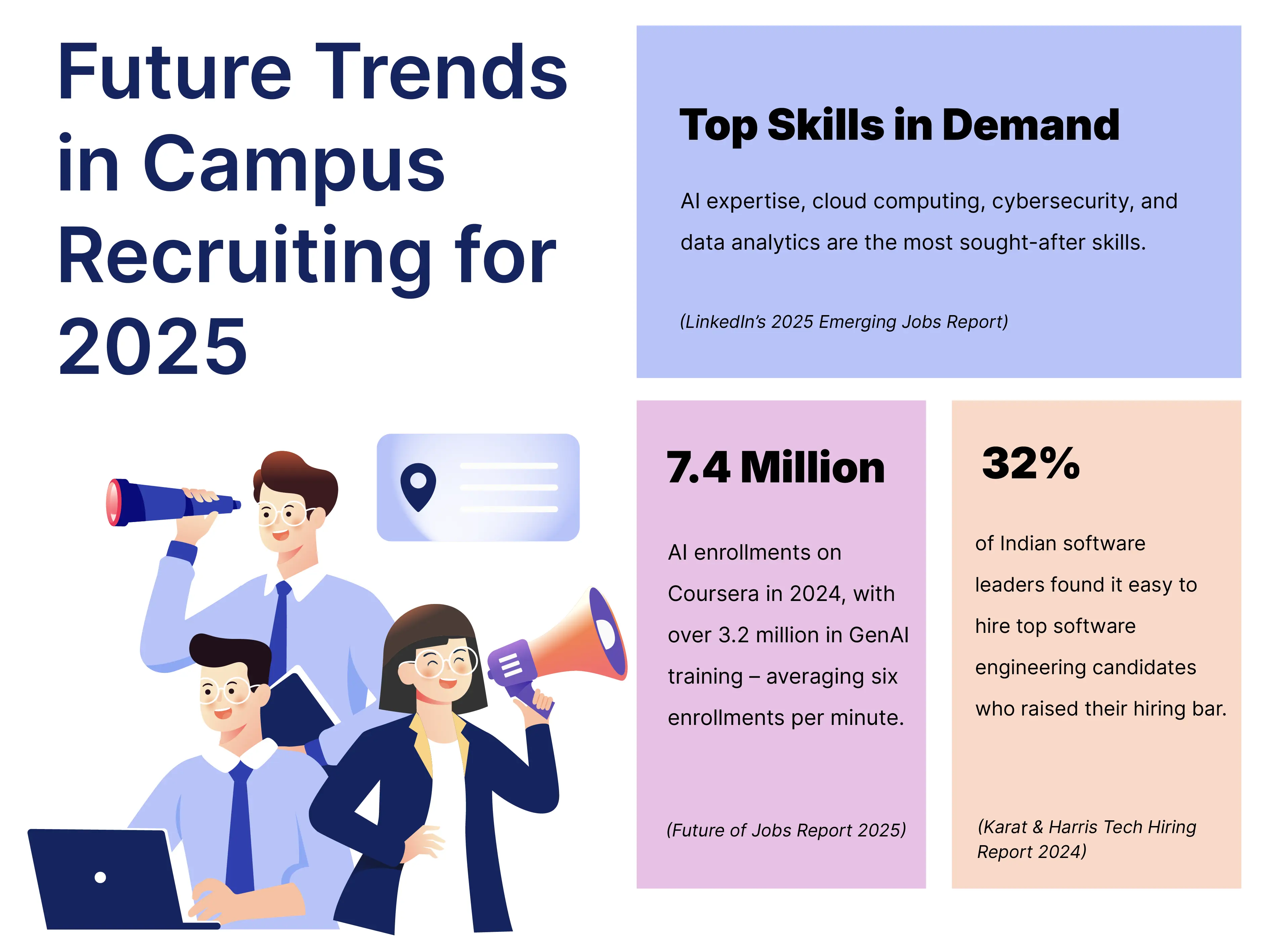
  • According to Karat and Harris Tech’s hiring report 2024, only a third (32%) of Indian software leaders found it easy to hire top software engineering candidates who raised their hiring bar.
  • Coursera data for the Future of Jobs Report 2025 reveals nearly 7.4 million AI enrollments on the platform in 2024, and over 3.2 million enrollments were in GenAI training–an average of six enrollments per minute.
  • LinkedIn’s 2025 Emerging Jobs Report states that the most in-demand skills include AI expertise, cloud computing, cybersecurity, and data analytics.

Key trends shaping campus recruitment in 2025

Key trend What & Why Facts HackerEarth’s Role
Virtual campus hiring events Virtual hiring events are increasingly replacing On-campus career fairs.

  • These events enable recruiters to reach students globally without logistical challenges.
  • Virtual hiring events simulate real-world challenges, giving employers insights into how candidates think and collaborate.
According to Employ Job Seeker Nation Report 2024, the adoption of AI in recruitment is accelerating, with 63% of organizations now using some form of AI to support their hiring processes. HackerEarth’s Assessment provides an excellent platform for engaging with students online while assessing their technical capabilities.
Personalized candidate engagement Recruiters are using AI-driven platforms to deliver tailored messaging and content.

  • For example, companies might use AI to send targeted recommendations to students based on their skills, interests, and career aspirations instead of sending a mass email about job openings.
According to a 2024 survey by Handshake, 72% of students are more likely to apply for a job if they’ve had a personalized conversation with a recruiter. HackerEarth will drive relevant participants who have knowledge about relevant technologies and have the required skills.
Skill-based hiring In 2025, employers are prioritizing skills over credentials.

  • Instead of hiring only “Computer Science majors,” companies are also looking for students who can write optimized and debug code efficiently.
The State of Skills-Based Hiring report suggests that 81% of employers use skills-based hiring (up from 73% in 2023 and 56% in 2022). Adoption rates are highest in Australia and Latin America and lowest in France. With platforms like HackerEarth Assessments, companies can objectively evaluate candidates based on their coding abilities, problem-solving skills, and domain expertise rather than relying solely on GPAs or resumes.
Sustainable and purpose-driven hiring To attract candidates, companies are focusing on purpose-driven initiatives in their campus recruitment, such as offering internships in sustainability projects and hosting hackathons that support sustainable solutions. A 2024 Deloitte study found that 60% of students consider a company’s sustainability efforts when deciding where to apply. Shell.ai Hackathon for sustainable and affordable energy was conducted on HackerEarth. It focused on a complex coding problem to optimize the placement of wind turbines.
Gamification of the recruitment process Gamified assessments are becoming popular as they make the hiring process more fun and help engage students.

  • Companies are designing interactive coding challenges or game-based problem-solving exercises to assess logical reasoning, technical skills, and teamwork.
A survey by Talent Board found that 49% of candidates think the application process is too complicated. Gamification makes the process simpler and more enjoyable, creating a better experience for candidates. HackerEarth’s gamified hackathons can help recruiters identify top performers while creating a fun and memorable experience for candidates.
Diversity hiring Diversity hiring continues to be a top priority, but in 2025, companies are focusing on more nuanced metrics, such as socio-economic diversity and geographic representation. Corporations identified as more diverse and inclusive are 35% more likely to outperform their competitors. Diverse management teams lead to 19% higher revenue. On HackerEarth, recruiters can run anonymized assessments. Recruiters can remove biases related to college name, gender, or ethnicity, ensuring a fair evaluation process.

How can HackerEarth help in Campus Recruitment?

HackerEarth has all the tools you need to hire the next leaders in technology. Navigate the evolving campus recruitment landscape in 2025 with ease—here’s how:

  • Skill-based assessments: With over 15,000 coding challenges in our library, you can easily assess candidates’ real-world skills that matter to your business.
  • Virtual events: Host hackathons and coding competitions to engage with talented students from all over the world and discover top talent.
  • Diversity hiring tools: Use anonymized assessments to ensure fair evaluations and help build a more inclusive team.
  • Upskilling programs: Hire the best talent and keep them ahead of the curve with continuous learning opportunities.

People also read…


How Candidates Use Technology to Cheat in Online Technical Assessments

The Top 7 Leadership Assessment Tests

6 Ways Candidates Try To Outsmart A Remote Proctored Assessment

Users also ask about…

Why campus recruitment is important​?

What is virtual campus recruitment?

Progressive Pre-Employment Assessment - A Complete Guide

The Progressive Pre-Employment Assessment is a crucial step in the hiring process, as it evaluates candidates through various dimensions including cognitive abilities, personality traits, and role-specific skills.

While employers and recruiters have this in the palm of their hand, candidates who master it will successfully navigate the assessment and have a higher chance of landing that dream job. But what does it entail in the first place?

Candidates can expect to undergo tests that assess verbal, numerical, and work style capabilities, as well as a personality assessment. Hence, understanding the structure and purpose of the Progressive Pre-Employment Assessment can give candidates a competitive edge. But before one tackles online tests, we must first dissect what this assessment is and what it consists of.

The evolution of pre-employment assessments

Pre-employment assessments have undergone significant changes over the decades, from rudimentary tests to sophisticated, modern evaluations. Let’s put the two side by side.

  • Traditional methods:

    Initially, pre-employment assessments focused on basic skills and educational qualifications. These paper-based tests primarily assessed cognitive and verbal abilities, without any conclusions about the candidates’ output in very specific situations.

  • Modern techniques:

    Today, online assessments are prevalent, evaluating a variety of dimensions, including cognitive skills, personality traits, and behavioral evaluations. These tools offer a more comprehensive view of a candidate's job performance potential, while, at the same time, saving precious time for both parties involved.

In today’s competitive job market, progressive pre-employment assessments play a crucial as they not only measure technical skills and knowledge but also provide insights into a candidate's ethical bias, cultural fit, and communication skills.

Likewise, assessment tests have evolved to include situational judgment tests and culture fit analyses, which are pivotal in assessing the suitability of a candidate for specific roles. And this isn’t just in terms of skillsets—they help in identifying candidates who align well with the company's values and working environment.

This is mainly for the tests’ ability to accurately gauge a candidate's interpersonal skills and emotional intelligence, which are essential for roles that require teamwork and client interactions.

What are progressive pre-employment assessments?

Progressive pre-employment assessments are structured evaluations designed to judge a candidate’s abilities and fit for a role at Progressive Insurance. Unlike traditional aptitude tests, these assessments encompass various elements such as cognitive abilities, situational judgments, and personality traits.

These tests typically include verbal and numerical reasoning sections, as well as work style assessments that gauge behavioral tendencies. Through this merger of multiple dimensions, Progressive seeks to understand not just the skills and knowledge of the candidate, but also their ethical perspectives and communication skills.

Components of a progressive assessment strategy

What sets progressive assessments apart? Well, as most employers just focus on the basic credentials and competencies, the comprehensive assessment strategy at Progressive includes several key components:

  1. Cognitive evaluations: These tests measure candidates' logical reasoning and problem-solving capabilities through verbal, numerical, and abstract reasoning questions.
  2. Personality assessments: These tests evaluate traits and tendencies to understand how a candidate might behave in various workplace scenarios. They aim to provide insight into their ethical bias and interpersonal skills.
  3. Behavioral evaluations: These sections analyze how candidates might act in specific situations, ensuring a good cultural fit and alignment with Progressive's values.
  4. Role-specific skills tests: These assessments focus on the specialized skills required for the position, ensuring the candidate has the necessary technical knowledge and expertise.

Implementing progressive assessments

Successful implementation of Progressive Assessments in the hiring process requires designing an effective assessment process and following best practices for administration. This ensures accuracy, better data security, and reliable decision-making. In particular, the implementation hinges on the feasibility of the original design.

Step 1 --- Designing the assessment process

Designing an effective Progressive Assessment involves understanding the specific needs of the role and the company's approach to hiring. Each test component — verbal, numerical, and work style — must align with the desired skills and personality traits for the role.

HR teams need to define clear objectives for each assessment section. This includes establishing what each part aims to evaluate, like the problem-solving or personality assessments. Incorporating legal and policy guidelines ensures the assessments are fair and non-discriminatory, which is crucial for avoiding legal issues.

Likewise, everaging online assessment tests provides flexibility and efficiency. These tests allow candidates to complete them remotely, easing logistics and scheduling concerns. Ensuring security is also essential, and implementing testing and other recruitment tools can help enhance data security and accuracy.

Step 2 --- Best practices for assessment administration

Administering assessments effectively revolves around consistency and fairness. Establish structured guidelines for the administration process to ensure each candidate undergoes the same conditions, promoting reliability. This includes standardizing the timing, environment, and instructions for all assessments.

Training HR representatives is vital. They should be well-versed in handling the assessments, from initial candidate interactions to evaluating the results. Regular training updates ensure the team remains knowledgeable about best practices and any new tools used in the assessment process.

Administering assessments also involves maintaining better data security and accuracy. This is achieved by utilizing secure online platforms and ensuring that only authorized personnel have access to sensitive data. Leveraging top API penetration testing tools is one approach to securing candidate data and preserving the integrity of the assessment process.

Implementing consistent feedback mechanisms for candidates can also improve the process. Providing insights on their performance helps candidates understand their strengths and areas for growth, which reflects positively on the company’s commitment to candidate experience.

Benefits of progressive assessments

Progressive assessments offer significant advantages in the hiring process, such as improving the accuracy of hiring decisions and enhancing the overall candidate experience. These benefits help companies find better-fitting candidates and reduce turnover rates.

1. Improved hiring accuracy

Progressive pre-employment assessments allow companies to evaluate candidates more comprehensively. By assessing personality traits, cognitive abilities, and ethical biases, employers can identify individuals who align with the company’s values and have the necessary skills for the job.

For example, personality assessments can pinpoint traits like empathy, communication, and problem-solving abilities. This helps employers select candidates who are not only qualified but also fit well within the team. Evaluating these qualities ensures that new hires can thrive in customer service roles where empathy and effective communication are crucial.

Moreover, using tools like the DDI Adaptive Reasoning Test helps to simulate real job tasks. This gives employers deeper insights into a candidate's capability to handle job-specific challenges. As a result, the company is more likely to experience lower turnover rates due to better candidate-job fit.

2. Enhanced candidate experience

A well-structured assessment process can significantly enhance the candidate experience. Clear instructions,fair testing procedures, and timely feedback create a positive impression of the company. Candidates appreciate transparency and feel valued when the process is designed with their experience in mind.

Implementing assessments that reflect actual job roles and responsibilities gives candidates a realistic preview of the job. This reduces later dissatisfaction and turnover. Additionally, personality assessments that highlight traits such as confidence and empathy provide a more engaging candidate experience.

Companies can also strengthen their employer brand by showcasing their commitment to a fair and comprehensive hiring process. Providing resources like practice tests helps candidates feel better prepared and less anxious about the assessment, leading to a more positive perception of the company.

Common pitfalls in progressive assessments

Candidates often struggle with the cognitive abilities section, which requires strong analytical skills and problem-solving capabilities. The situational judgment tests can also be tricky as they assess empathy, decision-making, and customer service scenarios. Personality assessments can pose challenges as well, especially for those unsure how to present their personality traits aligned with the job role.

A significant issue is also misinterpretation of the test's format and expectations. Many find it daunting to navigate through various sections, such as verbal, numerical, and work style assessments. Lastly, some candidates might overlook the legal nuances of personality assessments or document redaction protocols, leading to compliance issues.

Strategies to overcome challenges

To tackle cognitive abilities assessments, candidates should engage in consistent practice with sample questions and mock tests. This helps enhance their analytical and problem-solving skills. For situational judgment tests, it is essential to practice empathy and customer service scenarios to develop a better understanding of role-specific challenges.

In personality assessments, being honest while demonstrating relevant personality traits like being a team player is crucial. Seeking guidance from study materials such as Job Test Prep can provide a realistic testing environment.

Understanding legal considerations, such as those around document redaction, is important for compliance. Utilizing a document redaction SDK can ensure adherence to required policies. Familiarity with each section's format will aid in navigating the assessments confidently and effectively.

Trends and innovations in employee assessments

There is a growing emphasis on AI-powered assessments —these tools analyze vast amounts of data to predict a candidate's job performance, ensuring a more objective and efficient selection process.


Personality assessments are evolving to include metrics like empathy and communication skills, which are crucial for roles in customer service and other people-centric positions.

Additionally, gamified assessments, which make the evaluation process engaging, are gaining popularity. They not only assess problem-solving skills but also gauge how candidates perform under pressure.

Organizations can prepare for the future by integrating cutting-edge technologies into their hiring processes. Investing in training for evaluators to accurately interpret new assessment metrics is crucial. This involves

understanding how to measure soft skills such as empathy and effective communication.

Moreover, companies should stay updated on legal requirements to maintain compliance and ensure fair assessment practices.

Encouraging candidates to focus on developing their personality traits, such as being team players and showing confidence, can also better prepare them for progressive assessments that look beyond technical skills.

The strategic value of progressive assessments

Progressive pre-employment assessments rigorously evaluate candidates on multiple fronts, including cognitive abilities, situational judgment, personality fit, and role-specific skills. This multifaceted approach not only helps in identifying the best match for specific roles but also reduces the risk of bad hires.

By investing in these assessments, companies can significantly enhance their recruitment processes. Consistent use of these tools leads to more informed decision-making, reducing turnover rates and ensuring employee retention.


Appropriate preparation and implementation of these assessments can streamline the hiring pipeline, saving time and resources. Furthermore, this approach bolsters team performance and aligns employee roles with their strengths, promoting a culture of efficiency and productivity. While Progressive is far from the only company using this approach, they’ve set a standard in terms of looking at candidates holistically and making sure they’re truly ready for the job.

Frequently Asked Questions

This section covers common inquiries related to the Progressive Pre-Employment Assessments, including differences from psychometric tests, benefits for small businesses, legal considerations, and the role of technology.

How do progressive assessments differ from psychometric testing?

Progressive assessments typically examine a candidate's ethical bias and personality traits. In contrast, psychometric tests focus on cognitive abilities and personality dimensions. The Progressive Pre-Employment Assessment includes verbal, numerical, and work style components, offering a broader evaluation spectrum.

Can small businesses benefit from implementing progressive assessment strategies?

Small businesses can gain significant advantages from adopting progressive assessment strategies. These assessments help identify candidates that align closely with the company’s values and culture, reducing turnover rates. Additionally, they provide insights into a candidate's ethical stance and work style, which are crucial for cohesive team dynamics.

What are the legal considerations when using pre-employment assessments?

Legal considerations include ensuring compliance with equal employment opportunity laws and avoiding discrimination based on race, gender, or disability. It is essential to validate the assessment tools and ensure they are scientifically proven to be fair. Companies must also maintain transparency about the purpose and usage of the assessments.

How can technology enhance the effectiveness of progressive assessments?

Technology can streamline the assessment process by allowing candidates to complete the tests remotely. Advanced analytics help in the accurate interpretation of results, ensuring a better match between the candidate and the job role. Many platforms offer practice tests that mirror the actual assessment, aiding in preparation and reducing test anxiety.