Why recruiting automation matters today
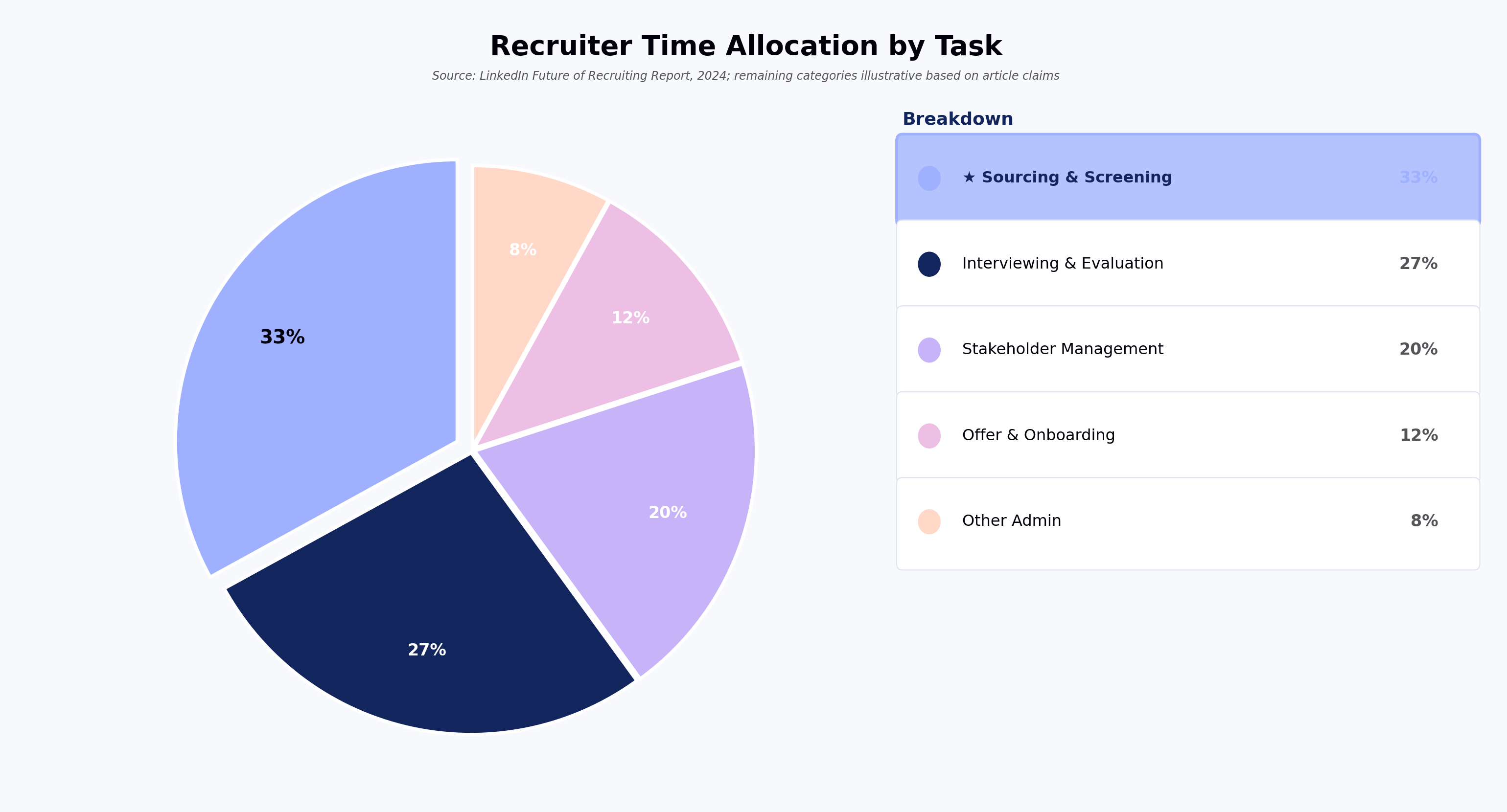
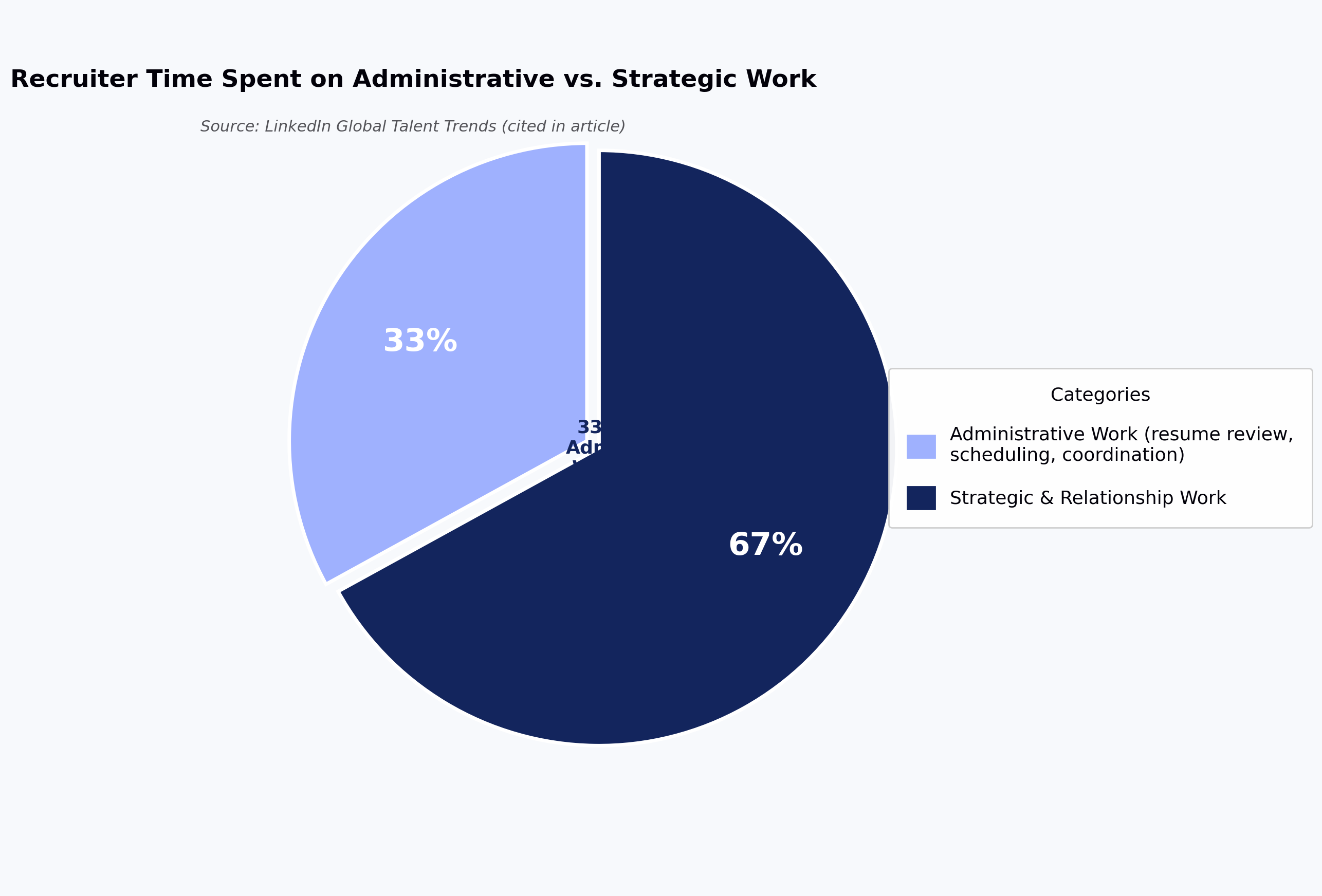
Recruiting automation — the use of software and AI to handle repetitive hiring tasks like sourcing, screening, and scheduling — is reshaping how talent teams operate. Recruiters typically spend nearly a third of their week on administrative work like resume review and interview coordination, according to LinkedIn's Global Talent Trends reporting, while the strongest candidates often sit on multiple offers within days of entering the market.
This is where recruiting automation steps in. What was once a niche HR tool has become a core part of the hiring stack. When implemented well, automation doesn't replace human recruiters. Instead, it removes manual work so recruiters can focus on relationship-building and hiring decisions — though, as we'll cover later, it also introduces trade-offs around bias, privacy, and hiring contexts where automation fits poorly.
What recruiting automation really means
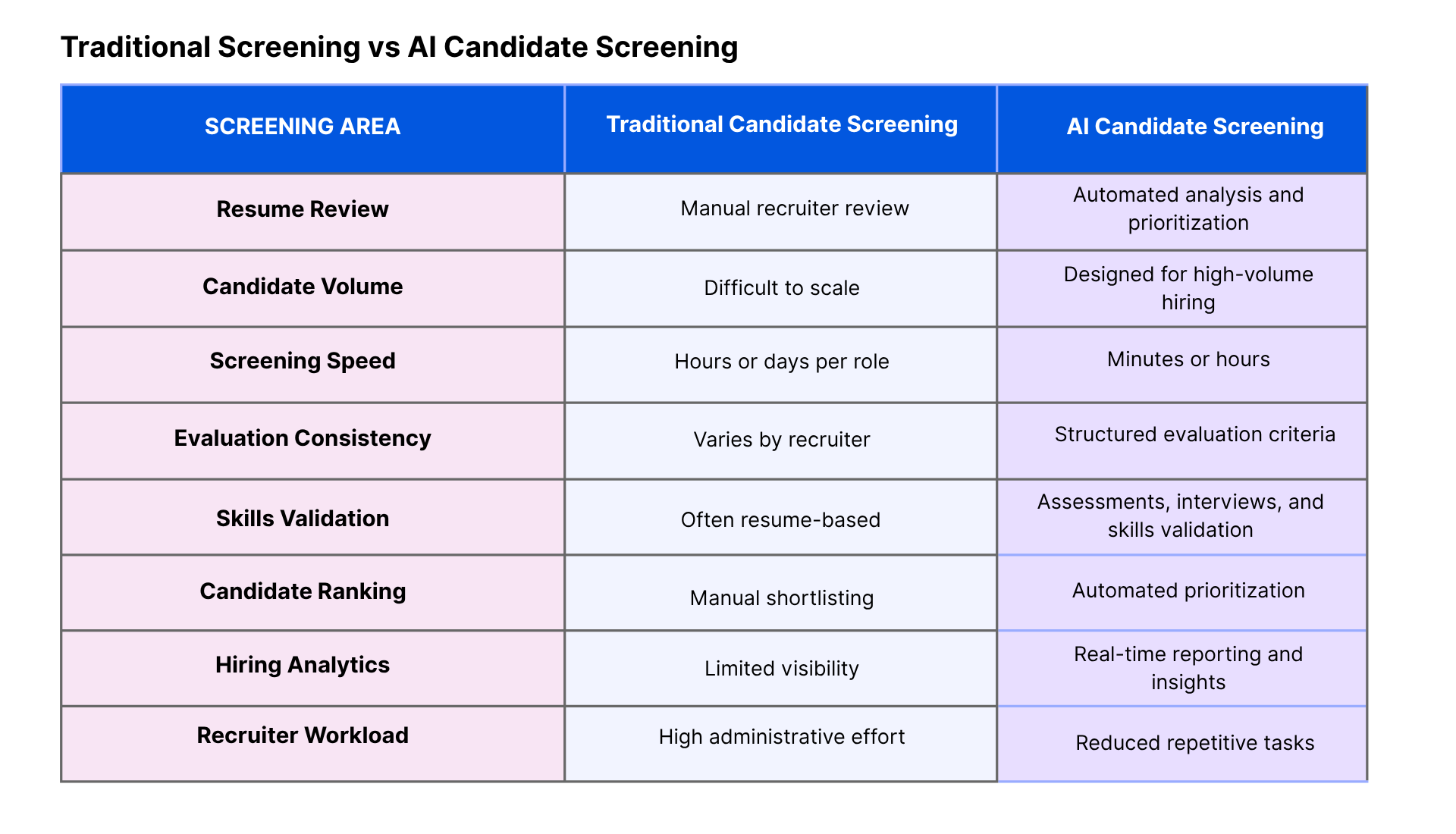
At its core, recruiting automation uses technology to handle tasks that recruiters traditionally did by hand: sourcing candidates, screening resumes, scheduling interviews, sending reminders, and generating onboarding documents.
This sits inside a broader shift called hyperautomation, where AI, machine learning, and robotic process automation combine to simplify hiring workflows end-to-end. In recruiting, that means candidate data moves directly from sourcing tools into the ATS, into interview scheduling, and into onboarding without manual re-entry. The value comes from an end-to-end system where hiring connects into workforce planning, headcount forecasting, and skills data — not a bolt-on tool sitting beside your ATS.

How AI recruiting automation delivers measurable results
The business case for AI recruiting automation is measurable, but the strength of the evidence varies claim by claim. Here's what the available data suggests.
Cutting time-to-hire
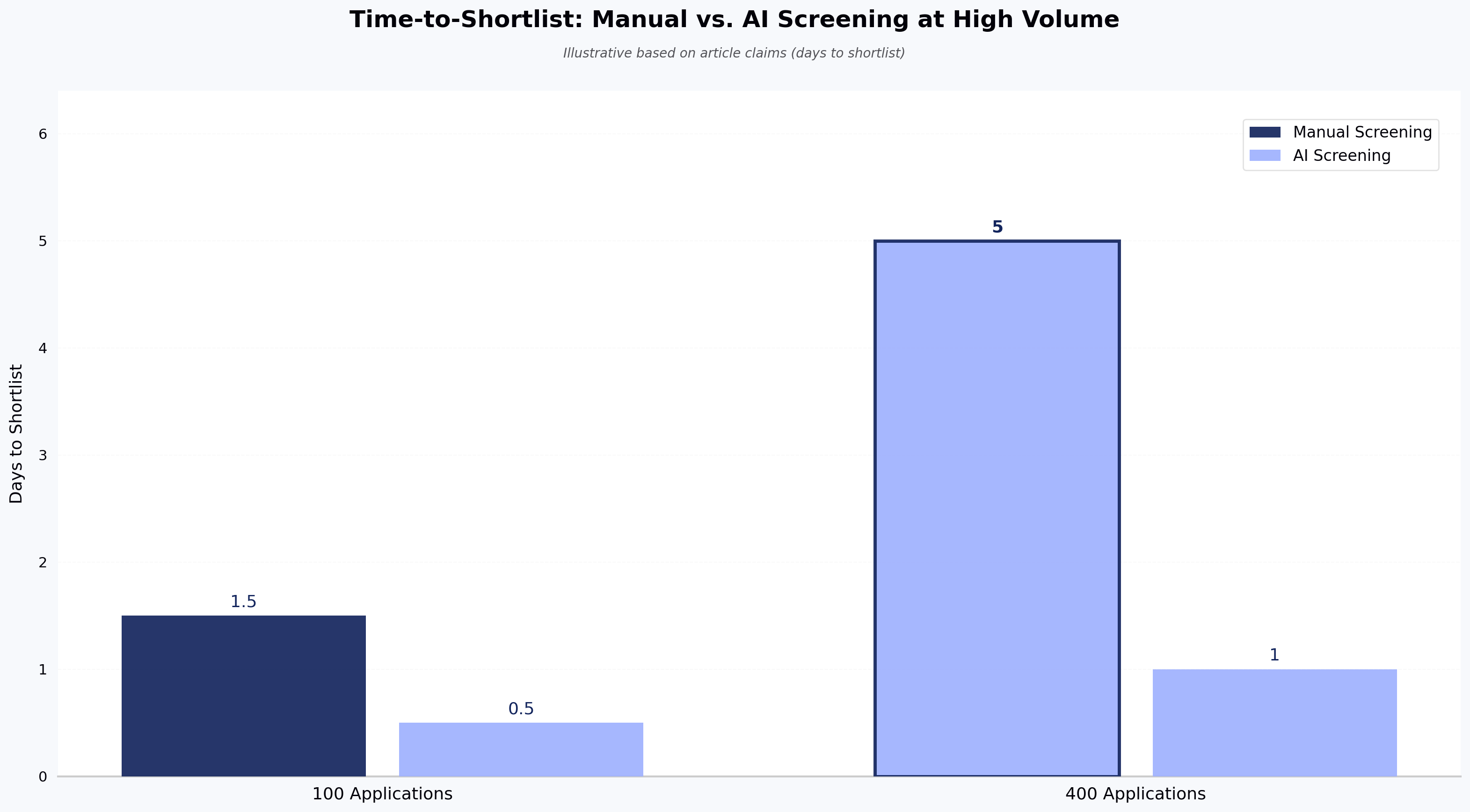
Speed matters. Recent benchmark data from SHRM and Josh Bersin research places average time-to-hire in the range of 36–44 days depending on role and industry. Some studies suggest AI-enabled recruiting can reduce hiring time by 30–50%, though outcomes vary widely by role complexity and hiring volume.
Faster response times reduce candidate drop-off to competitors and shorten the cost window of vacant seats.
Reducing cost-per-hire
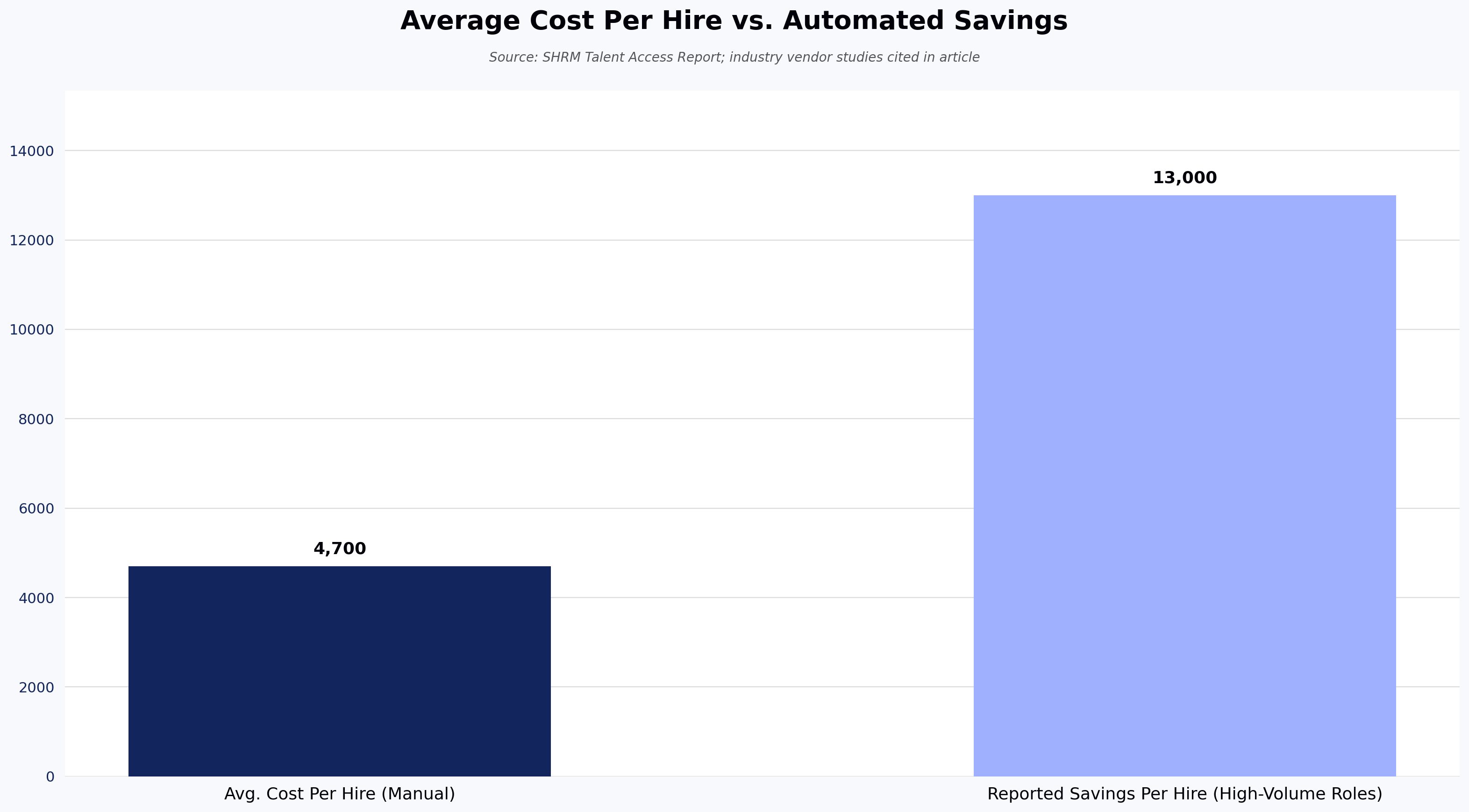
Hiring is expensive. According to SHRM's Talent Access Report, the average cost per hire is approximately $4,700 when factoring in ads, recruiter hours, and agency fees. Manual interview scheduling alone can consume several hours per candidate.
Automation can lower these costs. Industry vendor studies (which should be read as directional, not independent) report administrative overhead reductions of up to 80% and per-hire savings in the range of $10,000–$16,000 for high-volume roles. Independent replication of these figures is limited, so treat the upper bounds as best-case scenarios.
Unlike manual processes, automated systems don't scale linearly in cost with hiring volume — an important factor for teams ramping headcount quickly.
Improving candidate quality
Automation can raise candidate quality when configured correctly. AI tools that score on skills and validated assessments — rather than proxies like school name or keyword density — can reduce some forms of unconscious bias. Vendor-reported resume-screening accuracy figures of 85–95% are common but rarely define what "accuracy" measures (agreement with human reviewers? fit-to-hire correlation? interview-pass rate?). Treat these numbers cautiously until the underlying methodology is disclosed.
Case studies from AI recruiting vendors report candidate quality score improvements around 40% and sourcing quality lifts near 36%, though these are typically self-reported by platform providers rather than independently audited.
Enhancing candidate experience
Candidates expect fast, transparent communication. Automation supports that: chatbots handle common questions, automated updates keep candidates informed, and self-scheduling tools remove back-and-forth.
Vendor case studies report drop-off reductions near 49% and candidate satisfaction increases around 44% after automating communication workflows. According to a published Phenom case study, the American Heart Association reportedly doubled sourcing activity and raised recruiter engagement by about 50% after automating administrative work — a useful example, though the specific metrics come from the vendor rather than an independent audit. Similarly, United HR Solutions has been cited in AI recruiting case studies with time-to-hire reductions around 45% and time-to-fill improvements near 47%.
Where recruiting automation falls short
Automation is not universally beneficial, and vendor case studies rarely surface the trade-offs. A few worth naming:
- Algorithmic bias. AI screening models trained on historical hiring data can replicate the same patterns that produced non-diverse teams. The EEOC has issued guidance on employer liability when automated tools produce disparate impact, and the New York City AEDT law (Local Law 144) already requires bias audits for automated employment decision tools.
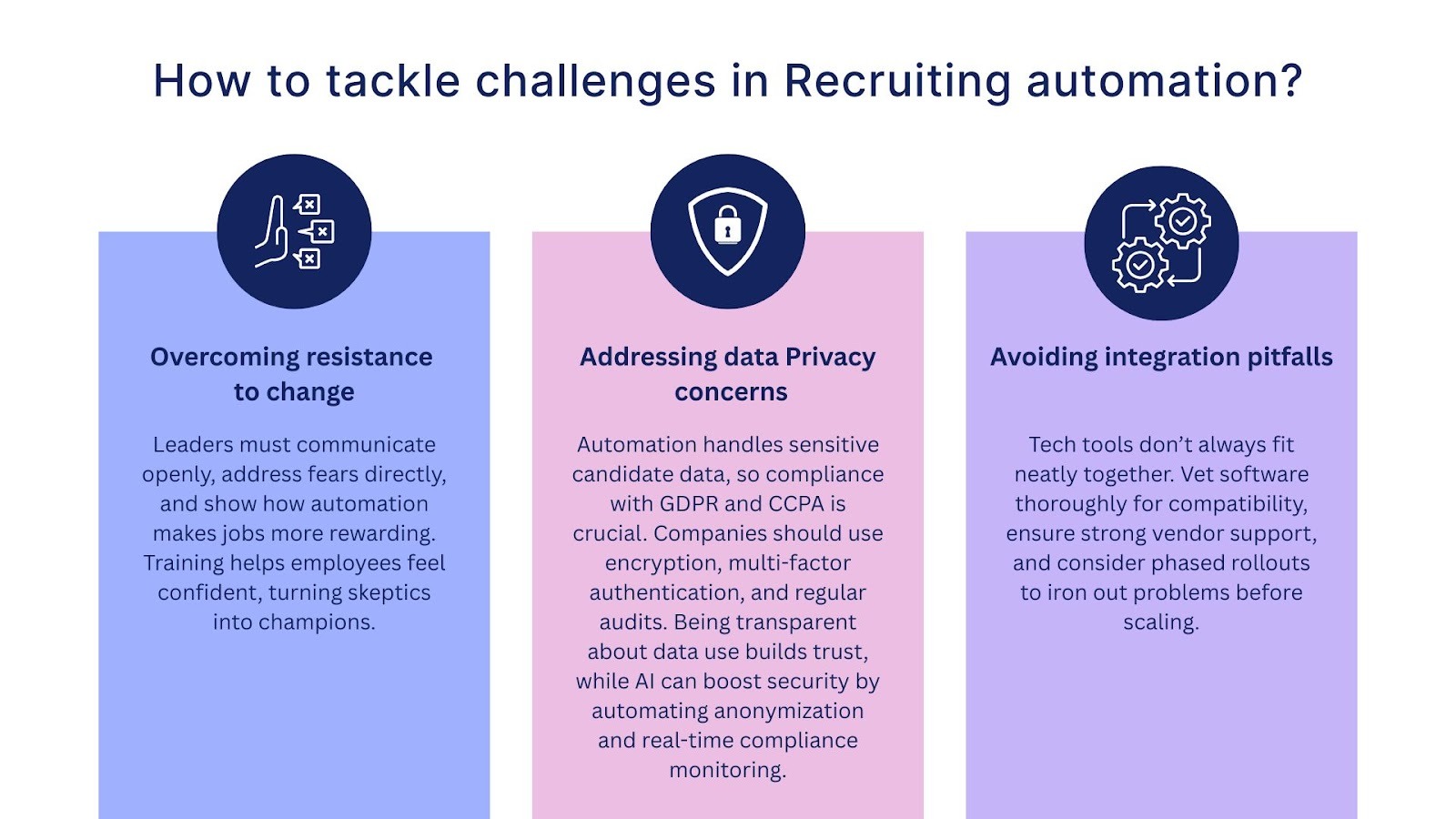
- Data privacy exposure. Automating candidate workflows means collecting, storing, and processing more personal data — often across borders. GDPR, CCPA, and emerging state laws create real compliance obligations, especially around consent, data retention, and the right to human review of automated decisions.
- Poor fit for senior and specialist hiring. Automation delivers the most value in high-volume, well-defined roles. For executive search, niche technical leadership, or highly creative roles, automated screening tends to filter out non-obvious signal. A human-led search is often still the right approach.
- Implementation cost and change management. Enterprise-grade automation platforms carry setup, integration, and licensing costs that can run into six figures annually. If adoption is weak or workflows aren't redesigned around the tool, ROI evaporates.
- Over-reliance on scoring. Treating an AI-generated candidate score as a decision rather than a signal is a common failure mode. Recruiters who defer to the model without reviewing edge cases will make systematically worse hires than teams that use scores as one input among several.
The honest version of the automation story is that it improves throughput and reduces cost in the middle of the funnel, but it degrades quality at the top (bias entering the pipeline) and the bottom (final selection) when it isn't supervised.
What HackerEarth adds to recruiting automation
For technical hiring specifically, resume screening and chatbot workflows are only part of the problem. The harder question is whether a candidate can actually do the job.
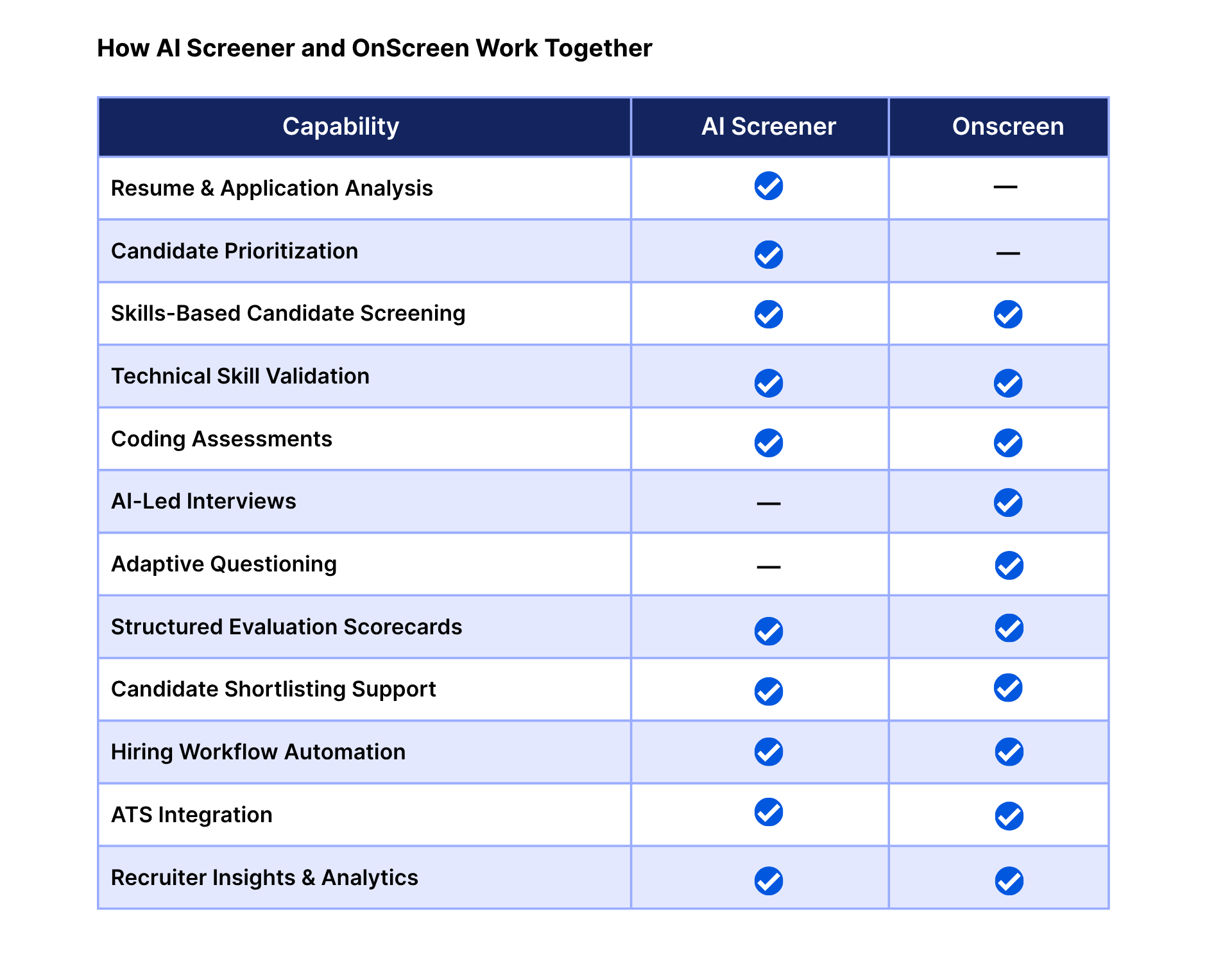
HackerEarth Assessments generate structured skill data by testing candidates on real coding, system design, and role-relevant problems rather than proxies. Signals include correctness, code quality, time-to-solve, and problem-solving approach, which feed into a candidate scorecard that hiring managers can compare across a pipeline. For talent leaders standardizing technical evaluation, this replaces subjective phone-screen judgment with a consistent skill signal — and the assessment data connects into your ATS so shortlisting doesn't require a separate workflow.
HackerEarth also supports FaceCode, a live interview environment with built-in coding, so the same skill signal carries from screening into technical interviews. For engineering managers and heads of talent acquisition, that means one skills record per candidate rather than fragmented evaluations across tools.
Best practices for recruiting automation
Adopting recruiting automation requires more than buying software. Success depends on how you scope, integrate, and govern it.
Choosing the right platform
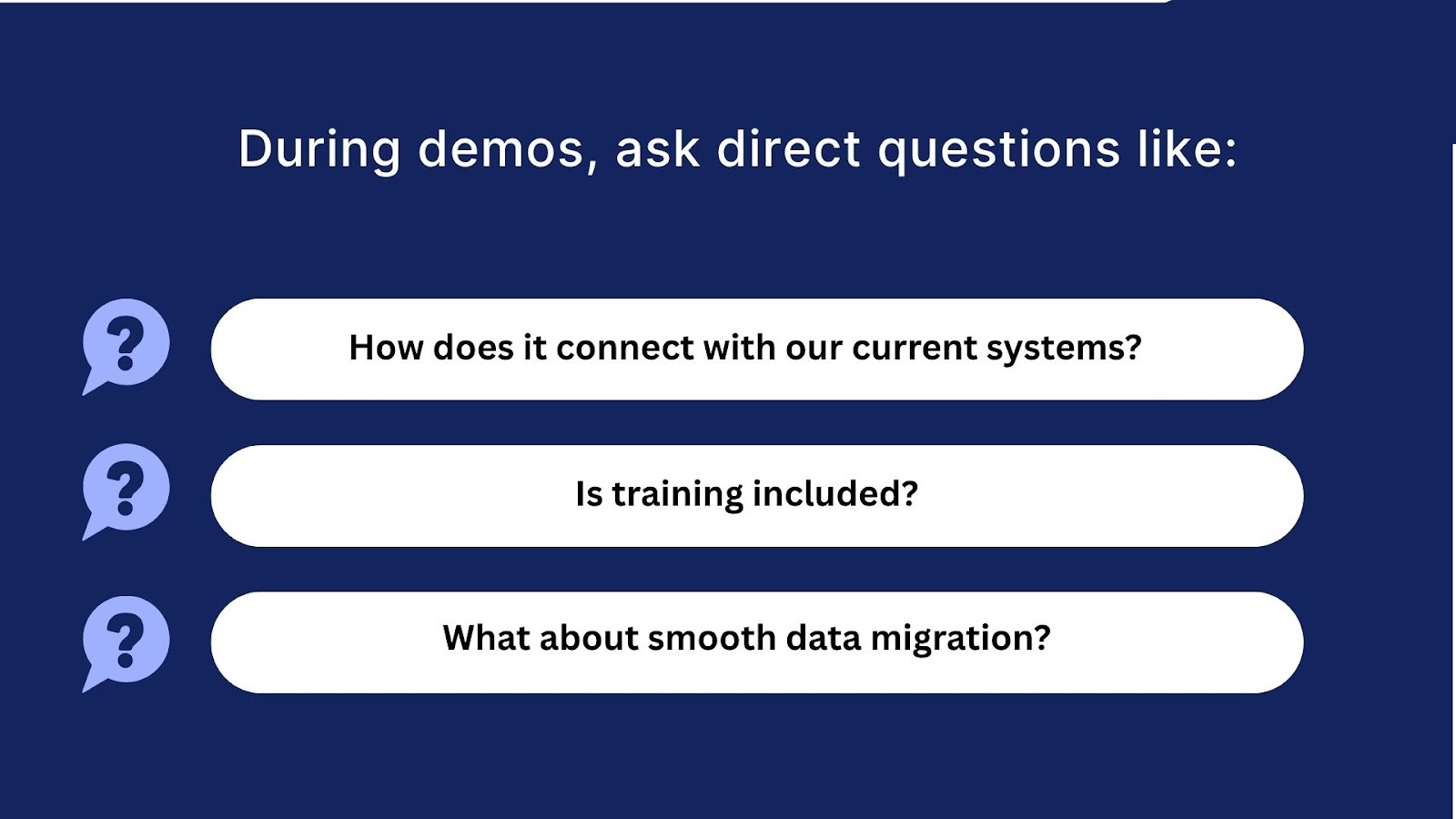
Instead of asking whether a tool is "scalable," ask specific questions:
- Does it support the hiring volume you expect over the next 24 months (e.g., 500 vs. 5,000 hires/year)?
- Does it integrate natively with your ATS, HRIS, and calendar systems, or does it require middleware?
- Does the vendor publish bias audit results, and can you review them before purchase?
- Can candidate data be exported and deleted on request to meet GDPR/CCPA obligations?
Building integrations that actually work
The ATS typically anchors the stack. Strong setups connect it to CRM, payroll, LMS, and skills assessment platforms. Middleware like Zapier or Workato can bridge gaps, but native API integrations are more reliable for high-volume workflows.
Managing change and training teams
Recruiter resistance is common — often rooted in concern about relevance or unfamiliar tooling. Involving recruiters early in tool selection and running structured pilots increases adoption. Assign an internal owner for each tool, define what "good" looks like (e.g., 90% of screens routed through the AI within 60 days), and revisit those metrics quarterly.
The future of recruiting automation and the changing recruiter role
The new role of recruiters
AI is unlikely to replace recruiters, but it will consolidate the role. Recruiters who add value through pipeline sourcing, phone screens, and scheduling will see those responsibilities absorbed by tooling. The recruiters who remain in demand will be those who operate as talent advisors — shaping role definitions with hiring managers, interpreting skill data, negotiating offers, and managing candidate relationships at the senior end of the funnel.
The contestable claim here: the "human-AI hybrid" framing understates the disruption. In practice, teams that automate well tend to run leaner recruiting orgs, not larger ones. The winners are hiring teams that redeploy freed-up capacity toward strategic work — not those that simply add automation on top of existing headcount.
Next steps: see recruiting automation in action
If you're evaluating recruiting automation for technical hiring specifically, schedule a demo of HackerEarth Assessments to see how skill-based screening and structured interviews fit into your existing ATS workflow.
FAQs on recruiting automation
What tasks can recruiting automation actually handle?
Recruiting automation handles resume parsing and ranking, candidate sourcing across job boards, interview scheduling, candidate communication (email and chatbot), skills assessments, offer letter generation, and portions of onboarding documentation. Tasks that require judgment — final hiring decisions, offer negotiation, complex candidate objections, and cultural evaluation — remain human work.
How much does recruiting automation cost?
Recruiting automation pricing varies widely by scope. Point solutions like scheduling tools or chatbots typically start around $5,000–$15,000 per year for small teams. Full-stack platforms with AI screening, assessments, and CRM can range from $30,000 to well over $150,000 annually for enterprise deployments, plus implementation and integration costs. ROI horizons are usually 6–18 months depending on hiring volume.
What are the risks of recruiting automation?
The main risks are algorithmic bias (models trained on skewed historical data), regulatory exposure under GDPR, CCPA, EEOC guidance, and NYC Local Law 144, over-reliance on AI scores without human review, and poor candidate experience when chatbots or automated rejections replace human touchpoints entirely. Bias audits, human-in-the-loop review, and clear candidate-facing disclosure are common mitigations.
How do I choose a recruiting automation platform?
Choosing a platform starts with mapping your hiring funnel and identifying which stages consume the most recruiter time. Then evaluate vendors on four criteria: native integration with your ATS and HRIS, published bias audit results, data privacy compliance (GDPR/CCPA and regional laws), and evidence from customers of similar size and industry. Run a 60–90 day pilot with defined success metrics before committing to an annual contract.
How does automation improve candidate experience?
Automation improves candidate experience by shortening the gap between application and first response, which is one of the strongest predictors of candidate drop-off. Self-scheduling tools remove email back-and-forth, chatbots answer status questions outside business hours, and automated updates keep candidates informed between stages. The risk is over-automation: candidates report frustration when every touchpoint is machine-generated and no human is reachable during the process.
Can automation replace human recruiters?
Automation cannot replace human recruiters for the parts of hiring that require judgment, negotiation, and relationship management, but it will continue to absorb transactional recruiting work. Teams that treat automation as a capacity multiplier — redeploying recruiters into talent advisory, hiring manager coaching, and executive search — tend to see stronger outcomes than teams that treat it as a headcount replacement.