Top 7 AI Interview Tools in 2026
Meta title: Top 7 AI Interview Tools in 2026 | HackerEarth Meta description: Compare the top 7 AI interview tools for 2026 — features, pricing, pros, cons, and how to pilot one without breaking your hiring pipeline.
Read time: 12 minutes
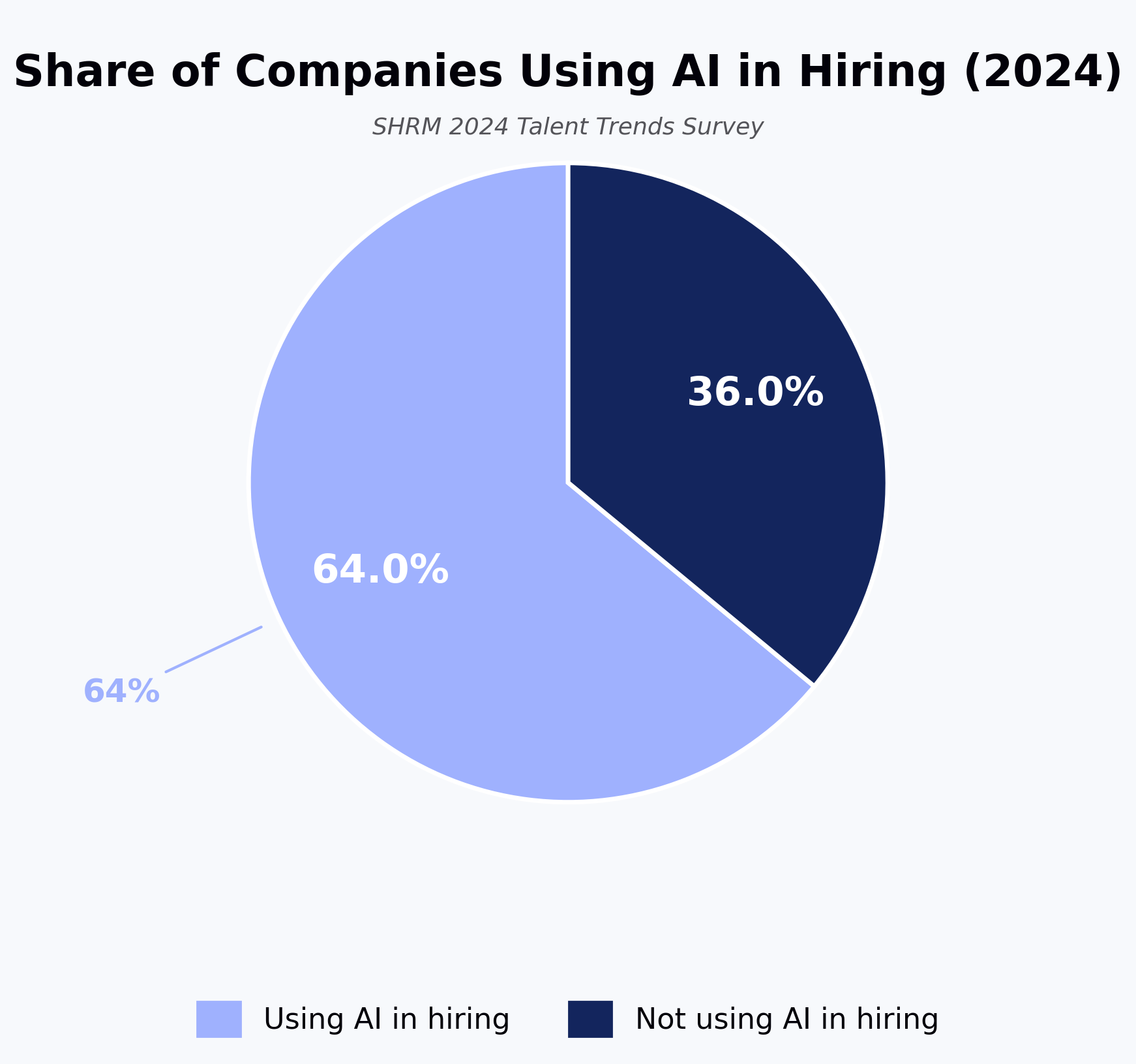
AI interview tools — software that uses artificial intelligence to record, transcribe, analyze, and score candidate responses against structured rubrics — have moved from experimental pilots to standard recruiting infrastructure. If you're a recruiter running back-to-back interview loops across multiple roles, the operational question isn't whether to adopt one, but which fits your workflow and how to introduce it without disrupting candidate experience. SHRM's 2024 Talent Trends Survey found that about 64% of companies were already using AI to support hiring through screening and evaluation; adoption figures for 2026 are not yet published, but the 2024 baseline is a useful reference point.
Below is a working comparison of seven AI interview tools shaping recruiter workflows in 2026, including what each one is actually good at, where it falls short, and how to pilot one without disrupting an active hiring pipeline.
What is an AI interview tool (and why AI interview software matters in 2026)
An AI interview tool is software that uses artificial intelligence, automation, and interview intelligence to record, transcribe, analyse, and evaluate candidate responses — generating structured insights that help recruiters make faster, more consistent hiring decisions. Unlike standard video interviewing, where recruiters manually schedule, review recordings, and rely on personal judgment, AI interview software automates scheduling, applies structured scoring rubrics across every candidate, and surfaces summarized signals from recordings rather than requiring full playback.
Three concrete drivers are pushing adoption of automated interview tools right now:
- Regulation moving from guidance to enforcement: NYC Local Law 144 requires bias audits for automated employment decision tools, the EU AI Act classifies most hiring AI as "high-risk" with documentation and transparency requirements, and EEOC guidance on algorithmic tools (2023) sets expectations for employers in the US. Tools without audit logs and explainability features create real compliance exposure.
- Multimodal scoring: Newer models analyze tone, response content, and engagement in combination, surfacing signals that earlier single-channel tools missed.
- Distributed hiring teams: With interviewers and candidates spread across time zones, async and AI-led formats keep loops moving without coordination bottlenecks.
According to reports paraphrased from Gartner's subscriber research on HR priorities, recruitment teams face risks when interview schedules drag, interviewers are unprepared or inconsistent, and candidate expectations aren't met (Gartner, Top Priorities for HR Leaders, 2024 — Gartner HR research; subscriber access required, language paraphrased and should be verified against the source before publishing). Video interview platforms and AI-led interview software can help mitigate these risks by automating scheduling, applying consistent rubrics, and giving hiring teams structured data to act on. For deeper context on how structured assessments influence hiring accuracy, see HackerEarth's analysis on how talent assessment tests improve hiring accuracy and the 12 most effective employee selection methods for tech teams.
What to look for in AI interview software
No tool wins on every dimension, and the right choice depends on whether your bottleneck is volume, quality of signal, candidate drop-off, or compliance review. A few criteria worth weighing — with their trade-offs:
- Fairness controls and explainability. Favor tools that publish how their scoring works, expose audit logs, and let recruiters override AI scores. The trade-off: more explainable models are sometimes less sophisticated than black-box ones, and any vendor promise of "bias-free" results overstates what's possible. As a general market observation (not a claim attributed to any specific vendor), rubric-applied evaluation is more consistent across candidates than ad-hoc human-led screens, but it isn't neutral on its own.
- ATS and workflow integration. Tools that don't connect to your ATS create duplicate data entry. Most enterprise tools claim ATS integration, but depth varies — some only push candidate status, others sync full interview recordings and scores. Confirm specifics during the demo.
- Multimodal assessment. Video, audio, and transcript analysis each surface different signals. For senior or client-facing roles, async video alone tends to underperform; live conversation or coding-plus-conversation formats give better signal.
- Customizable question sets. Off-the-shelf libraries are useful for high-volume early-stage screening; custom questions matter more for specialized or senior roles.
- Analytics that map to hiring metrics. Dashboards are easy to build; insights that actually move time-to-hire, completion rate, or quality-of-hire are harder. Ask for the specific reports during evaluation.
- Candidate experience. Mobile-first interfaces, language support, and clear instructions reduce drop-off — especially in geographies where async AI interviews see lower completion rates.
- Data security and regulatory alignment. Vendor documentation on data handling should align with regional requirements (e.g., GDPR, EEOC guidance on algorithmic tools, NYC Local Law 144). Don't rely on vendor marketing; ask for the actual compliance documentation.
A useful counter-pattern: any vendor that can't tell you what their tool is worse at than a human interviewer is selling, not informing.
At a glance: top 7 AI interview tools for 2026
The seven tools below were selected based on three working criteria: meaningful market presence among enterprise and mid-market recruiters in 2025, public documentation of AI scoring methodology, and coverage of either technical, non-technical, or both interview formats. This is not a ranked list — order is alphabetical to avoid implying a quality verdict. G2 ratings shown are as of November 2025 and change frequently; treat them as directional, not definitive. Prices last verified: November 2025.
| Tool | Best for | Key features | Pros | Cons | G2 rating (Nov 2025) |
|---|---|---|---|---|---|
| HackerEarth FaceCode + OnScreen | End-to-end technical hiring, live coding interviews, AI-led evaluation | Live coding interviews, real-time collaboration, multi-interviewer panels, structured rubrics | Wide language coverage, customizable question sets, calendar integration | FaceCode and OnScreen focus on technical hiring; non-technical roles are covered elsewhere in HackerEarth's platform via Skill Assessments. Pricing for small teams is not publicly listed — contact sales. | Not currently listed on G2 for these specific products (FaceCode and OnScreen are newer additions to the HackerEarth platform; the broader product line has G2 presence under different listings) |
| HireVue | High-volume async video screening | AI-scored video interviews, role-specific content libraries, interview analytics | Reduces time-to-hire at scale (per vendor), integrates with major ATS platforms | Some candidates find async AI assessments impersonal; configuration can be heavy | 4.1 |
| iMocha | Skills-first hiring across technical and functional roles | One-way video interviews, technical and soft skills assessments, AI scoring (50+ coding languages per vendor, not independently verified) | Wide skill coverage, detailed analytics | Limited real-time interaction; interface can feel dense | 4.4 |
| TestGorilla | Pre-employment testing for high-volume hiring | AI video interviews, skills tests, personality assessments (scoring validated on 21,000+ responses per vendor, not independently verified) | Wide test library, easy to deploy | Limited real-time interaction; lower-tier plans constrained | 4.5 |
| Vervoe | Skill-based hiring with task simulations | Customizable skill assessments, real-world task simulations, AI scoring | Wide range of skills covered, accessible interface, detailed analytics | Limited integration with some ATS platforms; setup time for complex assessments | 4.6 |
| WeCP | Technical and soft skills assessment | Real-time coding interviews, video responses, customizable question banks | Multi-language support, detailed candidate reports | Interface can be complex for new users; pricing climbs quickly for small teams | 4.7 |
| Xobin | Pre-employment skill testing across global roles | Live coding assessments, customizable tests, detailed analytics (29+ languages and 9,000+ job roles per vendor) | Multiple programming languages (per vendor), ATS integration | Limited soft skills evaluation; fewer ATS connectors than top-tier enterprise tools | 4.7 |
Detailed tool reviews: AI interview tools compared
Each tool below has a different center of gravity: some are built for async screening at volume, others for live technical conversation, others for skills-first assessment libraries. The reviews focus on what each platform is actually shaped for, rather than a feature-by-feature equivalence.
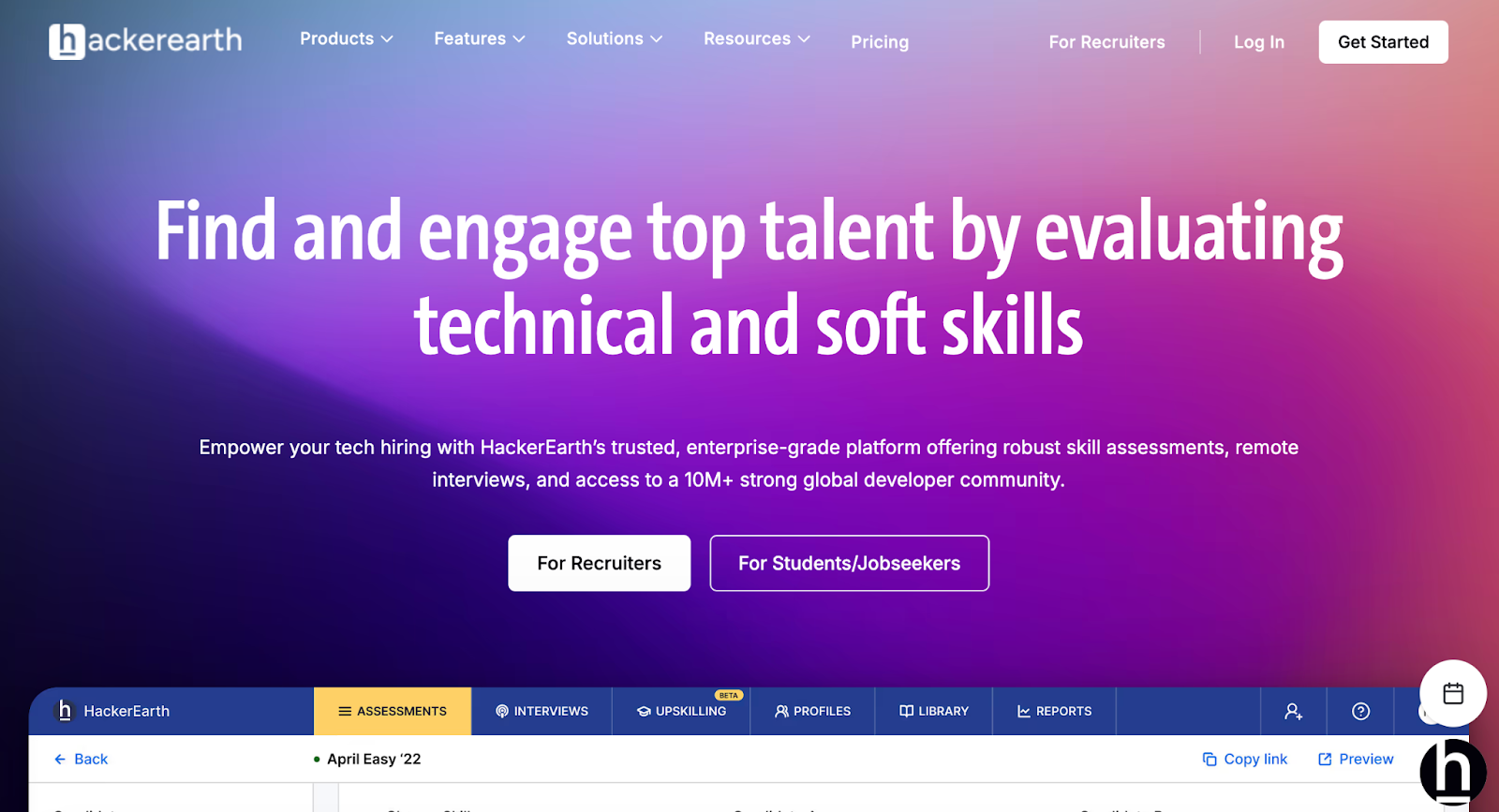
HackerEarth FaceCode + OnScreen
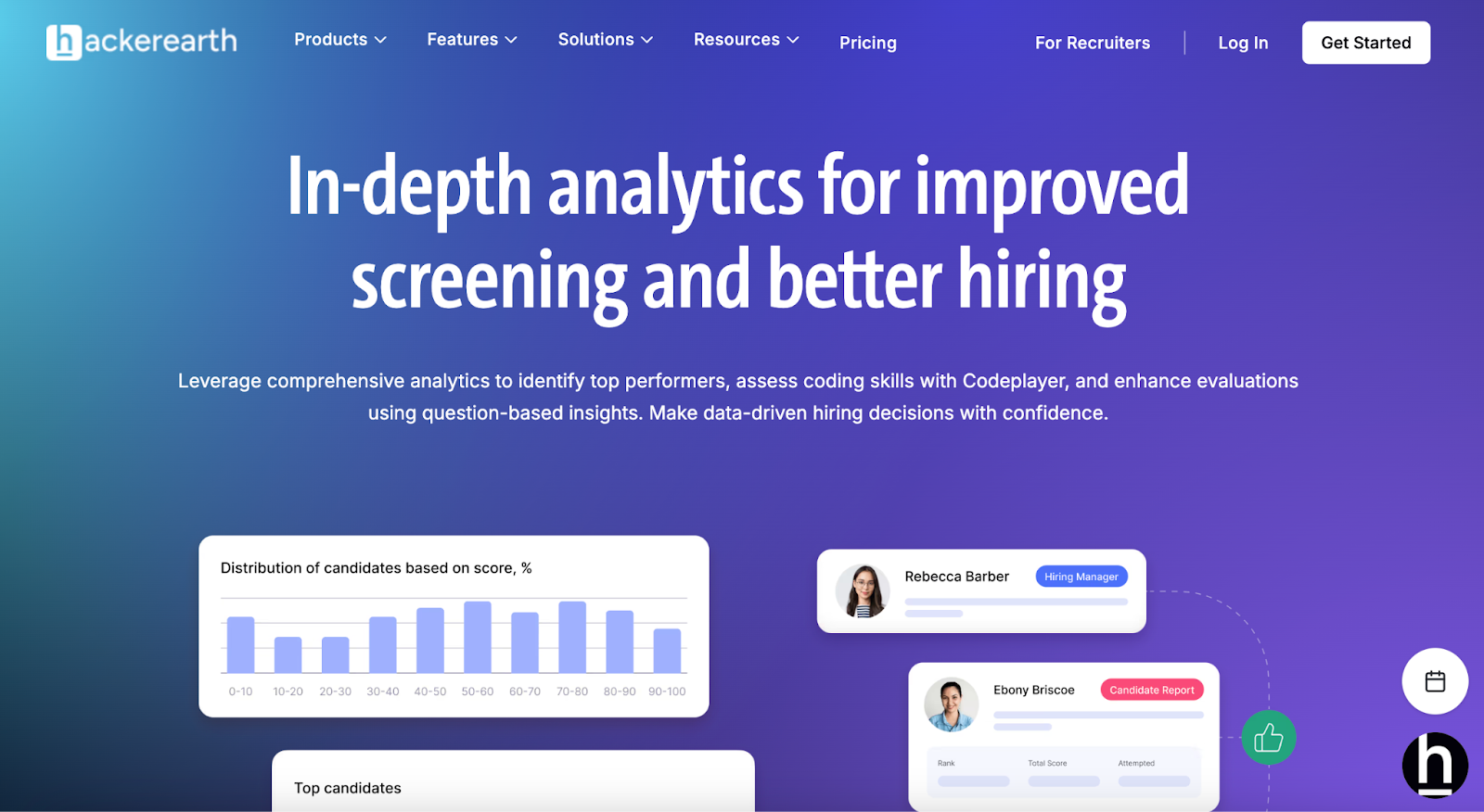
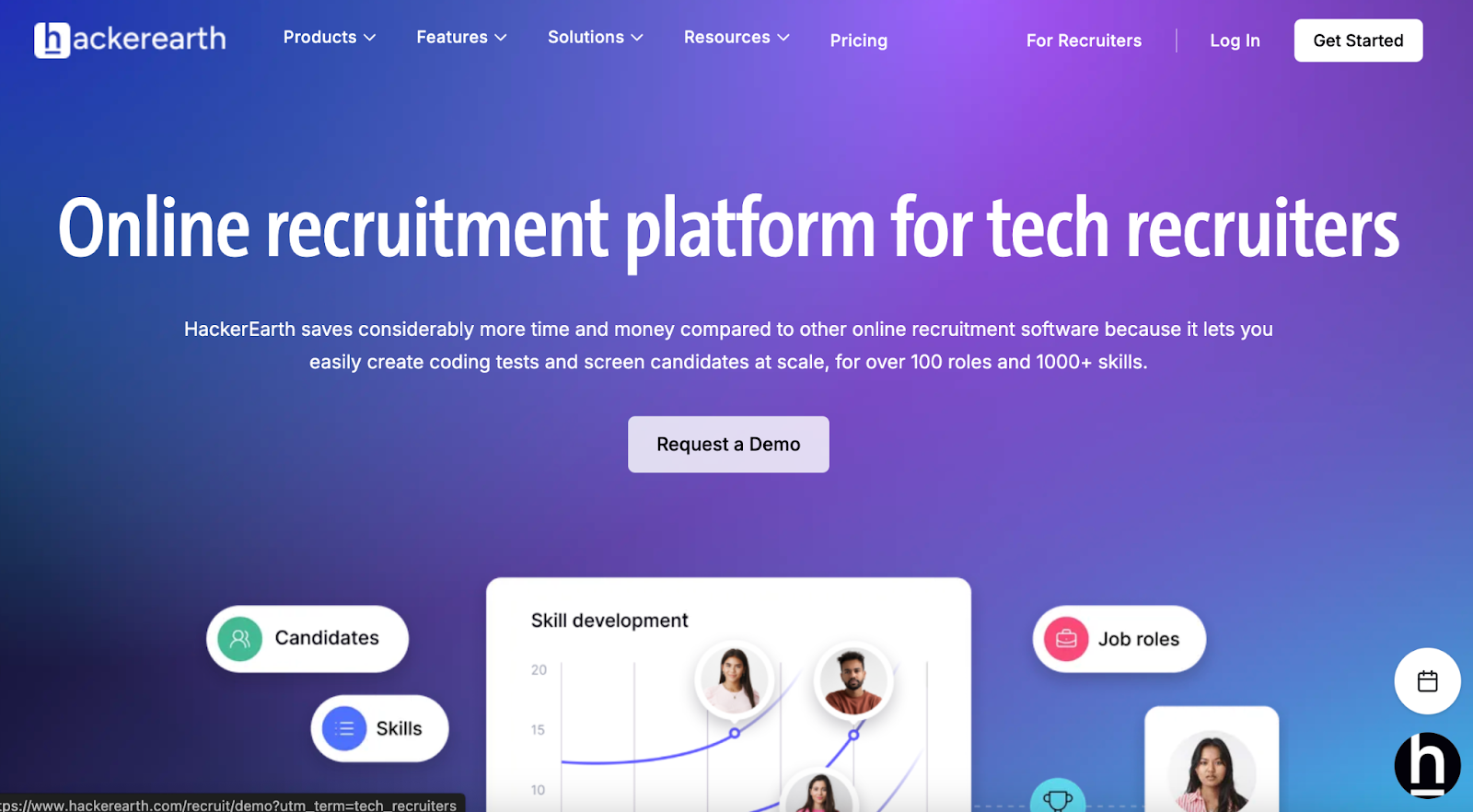
HackerEarth FaceCode + OnScreen is an interview platform best suited for technical hiring teams that need both live interviewer-led coding sessions and AI-led structured interviews in one workflow.
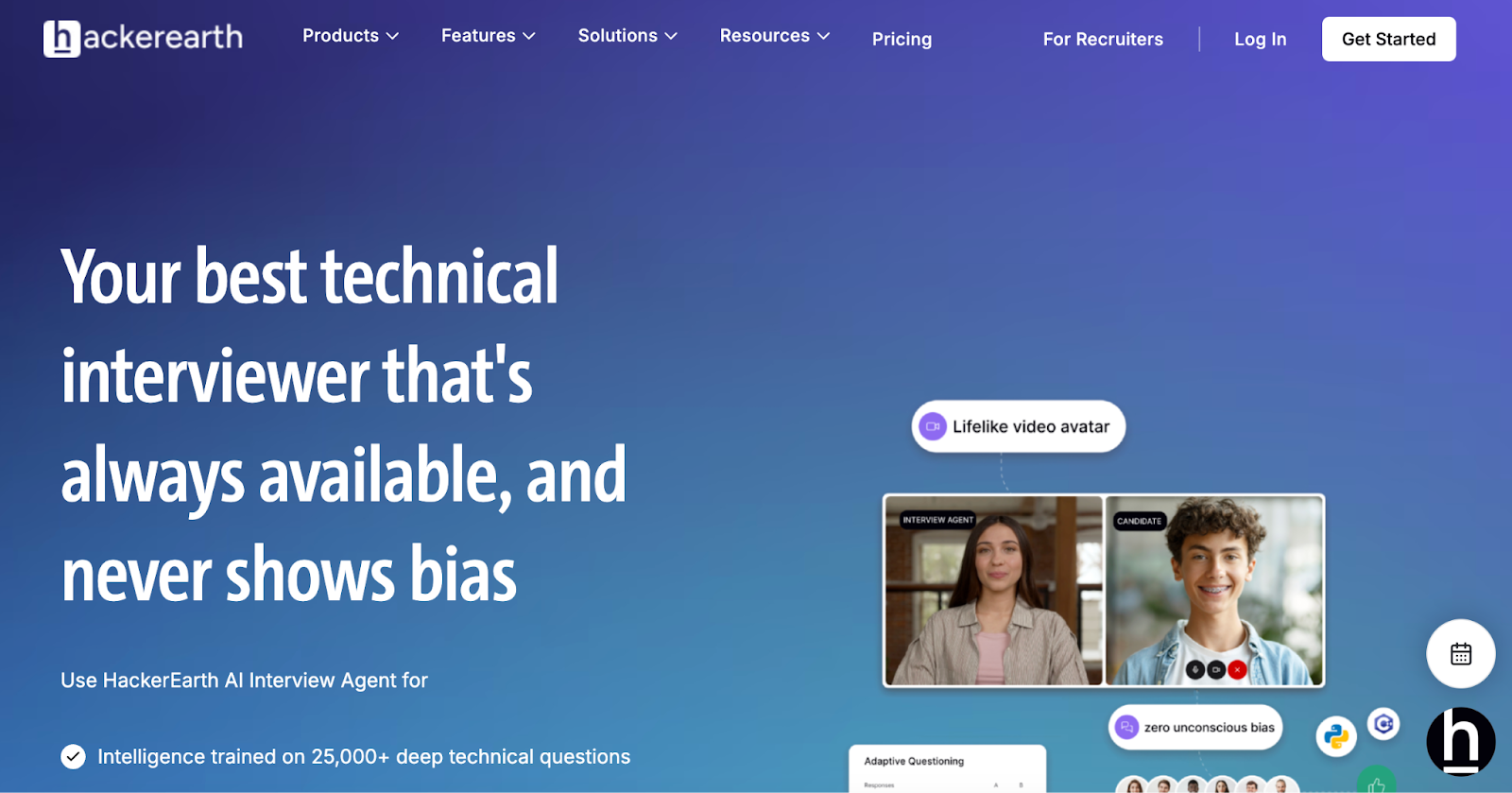
HackerEarth's interview stack automates structured technical interviews
FaceCode is HackerEarth's live coding interview environment, and OnScreen is the AI interview product launched in April 2026 (confirm launch date with the vendor at time of reading). Together they cover both interviewer-led and AI-led technical interviews from one platform, with a collaborative coding environment, a drawing and flowchart canvas for system design discussions, and lifelike AI video avatars that hold two-way conversations with candidates while applying a consistent rubric. The platform integrates directly with HackerEarth's existing tools — Skill Assessments, FaceCode, and Hiring Challenges — so scores and candidate reports stay in one place for downstream comparison.
Best suited for technical hiring at volume, the platform's strength is applying the same rubric across candidates to reduce inter-interviewer variance. Pricing varies by team size and usage and is available via the HackerEarth demo request. For non-technical roles, HackerEarth's broader platform includes Skill Assessments covering sales, customer support, and finance, so the overall product line is not limited to engineering hires.
HireVue
HireVue is a video interview platform best suited for high-volume async screening at enterprise scale.
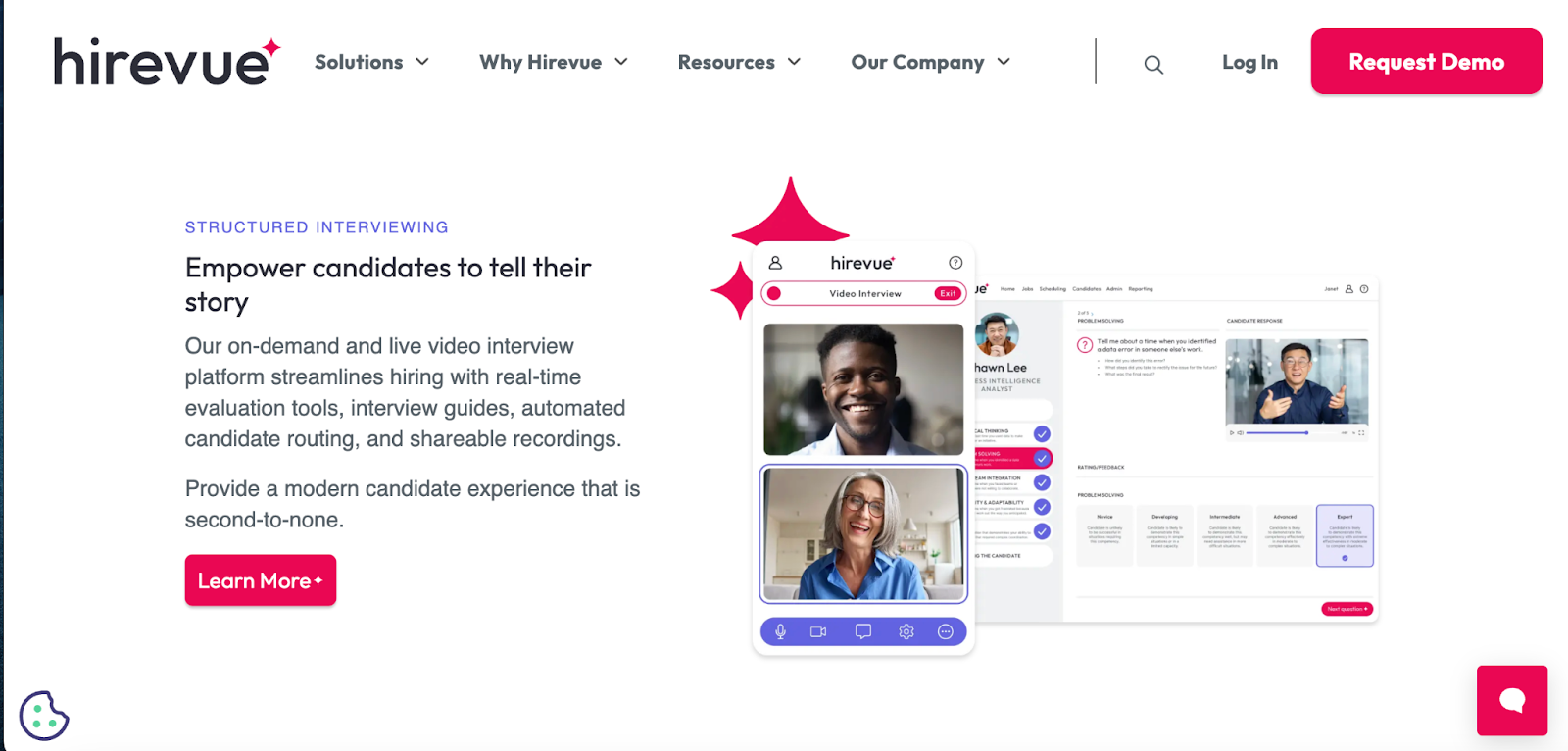
A video interview tool aimed at high-volume hiring
HireVue provides on-demand and live video interviews that let candidates share their story while giving hiring teams structured evaluation tools. Recruiters can automate candidate routing, create structured interview guides, and share recordings.
The platform connects with major ATS systems, offers a large library of role-specific interview guides, and lets candidates interview anytime via channels including SMS, WhatsApp, Zoom, Teams, and Webex. According to HireVue's product documentation, structured guides and standardized scoring may reduce variance across interviewers (vendor claim, not independently verified).
Key features: Live or on-demand video interviewing; structured, job-specific interview guides from a content library; ATS integration with common platforms.
Best for: Structured async screening, high-volume hiring, standardized evaluation.
Pros: Vendor reports reduced time-to-hire via automated routing and scheduling; supports standardized evaluation across multiple interviewers; candidates can complete interviews on their own schedule.
Cons: Users frequently report scheduling friction; async-only formats can see higher candidate drop-off for senior roles.
Pricing: Custom pricing (verify current pricing with vendor).
Vervoe
Vervoe is a skills-first AI interview software best suited for role-specific evaluation with task simulations and AI-graded scorecards.
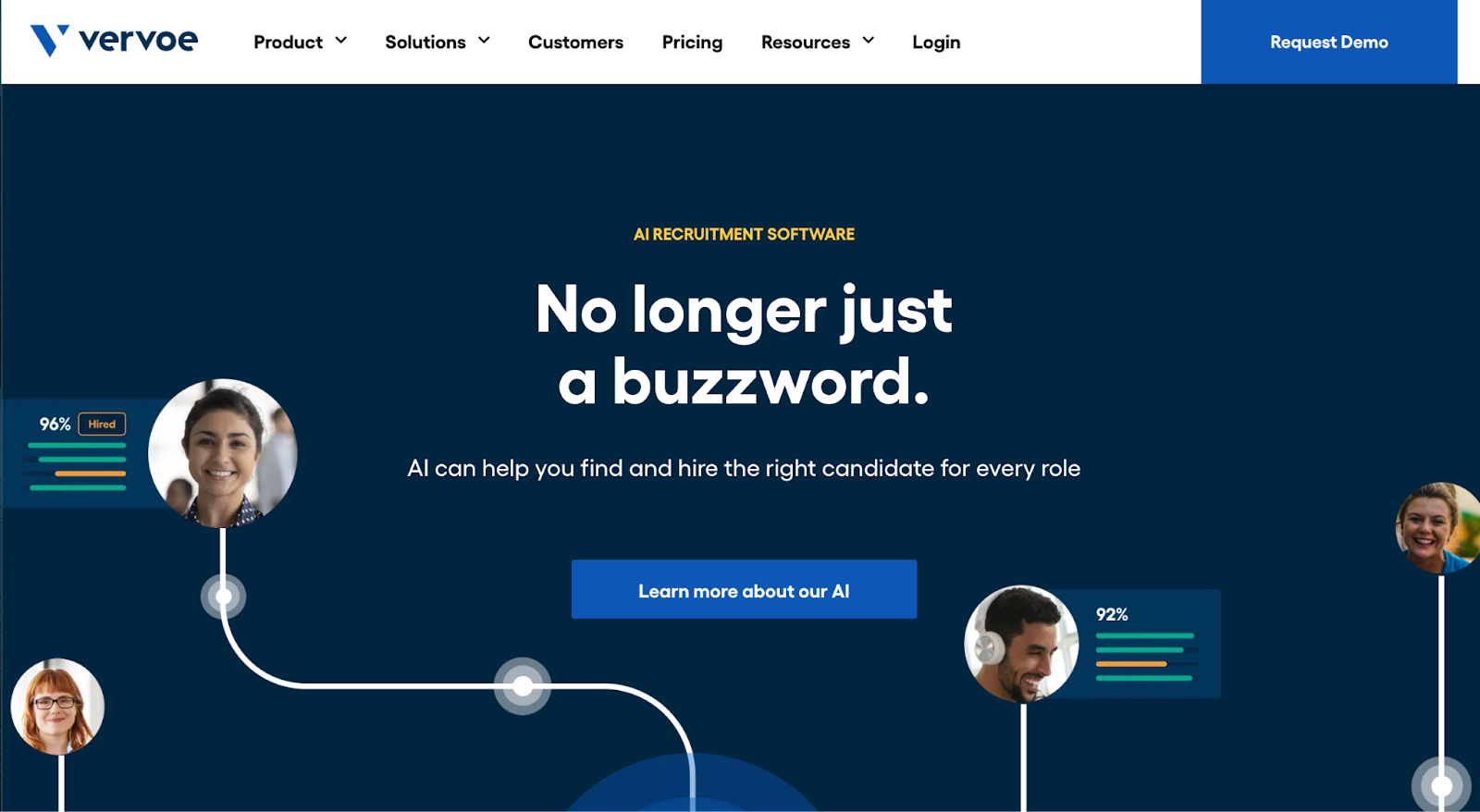
Find the right candidate for every role using AI
Vervoe uses AI-driven assessments to evaluate job-ready skills. It combines three models — How, What, and Preference — to track candidate interactions, analyze response content, and incorporate employer-specific grading preferences. The platform provides personalized grading, scorecards, rankings, and analytics.
Personal identifying information can be masked during assessment, while automated ranking helps hiring teams shortlist quickly. Vervoe's AI Assessment Builder generates tailored tests for specific roles.
Key features: Personalized grading against role-specific requirements; candidate scorecards highlighting strengths, gaps, and next steps; an AI assessment builder that generates assessments from job descriptions or titles.
Best for: Skills-based candidate evaluation, role-specific hiring, ranking workflows.
Pros: PII masking option supports more consistent comparison; automated grading and ranking can reduce recruiter time on shortlisting (per vendor); assessments map to specific role requirements.
Cons: The Preference Model needs upfront training to score reliably.
Pricing: Free 7-day trial. Pay As You Go at $300 (10 candidates, one-time payment, scales by candidate count) — verify current pricing with vendor. Custom: Contact for pricing.
WeCP
WeCP is an AI interview platform best suited for technical and skills-based async screening with adaptive AI-graded responses.
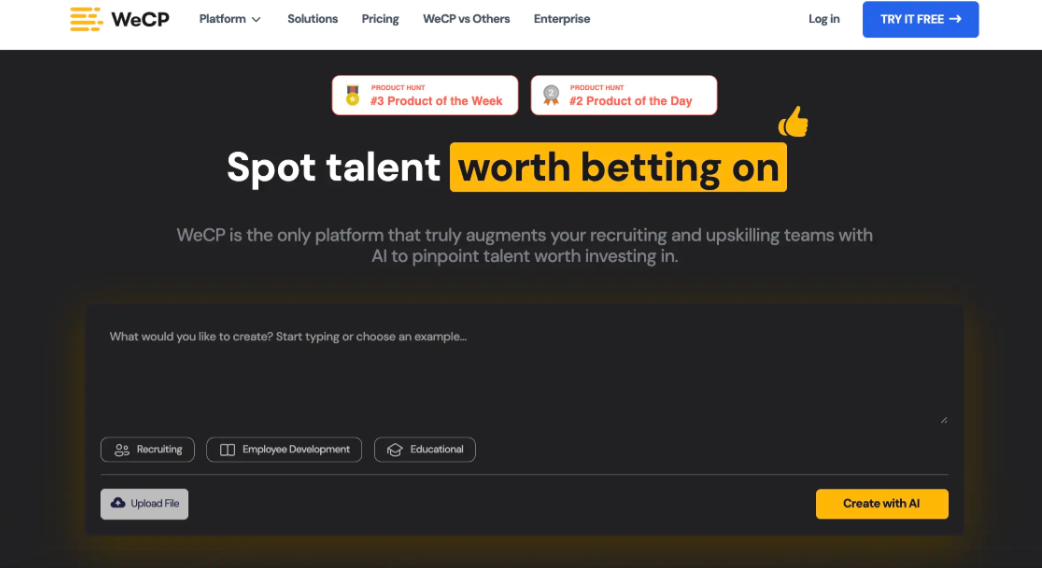
A platform aimed at technical and skills-based screening
WeCP's AI Interviewer handles candidate screening with asynchronous video and coding interviews. AI scoring evaluates technical and non-technical roles using structured rubrics, adaptive assessments, and real-time summaries.
Candidates complete interviews on their own schedule, while recruiters receive results, flagged responses, and skill-based scores. WeCP reports this may reduce manual phone screens and applies a consistent rubric across candidates (vendor claim, not independently verified).
Key features: AI-scored interviews evaluating coding, video, and text responses using NLP and ML models (per vendor), with recruiter-editable scores; asynchronous format allowing candidates to complete interviews anytime; coverage of technical and non-technical roles with role-specific scoring guidelines.
Best for: Technical hiring, non-technical screening, async interviews, skills-based evaluation.
Pros: 2,000+ customizable, role-specific interview templates (per vendor); AI follow-up questions that adapt based on candidate responses; video and voice analysis for communication signals.
Cons: Can be expensive for small businesses and startups; check current pricing directly with the vendor.
Pricing: Premium at $240/month (up to 40 candidates) — verify current pricing at vendor site. Custom/Enterprise: Custom pricing.
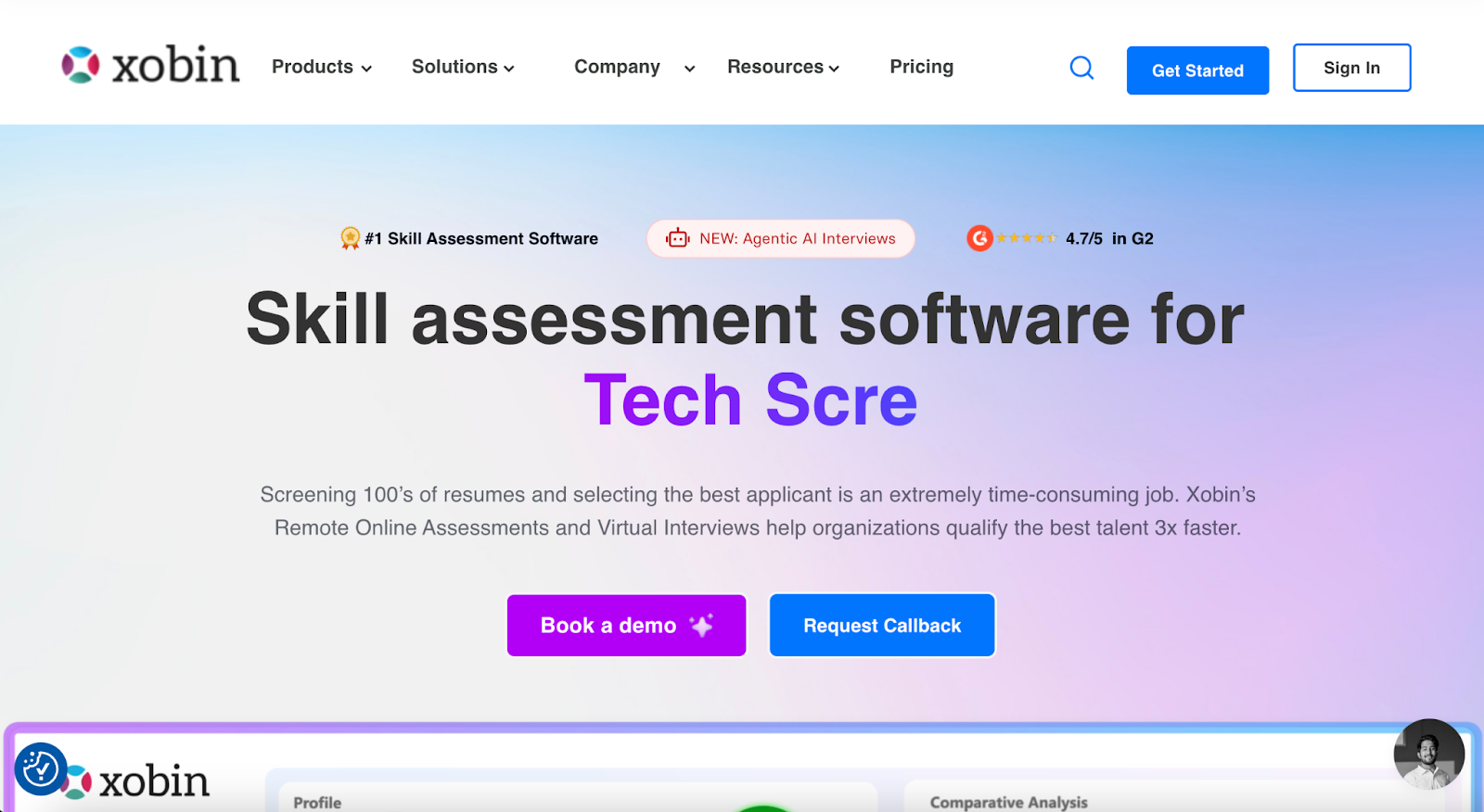
Xobin
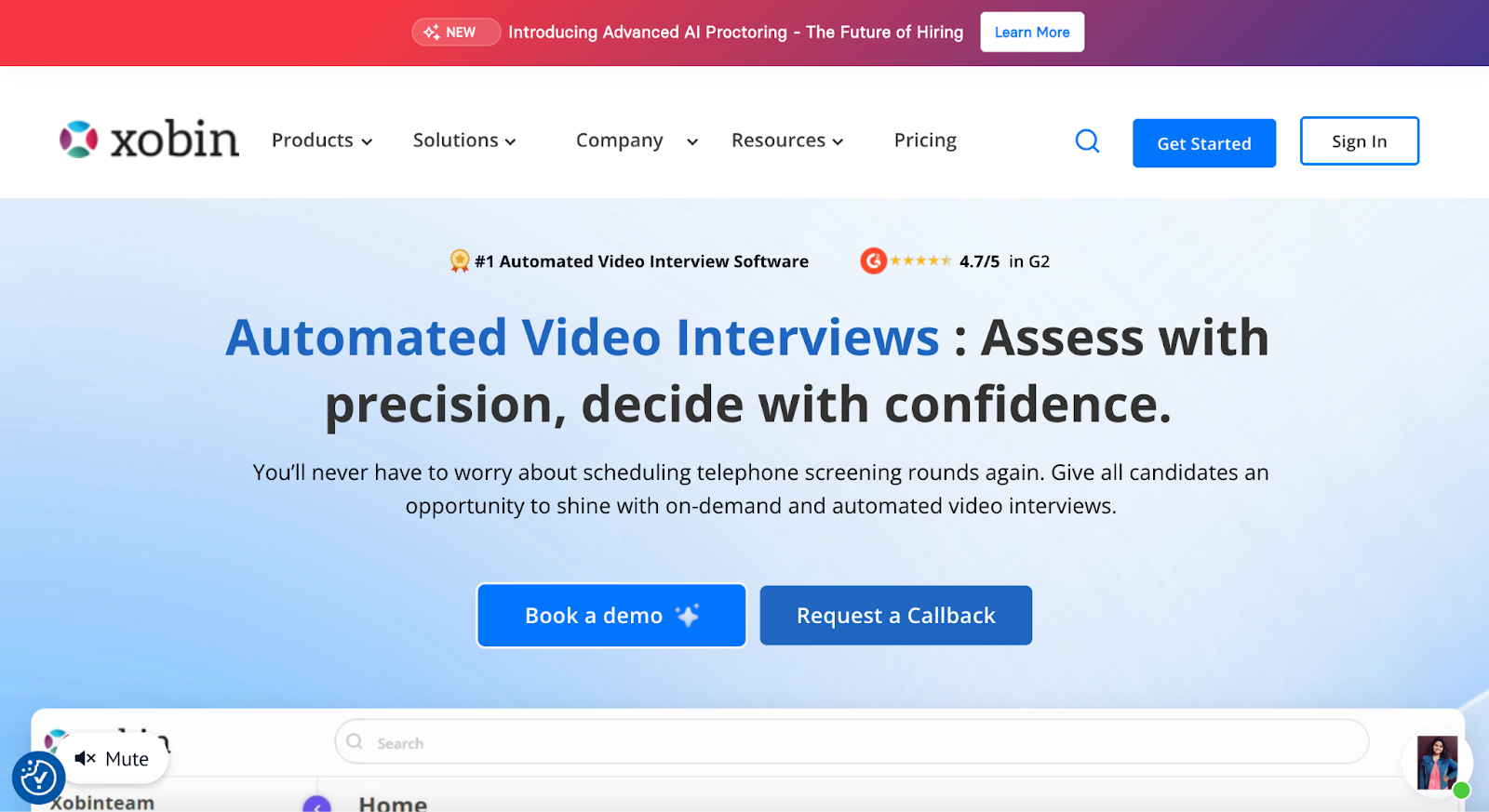
Xobin is an AI interview tool best suited for global, multi-language pre-employment screening across a wide range of roles.
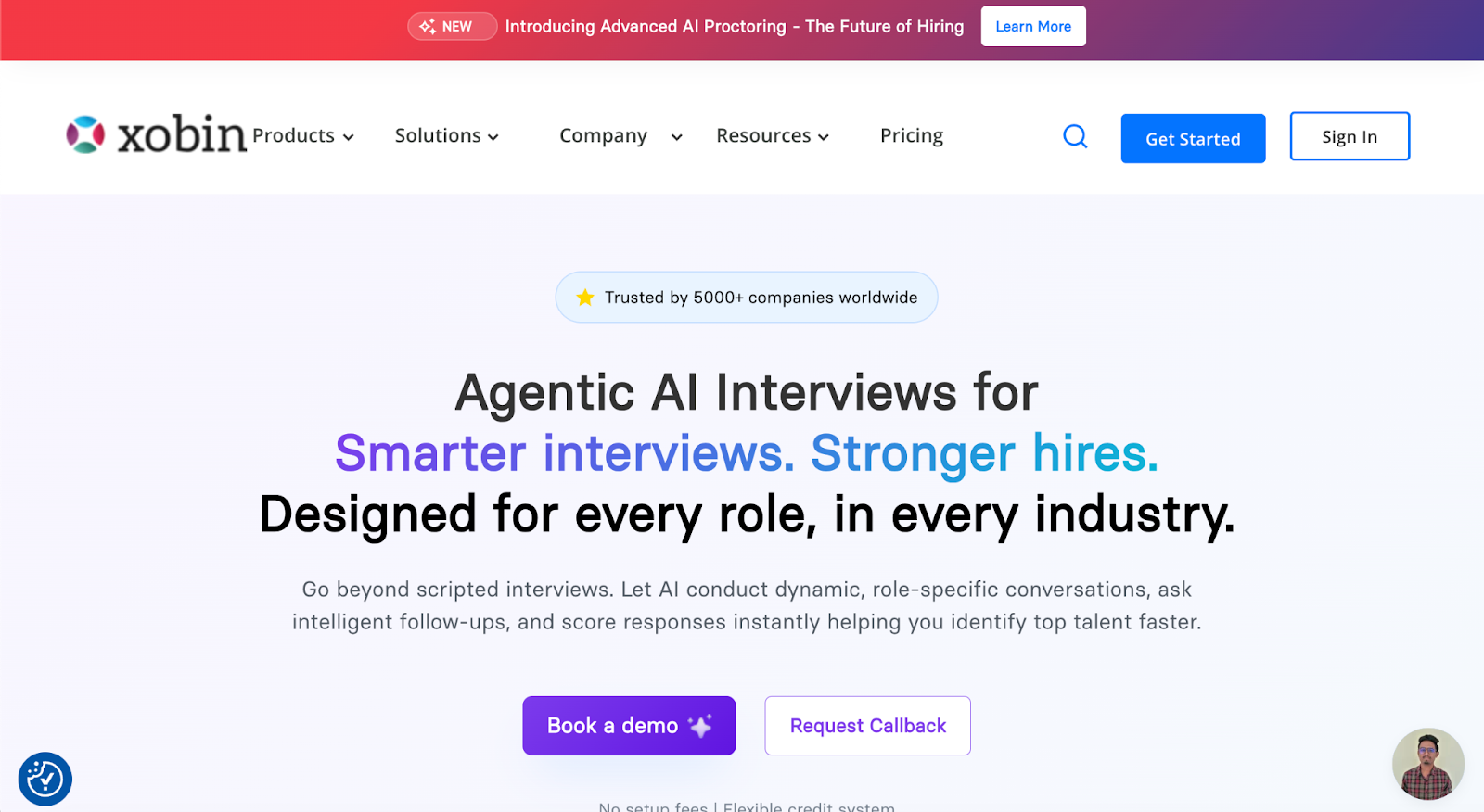
Agentic AI interviews for role-specific conversations
Xobin offers agentic AI interviews that conduct role-specific conversations with candidates. The platform adapts questions in real time, scores responses, and provides analytics on technical skills, communication, and cultural fit. It supports 29+ languages (per vendor) with structured assessments.
With coverage across 9,000+ job roles (per vendor), multi-format questions, and enterprise data security, Xobin focuses on reducing scheduling load and improving completion rates. Xobin publishes a cost-reduction figure for AI-driven interviews on its marketing site; we don't have independent validation of that figure, so we'd treat it as a directional vendor claim rather than a verified outcome.
Key features: Adaptive interviews with AI-adjusted follow-up questions; multi-language support with real-time translation; real-time analytics on skills, behavior, and cultural fit.
Best for: Technical hiring, multi-role screening, global recruitment.
Pros: 24/7 AI interview availability eliminates scheduling conflicts; SOC 2, ISO, and GDPR compliance documented by vendor.
Cons: Fewer ATS integrations than top-tier enterprise tools.
Pricing: 14-day free trial. Complete Assessment Suite starting from $699/year — verify current pricing with vendor.
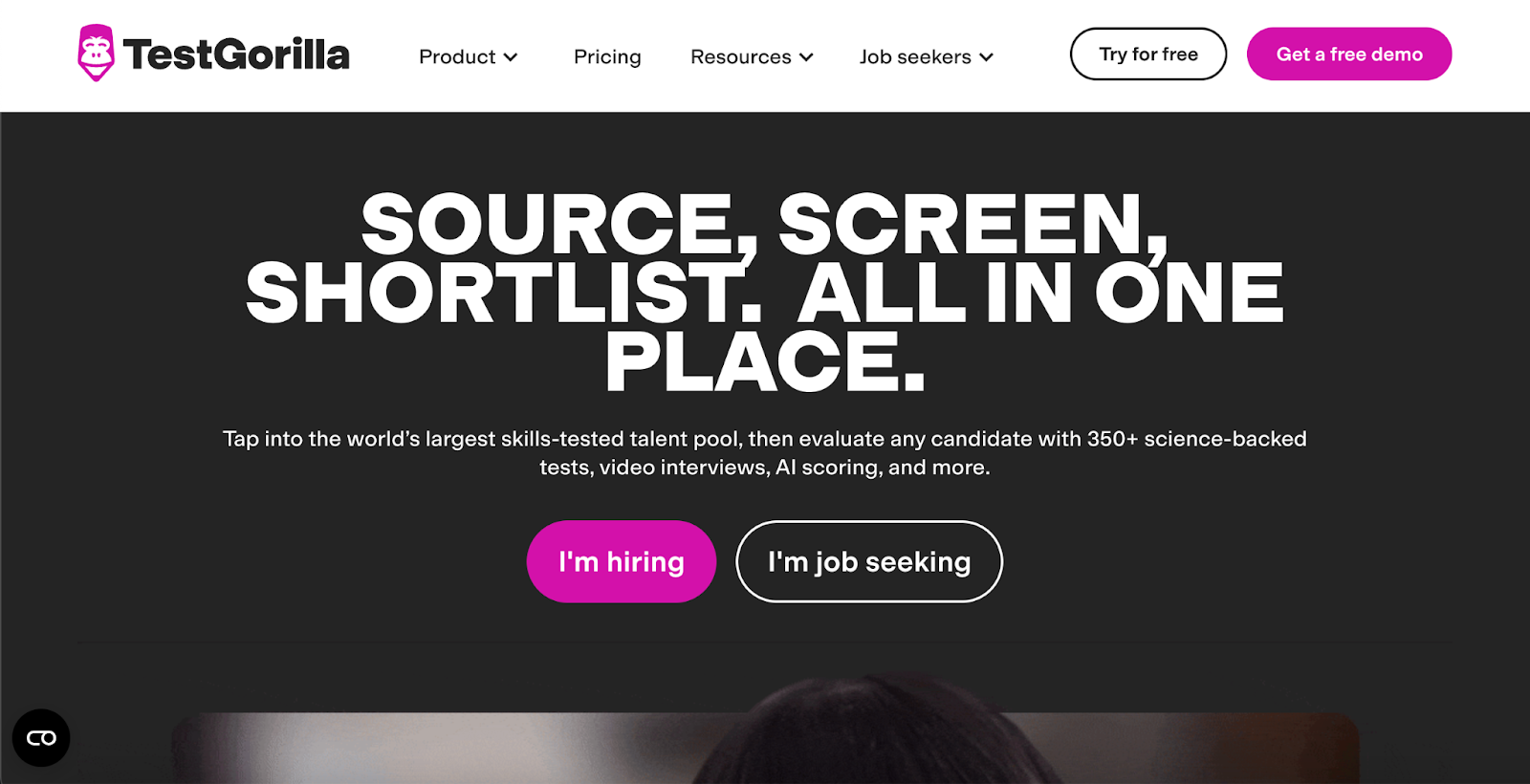
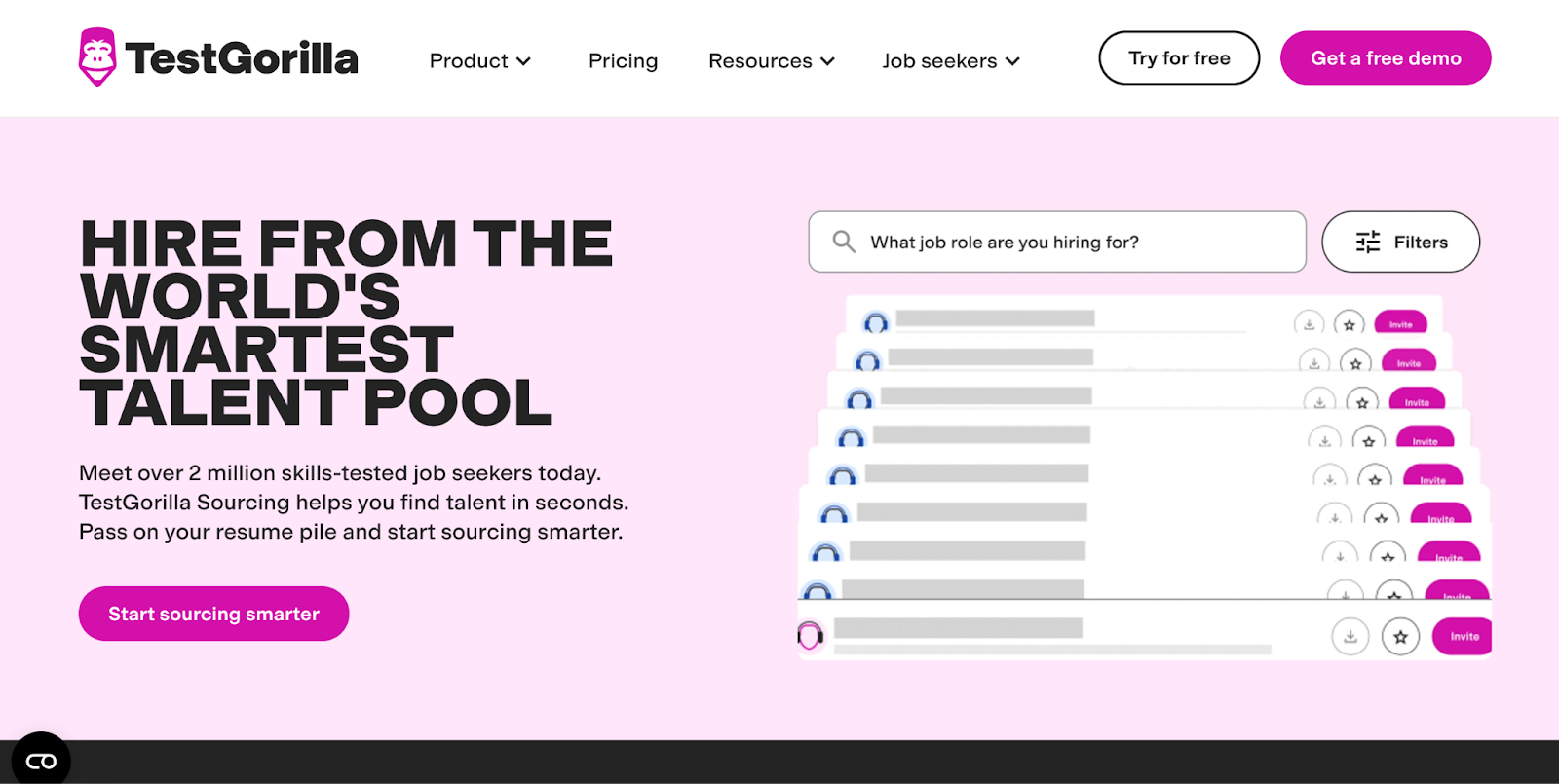
TestGorilla
TestGorilla is a pre-employment AI video interview platform best suited for high-volume, skills-based shortlisting against structured rubrics.
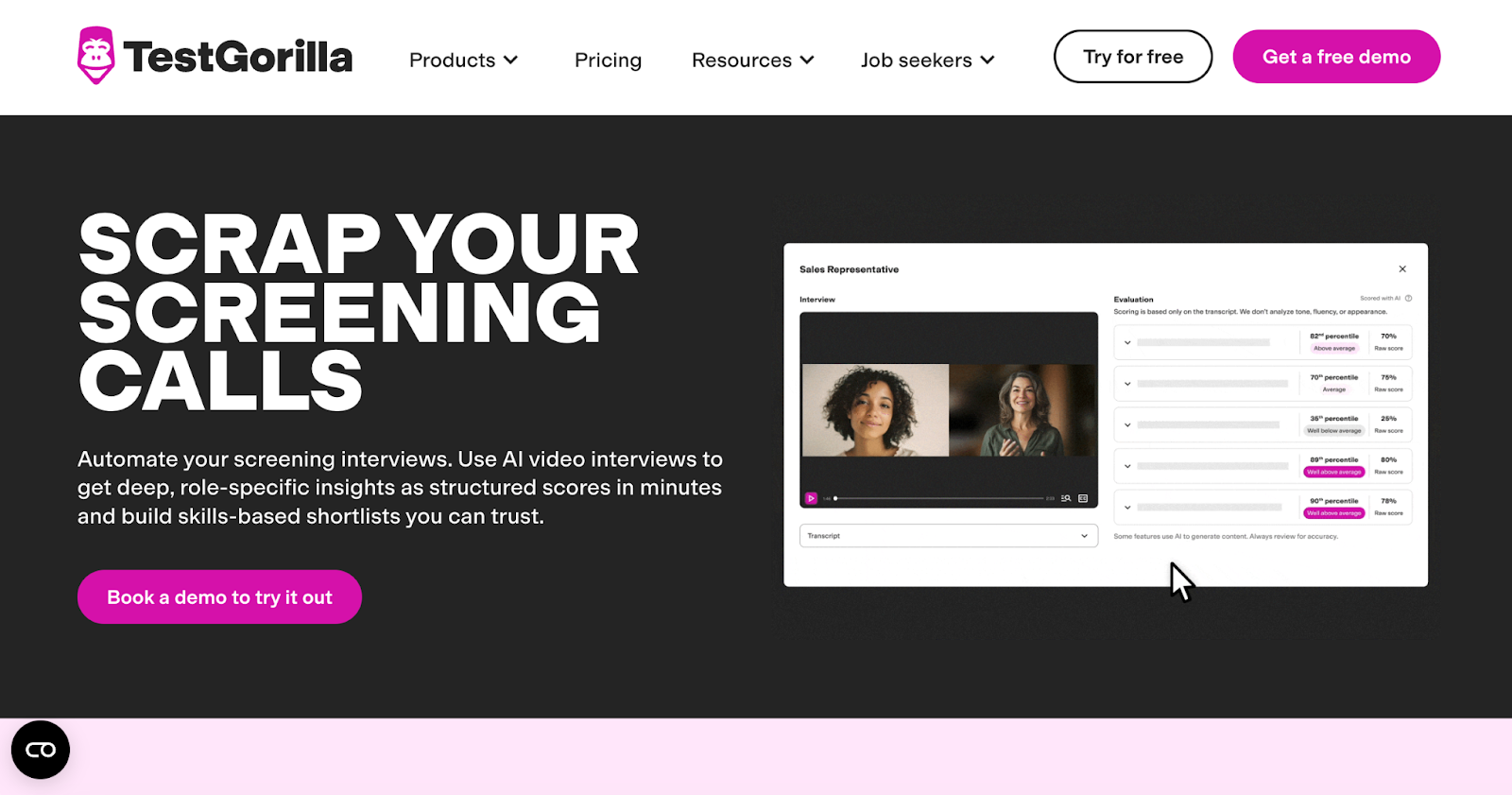
Get skill-based shortlists fast with automated AI scoring
TestGorilla handles candidate screening using AI video interviews that produce structured, role-specific scores. The platform offers conversational AI for higher-stakes roles and one-way AI interviews for high-volume hiring. Every response is evaluated against expert-designed rubrics, with editable scoring.
TestGorilla reports its scoring models have been validated on over 21,000 responses (per the vendor's own documentation; not independently verified). Recruiters can override scores, capture STAR-aligned answers, and build skills-based shortlists.
Key features: AI-led interviews with structured, role-specific questions; one-way interviews for high-volume screening with expert-designed questions; recruiter-editable AI scores.
Best for: Structured interviews, high-volume hiring, AI-led screening, skills-based shortlisting.
Pros: May reduce manual screening calls (per vendor); validated, structured, and editable scoring (per vendor); STAR-aligned answer capture with dynamic follow-ups.
Cons: Lower-tier plans have limitations compared with competitors.
Pricing: Free plan available. Core at $142/month (billed annually) — verify current pricing with vendor. Plus: Contact for pricing.
For related reading, see HackerEarth's guide to conducting successful system design interviews.
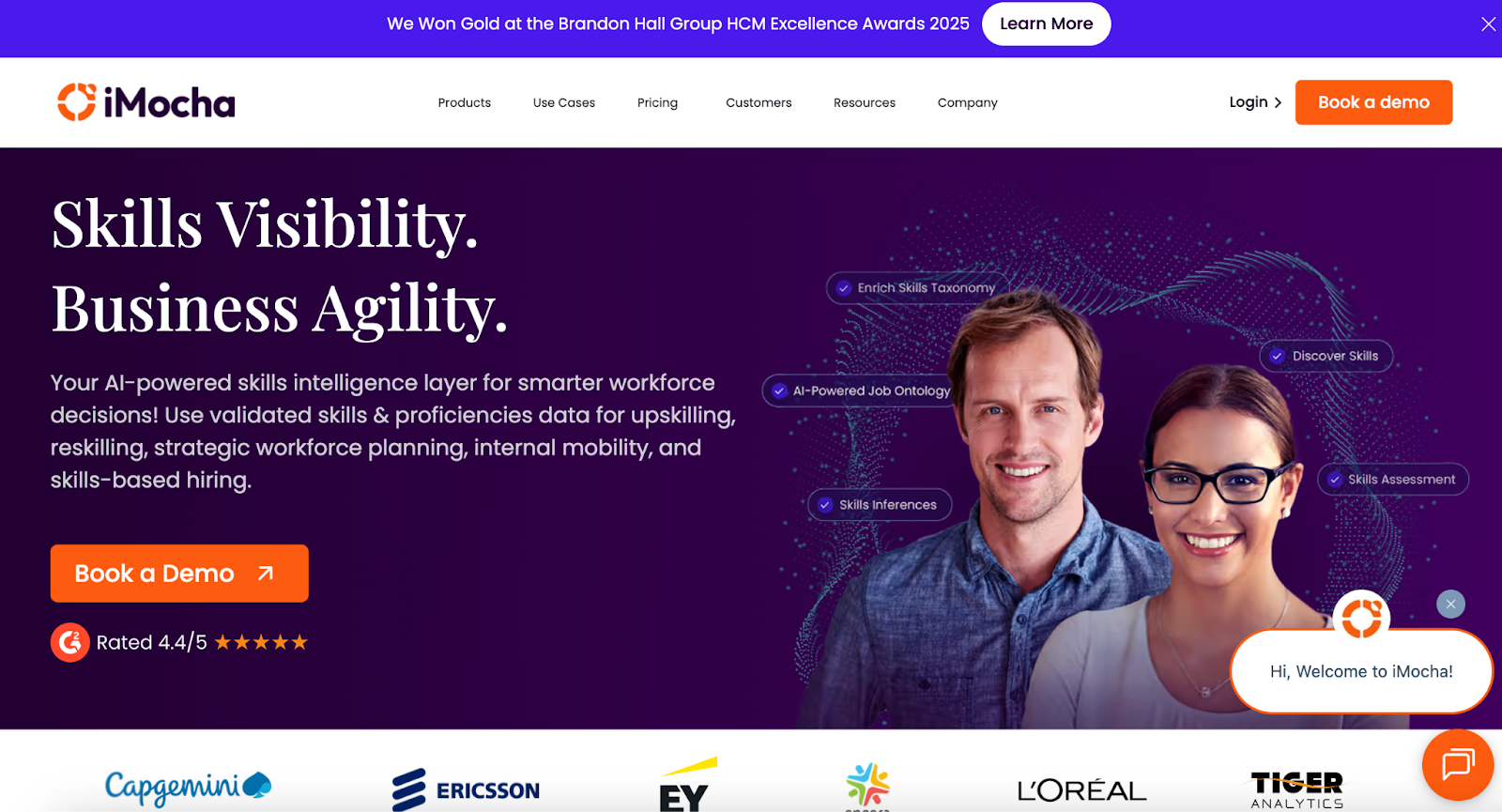
iMocha
iMocha is a skills-first AI interview platform best suited for evaluating technical, functional, and soft skills through automated and live interviews.
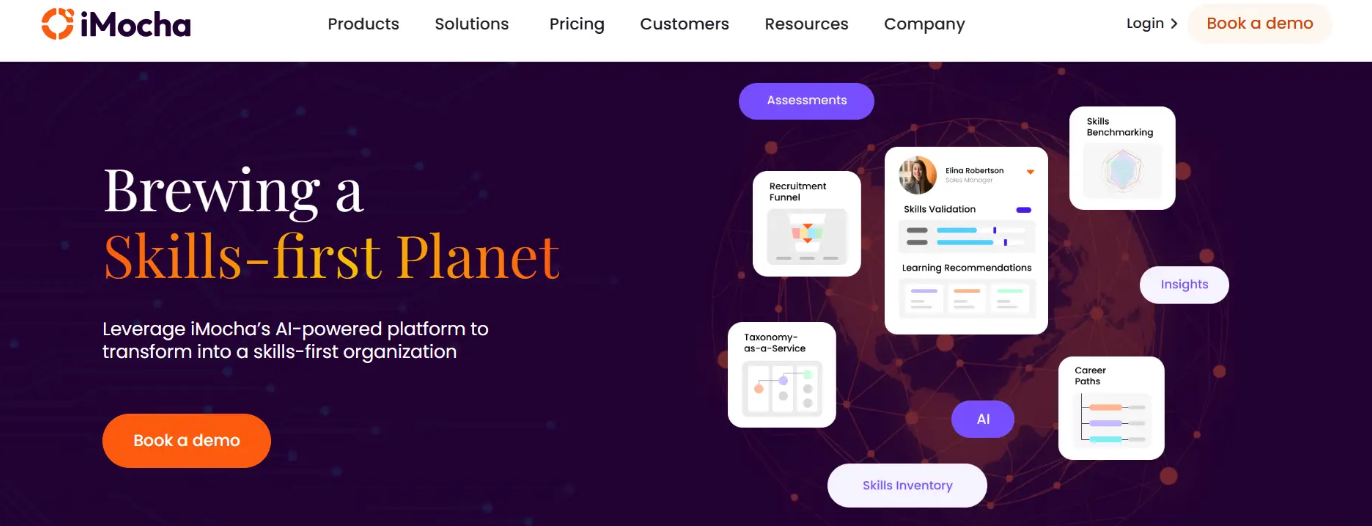
Use AI for skills validation and learning recommendations
iMocha is an interview platform built around skills-first hiring. It evaluates candidates across technical, functional, and soft skills using AI-driven assessments — automated and live interviews and analytics. Its scoring models are trained on response patterns across iMocha's question library; capabilities and limits are documented in vendor materials.
The platform's Smart Interview Solutions suite handles end-to-end hiring workflows, focusing on shortlisting efficiency and reduced scheduling load. Live coding interviews are reported to cover 50+ programming languages (per vendor documentation; not independently verified).
Key features: AI interviewer covering technical, behavioral, and communication signals; AI-LogicBox for logical thinking and problem-solving via coding simulations; automated one-way video interviews for flexible candidate scheduling.
Best for: Skills-first hiring, technical and functional assessments, structured interviews.
Pros: Rubric-applied evaluation across multiple skill dimensions; AI proctoring options for assessment integrity; wide coding language coverage (per vendor).
Cons: The interface can feel cluttered.
Pricing: 14-day free trial. Basic, Pro, and Enterprise: Contact for pricing.
How to pilot AI interview tools without breaking your hiring pipeline
For recruiters running this week's hiring loop, the implementation question is practical: how do you introduce a new tool without breaking your pipeline? The four steps below are recruiter-actionable; broader compliance and procurement steps should be coordinated with your TA leader.
Step 1: Start with one high-volume role family
Begin with one role family that runs high candidate volumes — typically a high-demand technical role or a recurring sales/support hire — and run the pilot for 4–6 weeks before expanding. Smaller scope means cleaner signal on whether the tool actually saves time.
Step 2: Loop in the right people early
Identify and engage every stakeholder whose work the tool touches before the pilot starts. Pull in:
- You and your fellow recruiters to test the day-to-day workflow
- Hiring managers from the pilot role family to check candidate quality
- A TA leader or operations partner to coordinate ATS access and any procurement review
- Legal/compliance contact if your organization requires sign-off on automated assessment tools (not every pilot needs this, but jurisdictions covered by NYC Local Law 144 or the EU AI Act typically do)
Step 3: Define what "working" looks like before you start
Set 2–3 measurable success criteria tied to the bottleneck you're trying to fix — time-to-shortlist, interviewer hours per hire, candidate completion rate, or hiring manager satisfaction with shortlists. Capture a baseline from the four weeks before the pilot so you have something to compare against. Without a baseline, "it felt faster" is the only answer you'll get.