Hiring process optimization guide
Hiring process optimization is the discipline of redesigning recruitment workflows — from sourcing through onboarding — to reduce time-to-hire, improve candidate quality, and align hiring outcomes with business goals. For recruiters and talent acquisition leaders entering 2026, hiring process optimization has become unavoidable: according to Korn Ferry's 2025 Talent Acquisition Trends, roughly 90% of organizations reported missing their main hiring targets last year, and surveys from LinkedIn's Future of Recruiting report indicate nearly 60% of talent teams say their average time-to-hire continues to climb. This guide walks recruiters through a structured approach to hiring process optimization that combines automation with the human judgment candidates still expect.
A note on the data in this guide: where statistics reference "2026," they reflect forecasts and projections from 2025 industry reports unless otherwise stated. Treat them as directional signals, not settled facts.
The strategic foundations of 2026 recruitment
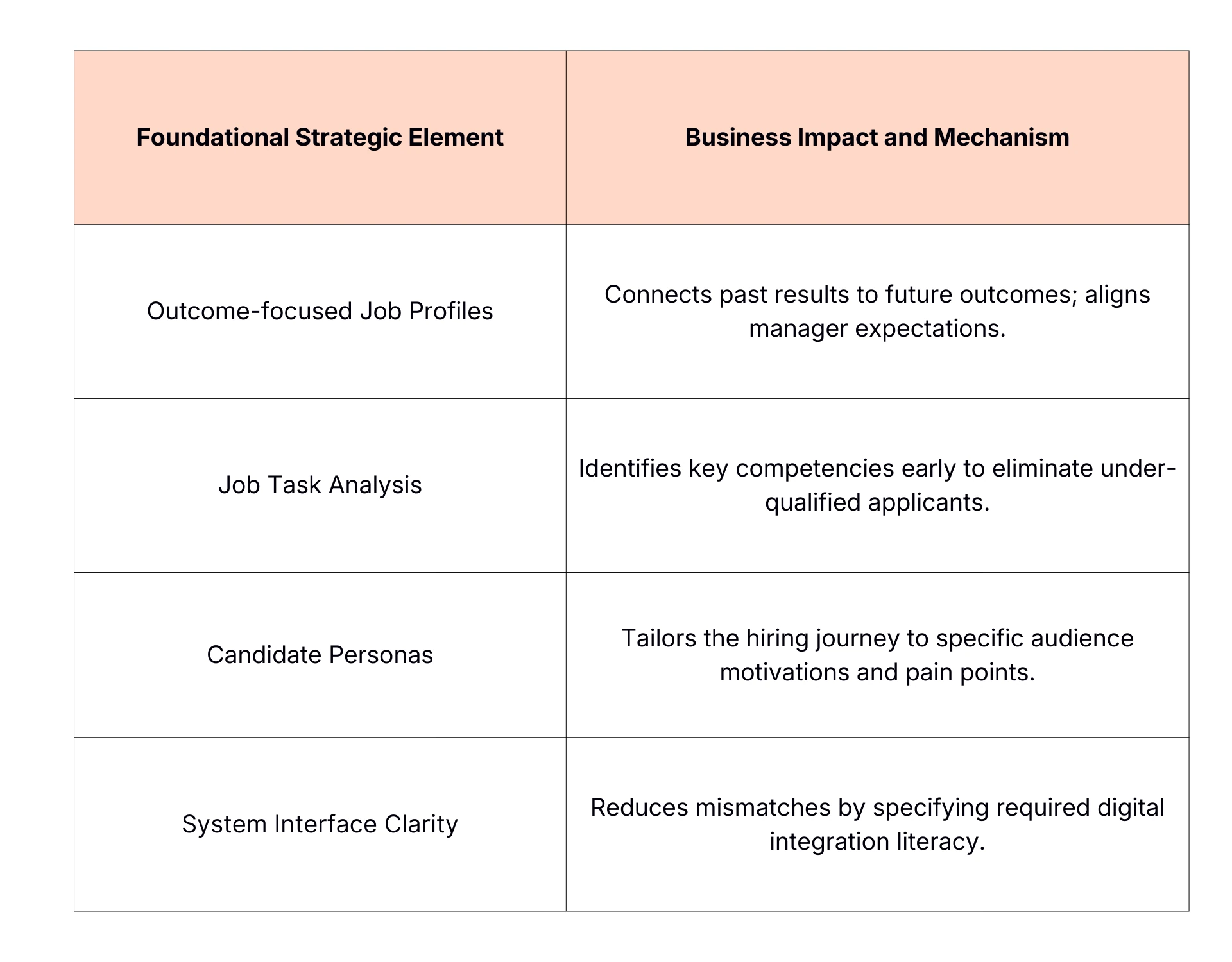
Strong hiring process optimization starts before a job ad goes live — with role definition tied to measurable outcomes. According to Gartner's CFO survey data, roughly 58% of CFOs report significant skill gaps on their teams, which slows down work such as data cleaning and cross-departmental projects. The first step in fixing this is writing job profiles built around clear outcomes, not generic responsibilities.
These outcome-based profiles differ from old job descriptions because they specify what new hires should achieve in their first 30, 60, and 90 days. By defining success early, hiring managers and recruiters stay aligned and avoid late-stage rejections over unclear fit. Job task analysis also helps by listing the exact skills and digital tools needed. Since many roles now involve complex systems like ERP, BI, and HRIS, spelling out these requirements upfront helps new hires ramp faster.
Another core step is building candidate personas. Frameworks such as HubSpot's "Make My Persona" template or the buyer-persona methodology from the Buyer Persona Institute can be adapted for recruiting: a persona for a mid-level backend engineer, for example, might document preferred job boards (Stack Overflow, GitHub Jobs), motivators (technical autonomy, mentorship), and dealbreakers (rigid on-call rotations). Paired with an employer brand audit, these personas help teams pick the right channels and messages — and they connect directly to skills-based hiring strategies that prioritize evidence over credentials.
Limitation worth naming: outcome-based profiles work well for individual contributor and mid-management roles, but they often underperform for senior leadership hires, where judgment, network, and pattern recognition matter more than any 90-day deliverable.
The candidate experience as a competitive advantage
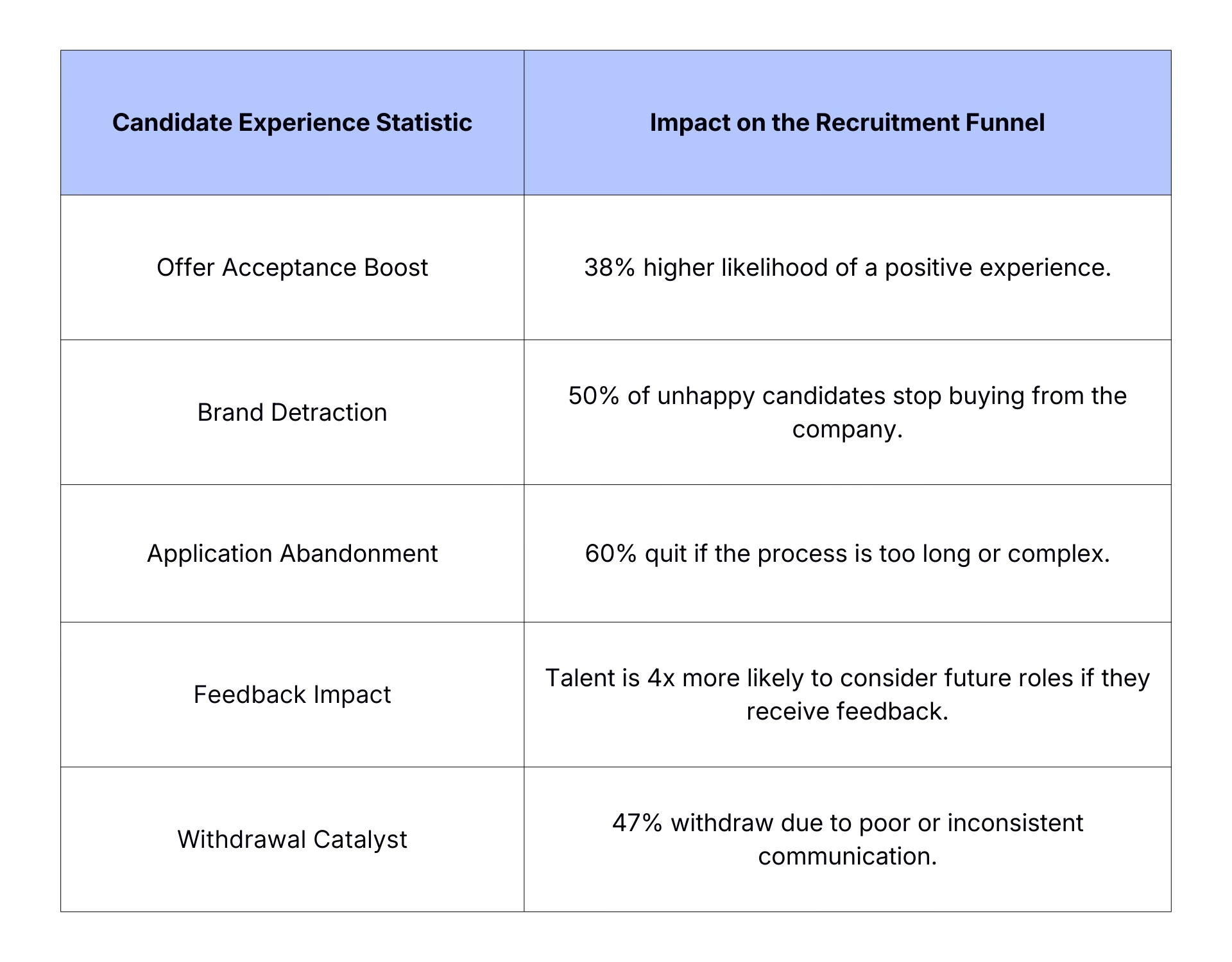
Candidate experience now directly affects offer acceptance and revenue, not just employer brand sentiment. Data cited in IBM's Smarter Workforce Institute candidate experience research and CareerPlug's 2024 Candidate Experience Report suggests a positive candidate experience can increase a seeker's likelihood of accepting a job offer by around 38%. The downside risk extends past hiring: roughly half of candidates surveyed by Virgin Media's well-documented case study said they would stop purchasing from a company after a poor application experience, and about 72% reported sharing those frustrations with their networks.
The psychology of candidate resentment
A primary reason candidates drop out is that they feel their time isn't respected. Research from Greenhouse's Candidate Experience Report suggests about a third of candidates who leave a hiring process cite time issues as the biggest factor, followed by unmet salary expectations and overly long processes. Many candidates resent stacked automated steps — video interviews, personality tests, async screens — before any human conversation. It can make them feel like a number and erode trust in the eventual offer.
To address this, many organizations are using a mix of human and AI support. AI handles tasks like scheduling and first-round screening, while human recruiters step in at moments that need empathy and relationship-building. The aim is for candidates to feel acknowledged, even in a process that leans heavily on automation.
Transparency and communication standards
Candidates increasingly expect transparency as baseline. A Glassdoor 2024 transparency survey found roughly 74% of job seekers want to see pay details in postings, and companies that share full compensation ranges — salary, bonuses, equity — tend to build trust faster. Fast communication also matters: stronger teams reply to initial applications within 24 hours and respond to interview-stage candidates within five days.
The transition to skills-based hiring
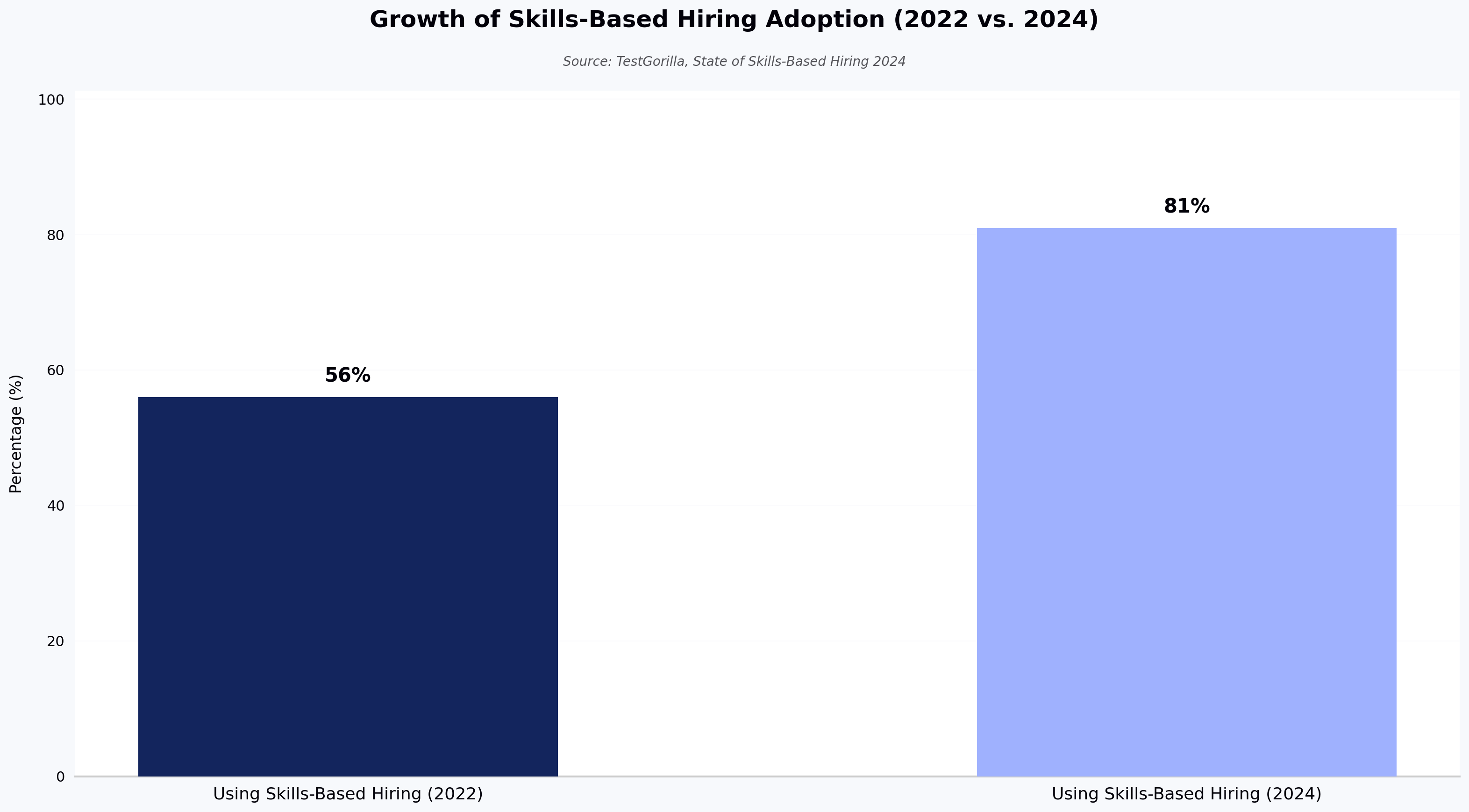
Skills-based hiring is replacing degree-first screening across a growing share of roles. According to TestGorilla's State of Skills-Based Hiring 2024, about 81% of organizations report using skills-based hiring in some form, up from 56% in 2022. The shift is driven by recognition that traditional credentials don't reliably predict performance, particularly as tools and stacks evolve quickly.
Predictive modeling for performance
The same TestGorilla research indicates around 94% of employers believe skills-based hiring better predicts job performance than resume screening alone. By focusing on demonstrable ability, companies can find candidates who add to their culture and show real potential, not just those with conventional backgrounds. This matters most for small and mid-sized businesses that need adaptable, fast-learning employees.
A contrarian note: skills-based hiring underperforms for roles that require credentialed expertise — licensed medical practitioners, regulated financial advisors, or senior legal counsel — where formal qualifications are not optional and where a practical test cannot substitute for years of supervised practice. Treat skills-based hiring as a default, not a universal rule.
Engineering leaders interviewed in Stripe's Developer Coefficient report have argued that top engineers contribute roughly three times their compensation in value — a useful frame, though one based on self-reported leadership perception rather than independent measurement. To find that level of talent, companies are moving away from generic interview questions toward practical work tests like coding challenges and real-world scenario assessments. For a deeper walkthrough, see our guide to technical skill assessments.
The role of AI in skills evaluation
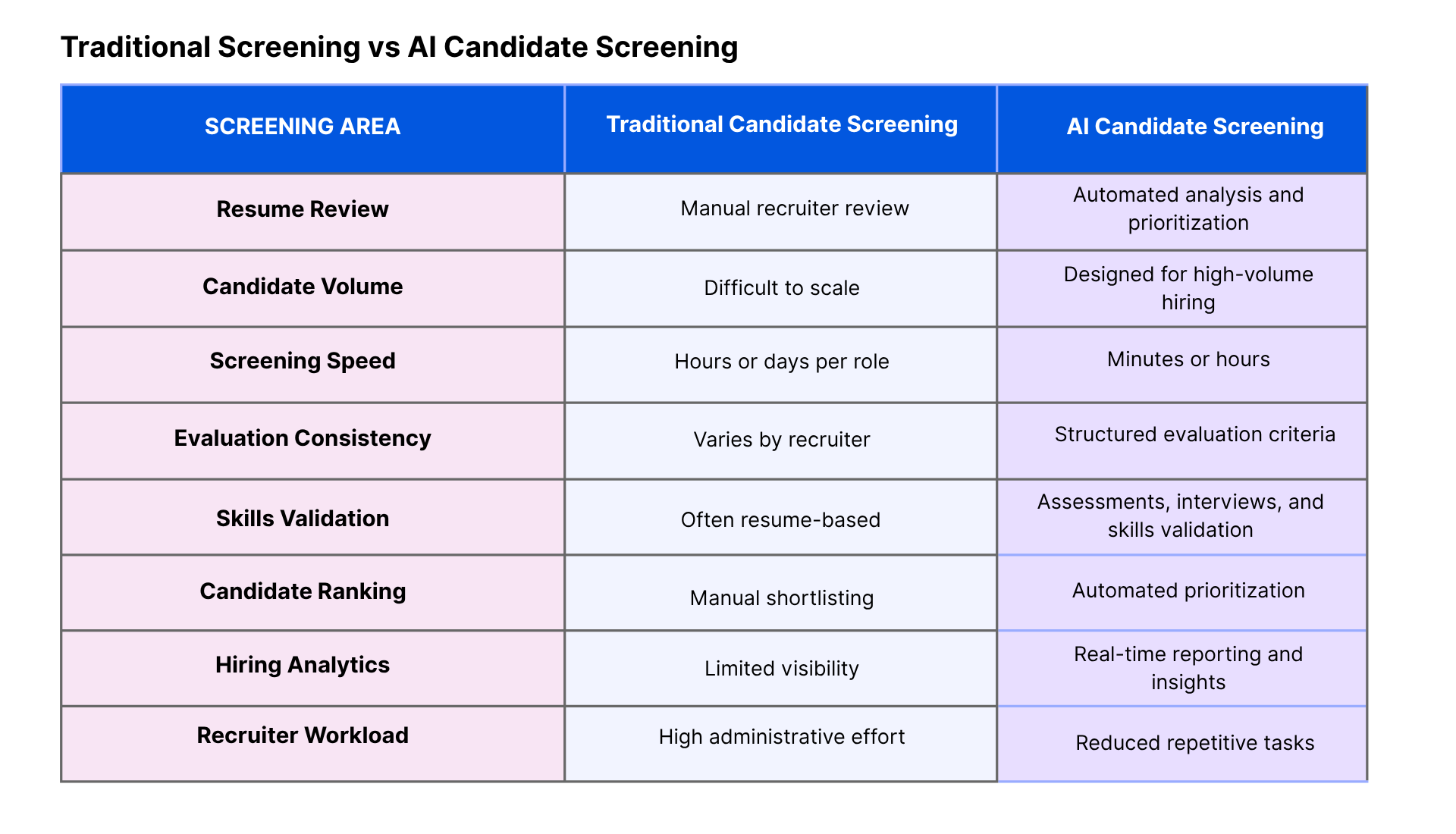
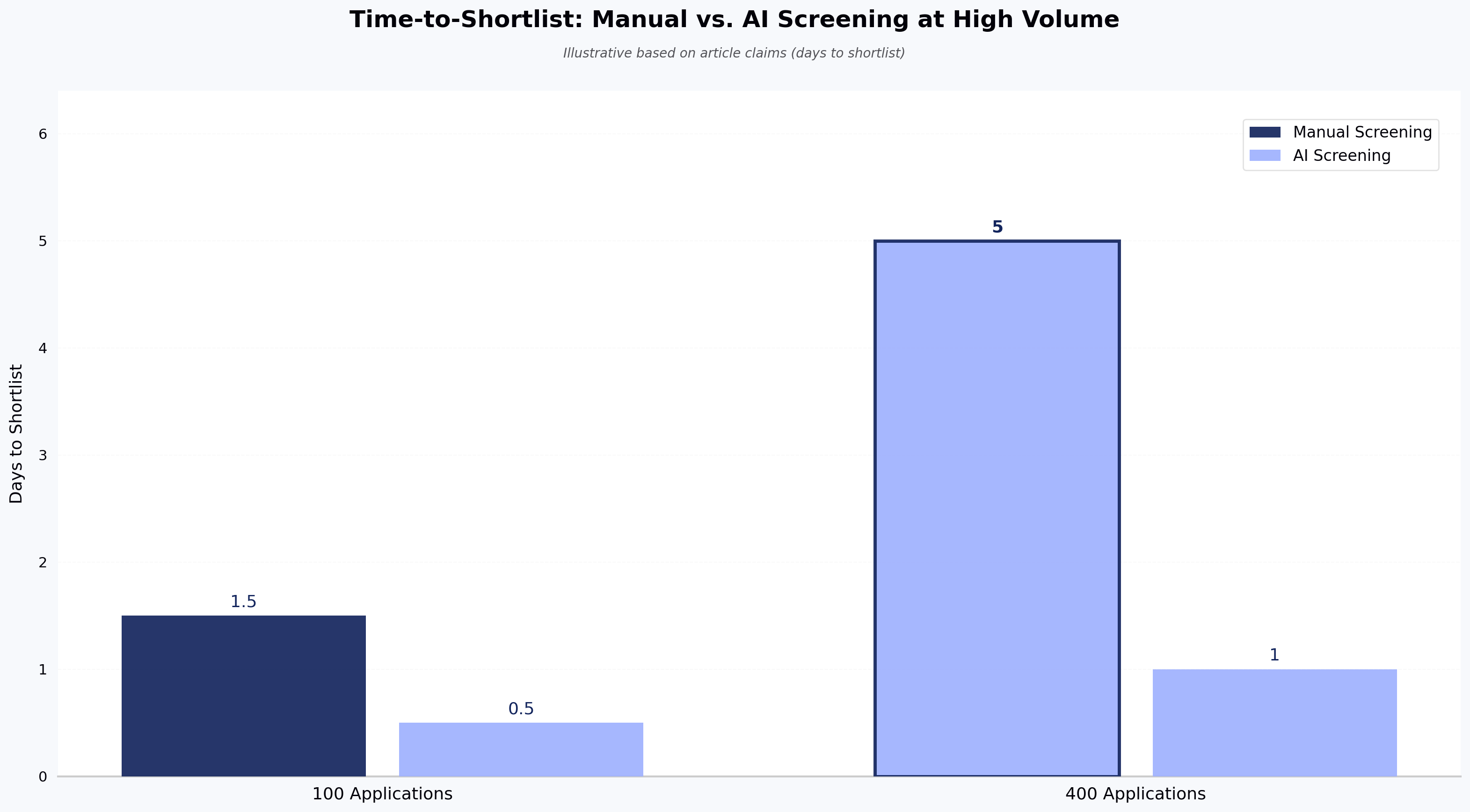
AI in hiring — the use of machine learning models to screen resumes, score assessments, and schedule interviews — has become operationally necessary at scale. LinkedIn's 2025 Future of Recruiting report found roughly two-thirds of recruiters expect more candidates per role in 2026, making manual screening impractical. AI screeners trained on historical assessment data and hiring outcomes can help teams review large applicant pools quickly, though the quality of any AI screen depends entirely on the data it was trained on — biased training data produces biased rankings.
Transparency about AI use also matters. Pew Research Center surveys suggest candidates are roughly 25% more likely to distrust a company if they believe an algorithm alone decides their future. A more defensible approach is to let AI surface recommendations while human managers review and own final decisions. Worth flagging: under the EU AI Act, AI systems used in employment decisions are classified as "high-risk," which imposes documentation, transparency, and human oversight obligations on employers operating in the EU. U.S. jurisdictions including New York City (Local Law 144) and Illinois have similar requirements. Any AI screening rollout should include legal review for the jurisdictions you hire in.
Speed optimization and the efficiency crisis
Faster hiring is harder than it looks: industry tracking from Josh Bersin's Global Workforce Intelligence suggests that in 2025, only about one in nine companies meaningfully sped up hiring while roughly 60% slowed down. The usual cause is "time debt" — experienced staff stuck on repetitive screening and scheduling instead of higher-value work. Honest take: the "15-step process" itself is often the source of slowness. Each added step is justifiable in isolation, but the cumulative effect is a pipeline that loses good candidates to faster competitors.
Addressing the scheduling bottleneck
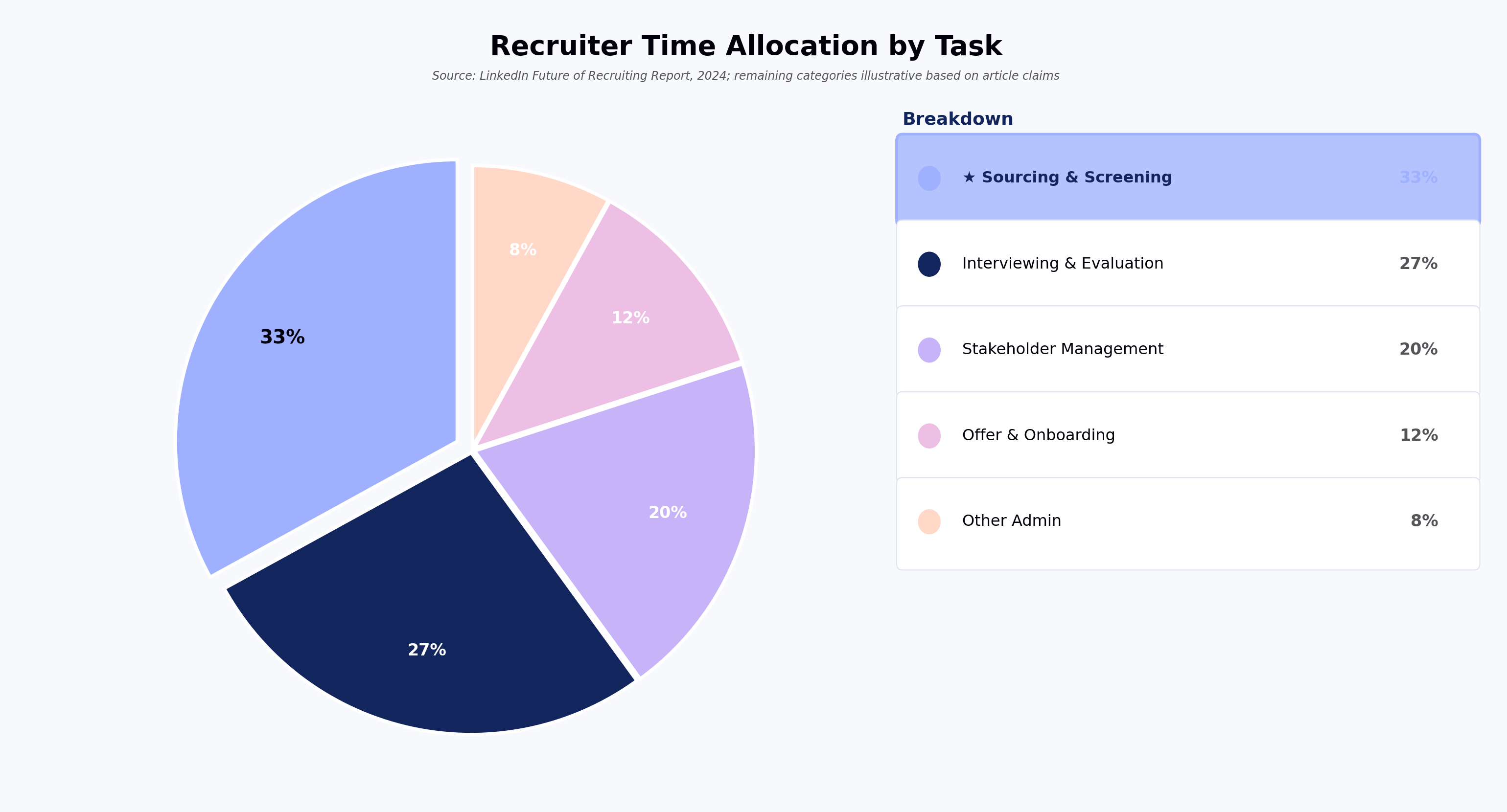
Scheduling remains the single largest drain on recruiter time. Data from Yello's Recruiting Operations Benchmark Report suggests scheduling consumes roughly 38% of a recruiter's working hours, largely due to interviewer availability and rescheduling.
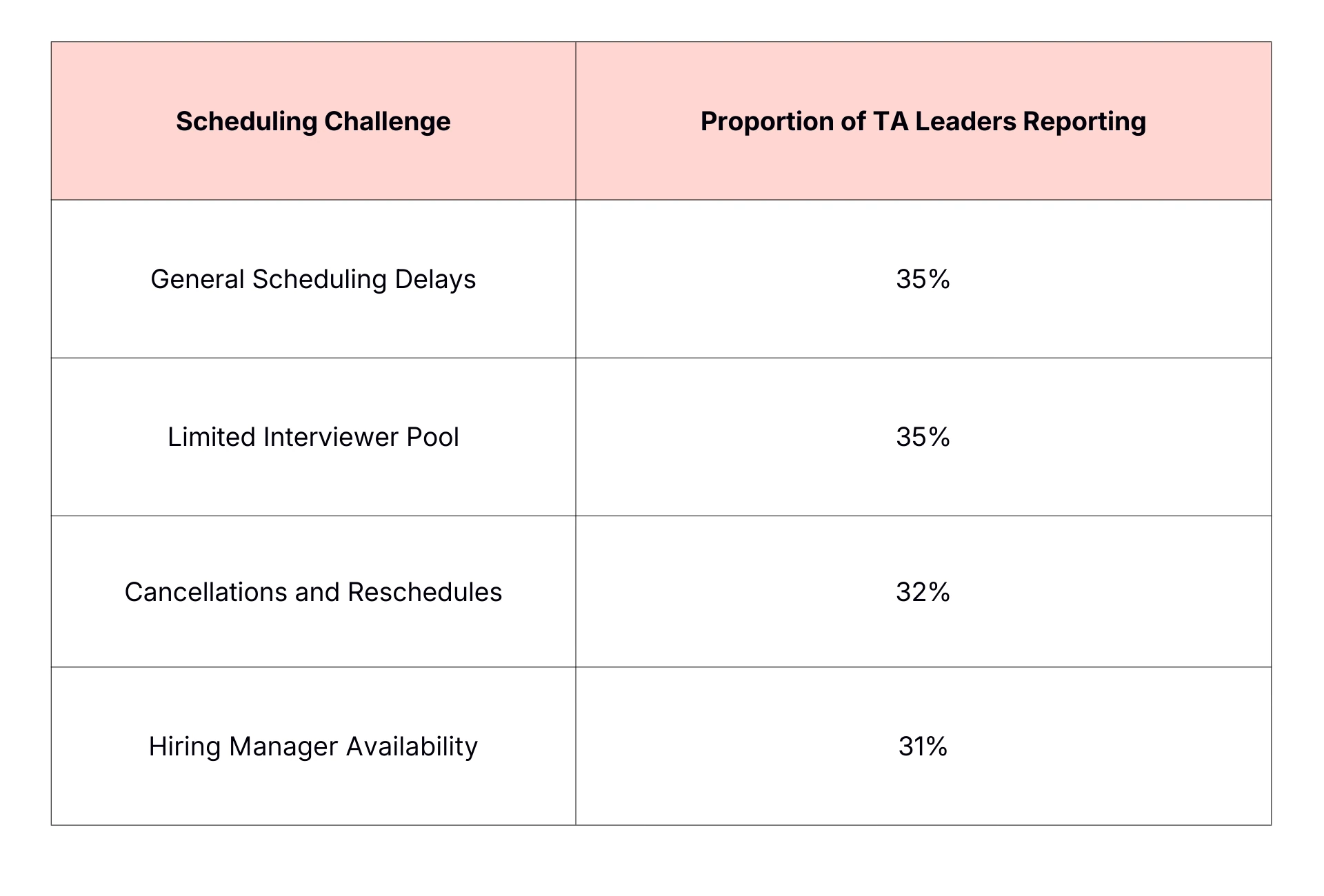
Stronger teams are addressing this with AI scheduling agents — typically trained on calendar patterns and interviewer availability — so they can process more candidates without adding headcount. Async video interviews and one-way assessments also help across time zones, though they should be limited to early stages to avoid the "all-automation, no-human" experience candidates resent.
A 10-step recruitment workflow
A clear, repeatable workflow is the backbone of hiring process optimization. The 10 steps below cover the operational core; each can be expanded based on role complexity.
- Mission and value showcase: Build a digital employer brand so candidates can research culture independently. Concrete example: a recorded engineering team Q&A on YouTube outperforms a generic "About Us" page for technical roles.
- Identification of need: Document required qualifications, experience level, and the specific business outcome the role will own — not just a list of duties.
- ATS integration: Use applicant tracking software to automate job board distribution and structured resume filtering. Pair this with an ATS comparison checklist before procurement.
- Targeted job ads: Market to both active and passive seekers through role-specific channels (Stack Overflow for engineers, AngelList for startup hires, niche Slack communities for specialists).
- Employee referrals: Use internal networks to find pre-vetted talent, with referral bonuses tied to retention milestones rather than hire date.
- Keyword and skills filtering: Filter unqualified applicants automatically against a defined skills matrix, not against keyword density.
- Rapid phone screening: Move qualified candidates to in-depth interviews within one week to prevent drop-off.
- Automated offer letters: Prevent "radio silence" between verbal offer and written offer — a common source of candidate doubt and reneges.
- AI-integrated background checks: Use vendors like Checkr or Certn to compress verification timelines from weeks to days.
- Electronic onboarding: HRIS-integrated onboarding can compress paperwork time significantly — anecdotal customer reports cite reductions from 11 hours to about 5.5 hours, though results vary by HRIS configuration.
By automating administrative work, recruiters can spend more time on relationship-building and assessing fit.
Technical assessment integrity in the age of generative AI
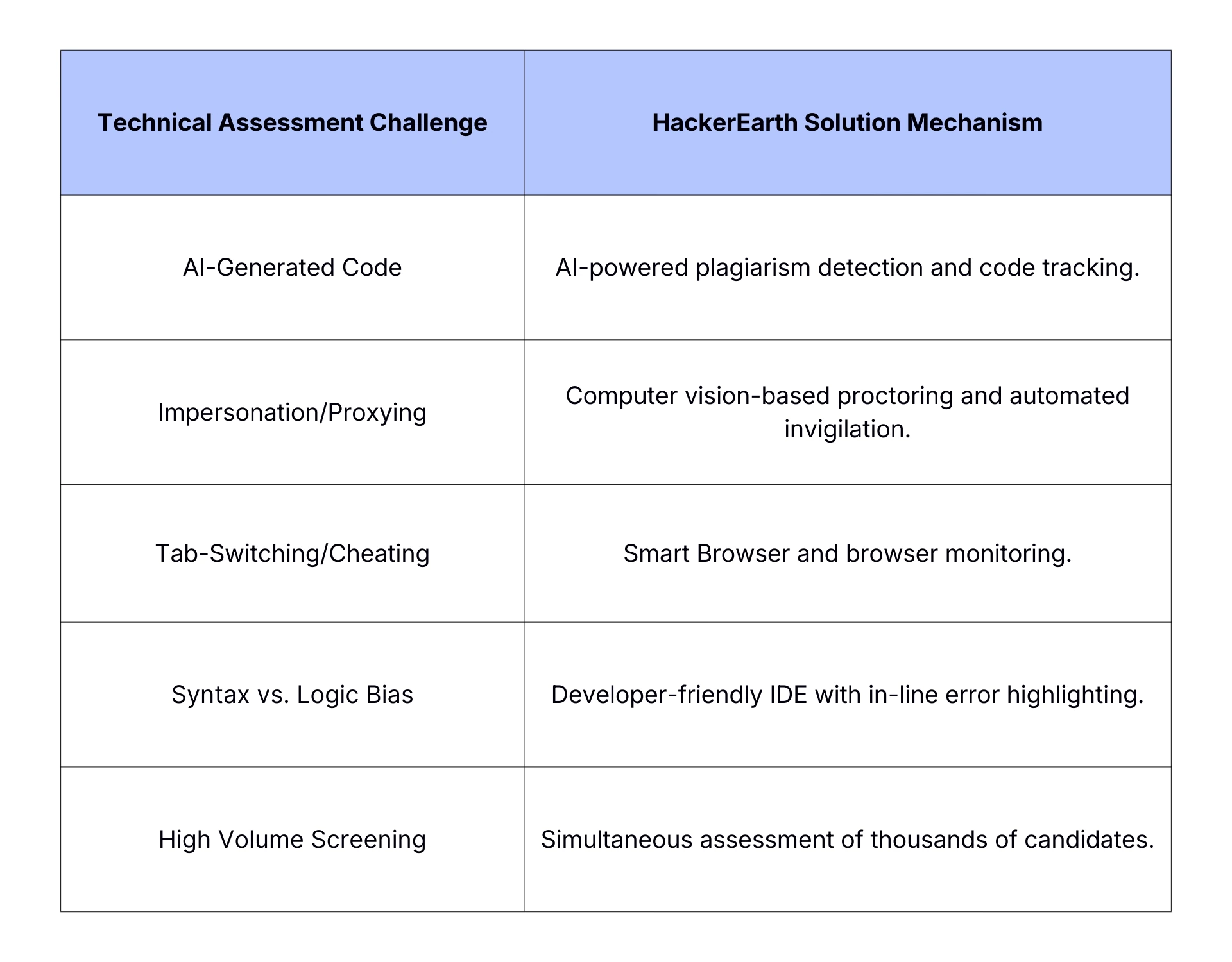
Generative AI has introduced a new failure mode in hiring: "AI interview fraud." Survey data from Gartner's 2024 talent risk research suggests roughly half of businesses have encountered candidates using deepfakes, impersonators, or real-time AI assistance during interviews. Many coding tests now measure prompt-engineering ability rather than engineering judgment.
Defining the "integrity layer"
The "integrity layer" is shorthand for a set of assessment design choices — conversational follow-ups, reasoning probes, and process-level review — that verify a candidate actually understands the work they submitted, rather than just blocking external tools. It is distinct from "proctoring," which focuses on surveillance.
Older security methods like browser lockdowns and eye-tracking are increasingly described as "security theater" because determined candidates can bypass them with secondary devices or HDMI splitters. The more durable approach is shifting evaluation from output to reasoning: asking candidates to explain their design choices in real time.
A capability comparison flagged here: third-party generative AI tools (ChatGPT, GitHub Copilot, Claude) currently produce code suggestions but struggle to deliver a confident, real-time spoken justification for architectural choices under interviewer follow-up. Latency and the need to copy questions into another window often surface the gap. This shifts the technical interview's central question from "does the code work?" to "can you explain why it works?"
How assessment platforms support integrity
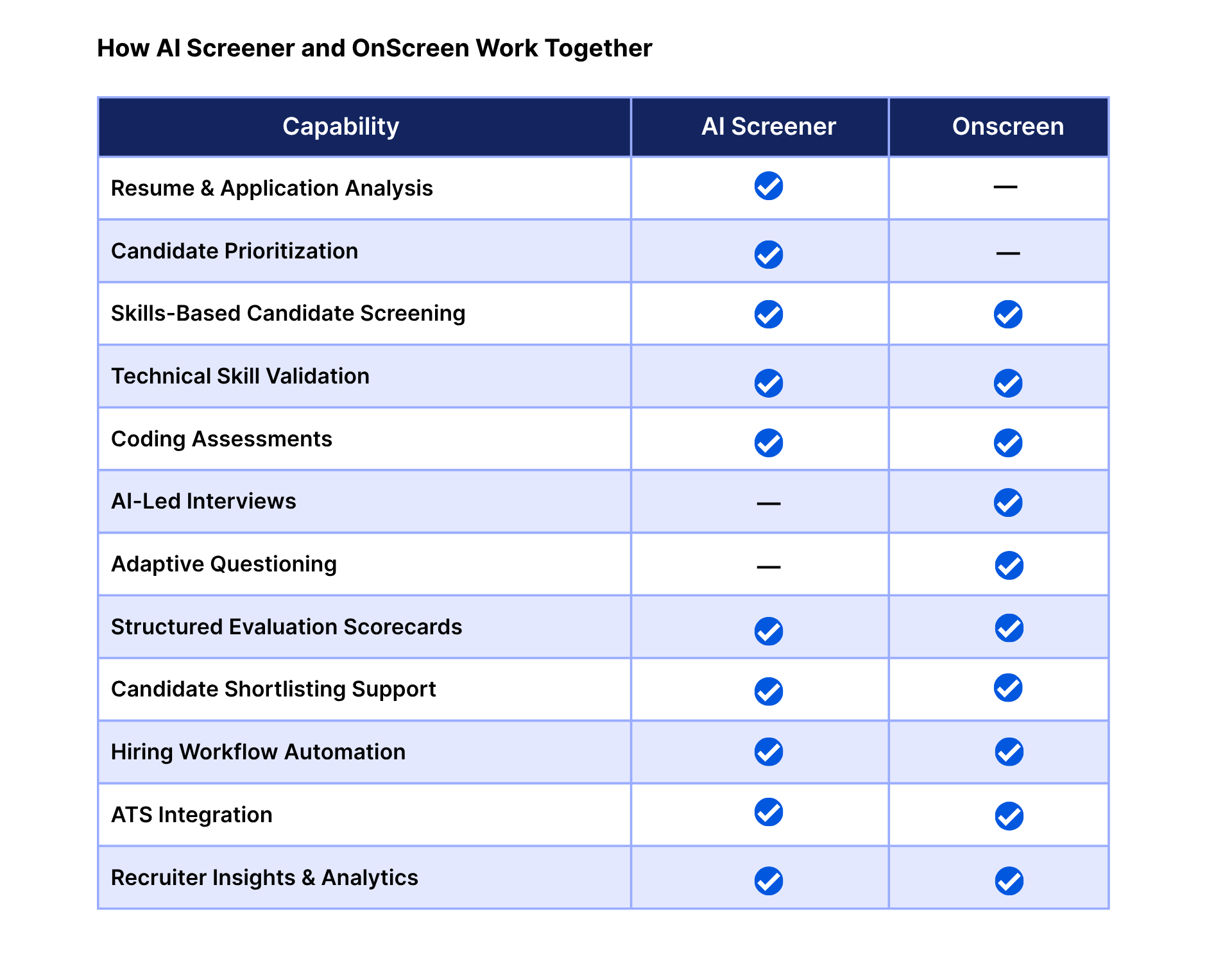
HackerEarth's assessment platform is one option recruiters use for integrity-focused technical evaluation, alongside competitors like CodeSignal, HackerRank, and CoderPad. Each has trade-offs in question library size, anti-cheating tooling, and integration depth. HackerEarth's assessments apply consistent, rubric-driven evaluation across candidates — meaning scoring does not vary by interviewer mood or fatigue — though no platform eliminates bias entirely, and any AI-scored component should be audited periodically against hiring outcomes.
A representative outcome from a HackerEarth case study: an enterprise technology customer used the platform to assess a large developer pool ahead of in-person interviews, reducing downstream interviewer load. Specific customer outcomes vary; recruiters evaluating platforms should ask for case studies relevant to their hiring volume and role mix.
Onboarding: the final frontier of recruitment
Onboarding determines whether a hire actually sticks. Research from BambooHR's onboarding study suggests companies have roughly 44 days to influence a new hire's long-term commitment, and that around one in ten new employees leaves within the first month when onboarding goes poorly.
Effective onboarding focuses on culture and mission clarity. It starts with an offer letter written in plain, value-driven language. New employees should also receive a personalized 30/60/90-day plan with explicit goals and ownership.
HubSpot has publicly documented its "Culture Code" deck as part of onboarding, and Slack has written about its onboarding playbook on its engineering blog. Both companies emphasize making implicit norms (PTO requests, meeting culture, decision-making) explicit. Recognition matters too: data from Nectar's 2023 Employee Recognition Survey indicates around 77.9% of employees say they would be more productive with more frequent recognition.
Internal mobility and upskilling
Internal mobility is now a core retention lever. Because skill requirements change quickly, many companies prefer to train and promote internal employees rather than hire externally for every opening. Internal candidates carry less risk because the organization already has direct evidence of their performance and fit. According to SHRM's cost-of-hire research, a failed external hire often costs 2 to 3 times the employee's annual salary.
A strong internal mobility program involves:
- Securing stakeholder buy-in: Reducing "talent hoarding" by tying manager performance reviews to internal promotion rates.
- Skill gap analysis: Identifying in-demand competencies across departments using a defined skills taxonomy.
- Internal marketing: Publishing internal role openings before external ones for a defined window (often 7–10 days).
- Upskilling paths: Providing mentors or formal training for employees moving into adjacent roles. See our onboarding and upskilling checklist for a structured starting point.
Frequently asked questions
How long should a hiring process take? A reasonable target is three to four weeks from application to offer for most individual contributor roles. Executive and senior technical hires often run six to eight weeks. Anything beyond that typically signals process drag, not thorough evaluation.
What is skills-based hiring? Skills-based hiring is an approach that evaluates candidates on demonstrable abilities — through work samples, assessments, or structured exercises — rather than on degree, prior employer, or years of experience. It is most effective for technical, creative, and operational roles, and less suitable for credentialed professions like medicine or law.
How does AI help recruitment? AI in recruitment automates high-volume, repetitive tasks: resume screening, scheduling, initial assessment scoring, and candidate communication. Its limits are equally important — AI models can replicate biases present in their training data, and they should not make final hiring decisions without human review.
What is hiring process optimization? Hiring process optimization is the practice of analyzing each step of a recruiting workflow — sourcing, screening, interviewing, offer, onboarding — and redesigning it to reduce friction, shorten time-to-hire, and improve candidate and hire quality. It typically combines workflow redesign, automation, and measurement.
Is AI screening legal? It depends on jurisdiction. The EU AI Act classifies employment AI as "high-risk" and requires transparency and human oversight. In the United States, New York City's Local Law 144 requires bias audits for automated employment decision tools, and Illinois and Maryland have AI interview disclosure laws. Legal review is required before deploying AI screening in any of these jurisdictions.
How do I prevent AI cheating in technical assessments? Combine reasoning-based evaluation (asking candidates to explain their approach in real time) with process-level review of how a solution was built, not just the final code. Lockdown browsers and proctoring tools alone are increasingly bypassed.

Next steps
If you're a recruiter or talent acquisition leader looking to put this into practice, a structured starting point is to audit your current hiring funnel for the three most common drag points — scheduling, technical screening, and offer-stage delays — and pick one to redesign first.
- Compare your current technical screening workflow against a structured developer assessment approach.
- Review the skills-based hiring framework and identify two roles where degree requirements could be replaced with a work sample.
- Request a walkthrough of HackerEarth's assessment platform to see how rubric-driven evaluation works against your current question set.
Conclusion
Hiring process optimization in 2026 is less about adopting more tools and more about deciding which steps of the process actually add signal — and removing the rest. Recruiters who succeed will be the ones willing to cut steps, not just automate them, and to be explicit with candidates about where AI is used and where a human decides. The technology is improving quickly; the candidate's expectation of being treated as a person is not changing at all.