Strategies to improve the quality of hire
In 2026, hiring has shifted from a focus on filling roles quickly to a more precise approach that adds real value to organizations. The key measure now is quality of hire, which looks at how well new employees perform, fit in, and contribute over time. Improving this metric is crucial because hiring mistakes are expensive. Research shows a bad hire can cost about 30 percent of their first-year salary. For mid-to-senior roles, the total cost, including lost productivity and team disruption, can be between $100,000 and $240,000. In some cases, such as a manager earning $62,000 who leaves after thirty months, the loss can reach $840,000. On the other hand, hiring a top performer can have a significant positive impact, as these employees are 400 to 800 percent more productive than the average employee.
Organizational impact of hiring quality
To see why hiring quality matters, it's important to look closely at the costs of making the wrong choice. The Society for Human Resource Management (SHRM) estimates that hiring someone for a typical job costs about $4,129 to $4,700, and for executive roles, it can be $28,000 or more. If a new hire doesn't work out, these costs double because the company has to start the search again while the position remains open.
The costs of a bad hire go beyond just replacing them. Poor hires can lower productivity across the company in ways that are hard to measure but easy to notice. Surveys show that managers spend about 17 percent of their time, almost seven hours a week, managing underperformers. This takes time away from more important work. Team morale also suffers, as top employees often get frustrated and burned out when they have to pick up the slack. This can lead to valuable team members leaving. According to Harvard Business Review, up to 80 percent of employee turnover is caused by poor hiring decisions.
Leaving a job open for too long is also costly. Many companies wait to find the perfect candidate, but research from Northwestern University shows that taking twice as long to fill a role can lead to a 3 percent drop in profits and a 5 percent drop in sales. Open positions put extra pressure on current staff, which can lead to burnout and up to 20 percent of employees leaving each year.
The star performer phenomenon and power law distributions
One main goal of improving hiring quality is to find and hire "star" performers. These top employees don't fit the usual pattern of average productivity. Instead, a small group creates most of the value for the company. Research from McKinsey and Company shows that in complex jobs like software engineering or research, the best people are eight times more productive than the average.
The productivity gap between top and bottom performers is huge. One person in the top 1 percent can do the work of twelve people in the bottom 1 percent. For example, spending $100,000 on a top performer can save a company up to $800,000 a year by reducing the need for several average employees. These high achievers also help their teams by sharing knowledge and encouraging new ideas.
However, these high achievers are often the most neglected employees. Research consistently shows that they leave not for higher pay, but because their growth and development have stalled. Organizations that fail to provide stretch assignments or meaningful challenges risk losing their most productive assets. When a star performer leaves, the loss is not just an individual vacancy but a decline in team-wide patent development, innovation quality, and creative performance.
Defining and measuring quality of hire metrics
Quality of hire measures how well new employees help the business, showing the return on investment for hiring. Even though 88 percent of recruiters say it's important, less than half track it well. The challenge is to balance hard numbers with more personal, subjective feedback.
To measure an individual’s quality of hire, companies usually combine several factors into a percentage score. The most common ones are job performance, how long the person stays, how quickly they become productive, and how satisfied the hiring manager is.
The fundamental formula for an individual hire is:

Where

represents the number of indicators used. For a broader organizational view, the overall quality of hire is often calculated by averaging the individual scores of a cohort and integrating the retention rate:

Alternatively, organizations may use the employee lifetime value (ELV), which represents the total net value an employee brings to the organization from their first day until their departure.
.webp)
Industry standards show that if 85-90 percent of job offers are accepted, the company has a strong employer brand. A 72.2 percent interview-to-offer rate means the hiring process is well managed. For technical jobs, the market is very selective, with only 0.5 percent of applicants getting offers.
The shift toward skills-based hiring and away from credentials
In 2026, hiring is moving away from focusing on degrees and toward looking at real skills. This change is happening because there aren’t enough qualified people, and technology is changing faster than schools can keep up. Since 2014, jobs that don’t require a degree have increased almost four times. Companies using a skills-first approach see 92 percent better hiring results and 88 percent fewer hiring mistakes.
When companies look at what candidates can do instead of where they went to school, they can find up to 8.2 times more people for specialized jobs like AI engineering. This also helps with diversity and inclusion, since people from different backgrounds, including self-taught and bootcamp graduates, get a fair chance. Research shows that hiring based on skills is five times better at predicting job performance than using education alone.
.webp)
Skills-based hiring also saves money. Employers can save between $7,800 and $22,500 per job by using assessments to spot mismatches early, instead of waiting until after the probation period. These savings come from hiring people who already have the needed skills, which shortens the hiring process and reduces wasted training.
The integration of agentic artificial intelligence in talent acquisition
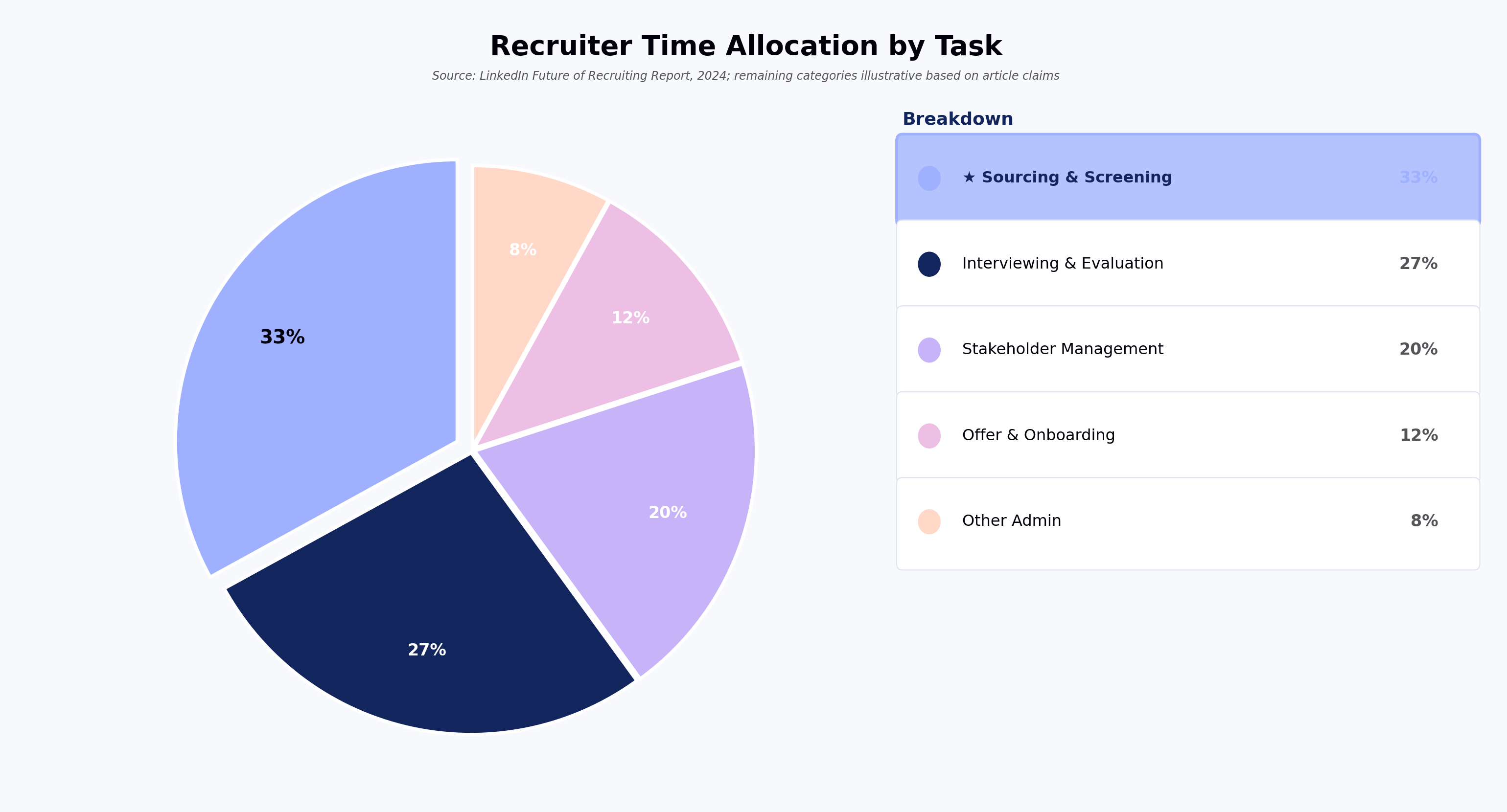
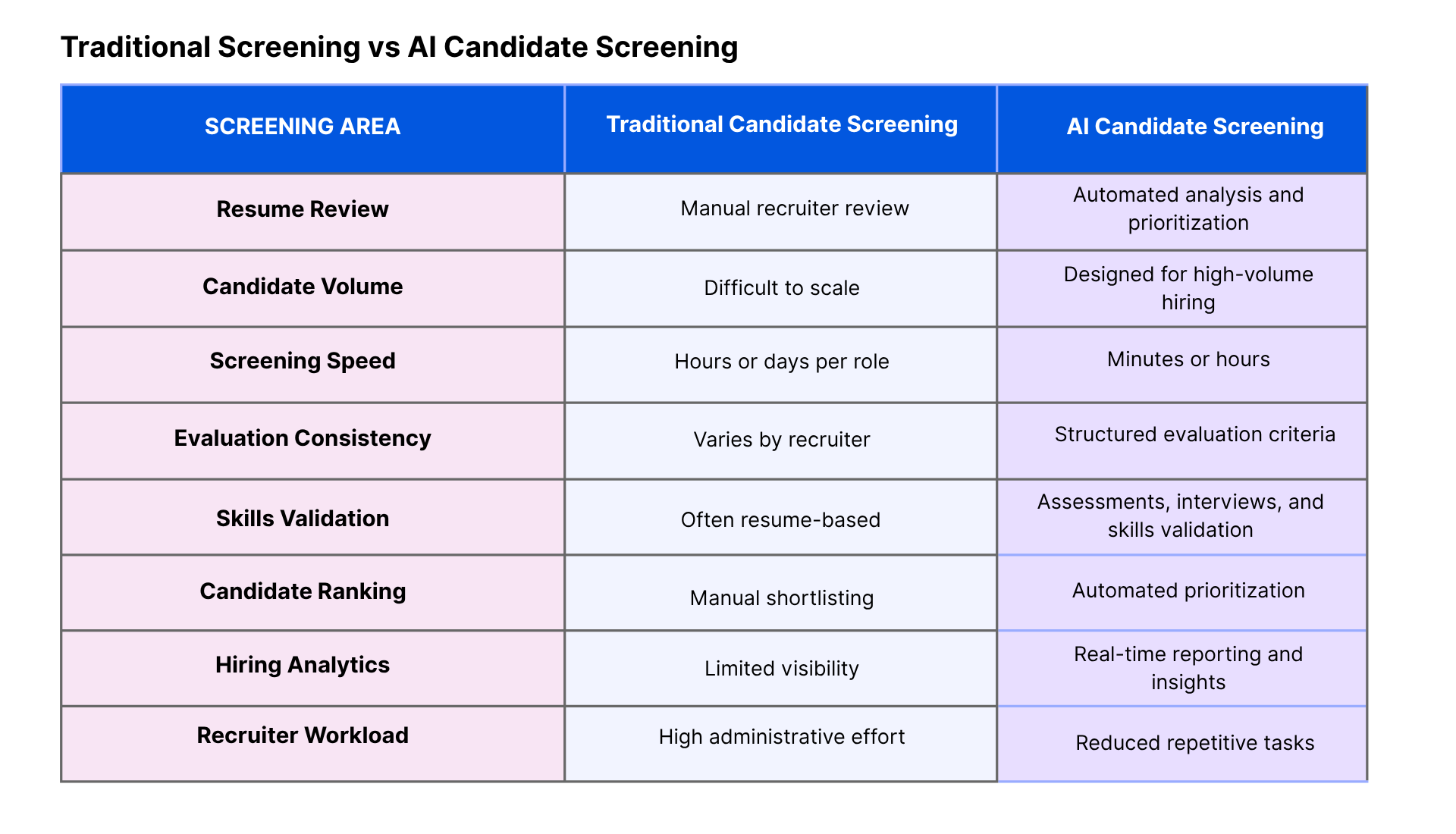
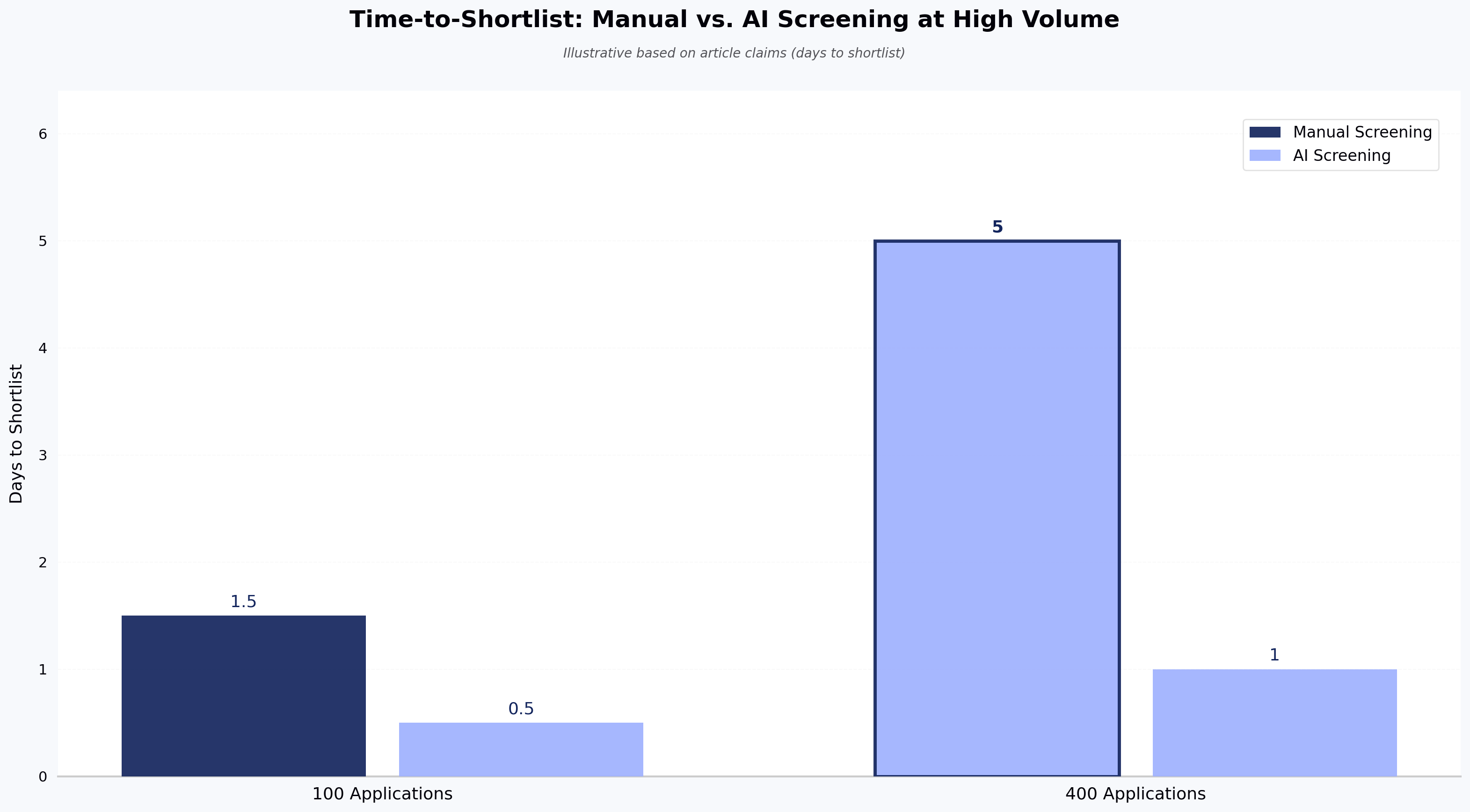
In 2026, artificial intelligence is more than just an automation tool—it works alongside people throughout the hiring process. AI handles tasks like sorting resumes quickly, finding related skills, and even running initial screening interviews, saving recruiters thirty or more hours per search. This lets human recruiters focus on understanding people and making key decisions.
A big improvement is moving away from filtering resumes by keywords, which used to favor people who filled their resumes with buzzwords. In 2026, AI uses smarter searches and context analysis to understand a candidate’s real career growth and project impact. This unbiased process focuses on what candidates can actually do, not just on keywords or unconscious biases.
Practical ideas to improve the quality of hire - planning and sourcing
Improving hiring quality starts well before the interview. It means rethinking how jobs are defined and how potential candidates are found.
1. Reverse engineer top performers
Identifying quality markers by studying existing high-performing employees is the most effective way to define the "ideal candidate persona". By analyzing the behaviors, traits, and skills of those who have been promoted or consistently exceeded goals, recruitment teams can replicate these profiles in their sourcing efforts. This process, known as cloning high performers, involves quantifying the value they bring and the specific methodologies they use to achieve success.
2. Narrative job descriptions over list-based requisitions
Instead of the traditional list of "must-have" skills and years of experience, narrative job descriptions use storytelling to illustrate what success looks like in the first six months. This approach helps high-quality candidates see themselves in the role and understand the impact they will have, leading to better self-selection. Descriptions that focus on competencies—such as "proven ability to manage multiple projects under tight deadlines"—are far more effective than arbitrary time-based requirements.
3. Define success metrics and KPIs upfront
Before a role is even posted, hiring managers and recruiters must agree on what "success" looks like after one year.8 Establishing these kpis early ensures that every stage of the evaluation process is aligned with actual business needs rather than vague impressions of "goodness." This clarity prevents mismatched expectations and reduces the risk of early turnover.
4. Conduct internal skills audits
Before looking externally, organizations should utilize skills inventories for strategic workforce planning. Mapping internal capabilities allows for the redeployment of existing talent into emerging areas, which is often more cost-effective and successful than external hiring. Internal mobility maximizes quality of hire because internal candidates already understand the product, culture, and customers.
Practical ideas to improve the quality of hire - evaluation and selection
The evaluation stage is where companies can make the biggest improvements in hiring quality by using fair assessments and consistent processes.
1. Implementation of structured skills assessments
Replacing resume screening with structured skills tests is the most effective way to predict job performance. These assessments evaluate what a candidate can actually do, catching mismatches early and saving the organization up to $22,500 per role.
2. Shift from "culture fit" to "culture add"
While "culture fit" often leads to hiring people who think and act identically, "culture add" seeks individuals who bring fresh viewpoints and enhance the organization. Interviews should focus on what a candidate can teach the company rather than just how well they blend in.
3. Live pair programming and job simulations
Pair programming interviews mimic real-world work by combining technical evaluation with real-time collaboration. Observing how a candidate breaks down complex problems and responds to feedback provides a clearer picture of their on-the-job performance than any abstract puzzle or whiteboard exercise.
4. Use of interview intelligence and transcription
Capturing and analyzing every interview conversation with AI-driven intelligence allows teams to spot patterns and calibrate their evaluations. This technology ensures that hiring decisions are based on data rather than biased, inconsistent notes taken during the pressure of the interview.
5. Mask personally identifiable information (PII)
To support truly unbiased recruitment, organizations are using tools like FaceCode to mask candidate PII during technical interviews. This ensures that evaluations are merit-focused and merit-based, reducing the impact of unconscious bias.
Practical ideas to improve the quality of hire, onboarding, and retention
A hire is only truly successful if the new employee fits in well and stays with the company.
1. Standardized 30, 60, and 90-day manager surveys
Conducting surveys at these specific intervals provides real-time data on the effectiveness of the recruiting process. Hiring managers can rate the new hire's performance against initial expectations, allowing for immediate calibration of the talent strategy for future roles.
2. Tracking time to productivity metrics
Measuring how many days it takes for a new hire to become fully operational—compared to a departmental benchmark—is a primary determinant of hiring success. This metric highlights gaps in onboarding or training that might be sabotaging the hire's potential.
3. Utilize the employee net promoter score (eNPS)
Asking new hires, "How likely are you to recommend this company as a place to work?" reveals whether the internal brand matches the promises made during recruitment. Scores above 50 indicate a successful cultural integration and a high-quality hire.
4. Granular turnover and retention analysis
Organizations must analyze why people leave, particularly in the first year. If turnover is high, it often signals that job descriptions were misaligned with the actual roles, requiring a revisit of the sourcing and screening criteria.
5. Foster a "coaching culture" for star performers
Since high achievers leave when they feel underdeveloped, managers must be trained to support their growth. A coaching-focused leadership style ensures that top talent remains engaged and sees a clear roadmap for advancement within the company.
Strategic conclusions and the human-AI future of hiring
In 2026, making hiring better is not just an HR task, it’s essential for business success. The numbers show that hiring mistakes are too costly, and bringing in top performers is too valuable to rely on old habits or gut feelings. By focusing on skills and using advanced AI, companies can build stronger, more productive, and more diverse teams.
The thirty-one practical ideas outlined in this report represent a holistic lifecycle approach to talent. From reverse-engineering top performers to using real-time pair programming and AI-driven transcription, these interventions move the needle from "filling a seat" to "investing in an asset". As the labor market remains lean, the organizations that will thrive are those that recognize their highest performers are their greatest growth opportunity. Neglecting the development of high achievers is as much of a strategic failure as hiring the wrong person. The future of quality of hire lies in seamlessly integrating data-backed insights with a renewed focus on the human experience of work.