Why soft skills define the 2026 labor market
The labor market of 2026 has transitioned from a period of technological adjustment to one of strategic consolidation, where the "Human Premium" serves as the primary differentiator for organizational success. As generative artificial intelligence has successfully commoditized a vast array of technical and administrative tasks—automating up to three hours of daily work per employee by 2030—the value of human-centered capabilities has reached an all-time high. This transition is not merely a preference but a strategic imperative. Organizations are navigating a complex reality known as "hybrid creep," a trend where companies are gradually increasing mandatory office presence to strengthen culture and productivity, despite significant resistance from a workforce that largely discovered higher productivity in remote models. By 2026, 83% of workers report feeling more productive in hybrid or remote environments, and 85% prioritize flexibility over salary when evaluating new job opportunities.
This tension between organizational structure and employee autonomy necessitates a new approach to talent evaluation. Traditional hiring methods, often reliant on resumes and unstructured interviews, are insufficient for predicting success in a distributed, digitally-native workforce. Consequently, the adoption of soft skills assessment tools has moved from the periphery to the core of talent acquisition. These tools are designed to evaluate "power skills"—the interpersonal and behavioral strengths that determine how effectively an individual can navigate ambiguity, collaborate across time zones, and lead with empathy in an era of rapid change.
How soft skills assessment tools work
In 2026, the technology supporting soft skills assessment has evolved beyond simple multiple-choice questionnaires into high-fidelity, multimodal environments. These platforms utilize a combination of behavioral science, neuroscience, and advanced artificial intelligence to provide a holistic view of a candidate’s potential.
Situational judgment and behavioral simulations
The cornerstone of modern assessment is the Situational Judgment Test (SJT). Candidates are presented with hypothetical, job-related scenarios and asked to choose the most appropriate course of action. These assessments are highly effective because they test what a candidate can do in a realistic context rather than just what they know. By 2026, these have evolved into immersive behavioral simulations. Platforms like Vervoe and WeCP allow candidates to interact with digital environments that mirror the actual tasks of the role—such as drafting an empathetic response to a disgruntled client or collaborating with an AI co-pilot to solve a system design problem.
Conversational AI and multimodal analysis
Artificial intelligence has moved from passive screening to active evaluation. Conversational AI now conducts first-round interviews, utilizing Natural Language Processing (NLP) to understand intent and context rather than just matching keywords. These systems analyze multimodal cues, including voice modulation, speech patterns, and real-time transcription, to deliver a reliable evaluation of communication clarity, persuasion, and empathy. Furthermore, AI acts as an integrity guardian, with tools like WeCP’s "Sherlock AI" using behavioral tracking to detect plagiarism or hidden assistance with high accuracy.
Neuroscience and gamification
To cater to a workforce increasingly populated by Gen Z, assessments have become more interactive and gamified. Neuroscience-based games, popularized by platforms like Pymetrics, measure cognitive and emotional traits through seemingly simple tasks. For example, the "Money Exchange" game evaluates fairness and social intuition, while "Tower Games" assess planning and problem-solving efficiency. These methods provide objective data on a candidate’s psychological DNA without the stress of traditional testing, leading to a 70% increase in candidate engagement.
Why soft skills assessment is mandatory for hiring in 2026
The strategic implementation of these tools offers measurable benefits across the entire recruitment lifecycle, from reducing costs to fostering more inclusive workplace cultures.
Efficiency and speed-to-hire
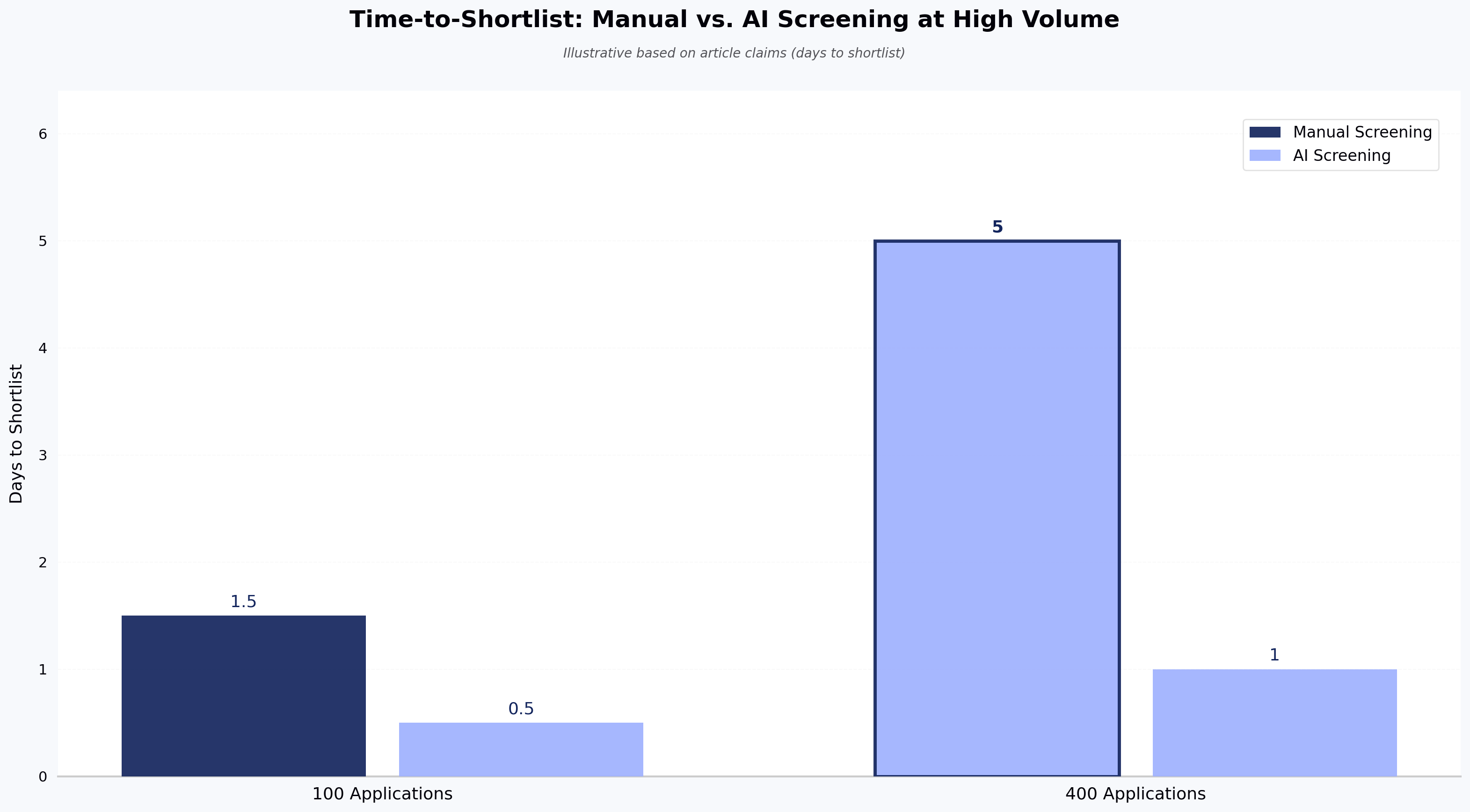
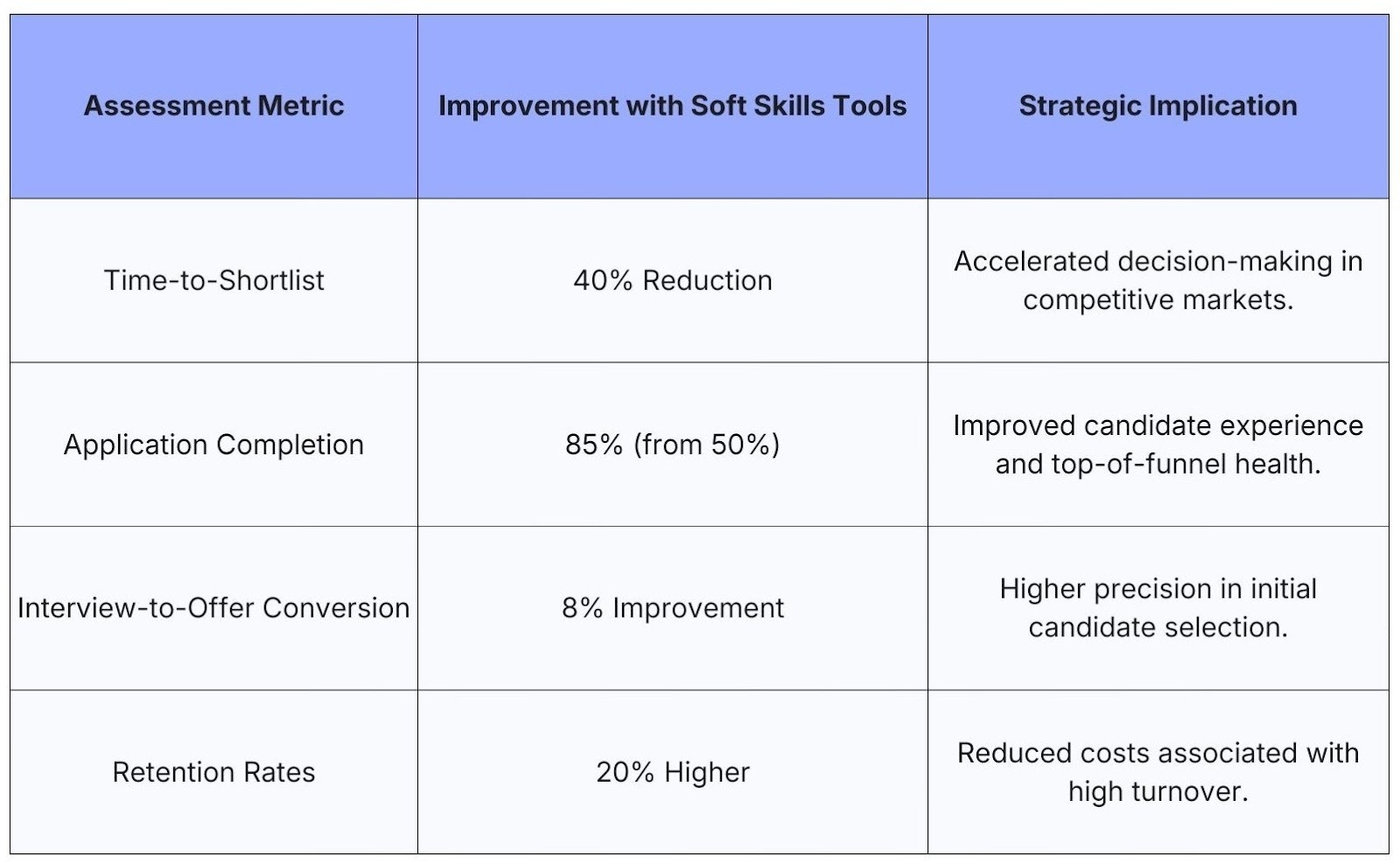
The use of automated screening and AI-driven interviews can reduce the time-to-hire by 40-50% while simultaneously saving up to 30% on hiring costs. By automating the early stages of the funnel, hiring managers can focus their energy on a ranked shortlist of high-potential candidates rather than sifting through hundreds of unqualified resumes. For high-volume roles, such as in retail or hospitality, asynchronous video interviews allow candidates to participate at their convenience, expanding the talent pool across global time zones.
Mitigation of unconscious bias
One of the most significant advantages of software-led assessment is the reduction of human bias. AI models can be designed to be "blind" to identifying information such as gender, ethnicity, or educational background, focusing purely on demonstrated skills and behavioral fit. 72% of candidates agree that AI-driven interviews make the process feel fairer, as they are evaluated on objective metrics rather than the subjective impressions of an interviewer.
Predicting performance and retention
Soft skills are often the best predictors of long-term success. Data indicates that 89% of hiring failures are due to a lack of critical soft skills. By assessing traits like resilience, accountability, and professionalism during the hiring process, organizations can significantly reduce turnover and improve team cohesion. Furthermore, these tools help align a candidate's personal motivations with the job role, ensuring a higher likelihood of long-term engagement.
Deep dives: the 10 best soft skills assessment tools in 2026
The following analysis explores the leading platforms in the 2026 market, highlighting their specific technological advantages, pricing models, and target use cases.
1. HackerEarth
HackerEarth has evolved from a technical screening platform into a comprehensive AI-driven talent intelligence suite that treats soft skills with the same rigor as coding proficiency. Recognized for having completed over 150 million assessments, the platform is a trusted resource for enterprise-level teams that require precision in high-volume technical hiring.
HackerEarth’s soft skill capabilities are anchored in its extensive psychometric library, which includes situational judgment tests (SJTs) tailored to specific professional challenges. The "FaceCode" feature facilitates live, collaborative interviews where hiring managers can observe a candidate's communication style and problem-solving approach in real-time. Furthermore, the platform utilizes advanced proctoring to ensure that behavioral patterns during the test are consistent with honest performance.
- Best for: Tech-heavy organizations that prioritize objective skill validation alongside behavioral fit.
2. Toggl Hire
Toggl Hire represents the "organized overachiever" of the screening world, focusing on speed and a frictionless candidate journey. Instead of requiring resumes upfront, the platform uses short, interactive skills challenges as the primary entry point for candidates. This approach allows companies to attract a broader talent pool and find high-quality candidates up to 86% faster than traditional methods.
The platform is designed to be "plug and play," requiring minimal setup while offering a visual, Kanban-style candidate pipeline. Toggl Hire’s library includes over 19,000 expert-created questions covering technical tasks, soft skills, and language proficiency. It is particularly effective for distributed teams that need to scale quickly without the administrative overhead of complex enterprise software.
- Best for: High-growth startups and SMBs prioritizing speed and candidate engagement.
3. TestGorilla
TestGorilla has become the gold standard for organizations seeking data-driven depth across a wide array of competencies. The platform allows recruiters to combine up to five different tests—spanning cognitive ability, software skills, personality traits, and culture add—into a single assessment. This holistic approach provides a nuanced portrait of a candidate's suitability for a role.
One of TestGorilla’s standout features is its advanced AI-powered grading and statistics, which move beyond binary results to provide a comprehensive analysis of how each applicant performed relative to the benchmark. The platform also includes robust anti-cheating measures, such as webcam monitoring and screen tracking, which are essential for remote hiring integrity.
- Best for: Mid-sized to large teams requiring comprehensive, science-backed evaluations for a diverse range of roles.
4. Pymetrics (Harver)
Pymetrics, a core component of the Harver ecosystem, utilizes neuroscience-based games to assess the social, cognitive, and emotional attributes of candidates. By observing how a candidate interacts with games like "Stop 1" (measuring attention) or "Money Exchange" (measuring trust and fairness), the platform builds a behavioral profile that is highly predictive of job performance.
This platform is particularly valued for its "DEI-supportive algorithms," which are designed to remove bias and ensure a fair playing field for all applicants. Pymetrics provides employers with job suitability scores and custom benchmarks for each role, allowing for quantifiable measures of cultural and behavioral fit.
- Best for: Enterprises committed to diversity, equity, and inclusion (DEI) and high-volume candidate engagement.
5. iMocha
iMocha is an expansive talent analytics platform that supports both hiring and internal talent development. Boasting the world’s largest skill library with over 3,000 tests, iMocha allows organizations to assess everything from coding and cloud infrastructure to business English and emotional intelligence.
A unique feature of iMocha is its "AI-LogicBox," which evaluates logic and problem-solving skills without requiring full code execution. The platform also offers "AI-Speaking" for automated evaluation of video responses and "AI-Writing" for subjective question scoring. For global teams, iMocha’s skill benchmarking analytics are invaluable, as they map test results to internal and industry standards to identify top-tier talent quickly.
- Best for: Global enterprises and IT services firms requiring robust benchmarking and role-based skills evaluation.
6. Bryq
Bryq is a talent intelligence platform that prioritizes the intersection of behavioral traits, cognitive ability, and organizational culture. Developed by I-O psychologists and grounded in validated psychological models like the 16PF and Big Five (OCEAN), Bryq provides a "Talent Match Score" that indicates a candidate’s alignment with specific job requirements and team values.
The platform’s AI Job Builder scans job descriptions to identify critical skills and automatically recommends the appropriate assessment mix, ensuring that the evaluation process is role-driven from the start. Bryq is particularly effective for internal mobility decisions, as it can map existing employees' potential to new roles within the company.
- Best for: Organizations prioritizing culture fit, team compatibility, and long-term behavioral alignment.
7. Mercer Mettl
Mercer Mettl offers a world-class, cloud-based platform for customized online assessments, specifically tailored for enterprise-scale operations and high-stakes evaluation. With a library of over 400 job-role assessments and extensive psychometric tools, Mettl is widely used for identifying leadership potential and conducting rigorous behavioral profiling.
Mettl’s differentiator is its "pay-as-you-go" tailored pricing and high-security proctoring environment. The platform supports more than 25 million assessments annually across 100+ countries, making it a dominant player for organizations that require global scalability and localized language support.
- Best for: Large-scale enterprises, educational institutions, and public sector organizations requiring secure, compliant assessments.
8. Vervoe
Vervoe distinguishes itself by moving beyond multiple-choice questions into realistic job simulations. The platform uses three distinct AI models—the "How," "What," and "Preference" models—to analyze how candidates interact with tasks, what they respond, and how those responses align with the hiring manager's specific preferences.
Vervoe’s assessments create an immersive experience where candidates handle tickets, draft emails, or solve coding challenges in 8 different languages. The AI automatically reviews and ranks candidates based on performance accuracy, context, and tone, allowing hiring teams to "see them do the job" before the first interview. This approach is proven to identify "hidden gems" whose skills might not be apparent on a traditional resume.
- Best for: Creative, sales, and support roles where task performance is the primary indicator of success.
9. eSkill
eSkill is a versatile assessment tool that allows recruiters to create completely unique evaluations by mixing and matching questions from a massive library of 800+ subjects and job roles. It is particularly effective for identifying "transferable skills" in candidates who may lack direct experience but possess the underlying aptitude for a role.
The platform includes integrated one-way video interviews, which work alongside modular skills tests to give hiring managers a clear view of a candidate's tone, clarity, and confidence. Organizations using eSkill report a drastic reduction in recruitment time by eliminating manual screening and scheduling bottlenecks.
- Best for: HR teams requiring maximum flexibility and modular testing across diverse professional and industrial roles.
10. Codility
While Codility is renowned for its technical coding challenges, it has expanded its suite in 2026 to focus heavily on the behavioral and collaborative aspects of engineering. Through its "CodeLive" feature, Codility facilitates interactive technical interviews where recruiters can assess a candidate's communication style, teamwork, and approach to debugging in real-time.
The platform also employs advanced behavioral tracking to maintain test integrity, monitoring for tab-switching, unusual mouse movements, and typing patterns that suggest non-human intervention. Codility’s "Skills Intelligence" module provides organizations with data-driven insights into their team's technical and soft skill health, enabling smarter long-term workforce planning.
- Best for: Engineering teams and tech recruiters who value a candidate's collaborative mindset and system design thinking over pure coding output.
The “power skills” of 2026: defining the new standard
The effectiveness of these assessment tools is measured by their ability to identify the specific soft skills that drive organizational resilience in the current economy. Hiring managers in 2026 have ranked the following as the most critical human capabilities:
- Communication: The ability to translate complex data into actionable insights and collaborate effectively across hybrid environments remains the top currency.
- Professionalism and accountability: There is an increased focus on "ownership" and reliability, especially among younger generations entering the workforce with a more laid-back attitude toward work.
- Adaptability and learning mindset: With 44% of work skills expected to transform by 2030, the ability to "unlearn and relearn" new tools and processes is non-negotiable.
- Critical thinking and ethical judgment: As AI generates more content, the human ability to audit for bias, logic, and truth has become a specialized high-value skill.
- Emotional intelligence (EQ): High EQ is the bedrock of leadership and conflict resolution in high-pressure, diverse team environments.
Future trends: the next frontier of soft skills assessment
As we move toward the late 2020s, the landscape of soft skills assessment is poised for further radical transformation.
The rise of immersive VR and AI agents
Virtual Reality (VR) is emerging as a powerful tool for observing authentic behavior in high-stakes environments. VR training already shows four times higher information retention, and as an assessment tool, it enables the analysis of micro-expressions, posture, and real-time decision-making. Simultaneously, "Agentic AI" recruiters are becoming autonomous, conducting first-round interviews that adapt dynamically based on candidate responses—probing deeper into areas of expertise and shifting away from weaknesses in real-time.
Strategic workforce planning through skills inventories
Organizations are increasingly moving away from reactive hiring toward strategic "Skills Audits." By maintaining an internal "Skills Inventory," companies can identify hidden talent within their existing workforce and facilitate internal mobility, reducing the need for expensive external hires and improving employee loyalty. This shift is supported by the rise of "micro-credentials," where specific assessed skills are valued more highly than traditional degrees.
Implementation strategy: selecting the right tool for your organization
Choosing the appropriate soft skills assessment platform requires a strategic evaluation of five critical factors:
- Scientific validity: Ensure the tool uses validated psychometric models (like OCEAN or 16PF) and is independently audited for fairness.
- Breadth of role coverage: Does the platform offer specific tests for your industry, from manufacturing and skilled trades to IT and administrative services?
- Candidate experience: Avoid assessment fatigue by choosing tools that are mobile-friendly, gamified, and efficient (typically taking under 30 minutes).
- Decision support analytics: Look for platforms that provide quantifiable benchmarks and ranked shortlists rather than just raw data.
- Integrations: The tool must fit seamlessly into your existing ATS and HRIS workflow to ensure data integrity and recruiter efficiency.
Synthesis and strategic recommendations
The professional landscape of 2026 has made it undeniably clear: technical expertise alone is no longer a guarantee of career security or organizational success. As the half-life of technical knowledge continues to shrink, the "soft" abilities of humans to adapt, empathize, and think critically have become the "hard" requirements of the modern workplace.
For recruitment leaders, the mandate is to move beyond "gut-feel" hiring and embrace evidence-based talent acquisition. By integrating these top-tier soft skills assessment tools, organizations can build teams that are not only capable of performing today's tasks but are also resilient enough to navigate the uncertainties of tomorrow. Whether it is through the gamified neuroscience of Pymetrics, the immersive simulations of Vervoe, or the technical-behavioral hybridity of HackerEarth, the tools available in 2026 provide the precision needed to turn human potential into a competitive advantage. The choice of platform should align with organizational values, role complexity, and the desired candidate experience, ensuring that every hire is a "culture add" built for long-term growth.