11 Top Talent Intelligence Platforms Transforming Hiring [2026]
Talent intelligence platforms — software that combines internal workforce data, external labor market signals, and AI-driven inference to guide hiring and workforce decisions — are now standard tooling in most enterprise TA functions. The interesting question in 2026 isn't whether to adopt one. It's which platform fits the workflow you actually run, and which trade-offs you can live with on data accuracy, skills-inference quality, and vendor lock-in.
Korn Ferry's 2025 Talent Acquisition Trends research reports that a majority of talent leaders plan to deploy autonomous AI agents within their teams over the next year. That shift changes what recruiters spend their time on — and what a "platform" is expected to do. Sourcing agents, scheduling agents, and interview agents now sit alongside the analytics dashboards that defined the previous generation of talent intelligence.
This guide compares 11 talent intelligence platforms for 2026, names where each one is strong, and flags the trade-offs vendors rarely put in their pitch decks.
Who this guide is for
This guide is written primarily for heads of talent acquisition, technical recruiters, and engineering hiring managers evaluating tooling for technical and high-volume hiring. CHROs and L&D leaders will find useful context in the workforce planning sections, but the operational depth is recruiter-focused.
What is a talent intelligence platform?
A talent intelligence platform uses data, analytics, and AI to inform decisions across the talent lifecycle — sourcing, hiring, retention, internal mobility, and workforce planning. It differs from traditional recruiting analytics in three ways:
- Predictive, not just retrospective. Traditional analytics answer "what happened to time-to-fill last quarter?" Talent intelligence answers "which skills will we be short on in nine months?"
- Skills-first, not credential-first. Modern platforms infer skills from resumes, work history, assessments, and learning data rather than filtering on job titles and degrees.
- Data joins across silos. Internal ATS, HRIS, and performance data get combined with external labor market signals — talent supply, compensation benchmarks, competitor hiring patterns.
For example, a talent intelligence platform might flag that engineers with specific cloud certifications are increasingly scarce in your primary hiring market but abundant in an adjacent one. Recruiters can then adjust location strategy, expand remote hiring, or refine compensation before the shortage bites.
One caveat worth naming up front: skills inference is probabilistic, not deterministic. Inferred skills can be wrong — particularly for candidates with non-traditional career paths — and platforms vary widely in how transparent they are about confidence scores. Treat an inferred skill as a hypothesis worth validating with an assessment or interview, not a verified credential.
📌 Also read: 7 Key Recruiting Metrics Every Talent Acquisition Team Should Track
Why talent intelligence platforms matter in 2026
Three shifts have made talent intelligence platforms more central than they were even 18 months ago.
AI-generated CVs broke resume signal
The top of the funnel is now full of AI-assisted applications. Cover letters are generic in familiar ways. Resumes are tuned for keyword match. Recruiters cannot read their way to a shortlist the way they could in 2022. Talent intelligence platforms that infer skills from work history and assessments — rather than trusting the resume text — partially fix this, but only partially. The honest answer is that the top-of-funnel problem now requires a combination of skills inference, structured assessment, and interview-stage identity verification.
Autonomous agents shifted the work
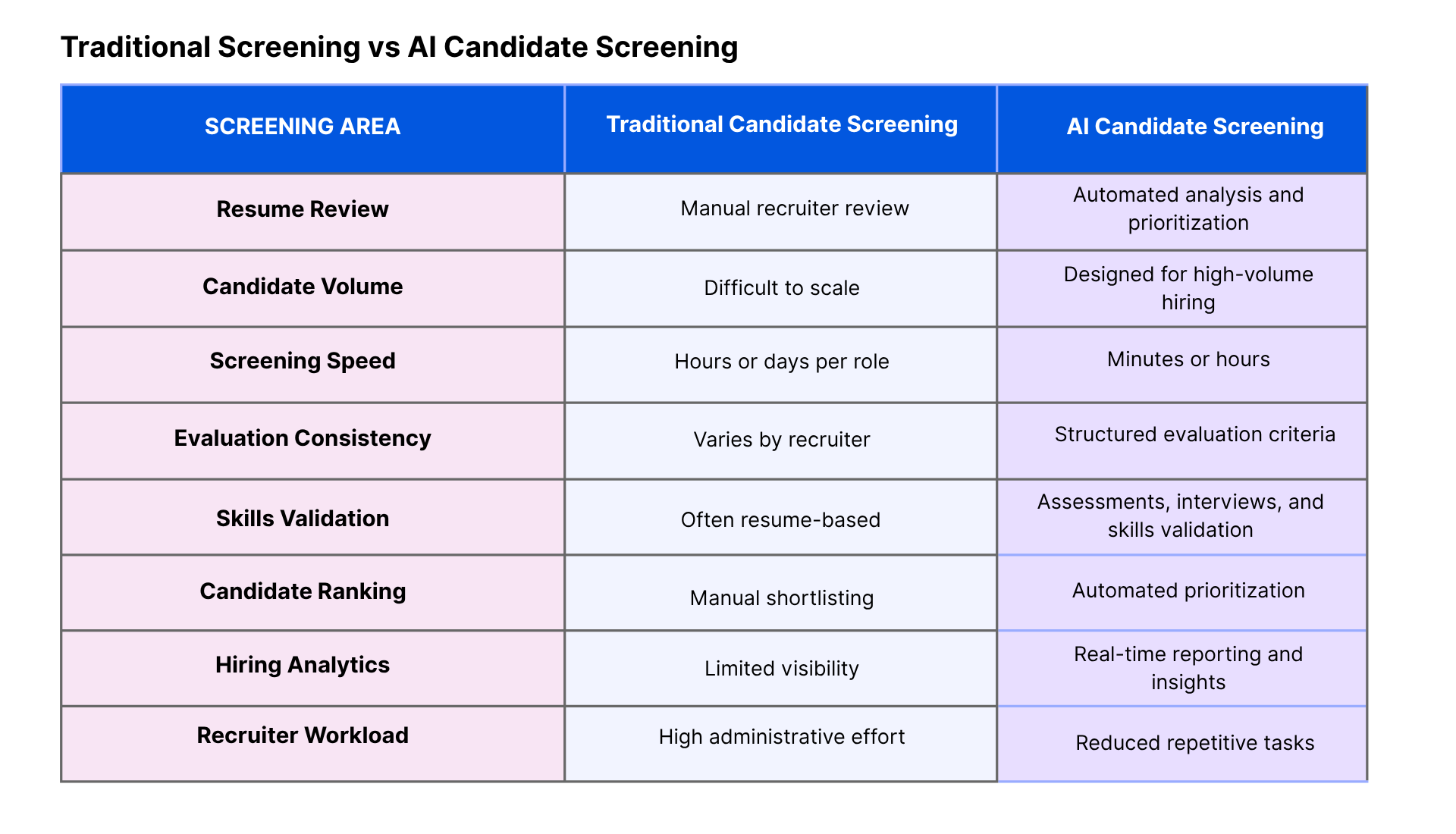
Sourcing agents, scheduling agents, and interview agents (including HackerEarth's OnScreen) now handle the highest-volume repetitive tasks. That changes what a recruiter's day looks like — less coordination, more calibration and judgment. Platforms are being re-evaluated on how well they orchestrate agents, not just on how well they report on outcomes.
Skills-first hiring became the default framing
A 2024 Intelligent.com survey of hiring managers, reported by Republic World, found roughly half of surveyed companies planned to drop bachelor's degree requirements for some roles. The survey reflects intent, not structural change — many of those companies still filter on degrees in practice. But the direction of travel is consistent across LinkedIn's Future of Recruiting research and other sources: skills-based hiring is the framing that survives the next planning cycle. Talent intelligence platforms are how most organizations operationalize it.
The counter-argument: vendor lock-in is real
Unified, all-in-one platforms create switching costs on skills taxonomies, historical analytics, and integrated workflows. The convenience of one vendor comes at the price of negotiating leverage and data portability later. A best-of-breed stack — a strong assessment platform, a separate sourcing tool, a workforce analytics layer — remains a defensible choice for teams that value flexibility over single-throat-to-choke simplicity. This guide reviews both categories.
Key features to evaluate
- Unified internal and external data integration. A strong platform pulls from ATS, HRIS, performance, and learning systems, and layers external signals — skills supply, compensation trends, competitor hiring, geographic distribution.
- Skills inference with visible confidence. Look for platforms that show how confident they are in an inferred skill, and where the inference came from. Black-box skills scoring fails an audit.
- Workforce planning that maps to your reality. Scenario modelling is only useful if the underlying skills taxonomy matches your actual roles. Vendor-supplied taxonomies often don't.
- AI-driven candidate matching. Machine learning that matches on skills and outcomes rather than keywords or credentials.
- Bias-mitigation tooling with honest scope. Bias detection reduces some patterns; it does not eliminate bias. Ask what the tool actually measures.
- Assessment integration. For technical hiring, inferred skills need to be validated. Platforms that partner with or include assessment capability are stronger than platforms that assume the resume tells the truth.
- Agent orchestration. How does the platform handle sourcing agents, scheduling agents, and interview agents — its own or third-party?
The 11 top talent intelligence platforms in 2026: side-by-side
A note on the ratings: G2 scores below are drawn from publicly available G2 listings and change frequently. Verify current ratings at G2.com before relying on them for procurement decisions. Retrain.ai shows "N/A" because public review volume is too thin to produce a comparable score.
| Platform | Primary strength | Trade-off to know | G2 rating (unverified) |
|---|---|---|---|
| HackerEarth | Skills assessment and AI interviews for technical hiring | Focused on skills evaluation; pair with a workforce-planning tool for full lifecycle | 4.5 |
| Eightfold.ai | Enterprise skills graph, internal mobility, workforce planning | Complex rollout; enterprise pricing; thin on native assessment | 4.2 |
| SeekOut | Deep sourcing with granular DEI filters | Contact data accuracy varies; sourcing-heavy, less workflow depth | 4.5 |
| Beamery | Unified talent CRM plus workforce scenario modelling | Steep learning curve; enterprise-only pricing | 4.1 |
| Loxo | Consolidated recruiting workflow — ATS, CRM, sourcing, outreach | Less depth in workforce planning; more agency-shaped | 4.6 |
| hireEZ | Open-web sourcing beyond LinkedIn plus outreach automation | Contact data quality varies; costs climb at scale | 4.6 |
| Metaview | AI interview transcription and structured hiring notes | Narrow scope — interviews only, not a full platform | 4.8 |
| Gloat | Internal talent marketplace and career pathing | Weak on external sourcing; better as an add-on | 4.4 |
| Reejig | Ethical AI focus, skills-based internal/external matching | Dated UX and learning curve for non-technical users | 3.5 |
| Gem | Recruiting CRM with strong engagement sequences | Not a workforce-planning tool; engagement-focused | 4.8 |
| Retrain.ai | Skills demand forecasting and reskilling planning | Smaller market presence; limited public review data | N/A |
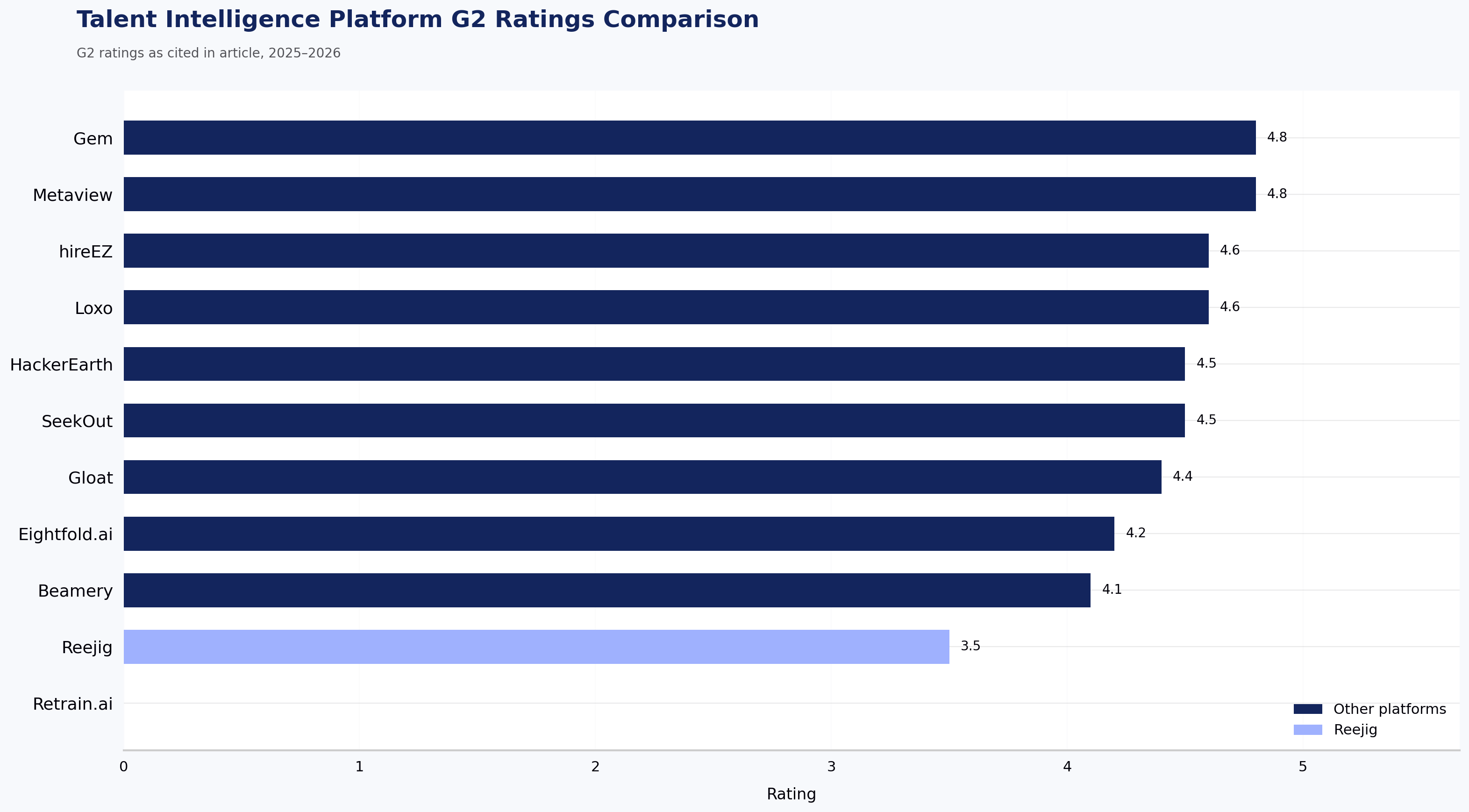 Source: G2 ratings as cited above. Verify current ratings at G2.com before referencing.
The 11 best talent intelligence platforms in 2026
1. HackerEarth — technical hiring and skills intelligence
Disclosure: HackerEarth is the publisher of this guide.
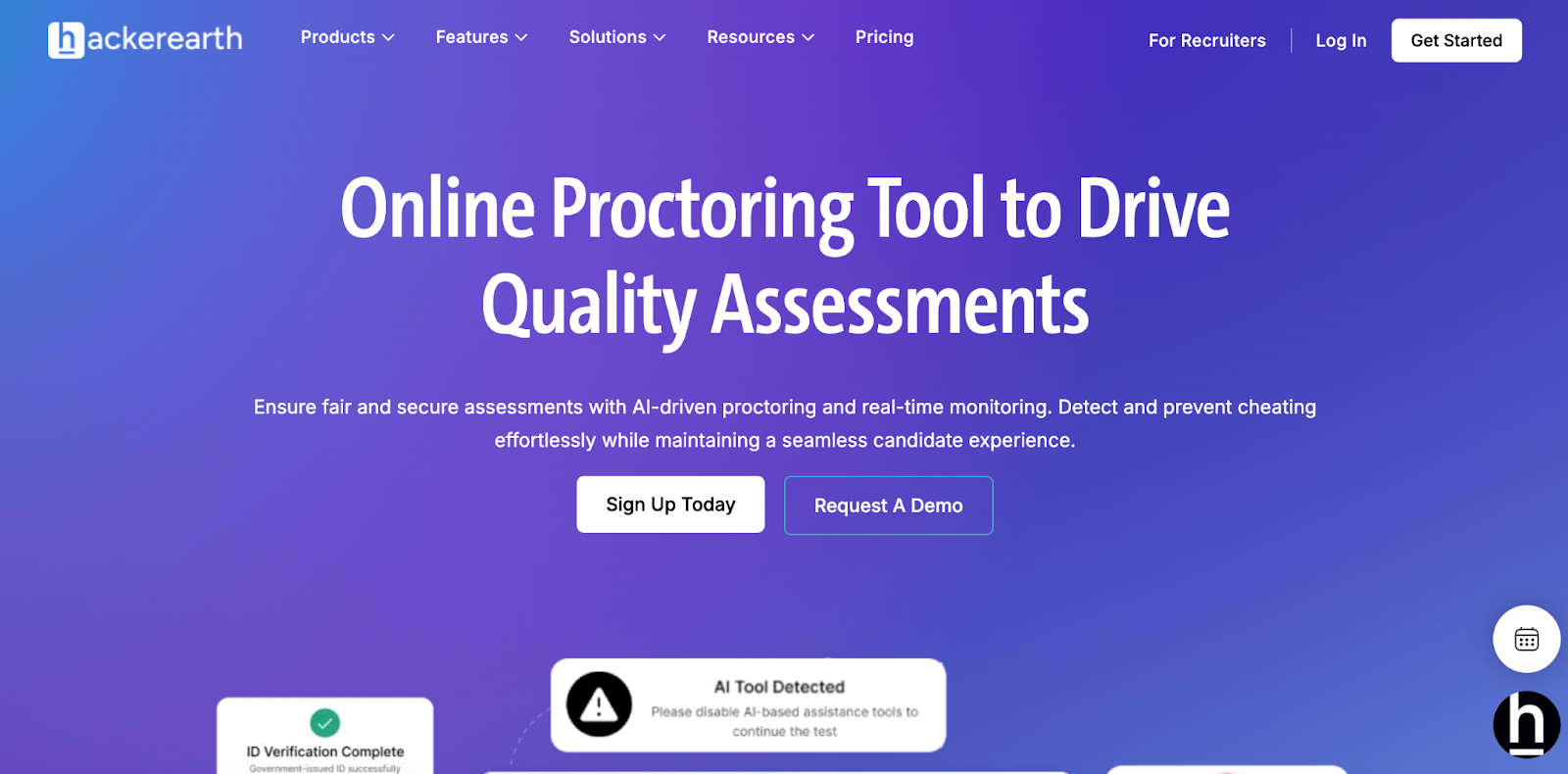
HackerEarth is a skills intelligence platform focused on technical hiring. It combines skill assessments, live coding interviews, an AI interview agent, and proctoring — giving recruiters and hiring managers a way to measure candidate capability against the actual work, not just the resume. The Skill Assessments library covers 1,000+ skills across 40+ programming languages, and custom content creation supports non-technical roles when needed.
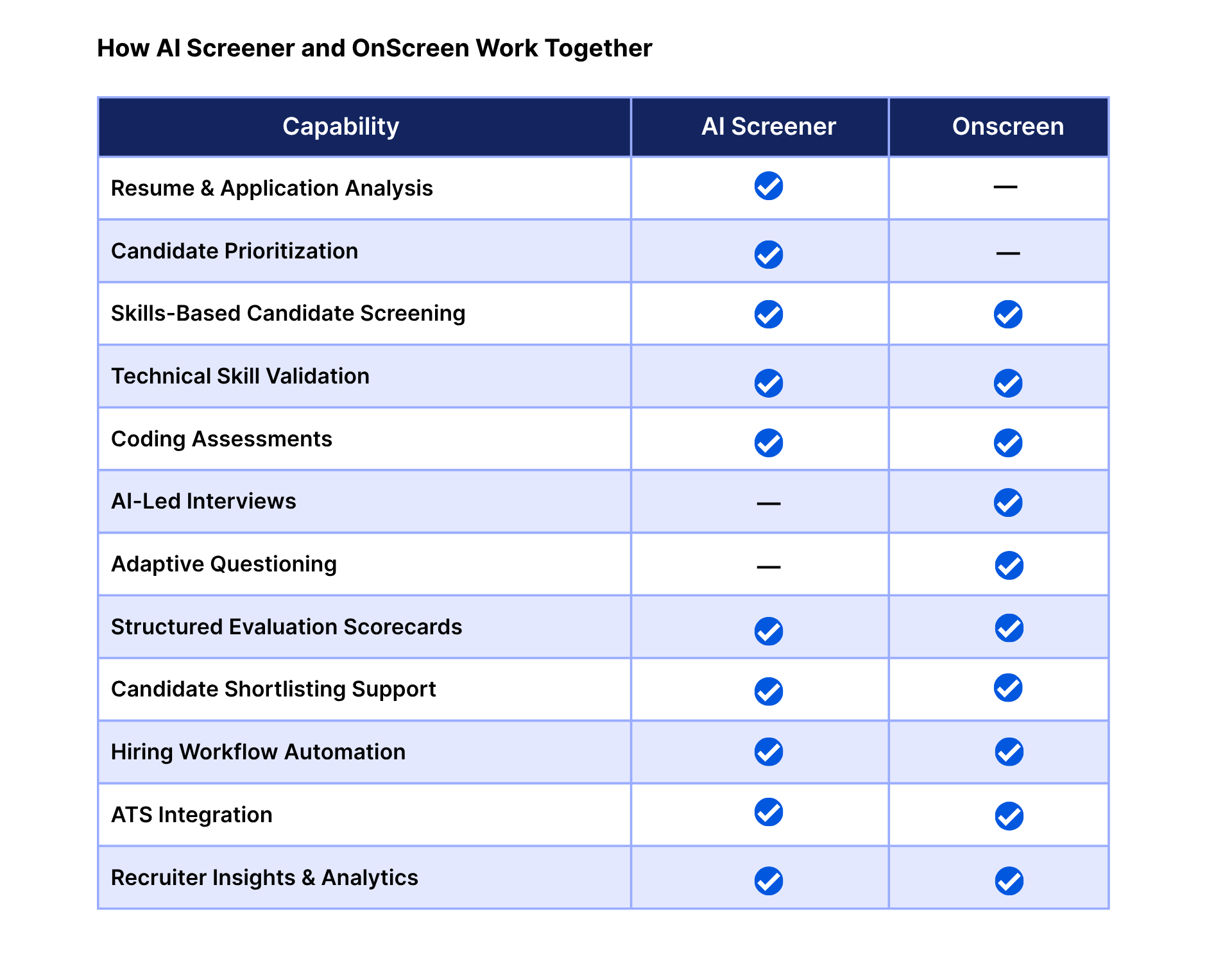
FaceCode is HackerEarth's live interview environment — real-time coding, video, a shared drawing canvas for system design, and rubric-based scoring stored alongside the candidate report. OnScreen, the AI interview agent launched in 2026, conducts structured technical interviews around the clock using video avatars, with built-in identity verification and proctoring. Every OnScreen interview follows a deterministic evaluation framework, which produces comparable results across candidates in a way human panels rarely achieve. It is more consistent than human-led screens; it is not a substitute for human judgment at the offer stage.
At Discover Dollar, Head of HR Pawan Kuldip described the change this way: "Before OnScreen, we had no reliable way to measure candidate quality, especially with the rise of AI-generated CVs... Roles that previously took much longer are now being closed within three to four weeks."
Best for: Enterprises hiring developers at volume who need validated skills assessment and AI-assisted interviews integrated into the same platform.
Trade-off: HackerEarth is specialized for skills evaluation and technical hiring. Teams that need a single vendor for external sourcing and workforce planning will pair it with another tool.
2. Eightfold.ai — enterprise skills graph and workforce planning
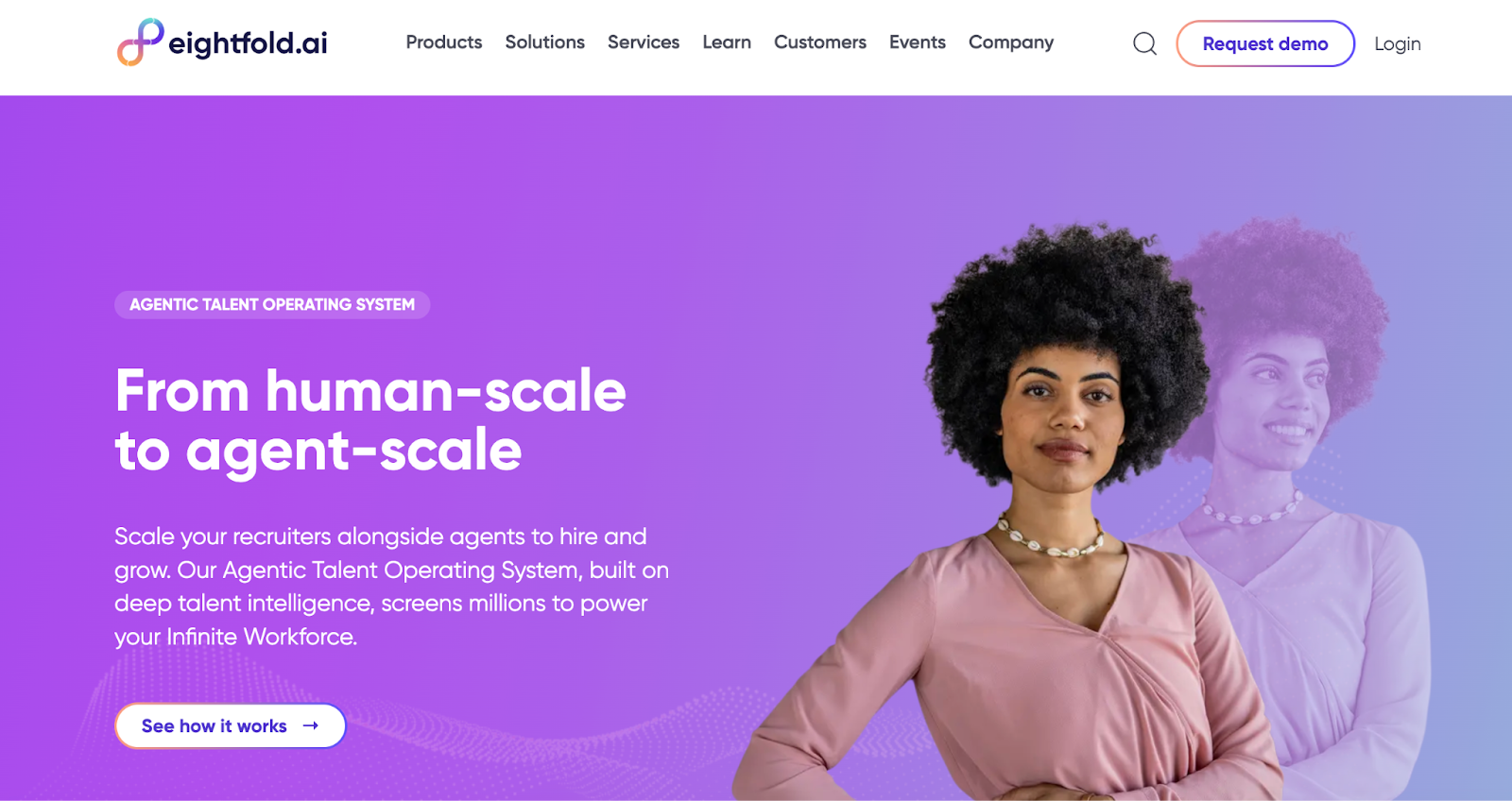
Eightfold positions itself as a full Talent Intelligence Platform rather than a point tool. Its Talent Intelligence Graph analyzes billions of career profiles worldwide to match candidates to roles, identify internal candidates for reskilling, and forecast workforce needs. The differentiator is coverage across external sourcing and internal mobility in the same platform — useful for large enterprises trying to fill critical roles from existing employees before going to market.
Key features: global skills graph, candidate matching, automated nurture workflows, internal redeployment and career pathing.
Pros: breadth across sourcing, mobility, and workforce planning; strong fit for global enterprises; clean UI.
Cons: native assessment is limited (inferred skills need external validation for technical roles); complex to roll out; enterprise pricing.
Best for: Global enterprises running skills-based transformation and internal mobility programs.
3. SeekOut — sourcing and workforce analytics
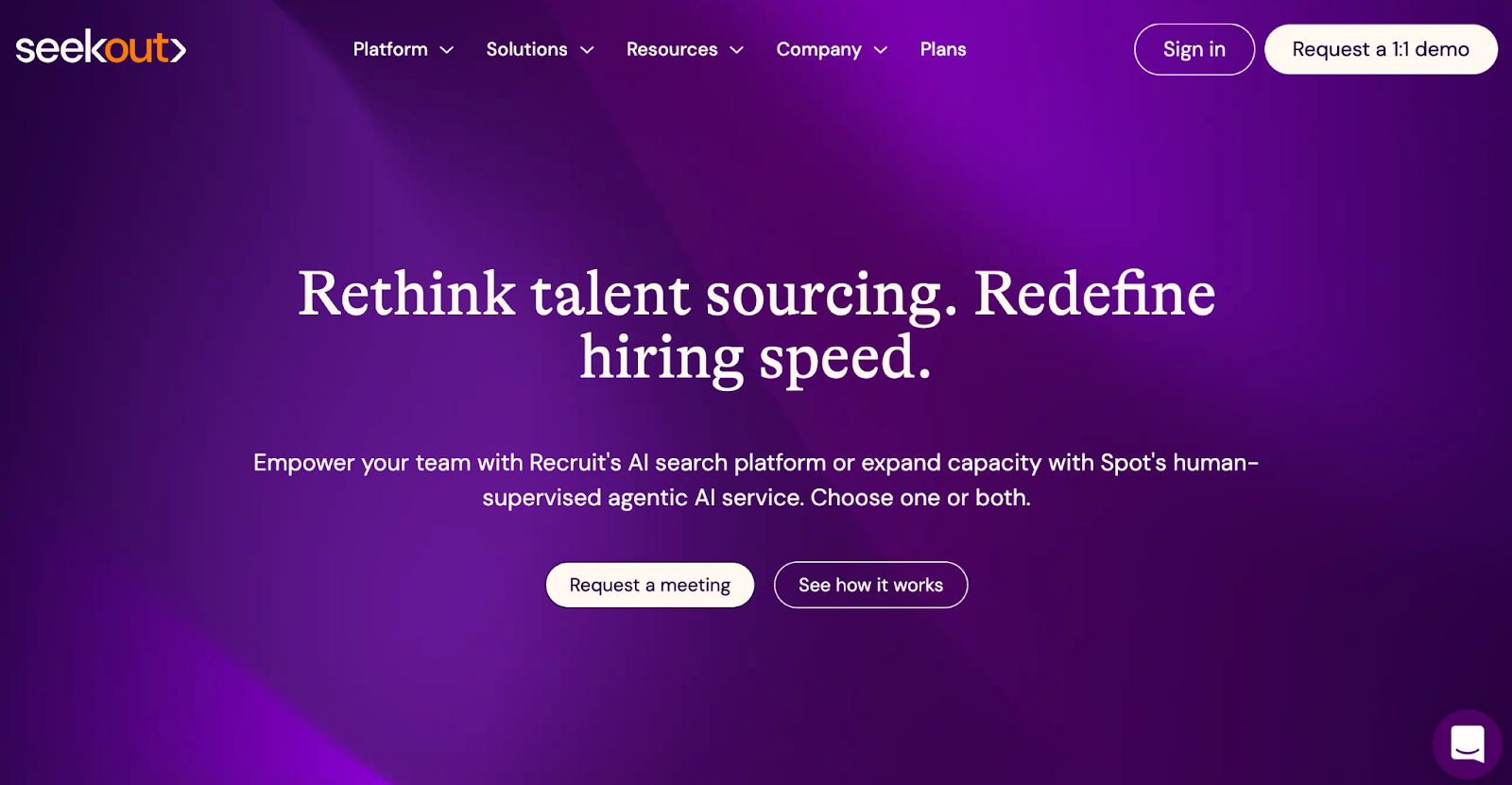
SeekOut is built around sourcing depth. Semantic search and Boolean filters let recruiters refine by skills, location, and experience, and the diversity filters are among the most granular in the category — particularly for technical, security-cleared, and veteran talent pools.
Key features: semantic search, DEI-focused filters and analytics, pipeline engagement tracking.
Pros: surfaces candidates that keyword-based tools miss; strong DEI sourcing; customizable project flows.
Cons: contact data occasionally goes stale; ATS integrations are uneven.
Best for: Enterprises that need visibility into external talent markets and want DEI sourcing depth beyond LinkedIn.
4. Beamery — talent CRM with workforce planning
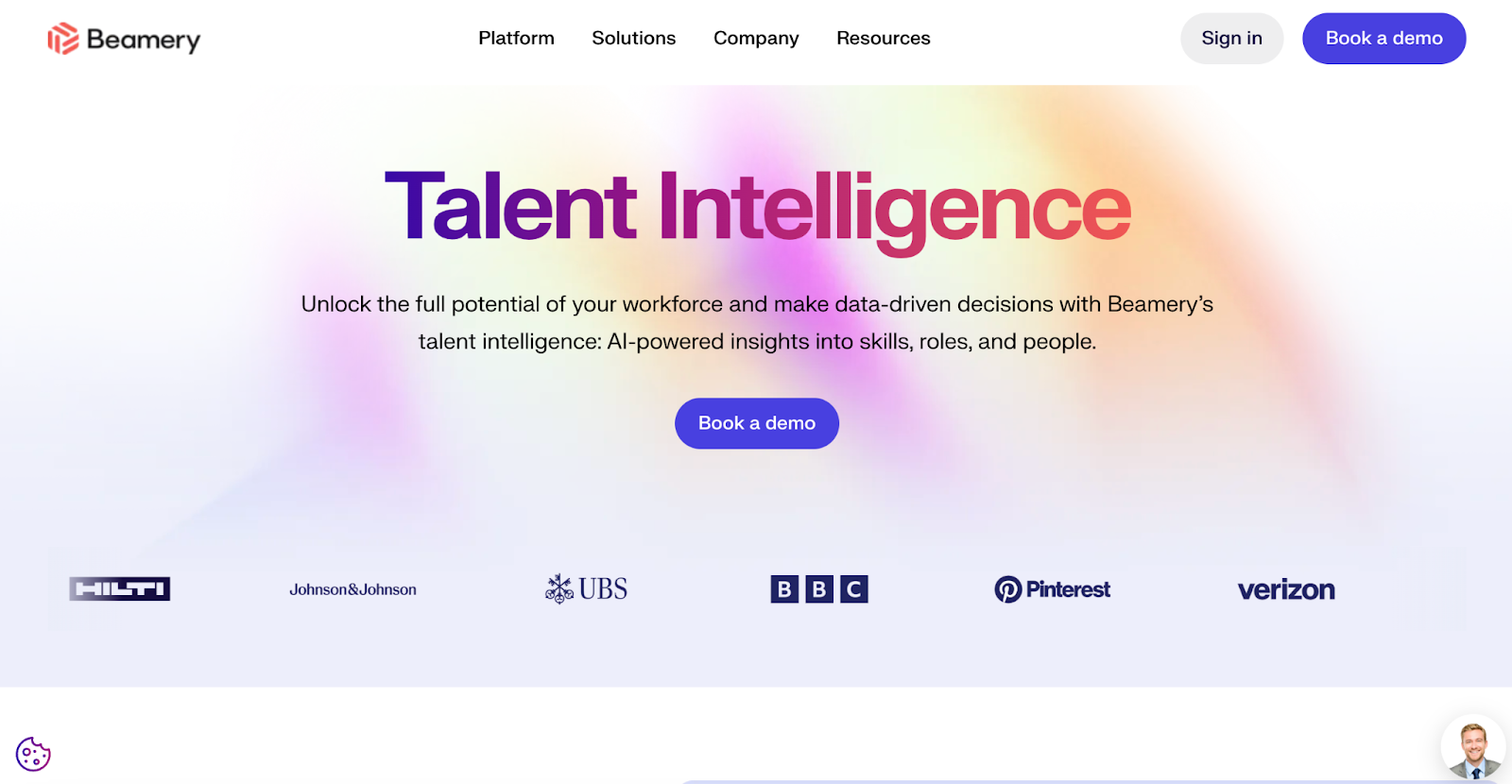
Beamery combines talent CRM, sourcing, and workforce planning with skills-based intelligence. It reconciles internal profiles with external labor market data — skills supply, salary benchmarks, competitor hiring — so leaders can plan hiring, redeployment, and upskilling against the same skills taxonomy.
Key features: talent CRM and pipeline management, workforce scenario simulation, real-time labor market signals.
Pros: unified CRM plus workforce planning; strong AI insights for skill-to-role alignment.
Cons: steep onboarding; reporting customization is limited; enterprise-only pricing.
Best for: Large enterprises that want CRM and workforce planning in one platform and can absorb a longer implementation.
5. Loxo — consolidated recruiting workflow
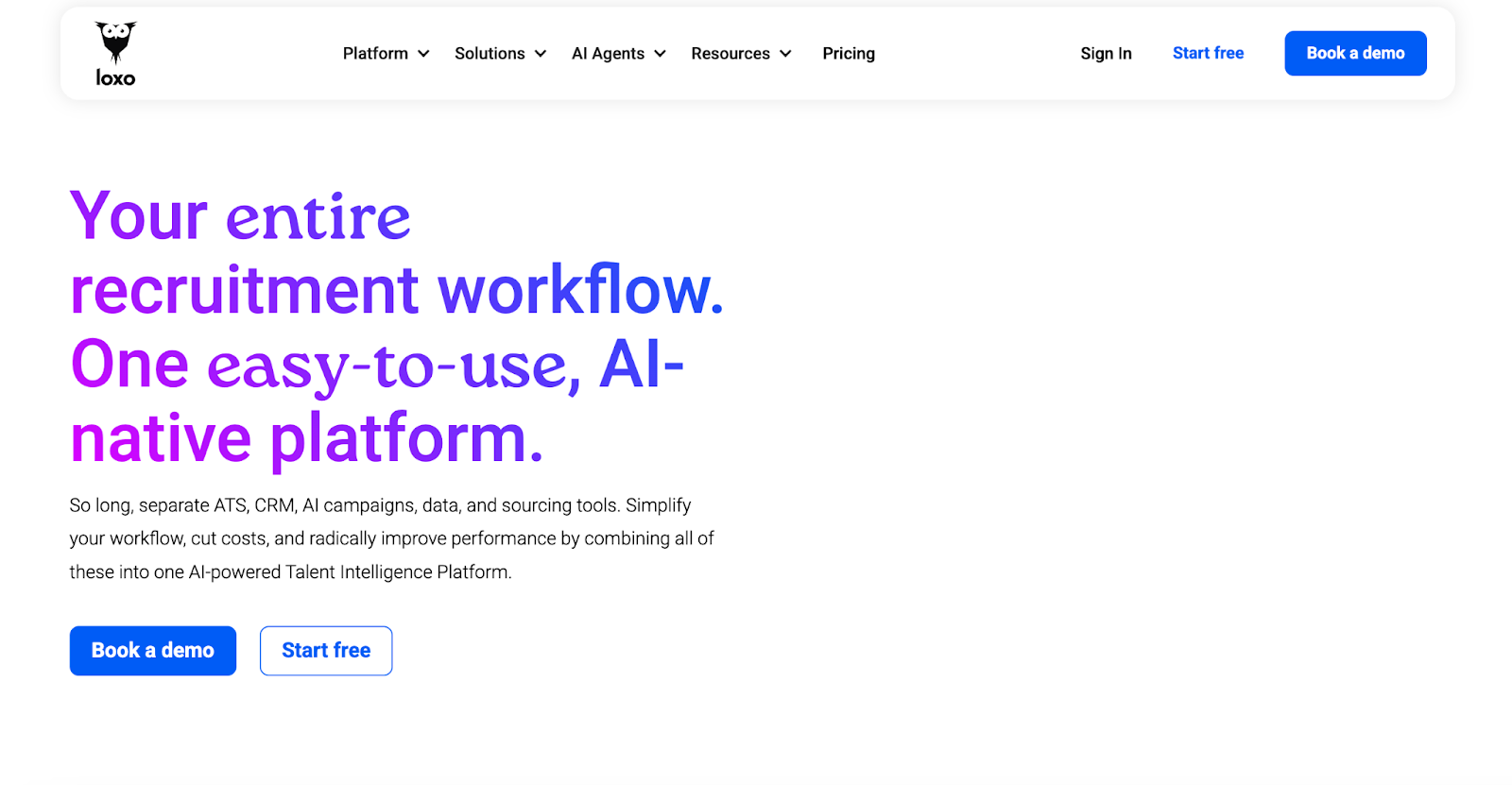
Loxo replaces the standard stack of ATS, CRM, sourcing tool, and outreach platform with a single AI-native system. Recruiters manage sourcing, outreach, pipelines, and reporting from one interface — particularly useful for agencies and high-volume in-house teams running many concurrent searches.
Key features: sourcing, ATS, CRM, outreach, and reporting unified; continuous candidate profile refresh; automated campaigns.
Pros: cuts time-to-hire on high-volume searches; reduces total tool spend by consolidating; supports many recruiting models on one platform.
Cons: advanced workflows take configuration time; workforce planning is thin compared to enterprise platforms.
Best for: Recruiting agencies and in-house teams running high-volume outbound campaigns.
6. hireEZ — open-web sourcing and outreach
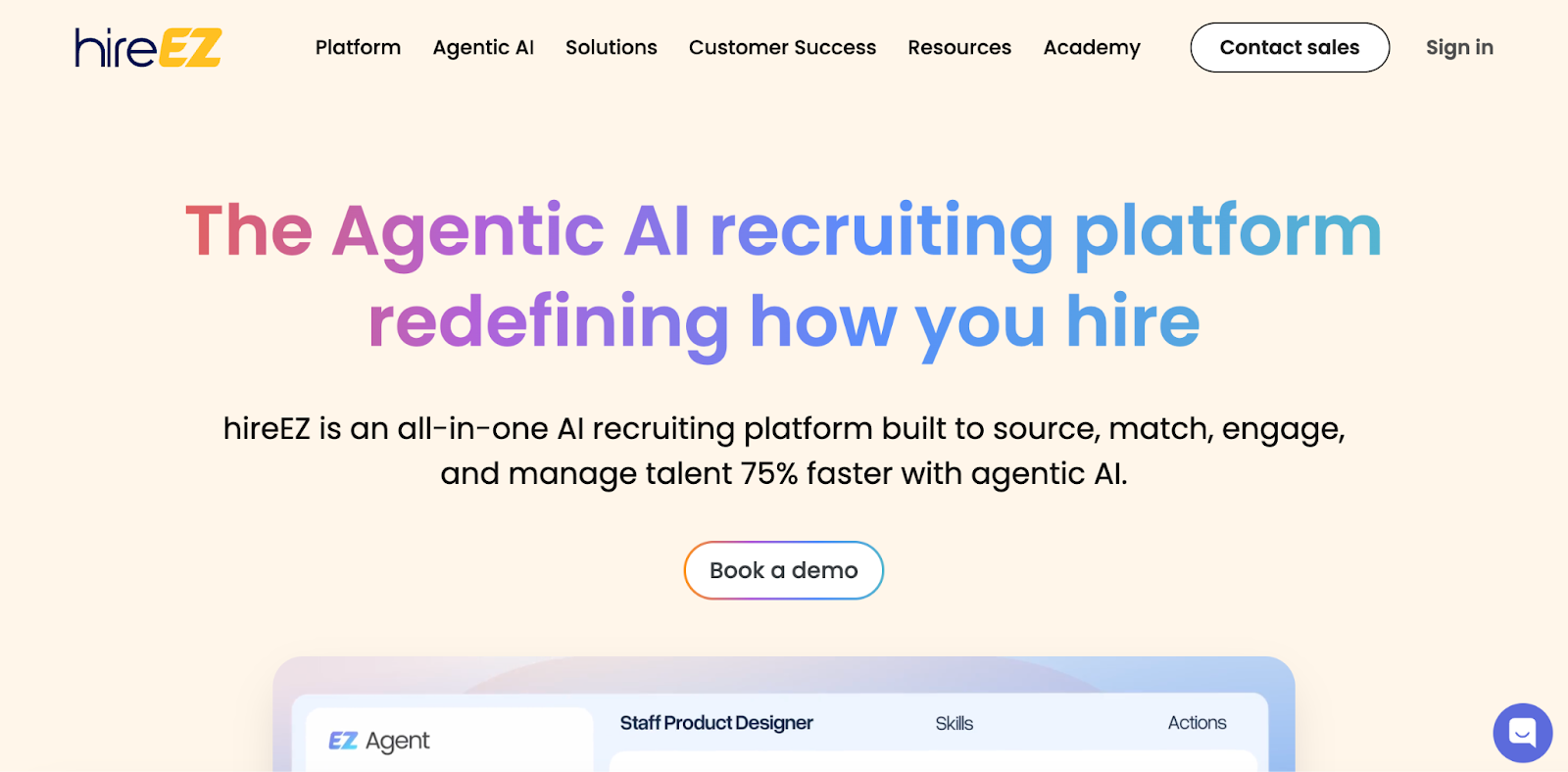
hireEZ's differentiator is the breadth of its open-web talent graph. Candidate signals are aggregated from public sources well beyond LinkedIn, and outreach automation is built into the sourcing workflow rather than bolted on.
Key features: open-web talent graph, AI matching, multi-channel outreach sequencing, ATS integrations.
Pros: sourcing reach beyond traditional networks; automated engagement reduces manual work; useful for remote and global hiring.
Cons: contact data accuracy varies; costs climb quickly at scale.
Best for: Sourcing teams that need reach beyond LinkedIn and want outreach automation in the same tool.
7. Metaview — AI interview intelligence
Metaview focuses narrowly on interviews: transcription, structured notes, and hiring insights derived from what actually happened in the conversation. It doesn't try to be a full platform, which is a strength if you already have sourcing and workforce tools you like.
Pros: removes note-taking from interviewer workload; produces structured, comparable hiring signals across panels; high user satisfaction on G2.
Cons: narrow scope — interviews only; some integration gaps reported.
Best for: Teams that want to improve interview quality and calibration without replacing their existing stack.
8. Gloat — internal talent marketplace
Gloat is an internal mobility platform first and a talent intelligence tool second. It maps employees to internal roles, gigs, and projects using inferred skills and career preferences, and gives L&D teams a view of skill gaps against future needs.
Pros: best-in-category for internal mobility; solid skills visibility for retention programs.
Cons: external sourcing is not the focus; typically pairs with another platform for hiring.
Best for: Enterprises running internal talent marketplaces alongside external hiring tools.
9. Reejig — ethical AI and skills-based matching
Reejig markets itself on ethical AI — auditable skills matching across internal and external opportunities, with transparency in how decisions get made. The positioning matters in BFSI and regulated industries where defensibility is table stakes.
Pros: ethical AI positioning holds up in regulated hiring reviews; skills-based matching across internal and external candidates.
Cons: the 3.5 G2 rating reflects real user complaints about dated UX, search latency, and learning curve for non-technical HR users. Evaluate the interface before signing.
Best for: Regulated industries where auditability and ethical AI positioning matter more than UI polish.
10. Gem — recruiting CRM with engagement
Gem is a recruiting CRM built around candidate engagement — sequences, nurture flows, and analytics that show where candidates drop out. It is not a workforce-planning tool and does not pretend to be.
Pros: high recruiter satisfaction; strong engagement sequences and pipeline analytics.
Cons: narrower scope than full talent intelligence platforms; focused on engagement rather than skills inference or workforce planning.
Best for: In-house TA teams that want stronger candidate engagement and CRM analytics without the enterprise-platform overhead.
11. Retrain.ai — skills demand forecasting
Retrain.ai focuses on skills demand forecasting and reskilling planning — predicting which skills your workforce will need in 12 to 24 months and identifying reskilling pathways to close the gaps.
Pros: forward-looking skills forecasting; useful input for L&D program design.
Cons: smaller market presence; limited public review data; less relevant for teams focused on immediate hiring.
Best for: L&D and workforce planning leaders building multi-year reskilling programs.
How to choose: three questions to answer first
Vendor demos will not tell you which platform fits. Answer these three questions before you shortlist.
1. What is your primary problem — sourcing, evaluation, or planning? Sourcing problems point to SeekOut, hireEZ, or Loxo. Evaluation problems — especially for technical roles — point to HackerEarth. Planning and mobility problems point to Eightfold, Beamery, Gloat, or Retrain.ai. Platforms that claim to solve all three often do one well and the others adequately.
2. How much do you trust inferred skills for your roles? For high-volume, well-defined roles, inference works reasonably. For senior technical roles, staff engineers, or specialized functions, inference is not enough — you need an assessment layer that validates the skill against actual work. This is where platform choice diverges: some vendors assume the resume tells the truth; some assume it doesn't.
3. What is your appetite for lock-in? An all-in-one platform reduces integration work and gives you one throat to choke. It also gives one vendor control of your skills taxonomy, historical analytics, and workflow logic. A best-of-breed stack — say, HackerEarth for technical evaluation, a specialist CRM for engagement, and a workforce analytics layer — costs more to integrate but keeps optionality. Neither is wrong. Pick deliberately.
For each audience, one specific change
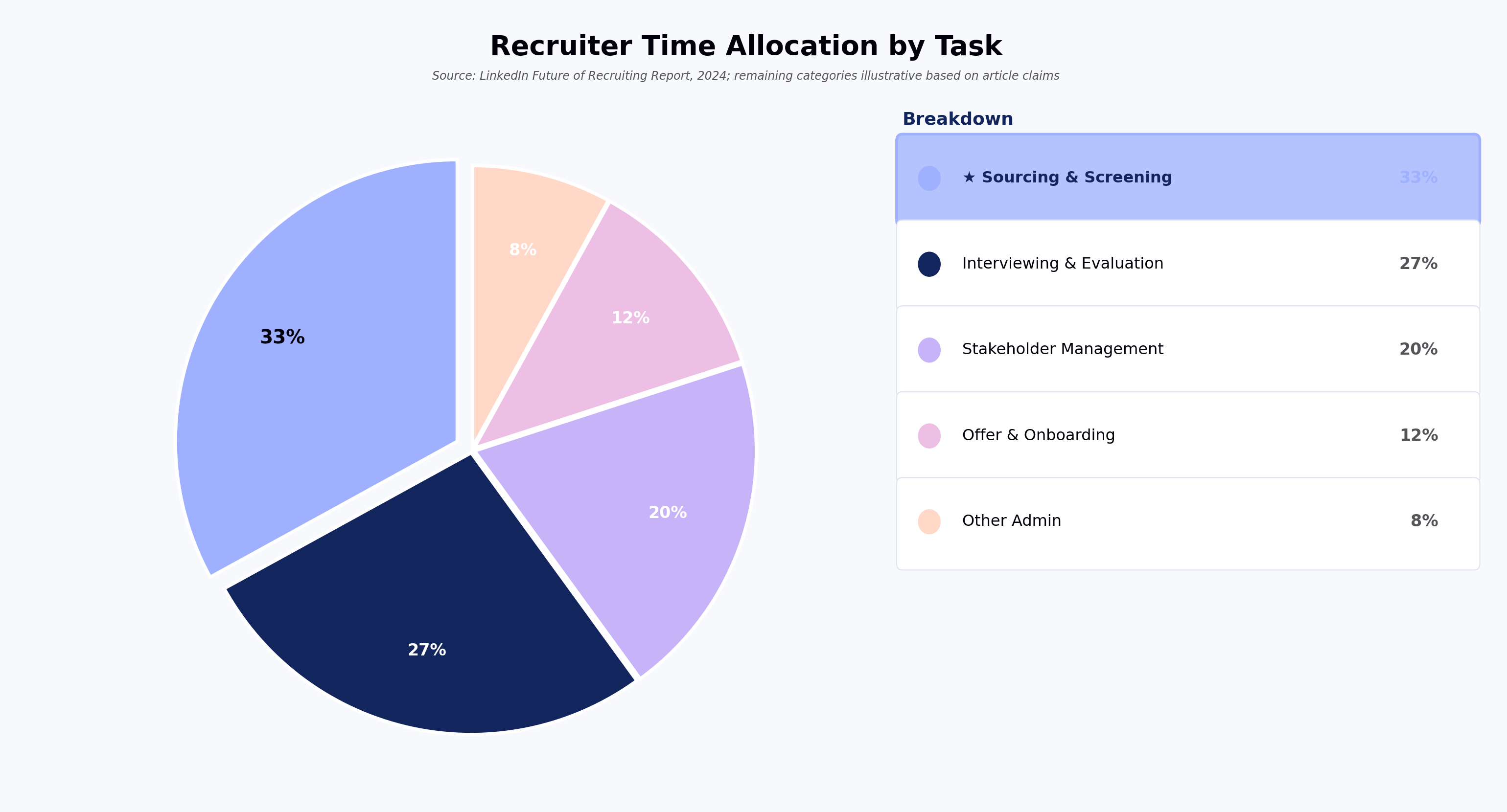
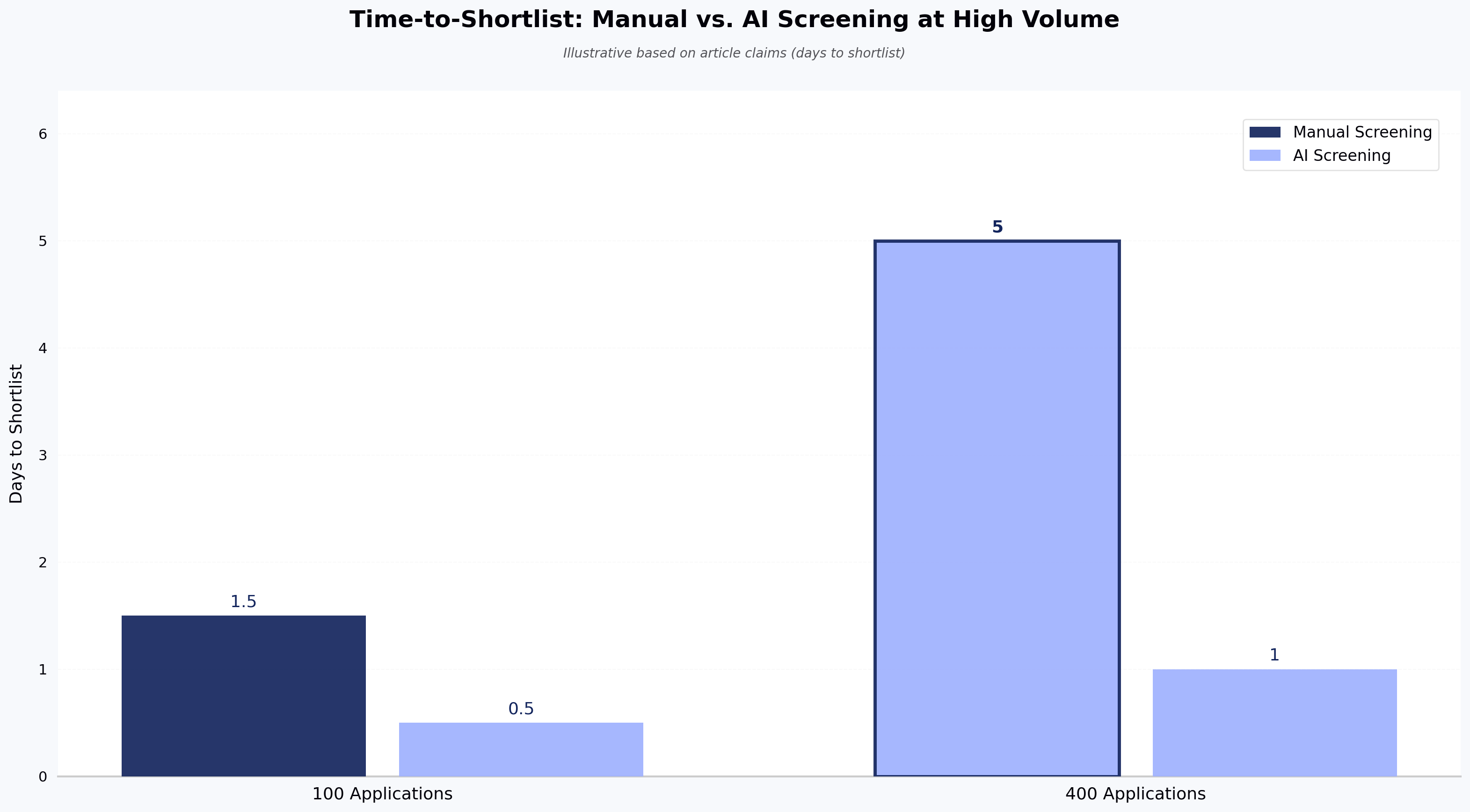
For recruiters, the shift is fewer hours on manual screening and scheduling — agents handle the mechanics; recruiters focus on candidate relationships and hiring manager calibration.
For heads of TA, the shift is defensible skills-based hiring at scale, with rubric-based evidence that holds up under audit.
For CHROs and L&D heads, the shift is a workforce view that connects hiring, mobility, and reskilling to actual business capability — measured, not asserted.
Next steps
If technical hiring is where you feel the most pressure — AI-generated CVs at the top of funnel, senior engineers spending 5+ hours a week on screens, roles taking longer than they should — start with the evaluation layer.
See how HackerEarth Assessments and OnScreen work together for structured technical evaluation and 24/7 AI-led interviews, or book a demo to walk through a role-specific setup with our team.
FAQ
Are talent intelligence platforms worth it for companies hiring fewer than 500 people a year? Not always. Below a certain volume, the platform's skills inference and workforce analytics don't have enough internal data to be meaningfully better than a strong ATS plus a good assessment tool. The break-even point varies, but if you hire fewer than 100 technical roles a year, a focused assessment platform plus your existing ATS is usually the higher-ROI choice.
How reliable is AI skills inference in 2026? Better than it was two years ago, still imperfect. Inference works well for candidates with linear career paths and standard job titles. It works poorly for career-changers, non-traditional backgrounds, and specialized roles where the skill isn't visible in the resume text. Treat inferred skills as a hypothesis to validate — through assessment or interview — not a verified credential.
Do talent intelligence platforms actually reduce bias? They reduce some patterns of bias — inconsistent interviewer judgment, keyword-driven filtering that penalizes non-traditional resumes — and introduce different ones from the training data. "Eliminates bias" is a claim to reject wherever it appears. "More consistent than human-led screens on specific dimensions" is a claim to accept when the vendor can show the dimensions and the evidence.
How long does implementation actually take? Assessment platforms can be live in days to weeks. Full talent intelligence platforms — Eightfold,