Medha Bisht

Author
Medha Bisht

Blogs
Medha is a technical writer and recent graduate who blends curiosity, creativity, and a love for stories. When not writing, she’s exploring long treks, diving into books, or rewatching her favorite anime.
author’s Articles

Insights & Stories by Medha Bisht

Discover Medha’s crisp breakdowns on tech, writing, and the ideas that inspire her - shaped by books, anime, and everyday adventures.
Clear all
Thank you! Your submission has been received!
Oops! Something went wrong while submitting the form.
Filter
Filter

Improving Quality of Hire Strategies

Strategies to improve the quality of hire

In 2026, hiring has shifted from a focus on filling roles quickly to a more precise approach that adds real value to organizations. The key measure now is quality of hire, which looks at how well new employees perform, fit in, and contribute over time. Improving this metric is crucial because hiring mistakes are expensive. Research shows a bad hire can cost about 30 percent of their first-year salary. For mid-to-senior roles, the total cost, including lost productivity and team disruption, can be between $100,000 and $240,000. In some cases, such as a manager earning $62,000 who leaves after thirty months, the loss can reach $840,000. On the other hand, hiring a top performer can have a significant positive impact, as these employees are 400 to 800 percent more productive than the average employee. 

Organizational impact of hiring quality

To see why hiring quality matters, it's important to look closely at the costs of making the wrong choice. The Society for Human Resource Management (SHRM) estimates that hiring someone for a typical job costs about $4,129 to $4,700, and for executive roles, it can be $28,000 or more. If a new hire doesn't work out, these costs double because the company has to start the search again while the position remains open.

The costs of a bad hire go beyond just replacing them. Poor hires can lower productivity across the company in ways that are hard to measure but easy to notice. Surveys show that managers spend about 17 percent of their time, almost seven hours a week, managing underperformers. This takes time away from more important work. Team morale also suffers, as top employees often get frustrated and burned out when they have to pick up the slack. This can lead to valuable team members leaving. According to Harvard Business Review, up to 80 percent of employee turnover is caused by poor hiring decisions.

Leaving a job open for too long is also costly. Many companies wait to find the perfect candidate, but research from Northwestern University shows that taking twice as long to fill a role can lead to a 3 percent drop in profits and a 5 percent drop in sales. Open positions put extra pressure on current staff, which can lead to burnout and up to 20 percent of employees leaving each year.

The star performer phenomenon and power law distributions

One main goal of improving hiring quality is to find and hire "star" performers. These top employees don't fit the usual pattern of average productivity. Instead, a small group creates most of the value for the company. Research from McKinsey and Company shows that in complex jobs like software engineering or research, the best people are eight times more productive than the average.

The productivity gap between top and bottom performers is huge. One person in the top 1 percent can do the work of twelve people in the bottom 1 percent. For example, spending $100,000 on a top performer can save a company up to $800,000 a year by reducing the need for several average employees. These high achievers also help their teams by sharing knowledge and encouraging new ideas.

However, these high achievers are often the most neglected employees. Research consistently shows that they leave not for higher pay, but because their growth and development have stalled. Organizations that fail to provide stretch assignments or meaningful challenges risk losing their most productive assets. When a star performer leaves, the loss is not just an individual vacancy but a decline in team-wide patent development, innovation quality, and creative performance.

Defining and measuring quality of hire metrics

Quality of hire measures how well new employees help the business, showing the return on investment for hiring. Even though 88 percent of recruiters say it's important, less than half track it well. The challenge is to balance hard numbers with more personal, subjective feedback.

To measure an individual’s quality of hire, companies usually combine several factors into a percentage score. The most common ones are job performance, how long the person stays, how quickly they become productive, and how satisfied the hiring manager is.

The fundamental formula for an individual hire is:

image.png

Where

image.png

represents the number of indicators used. For a broader organizational view, the overall quality of hire is often calculated by averaging the individual scores of a cohort and integrating the retention rate:

image.png

Alternatively, organizations may use the employee lifetime value (ELV), which represents the total net value an employee brings to the organization from their first day until their departure.

Industry standards show that if 85-90 percent of job offers are accepted, the company has a strong employer brand. A 72.2 percent interview-to-offer rate means the hiring process is well managed. For technical jobs, the market is very selective, with only 0.5 percent of applicants getting offers.

The shift toward skills-based hiring and away from credentials

In 2026, hiring is moving away from focusing on degrees and toward looking at real skills. This change is happening because there aren’t enough qualified people, and technology is changing faster than schools can keep up. Since 2014, jobs that don’t require a degree have increased almost four times. Companies using a skills-first approach see 92 percent better hiring results and 88 percent fewer hiring mistakes.

When companies look at what candidates can do instead of where they went to school, they can find up to 8.2 times more people for specialized jobs like AI engineering. This also helps with diversity and inclusion, since people from different backgrounds, including self-taught and bootcamp graduates, get a fair chance. Research shows that hiring based on skills is five times better at predicting job performance than using education alone.

Skills-based hiring also saves money. Employers can save between $7,800 and $22,500 per job by using assessments to spot mismatches early, instead of waiting until after the probation period. These savings come from hiring people who already have the needed skills, which shortens the hiring process and reduces wasted training.

The integration of agentic artificial intelligence in talent acquisition

In 2026, artificial intelligence is more than just an automation tool—it works alongside people throughout the hiring process. AI handles tasks like sorting resumes quickly, finding related skills, and even running initial screening interviews, saving recruiters thirty or more hours per search. This lets human recruiters focus on understanding people and making key decisions.

A big improvement is moving away from filtering resumes by keywords, which used to favor people who filled their resumes with buzzwords. In 2026, AI uses smarter searches and context analysis to understand a candidate’s real career growth and project impact. This unbiased process focuses on what candidates can actually do, not just on keywords or unconscious biases.

Practical ideas to improve the quality of hire - planning and sourcing

Improving hiring quality starts well before the interview. It means rethinking how jobs are defined and how potential candidates are found.

1. Reverse engineer top performers

Identifying quality markers by studying existing high-performing employees is the most effective way to define the "ideal candidate persona". By analyzing the behaviors, traits, and skills of those who have been promoted or consistently exceeded goals, recruitment teams can replicate these profiles in their sourcing efforts. This process, known as cloning high performers, involves quantifying the value they bring and the specific methodologies they use to achieve success.

2. Narrative job descriptions over list-based requisitions 

Instead of the traditional list of "must-have" skills and years of experience, narrative job descriptions use storytelling to illustrate what success looks like in the first six months. This approach helps high-quality candidates see themselves in the role and understand the impact they will have, leading to better self-selection. Descriptions that focus on competencies—such as "proven ability to manage multiple projects under tight deadlines"—are far more effective than arbitrary time-based requirements.

3. Define success metrics and KPIs upfront 

Before a role is even posted, hiring managers and recruiters must agree on what "success" looks like after one year.8 Establishing these kpis early ensures that every stage of the evaluation process is aligned with actual business needs rather than vague impressions of "goodness." This clarity prevents mismatched expectations and reduces the risk of early turnover.

4. Conduct internal skills audits 

Before looking externally, organizations should utilize skills inventories for strategic workforce planning. Mapping internal capabilities allows for the redeployment of existing talent into emerging areas, which is often more cost-effective and successful than external hiring. Internal mobility maximizes quality of hire because internal candidates already understand the product, culture, and customers.

Practical ideas to improve the quality of hire - evaluation and selection

The evaluation stage is where companies can make the biggest improvements in hiring quality by using fair assessments and consistent processes.

1. Implementation of structured skills assessments 

Replacing resume screening with structured skills tests is the most effective way to predict job performance. These assessments evaluate what a candidate can actually do, catching mismatches early and saving the organization up to $22,500 per role.

2. Shift from "culture fit" to "culture add" 

While "culture fit" often leads to hiring people who think and act identically, "culture add" seeks individuals who bring fresh viewpoints and enhance the organization. Interviews should focus on what a candidate can teach the company rather than just how well they blend in.

3. Live pair programming and job simulations 

Pair programming interviews mimic real-world work by combining technical evaluation with real-time collaboration. Observing how a candidate breaks down complex problems and responds to feedback provides a clearer picture of their on-the-job performance than any abstract puzzle or whiteboard exercise.

4. Use of interview intelligence and transcription 

Capturing and analyzing every interview conversation with AI-driven intelligence allows teams to spot patterns and calibrate their evaluations. This technology ensures that hiring decisions are based on data rather than biased, inconsistent notes taken during the pressure of the interview.

5. Mask personally identifiable information (PII) 

To support truly unbiased recruitment, organizations are using tools like FaceCode to mask candidate PII during technical interviews. This ensures that evaluations are merit-focused and merit-based, reducing the impact of unconscious bias.

Practical ideas to improve the quality of hire, onboarding, and retention

A hire is only truly successful if the new employee fits in well and stays with the company.

1. Standardized 30, 60, and 90-day manager surveys 

Conducting surveys at these specific intervals provides real-time data on the effectiveness of the recruiting process. Hiring managers can rate the new hire's performance against initial expectations, allowing for immediate calibration of the talent strategy for future roles.

2. Tracking time to productivity metrics 

Measuring how many days it takes for a new hire to become fully operational—compared to a departmental benchmark—is a primary determinant of hiring success. This metric highlights gaps in onboarding or training that might be sabotaging the hire's potential.

3. Utilize the employee net promoter score (eNPS)

Asking new hires, "How likely are you to recommend this company as a place to work?" reveals whether the internal brand matches the promises made during recruitment. Scores above 50 indicate a successful cultural integration and a high-quality hire.

4. Granular turnover and retention analysis 

Organizations must analyze why people leave, particularly in the first year. If turnover is high, it often signals that job descriptions were misaligned with the actual roles, requiring a revisit of the sourcing and screening criteria.

5. Foster a "coaching culture" for star performers 

Since high achievers leave when they feel underdeveloped, managers must be trained to support their growth. A coaching-focused leadership style ensures that top talent remains engaged and sees a clear roadmap for advancement within the company.

Strategic conclusions and the human-AI future of hiring

In 2026, making hiring better is not just an HR task, it’s essential for business success. The numbers show that hiring mistakes are too costly, and bringing in top performers is too valuable to rely on old habits or gut feelings. By focusing on skills and using advanced AI, companies can build stronger, more productive, and more diverse teams.

The thirty-one practical ideas outlined in this report represent a holistic lifecycle approach to talent. From reverse-engineering top performers to using real-time pair programming and AI-driven transcription, these interventions move the needle from "filling a seat" to "investing in an asset". As the labor market remains lean, the organizations that will thrive are those that recognize their highest performers are their greatest growth opportunity. Neglecting the development of high achievers is as much of a strategic failure as hiring the wrong person. The future of quality of hire lies in seamlessly integrating data-backed insights with a renewed focus on the human experience of work.
Hiring process optimization guide

In 2026, talent acquisition faces a real challenge: while companies are quickly adopting autonomous technologies, they are also struggling to maintain human connection. Last year, 90% of organizations missed their main hiring targets, and almost 60% of talent teams say their average time-to-hire is still going up. This efficiency problem exists even though nearly every team is using or testing advanced AI in their hiring process. For talent leaders and HR managers, the goal is no longer just to fill open roles. Instead, they need to create a smooth, data-driven hiring journey that combines fast automation with meaningful personal interaction.

The strategic foundations of 2026 recruitment

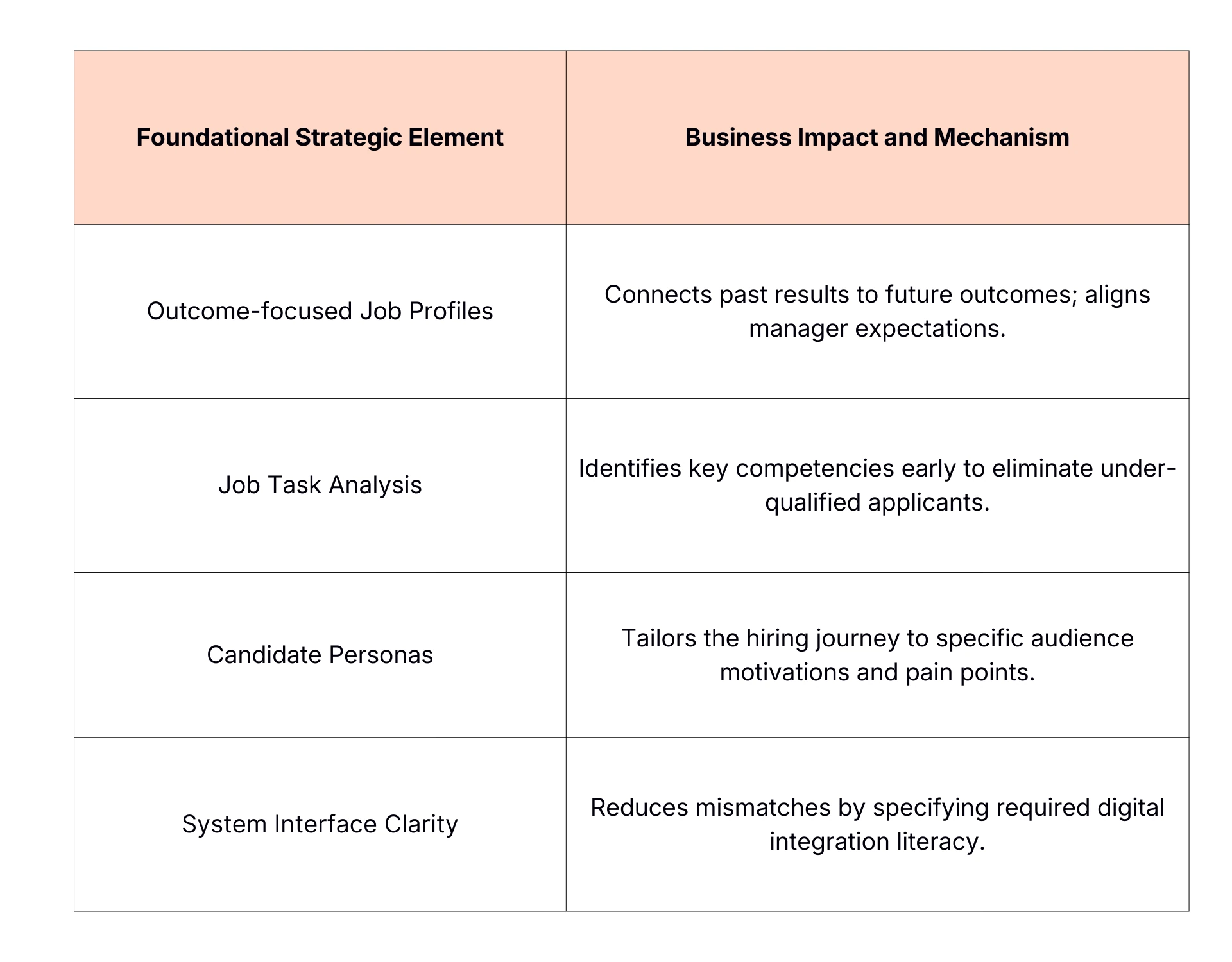
Today’s recruitment process starts well before a job ad goes live. In 2026, companies are moving from simply filling roles to focusing on who owns the outcomes of each position. About 58% of CFOs now say their teams have significant skill gaps, which slows down efforts such as data cleaning and cross-departmental work. As a result, streamlining starts with creating job profiles that focus on clear outcomes.

These new profiles are different from old job descriptions because they highlight what new hires should achieve in their first 30, 60, and 90 days. By clearly defining success early, hiring managers and recruiters stay on the same page and avoid last-minute rejections over unclear fit. Job task analysis also helps by listing the exact skills and digital know-how needed. Since many roles now involve complex systems like ERP, BI, and HRIS, spelling out these requirements from the start helps new hires get up to speed faster.

Another key step is creating candidate personas. These data-driven, semi-fictional profiles of the ideal candidate help talent teams understand what motivates their target audience, how they search for jobs, and the challenges they face. When paired with a strong employer brand review, these personas help companies choose the best ways and places to connect with candidates.

The candidate experience as a competitive advantage

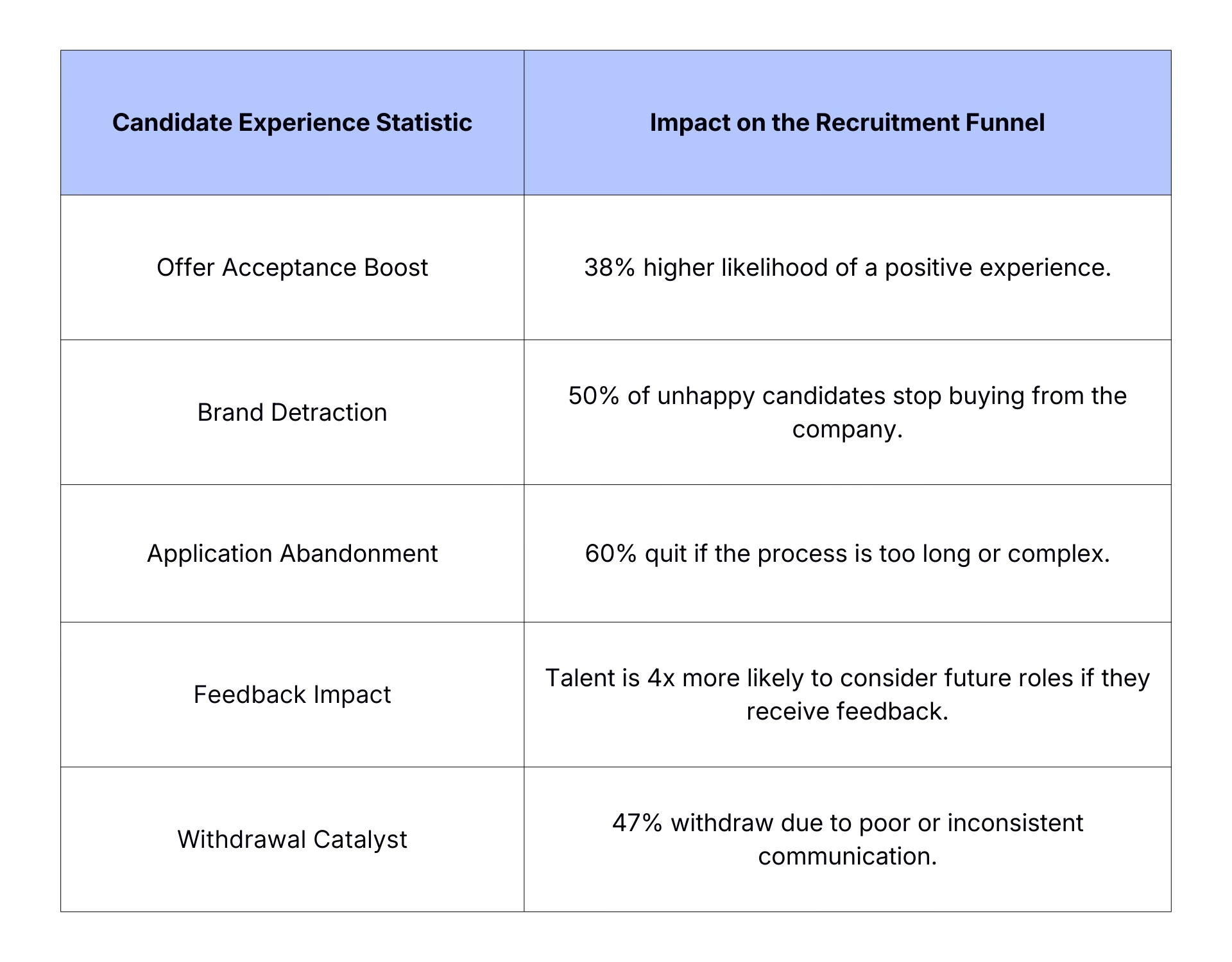
In 2026, the candidate experience has evolved from a qualitative "nice-to-have" to a measurable driver of offer acceptance and brand affinity. Statistics from 2025 and 2026 indicate that a positive candidate experience increases a seeker's likelihood of accepting a job offer by 38%. Conversely, the risks of a poor experience are catastrophic for the broader business: 50% of candidates will cease purchasing goods or services from a company after a single negative application experience, and 72% will share their frustrations with their professional and personal networks.

The psychology of candidate resentment

One main reason candidates drop out in 2026 is that they feel their time isn’t respected. About a third of those who leave a hiring process say time issues are the biggest factor, followed by unmet salary expectations and long processes. Many candidates are frustrated by automated steps like video interviews and personality tests before they ever talk to a real person. This makes them feel like just a number, which hurts fair negotiation and leaves them feeling judged by a faceless algorithm.

To address this, top organizations are using a mix of human and AI support. AI handles tasks like scheduling and first-round screening, but human recruiters step in at key moments when empathy and relationship-building matter most. The aim is to ensure candidates feel noticed, even in a process that relies heavily on automation.

Transparency and communication standards

In 2026, candidates expect transparency as a basic standard. About 74% of job seekers now want to see pay details, and companies that share full compensation ranges—including salary, bonuses, and equity build trust faster. Fast communication is also essential. The best teams now reply to initial applications within 24 hours and get back to interview-stage candidates within five days.

The transition to skills-based hiring

One of the biggest changes in 2026 hiring is moving away from degree requirements and toward a skills-based approach. Companies are realizing that traditional credentials don’t reliably predict future performance, especially as technology evolves rapidly. Now, 81% of organizations use skills-based hiring, up from 56% in 2022.

Predictive modeling for performance

This change is backed by data: 94% of employers believe skills-based hiring better predicts job performance than just looking at resumes. By focusing on what candidates can actually do, companies can find people who add to their culture and show real potential, not just those with the right background. This is especially important for small and medium businesses that need adaptable, eager-to-learn employees as they grow.

In 2026, the value of a great hire is clear. Engineering leaders say top engineers are worth at least three times what they’re paid. To find this kind of talent, companies are moving away from generic interview questions and using practical work tests, like coding challenges or real-world scenario assessments.

The role of AI in skills evaluation

AI tools are now crucial for handling the large number of applicants that come with skills-based hiring. Two-thirds of recruiters expect more candidates in 2026, making manual screening unworkable. AI screeners and assessment platforms help teams review over a thousand candidates at once, enabling them to find the best fit without adding more recruiters.

Still, it’s important to be open about using AI in screening. Candidates are 25% more likely to distrust a company if they think an algorithm alone decides their future. The best approach in 2026 is to let AI make recommendations, with human managers reviewing and making the final decisions.

Speed optimization and the efficiency crisis

Even with all the new technology, the problem of slow hiring remains. In 2025, just one in nine companies managed to speed up hiring, while 60% actually slowed down. This is often due to 'time debt,' where experienced staff spend too much time on repetitive tasks like screening and scheduling instead of focusing on more valuable work.

Addressing the scheduling bottleneck

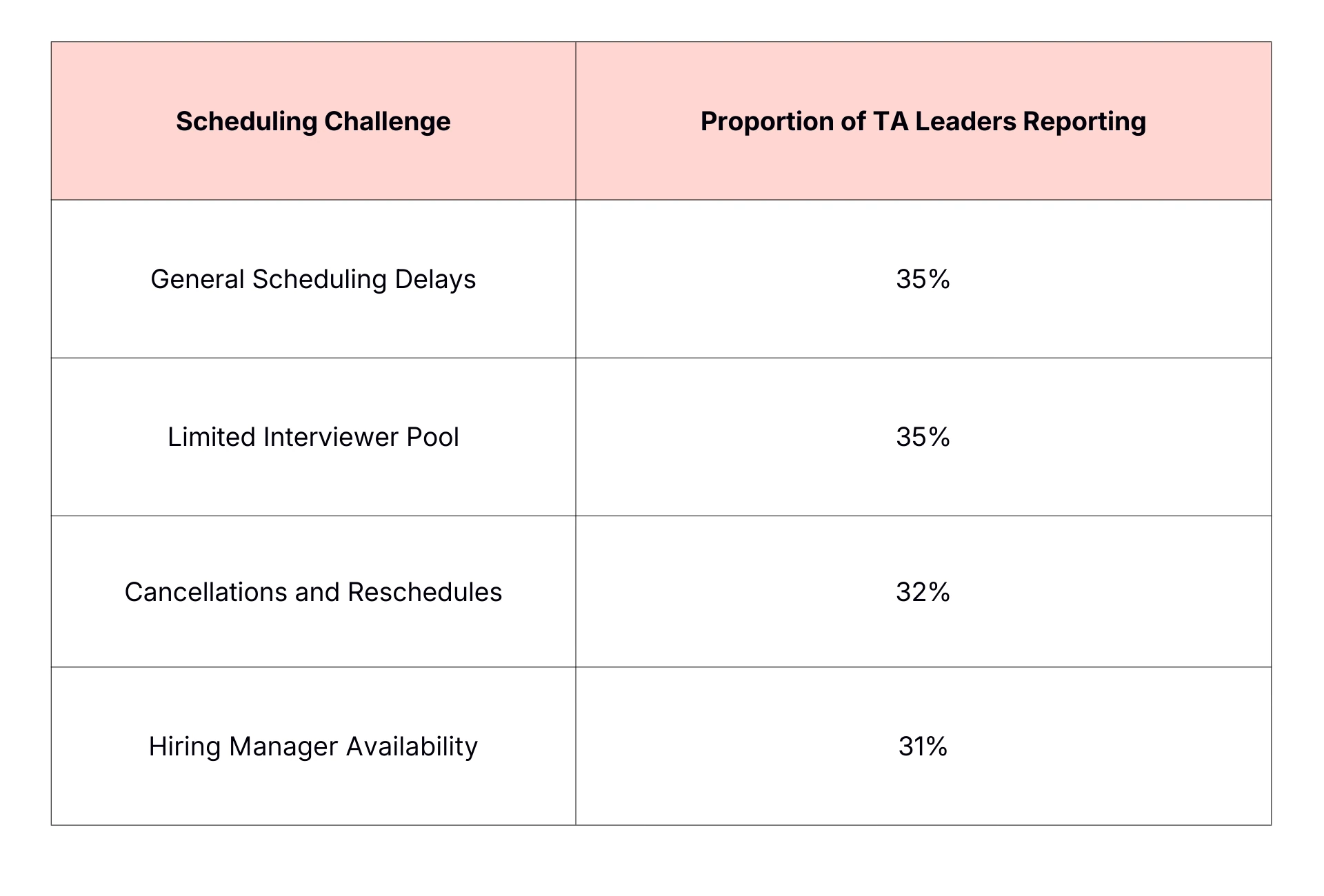
Scheduling is still the biggest drain on recruitment, taking up about 38% of a recruiter’s time. The main issues include finding available interviewers and frequent rescheduling.

Leading teams are solving this by using AI agents to handle interview scheduling, so they don’t need to hire more staff but can still process more candidates. They also use video interviews and one-way assessments that candidates can complete at their convenience, making it easier to work across different time zones and schedules.

Streamlining the 15-step recruitment guide

Having a clear, step-by-step recruitment process is key to moving quickly. In 2026, the standard approach uses a 15-step guide that adds automation wherever possible.

  1. Mission and Value Showcase: Establishing a strong digital brand so candidates can research the culture independently.
  2. Identification of Need: Precise listing of qualifications and required experience.
  3. ATS Integration: Using software to automate job board sharing and resume filtering.
  4. Targeted Job Ads: Marketing to both active and passive seekers through specific channels.
  5. Employee Referrals: Leveraging internal networks to find pre-vetted talent.
  6. Keyword Recruitment Tools: Shaving time off searches by filtering unqualified applicants instantly.
  7. Rapid Phone Screening: Moving candidates to in-depth interviews within one week.
  8. Automated Offer Letters: Preventing "radio silence" that leads to candidate doubt and offer rejection.
  9. AI-Integrated Background Checks: Using tools like Checkr for faster qualification verification.
  10. Electronic Onboarding: Reducing onboarding time from 11 hours to 5.5 hours via HRIS integration.

By automating these administrative tasks, recruiters can focus on building relationships and identifying the true "fit".

Technical assessment integrity in the age of generative AI

Generative AI has brought a new problem: 'AI interview fraud.' By 2026, half of businesses have seen candidates use tricks like deepfakes, fake interviewers, or real-time AI help. Many coding tests now end up measuring how well someone can use AI prompts instead of their real engineering skills.

The "integrity layer" solution

Old security methods like browser lockdowns and eye-tracking are now seen as 'security theater' because skilled cheaters can easily get around them with extra devices or HDMI splitters. Instead, companies are turning to an 'integrity layer,' which uses conversational AI interviewers to ask about the reasons and methods behind a candidate’s code.

AI tools like ChatGPT or GitHub Copilot can’t yet give a strong, real-time explanation for design choices. The delay in getting and repeating answers often reveals cheating. This changes the technical interview’s focus from 'does the code work?' to 'can you explain why it works?'

Leveraging the HackerEarth ecosystem for integrity

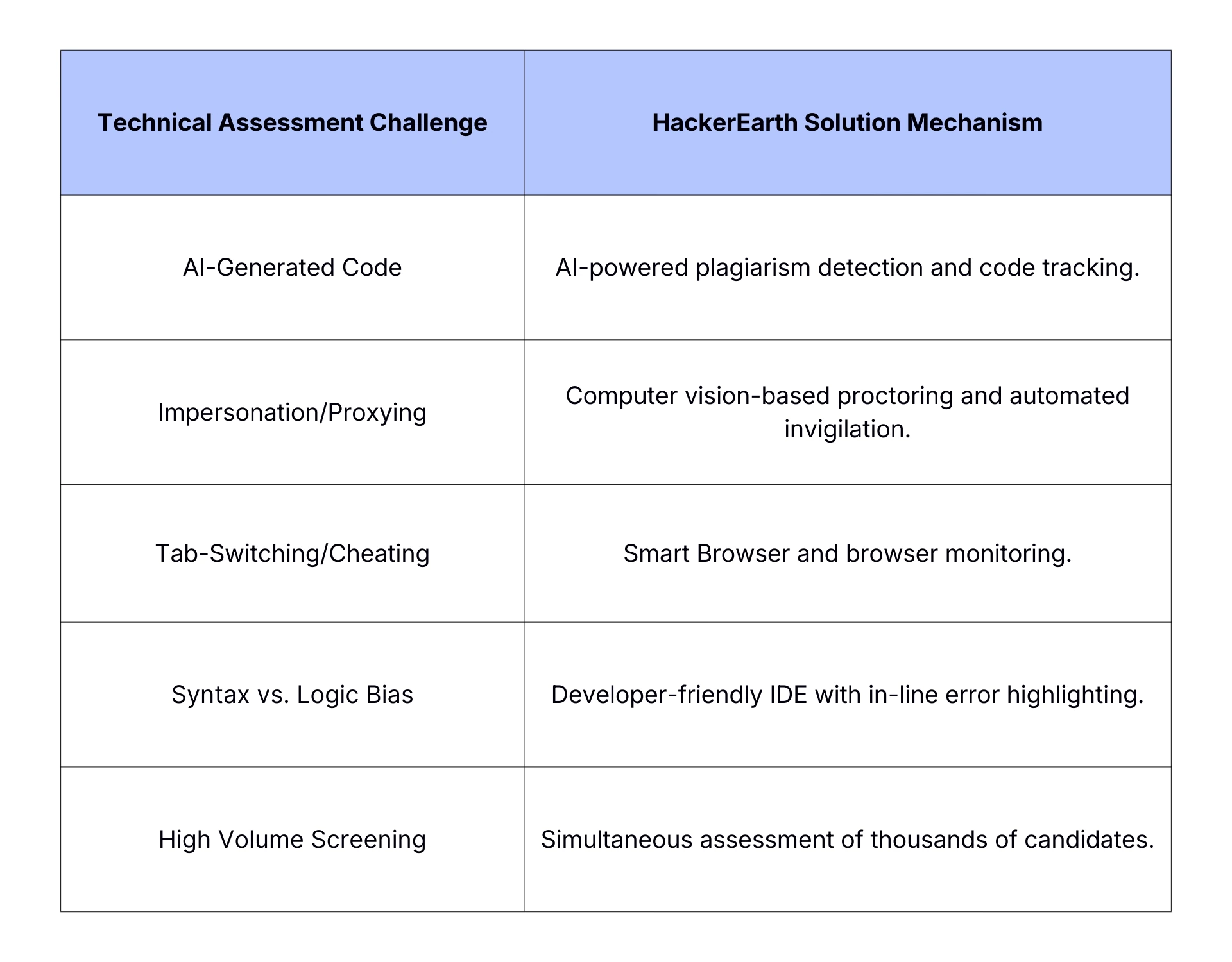
HackerEarth has positioned itself as a leader in maintaining assessment integrity through several sophisticated mechanisms. Their platform includes an industry-leading plagiarism detection system that specifically tracks AI-generated code.

Key HackerEarth integrity features include:

  • Smart Browser: Prevents "tab switching" and unauthorized copy-paste actions during assessments.
  • Code Replay: Allows hiring managers to watch the developer's process step-by-step, identifying unnatural jumps in code completion that suggest external assistance.
  • AI-LogicBox: Evaluates logical thinking and problem-solving through coding simulations that require more than just syntax memorization.

With these tools, companies like Amazon have been able to accurately assess more than 60,000 developers, ensuring candidates have the right skills before moving on to costly interviews with people.

Onboarding: the final frontier of recruitment

Recruitment doesn’t stop when someone accepts an offer. In 2026, companies know they have about 44 days to help new hires decide to stay for the long term. If onboarding goes badly, one in ten new employees will leave in their first month.

Good onboarding in 2026 focuses on company culture and making sure new hires understand the mission. It starts with an offer letter that uses real, value-driven language. New employees also get a personalized checklist for their first 30, 60, and 90 days to set clear goals and responsibilities.

Organizations like HubSpot and Slack have pioneered "Culture Code" sessions and the explicit communication of previously implied steps (such as PTO submission) to reinforce transparency. Furthermore, 77.9% of employees report they would be more productive if they were recognized more frequently, leading to the integration of shoutouts and handwritten notes into the onboarding curriculum.

Internal mobility and upskilling

Internal mobility has become a critical retention tool. Since skills need change rapidly, companies now prefer to train and promote internal employees rather than hiring externally for every role. Internal candidates carry less risk because the organization has firsthand knowledge of their performance and cultural fit. Failing to hire the right person externally is an expensive mistake, often costing 2 to 3 times the employee's salary.

A strong internal mobility program involves:

  • Securing Stakeholder Buy-In: Moving away from "talent hoarding" habits.
  • Skill Gap Analysis: Identifying in-demand competencies across departments.
  • Internal Marketing: Sharing the benefits of internal moves to boost employee interest.
  • Upskilling Paths: Providing mentors or formal training for employees shifting into new roles.

Conclusion

The recruitment landscape of 2026 demands a shift from traditional, reactive hiring to a proactive, integrated talent strategy. Streamlining the process is not merely about implementing faster tools; it is about rethinking the intersection of human judgment and artificial intelligence.

To succeed in 2026, talent acquisition leaders must:

  1. Prioritize the "Integrity Layer": Move beyond surveillance to conversational assessments that verify reasoning and intent.
  2. Focus on Skills-First Hiring: Replace degree requirements with practical work simulations to more accurately predict job success.
  3. Optimize the Candidate Journey: Minimize resentment by maintaining transparency around compensation, providing timely feedback, and simplifying the application process.
  4. Automate Operational Tax: Use AI for scheduling and high-volume screening to free up human recruiters for high-impact relationship building.
  5. Leverage Advanced Assessment Ecosystems: Utilize platforms like HackerEarth to provide data-driven, bias-resistant insights that scale with the organization's needs.

By following these best practices, companies can navigate the challenges of the 2026 talent market and make hiring a real advantage, improving both speed and quality. The future of recruitment is quick, dependable, and above all, human—as long as technology is used to support, not replace, real connections.

10 best soft skills assessment tools in 2026

Why soft skills define the 2026 labor market

The labor market of 2026 has transitioned from a period of technological adjustment to one of strategic consolidation, where the "Human Premium" serves as the primary differentiator for organizational success. As generative artificial intelligence has successfully commoditized a vast array of technical and administrative tasks—automating up to three hours of daily work per employee by 2030—the value of human-centered capabilities has reached an all-time high. This transition is not merely a preference but a strategic imperative. Organizations are navigating a complex reality known as "hybrid creep," a trend where companies are gradually increasing mandatory office presence to strengthen culture and productivity, despite significant resistance from a workforce that largely discovered higher productivity in remote models. By 2026, 83% of workers report feeling more productive in hybrid or remote environments, and 85% prioritize flexibility over salary when evaluating new job opportunities.

This tension between organizational structure and employee autonomy necessitates a new approach to talent evaluation. Traditional hiring methods, often reliant on resumes and unstructured interviews, are insufficient for predicting success in a distributed, digitally-native workforce. Consequently, the adoption of soft skills assessment tools has moved from the periphery to the core of talent acquisition. These tools are designed to evaluate "power skills"—the interpersonal and behavioral strengths that determine how effectively an individual can navigate ambiguity, collaborate across time zones, and lead with empathy in an era of rapid change.

How soft skills assessment tools work

In 2026, the technology supporting soft skills assessment has evolved beyond simple multiple-choice questionnaires into high-fidelity, multimodal environments. These platforms utilize a combination of behavioral science, neuroscience, and advanced artificial intelligence to provide a holistic view of a candidate’s potential.

Situational judgment and behavioral simulations

The cornerstone of modern assessment is the Situational Judgment Test (SJT). Candidates are presented with hypothetical, job-related scenarios and asked to choose the most appropriate course of action. These assessments are highly effective because they test what a candidate can do in a realistic context rather than just what they know. By 2026, these have evolved into immersive behavioral simulations. Platforms like Vervoe and WeCP allow candidates to interact with digital environments that mirror the actual tasks of the role—such as drafting an empathetic response to a disgruntled client or collaborating with an AI co-pilot to solve a system design problem.

Conversational AI and multimodal analysis

Artificial intelligence has moved from passive screening to active evaluation. Conversational AI now conducts first-round interviews, utilizing Natural Language Processing (NLP) to understand intent and context rather than just matching keywords. These systems analyze multimodal cues, including voice modulation, speech patterns, and real-time transcription, to deliver a reliable evaluation of communication clarity, persuasion, and empathy. Furthermore, AI acts as an integrity guardian, with tools like WeCP’s "Sherlock AI" using behavioral tracking to detect plagiarism or hidden assistance with high accuracy.

Neuroscience and gamification

To cater to a workforce increasingly populated by Gen Z, assessments have become more interactive and gamified. Neuroscience-based games, popularized by platforms like Pymetrics, measure cognitive and emotional traits through seemingly simple tasks. For example, the "Money Exchange" game evaluates fairness and social intuition, while "Tower Games" assess planning and problem-solving efficiency. These methods provide objective data on a candidate’s psychological DNA without the stress of traditional testing, leading to a 70% increase in candidate engagement.

Why soft skills assessment is mandatory for hiring in 2026

The strategic implementation of these tools offers measurable benefits across the entire recruitment lifecycle, from reducing costs to fostering more inclusive workplace cultures.

Efficiency and speed-to-hire

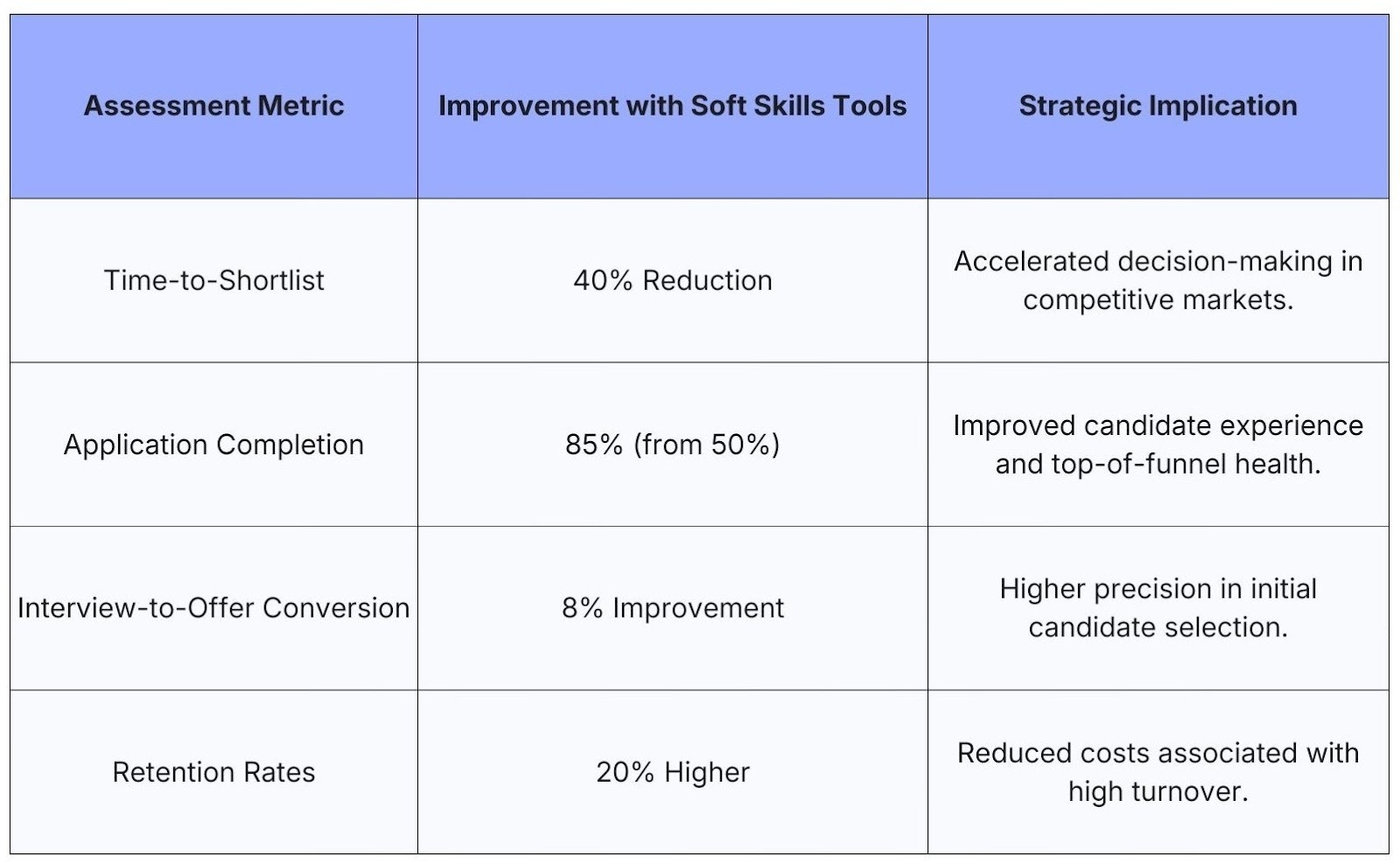
The use of automated screening and AI-driven interviews can reduce the time-to-hire by 40-50% while simultaneously saving up to 30% on hiring costs. By automating the early stages of the funnel, hiring managers can focus their energy on a ranked shortlist of high-potential candidates rather than sifting through hundreds of unqualified resumes. For high-volume roles, such as in retail or hospitality, asynchronous video interviews allow candidates to participate at their convenience, expanding the talent pool across global time zones.

Mitigation of unconscious bias

One of the most significant advantages of software-led assessment is the reduction of human bias. AI models can be designed to be "blind" to identifying information such as gender, ethnicity, or educational background, focusing purely on demonstrated skills and behavioral fit. 72% of candidates agree that AI-driven interviews make the process feel fairer, as they are evaluated on objective metrics rather than the subjective impressions of an interviewer.

Predicting performance and retention

Soft skills are often the best predictors of long-term success. Data indicates that 89% of hiring failures are due to a lack of critical soft skills. By assessing traits like resilience, accountability, and professionalism during the hiring process, organizations can significantly reduce turnover and improve team cohesion. Furthermore, these tools help align a candidate's personal motivations with the job role, ensuring a higher likelihood of long-term engagement.

Deep dives: the 10 best soft skills assessment tools in 2026

The following analysis explores the leading platforms in the 2026 market, highlighting their specific technological advantages, pricing models, and target use cases.

1. HackerEarth

HackerEarth has evolved from a technical screening platform into a comprehensive AI-driven talent intelligence suite that treats soft skills with the same rigor as coding proficiency. Recognized for having completed over 150 million assessments, the platform is a trusted resource for enterprise-level teams that require precision in high-volume technical hiring.

HackerEarth’s soft skill capabilities are anchored in its extensive psychometric library, which includes situational judgment tests (SJTs) tailored to specific professional challenges. The "FaceCode" feature facilitates live, collaborative interviews where hiring managers can observe a candidate's communication style and problem-solving approach in real-time. Furthermore, the platform utilizes advanced proctoring to ensure that behavioral patterns during the test are consistent with honest performance.

  • Best for: Tech-heavy organizations that prioritize objective skill validation alongside behavioral fit.

2. Toggl Hire

Toggl Hire represents the "organized overachiever" of the screening world, focusing on speed and a frictionless candidate journey. Instead of requiring resumes upfront, the platform uses short, interactive skills challenges as the primary entry point for candidates. This approach allows companies to attract a broader talent pool and find high-quality candidates up to 86% faster than traditional methods.

The platform is designed to be "plug and play," requiring minimal setup while offering a visual, Kanban-style candidate pipeline. Toggl Hire’s library includes over 19,000 expert-created questions covering technical tasks, soft skills, and language proficiency. It is particularly effective for distributed teams that need to scale quickly without the administrative overhead of complex enterprise software.

  • Best for: High-growth startups and SMBs prioritizing speed and candidate engagement.

3. TestGorilla

TestGorilla has become the gold standard for organizations seeking data-driven depth across a wide array of competencies. The platform allows recruiters to combine up to five different tests—spanning cognitive ability, software skills, personality traits, and culture add—into a single assessment. This holistic approach provides a nuanced portrait of a candidate's suitability for a role.

One of TestGorilla’s standout features is its advanced AI-powered grading and statistics, which move beyond binary results to provide a comprehensive analysis of how each applicant performed relative to the benchmark. The platform also includes robust anti-cheating measures, such as webcam monitoring and screen tracking, which are essential for remote hiring integrity.

  • Best for: Mid-sized to large teams requiring comprehensive, science-backed evaluations for a diverse range of roles.

4. Pymetrics (Harver)

Pymetrics, a core component of the Harver ecosystem, utilizes neuroscience-based games to assess the social, cognitive, and emotional attributes of candidates. By observing how a candidate interacts with games like "Stop 1" (measuring attention) or "Money Exchange" (measuring trust and fairness), the platform builds a behavioral profile that is highly predictive of job performance.

This platform is particularly valued for its "DEI-supportive algorithms," which are designed to remove bias and ensure a fair playing field for all applicants. Pymetrics provides employers with job suitability scores and custom benchmarks for each role, allowing for quantifiable measures of cultural and behavioral fit.

  • Best for: Enterprises committed to diversity, equity, and inclusion (DEI) and high-volume candidate engagement.

5. iMocha

iMocha is an expansive talent analytics platform that supports both hiring and internal talent development. Boasting the world’s largest skill library with over 3,000 tests, iMocha allows organizations to assess everything from coding and cloud infrastructure to business English and emotional intelligence.

A unique feature of iMocha is its "AI-LogicBox," which evaluates logic and problem-solving skills without requiring full code execution. The platform also offers "AI-Speaking" for automated evaluation of video responses and "AI-Writing" for subjective question scoring. For global teams, iMocha’s skill benchmarking analytics are invaluable, as they map test results to internal and industry standards to identify top-tier talent quickly.

  • Best for: Global enterprises and IT services firms requiring robust benchmarking and role-based skills evaluation.

6. Bryq

Bryq is a talent intelligence platform that prioritizes the intersection of behavioral traits, cognitive ability, and organizational culture. Developed by I-O psychologists and grounded in validated psychological models like the 16PF and Big Five (OCEAN), Bryq provides a "Talent Match Score" that indicates a candidate’s alignment with specific job requirements and team values.

The platform’s AI Job Builder scans job descriptions to identify critical skills and automatically recommends the appropriate assessment mix, ensuring that the evaluation process is role-driven from the start. Bryq is particularly effective for internal mobility decisions, as it can map existing employees' potential to new roles within the company.

  • Best for: Organizations prioritizing culture fit, team compatibility, and long-term behavioral alignment.

7. Mercer Mettl

Mercer Mettl offers a world-class, cloud-based platform for customized online assessments, specifically tailored for enterprise-scale operations and high-stakes evaluation. With a library of over 400 job-role assessments and extensive psychometric tools, Mettl is widely used for identifying leadership potential and conducting rigorous behavioral profiling.

Mettl’s differentiator is its "pay-as-you-go" tailored pricing and high-security proctoring environment. The platform supports more than 25 million assessments annually across 100+ countries, making it a dominant player for organizations that require global scalability and localized language support.

  • Best for: Large-scale enterprises, educational institutions, and public sector organizations requiring secure, compliant assessments.

8. Vervoe

Vervoe distinguishes itself by moving beyond multiple-choice questions into realistic job simulations. The platform uses three distinct AI models—the "How," "What," and "Preference" models—to analyze how candidates interact with tasks, what they respond, and how those responses align with the hiring manager's specific preferences.

Vervoe’s assessments create an immersive experience where candidates handle tickets, draft emails, or solve coding challenges in 8 different languages. The AI automatically reviews and ranks candidates based on performance accuracy, context, and tone, allowing hiring teams to "see them do the job" before the first interview. This approach is proven to identify "hidden gems" whose skills might not be apparent on a traditional resume.

  • Best for: Creative, sales, and support roles where task performance is the primary indicator of success.

9. eSkill

eSkill is a versatile assessment tool that allows recruiters to create completely unique evaluations by mixing and matching questions from a massive library of 800+ subjects and job roles. It is particularly effective for identifying "transferable skills" in candidates who may lack direct experience but possess the underlying aptitude for a role.

The platform includes integrated one-way video interviews, which work alongside modular skills tests to give hiring managers a clear view of a candidate's tone, clarity, and confidence. Organizations using eSkill report a drastic reduction in recruitment time by eliminating manual screening and scheduling bottlenecks.

  • Best for: HR teams requiring maximum flexibility and modular testing across diverse professional and industrial roles.

10. Codility

While Codility is renowned for its technical coding challenges, it has expanded its suite in 2026 to focus heavily on the behavioral and collaborative aspects of engineering. Through its "CodeLive" feature, Codility facilitates interactive technical interviews where recruiters can assess a candidate's communication style, teamwork, and approach to debugging in real-time.

The platform also employs advanced behavioral tracking to maintain test integrity, monitoring for tab-switching, unusual mouse movements, and typing patterns that suggest non-human intervention. Codility’s "Skills Intelligence" module provides organizations with data-driven insights into their team's technical and soft skill health, enabling smarter long-term workforce planning.

  • Best for: Engineering teams and tech recruiters who value a candidate's collaborative mindset and system design thinking over pure coding output.

The “power skills” of 2026: defining the new standard

The effectiveness of these assessment tools is measured by their ability to identify the specific soft skills that drive organizational resilience in the current economy. Hiring managers in 2026 have ranked the following as the most critical human capabilities:

  1. Communication: The ability to translate complex data into actionable insights and collaborate effectively across hybrid environments remains the top currency.
  2. Professionalism and accountability: There is an increased focus on "ownership" and reliability, especially among younger generations entering the workforce with a more laid-back attitude toward work.
  3. Adaptability and learning mindset: With 44% of work skills expected to transform by 2030, the ability to "unlearn and relearn" new tools and processes is non-negotiable.
  4. Critical thinking and ethical judgment: As AI generates more content, the human ability to audit for bias, logic, and truth has become a specialized high-value skill.
  5. Emotional intelligence (EQ): High EQ is the bedrock of leadership and conflict resolution in high-pressure, diverse team environments.

Future trends: the next frontier of soft skills assessment

As we move toward the late 2020s, the landscape of soft skills assessment is poised for further radical transformation.

The rise of immersive VR and AI agents

Virtual Reality (VR) is emerging as a powerful tool for observing authentic behavior in high-stakes environments. VR training already shows four times higher information retention, and as an assessment tool, it enables the analysis of micro-expressions, posture, and real-time decision-making. Simultaneously, "Agentic AI" recruiters are becoming autonomous, conducting first-round interviews that adapt dynamically based on candidate responses—probing deeper into areas of expertise and shifting away from weaknesses in real-time.

Strategic workforce planning through skills inventories

Organizations are increasingly moving away from reactive hiring toward strategic "Skills Audits." By maintaining an internal "Skills Inventory," companies can identify hidden talent within their existing workforce and facilitate internal mobility, reducing the need for expensive external hires and improving employee loyalty. This shift is supported by the rise of "micro-credentials," where specific assessed skills are valued more highly than traditional degrees.

Implementation strategy: selecting the right tool for your organization

Choosing the appropriate soft skills assessment platform requires a strategic evaluation of five critical factors:

  • Scientific validity: Ensure the tool uses validated psychometric models (like OCEAN or 16PF) and is independently audited for fairness.
  • Breadth of role coverage: Does the platform offer specific tests for your industry, from manufacturing and skilled trades to IT and administrative services?
  • Candidate experience: Avoid assessment fatigue by choosing tools that are mobile-friendly, gamified, and efficient (typically taking under 30 minutes).
  • Decision support analytics: Look for platforms that provide quantifiable benchmarks and ranked shortlists rather than just raw data.
  • Integrations: The tool must fit seamlessly into your existing ATS and HRIS workflow to ensure data integrity and recruiter efficiency.

Synthesis and strategic recommendations

The professional landscape of 2026 has made it undeniably clear: technical expertise alone is no longer a guarantee of career security or organizational success. As the half-life of technical knowledge continues to shrink, the "soft" abilities of humans to adapt, empathize, and think critically have become the "hard" requirements of the modern workplace.

For recruitment leaders, the mandate is to move beyond "gut-feel" hiring and embrace evidence-based talent acquisition. By integrating these top-tier soft skills assessment tools, organizations can build teams that are not only capable of performing today's tasks but are also resilient enough to navigate the uncertainties of tomorrow. Whether it is through the gamified neuroscience of Pymetrics, the immersive simulations of Vervoe, or the technical-behavioral hybridity of HackerEarth, the tools available in 2026 provide the precision needed to turn human potential into a competitive advantage. The choice of platform should align with organizational values, role complexity, and the desired candidate experience, ensuring that every hire is a "culture add" built for long-term growth.

How to use AI for recruiting

The global landscape of talent acquisition has undergone a fundamental transformation as artificial intelligence transitioned from a peripheral technological novelty to a core infrastructure requirement for enterprise-level recruitment. In the contemporary market, recruitment is no longer characterized merely by the identification of personnel but by the sophisticated orchestration of high-dimensional data, predictive analytics, and automated engagement protocols. By early 2025, approximately 99% of hiring leaders reported utilizing artificial intelligence in some capacity within their hiring workflows, signaling a near-total adoption across industries ranging from finance to manufacturing. This shift is driven by a critical need for operational efficiency as organizations navigate high-volume applicant pools and a workforce volatility characterized by rapidly evolving skill requirements that render traditional degrees increasingly secondary to demonstrable, real-time competencies.

The strategic shift toward AI-driven talent acquisition

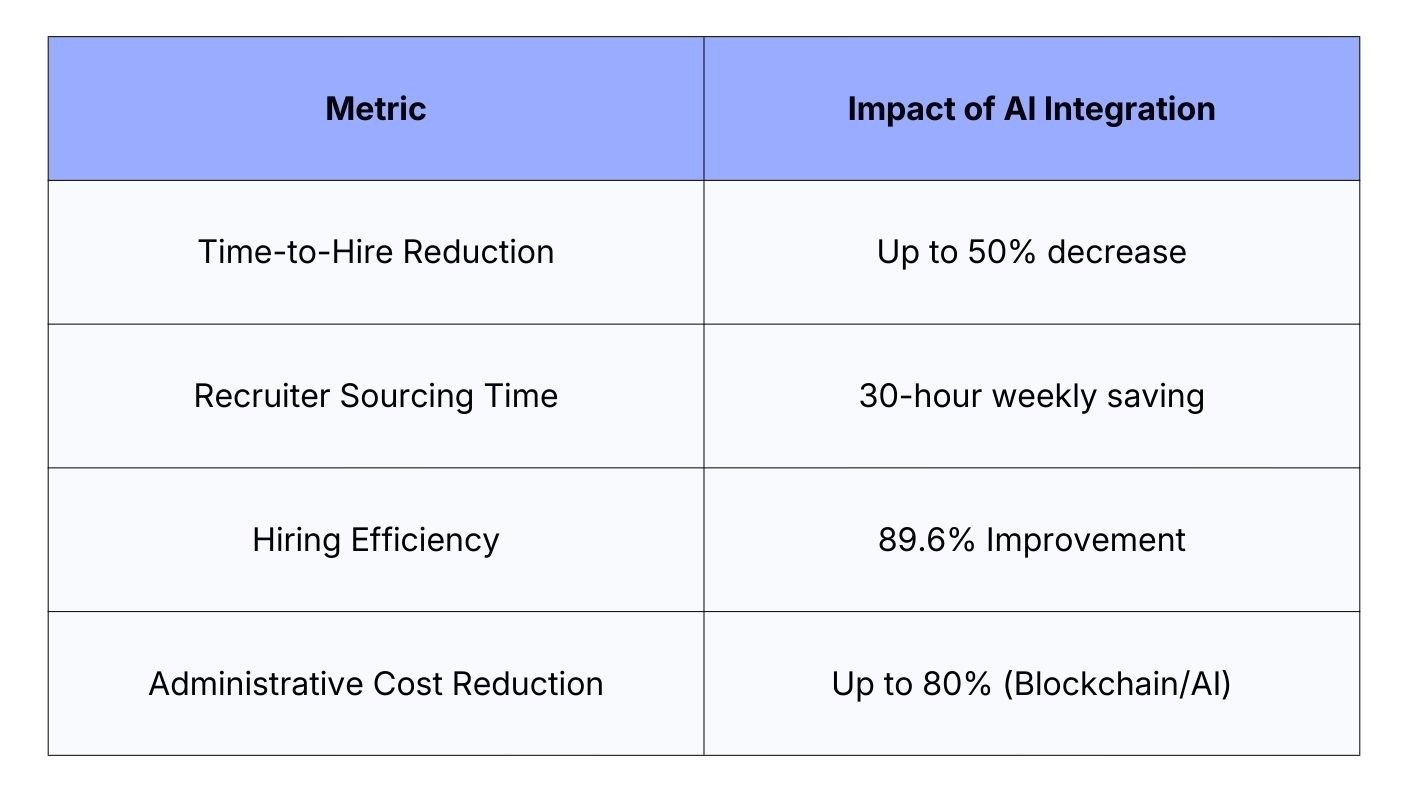
The integration of artificial intelligence into recruitment processes represents a strategic pivot from reactive hiring to proactive talent management. Historically, recruiters spent a significant portion of their workweek—often up to 30 hours—on manual sourcing and administrative tasks. The current era of recruitment technology leverages machine learning, natural language processing (NLP), and large language models (LLMs) to reclaim this time, allowing human capital professionals to focus on high-value initiatives such as cultural integration, strategic workforce planning, and the building of authentic candidate relationships.

Economic and productivity drivers of adoption

The economic rationale for adopting artificial intelligence in hiring is underscored by significant improvements in return on investment (ROI) and operational throughput. Organizations utilizing these tools report up to 89.6% greater hiring efficiency and a reduction in time-to-hire by as much as 50%. These gains are not merely incremental; they represent a fundamental restructuring of the cost-per-hire equation.

The acceleration of skill churn further necessitates the use of advanced analytics. In 2025, skills sought by employers changed 66% faster in occupations most exposed to artificial intelligence compared to those with less exposure. This rapid evolution means that a candidate's formal education may become outdated within 12 to 18 months, forcing recruiters to rely on AI to identify "what people can do today" rather than "what they studied in the past".

Enhancing candidate and manager experiences

Beyond efficiency, artificial intelligence serves to hyper-personalize the experience for both applicants and hiring managers. AI-driven systems provide tailored job recommendations based on a candidate's behavior and profile, while internal mobility tools assist existing employees in mapping career paths. For managers, the primary benefit lies in the reduction of "interview fatigue," particularly in technical fields where senior engineers may lose up to 15 hours weekly to preliminary evaluations. Approximately 75% of candidates report a better experience when interacting with AI chatbots, largely due to the immediate response times and 24/7 availability.

Functional applications across the recruitment funnel

The application of artificial intelligence is not restricted to a single stage of the hiring process; rather, it permeates the entire funnel from initial sourcing to final onboarding, fundamentally altering how talent is identified, engaged, and evaluated.

Sourcing and intelligent discovery

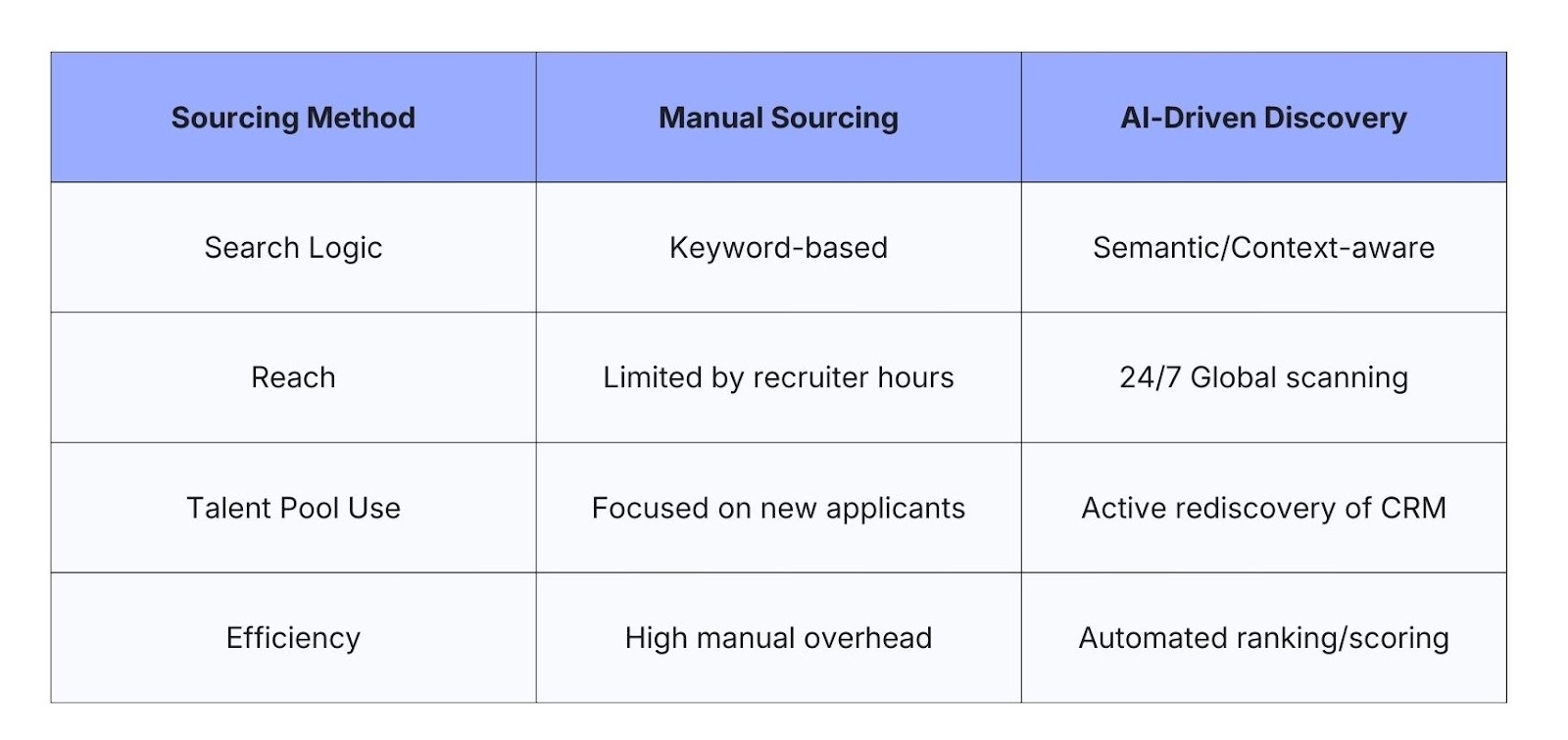
Modern sourcing leverages semantic search to understand the intent and context behind candidate queries, moving beyond simple keyword matching. AI agents now operate 24/7 to "rediscover" high-quality candidates already present in an organization's Applicant Tracking System (ATS), surfacing "silver medalists" for new roles that align with their evolving skill sets. This proactive orchestration ensures that no talent is wasted and that the talent pool remains a dynamic, utilized asset rather than a static database.

Automated screening and skill assessment

Artificial intelligence excels in the high-volume screening of resumes and cover letters, filtering applications in minutes that would take humans days to review. However, the most significant advancement in this area is the transition toward skills-based assessments. Advanced platforms evaluate candidates across diverse skill sets, using intelligence-backed question engines and libraries containing tens of thousands of problems, including real-world project simulations. This allows recruiters to benchmark talent against objective metrics of code quality, logic, and efficiency, rather than relying on subjective resume interpretations.

Conversational AI and intelligent scheduling

The use of natural language processing (NLP) in chatbots has revolutionized candidate engagement. Approximately 57% of recruitment agencies now use AI chatbots to handle initial communications, answer frequently asked questions, and collect preliminary data. These systems can automate up to 75% of candidate communications, ensuring that applicants receive immediate responses—a factor that significantly improves candidate satisfaction scores. Furthermore, intelligent scheduling tools eliminate the "back-and-forth" logistics of setting up interviews, further compressing the time-to-offer.

The dark side of AI: bias, privacy, and ethical risks

While the efficiency gains of artificial intelligence are indisputable, the technology brings significant ethical and legal risks that can lead to systemic discrimination and reputational damage.

The persistence of algorithmic bias

Research conducted in 2024 and 2025 has provided evidence of persistent racial and demographic bias in automated screening tools. A landmark study indicated that AI resume screeners prefer white-associated names in 85.1% of cases. More alarmingly, in direct head-to-head comparisons between Black male candidates and white male candidates with identical qualifications, certain AI systems failed to prefer the Black candidate a single time.

This bias often stems from "proxy discrimination," where the algorithm identifies variables that correlate with protected characteristics. For example, school names, zip codes, or even gaps in employment can serve as proxies for race or socioeconomic status. Furthermore, algorithms may exhibit "recency bias," prioritizing candidates with the most recent job changes or technical skills, which disproportionately disadvantages older workers with stable, long-term career histories. Longer resumes with more experience can sometimes be scored lower than shorter ones because the AI interprets length as a lack of focus.

Human mirroring of AI bias

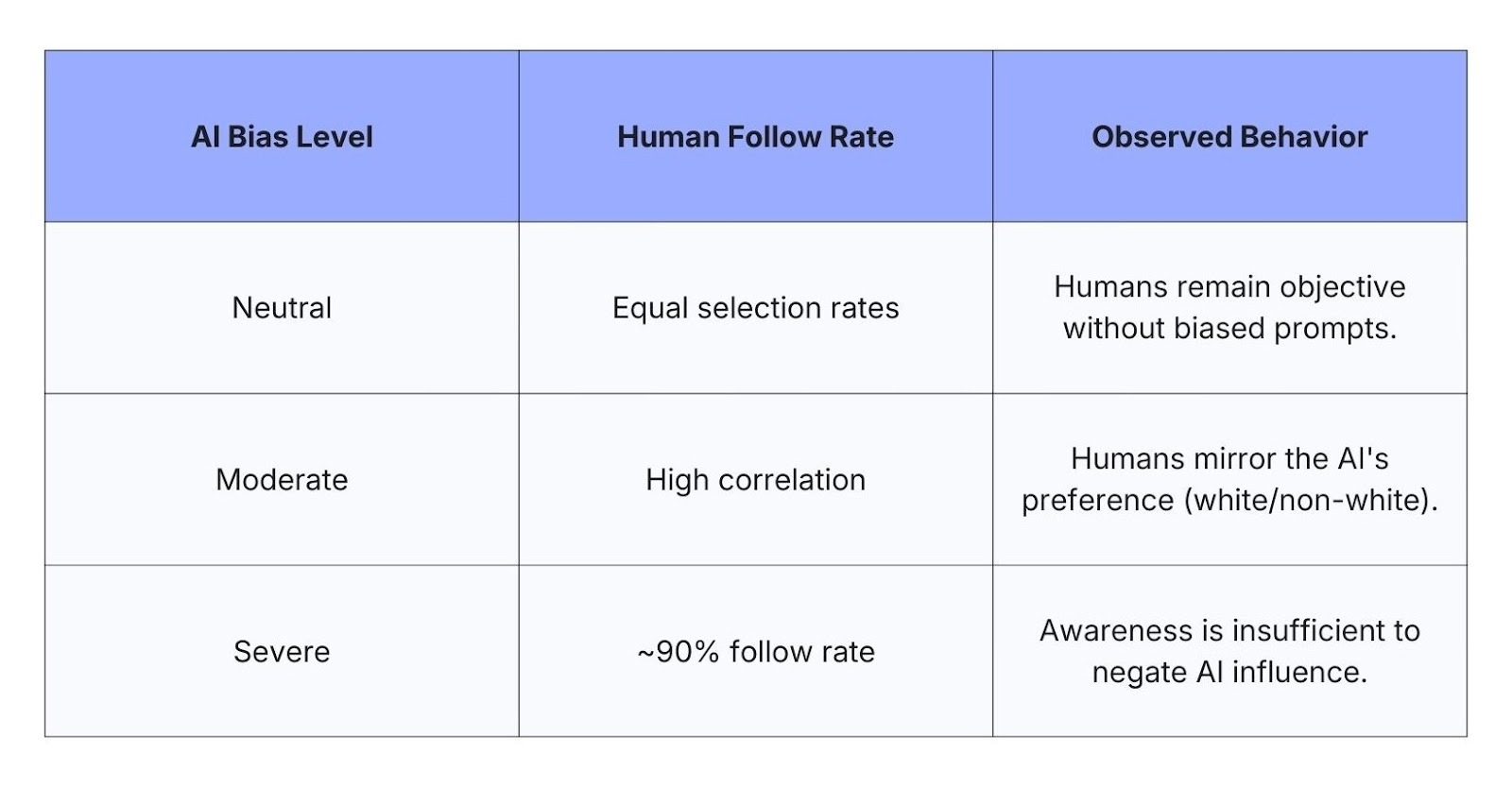
A critical risk identified by the University of Washington in 2025 is the tendency for human reviewers to mirror the biases of the AI tools they use. Because 80% of organizations require a human to review AI recommendations before a final decision is made, the human-AI interaction is the dominant model. The study found that unless the bias is blatantly obvious, human reviewers are often "perfectly willing to accept the AI’s biases," following the system's recommendations even when they are moderately biased toward specific races.

The study concluded that bias dropped by 13% when participants took an implicit association test (IAT) prior to screening, suggesting that proactive human training is essential to mitigate the "mirroring" effect.

Regulatory governance: the EU AI act and global compliance

To combat these risks, major jurisdictions have implemented rigorous regulatory frameworks that place high-stakes obligations on both the developers and the users of recruitment AI.

The European Union AI act

The EU AI Act, which began its phased application in 2024 and 2025, classifies artificial intelligence used in recruitment and human resources as "high-risk". This classification triggers a suite of mandatory requirements for documentation, transparency, and human oversight.

  • Prohibitions (Effective February 2, 2025): The use of AI for emotion recognition in candidate interviews or video assessments is strictly forbidden and must be ceased immediately. Biometric categorization that infers sensitive characteristics is also banned.
  • High-risk obligations (Effective August 2, 2025): Personnel-related AI systems must undergo risk assessments carried out by "notified bodies". Companies are responsible for permanently up-to-date documentation and must ensure high-quality data sets to minimize discriminatory outcomes.
  • Transparency requirements: Employers must inform candidates and employees when a high-risk AI system is used, explaining how decisions are made. Individuals have the right to request explanations regarding the AI's role in the decision-making process.
  • Penalties: Non-compliance can result in fines of up to €35 million or 7% of a company's global annual turnover, effective from August 2027.

Future horizons: blockchain, VR, and agentic AI

As the first generation of recruitment AI matures, several emerging technologies are poised to redefine the candidate experience and the integrity of professional data.

Blockchain for verifiable credentials

Blockchain technology addresses the pervasive issue of resume fraud—an issue cited by 85% of employers who have caught candidates lying on their applications. By storing educational qualifications, work history, and certifications on an immutable, decentralized ledger, organizations can verify candidate claims instantly.

Institutions like MIT and the University of Basel already issue digital diplomas on blockchain, allowing graduates to share verifiable credentials directly with employers and eliminating the risk of forged documents. This technology is particularly critical for C-suite executive recruitment, where fraudulent backgrounds can lead to massive financial and reputational damage.

Virtual reality and immersive simulations

Virtual Reality (VR) is transforming recruitment from a passive exchange of information into an immersive preview of the workplace.

  • Work simulations: Walmart uses VR to simulate high-pressure managerial scenarios, assessing an applicant's ability to handle customer conflict in a safe environment.
  • Safety and skill testing: Heavy industries, such as construction and health care, use VR to assess mechanical knowledge or surgical precision without the physical risks of working with real machinery.
  • Realistic job previews (RJP): Companies like Siemens and Lockheed Martin offer virtual factory tours, allowing candidates to walk into a virtual factory floor and see machinery in action.
  • Engagement: VR job demos are reported to improve candidate satisfaction by 75% and reduce anxiety by providing a realistic look at day-to-day tasks.
  • Diversity: Studies have shown that VR-based recruitment can lead to a 25% increase in the diversity of candidates selected for interviews by evaluating them solely on simulated performance.

The rise of agentic AI and generative models

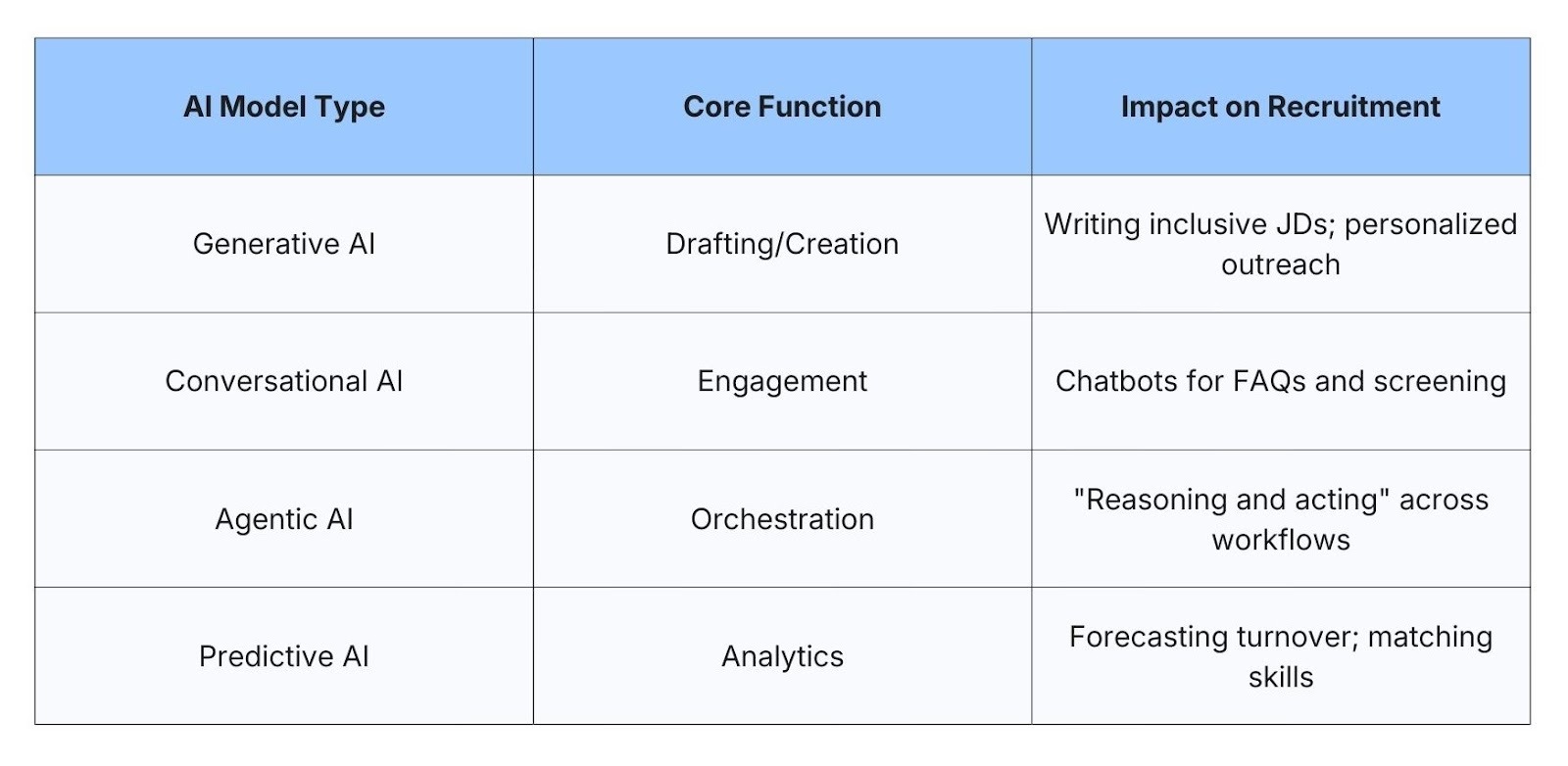
The most significant shift in 2025 is the transition from generative AI to "agentic AI." While generative AI drafts content, agentic AI can reason and act across the entire recruitment lifecycle. These agents do not merely suggest next steps; they execute them—automatically notifying candidates, nudging them toward specific roles, and managing complex workflows. By late 2025, 62% of organizations were at least experimenting with these agentic systems, which act as "Talent Companions" for candidates and "Automation Engines" for recruiters.

Redefining the recruiter: from administrative handler to strategic architect

The automation of low-complexity tasks does not render the human recruiter obsolete but rather necessitates a fundamental upskilling of the workforce.

Transitioning to complex problem solving

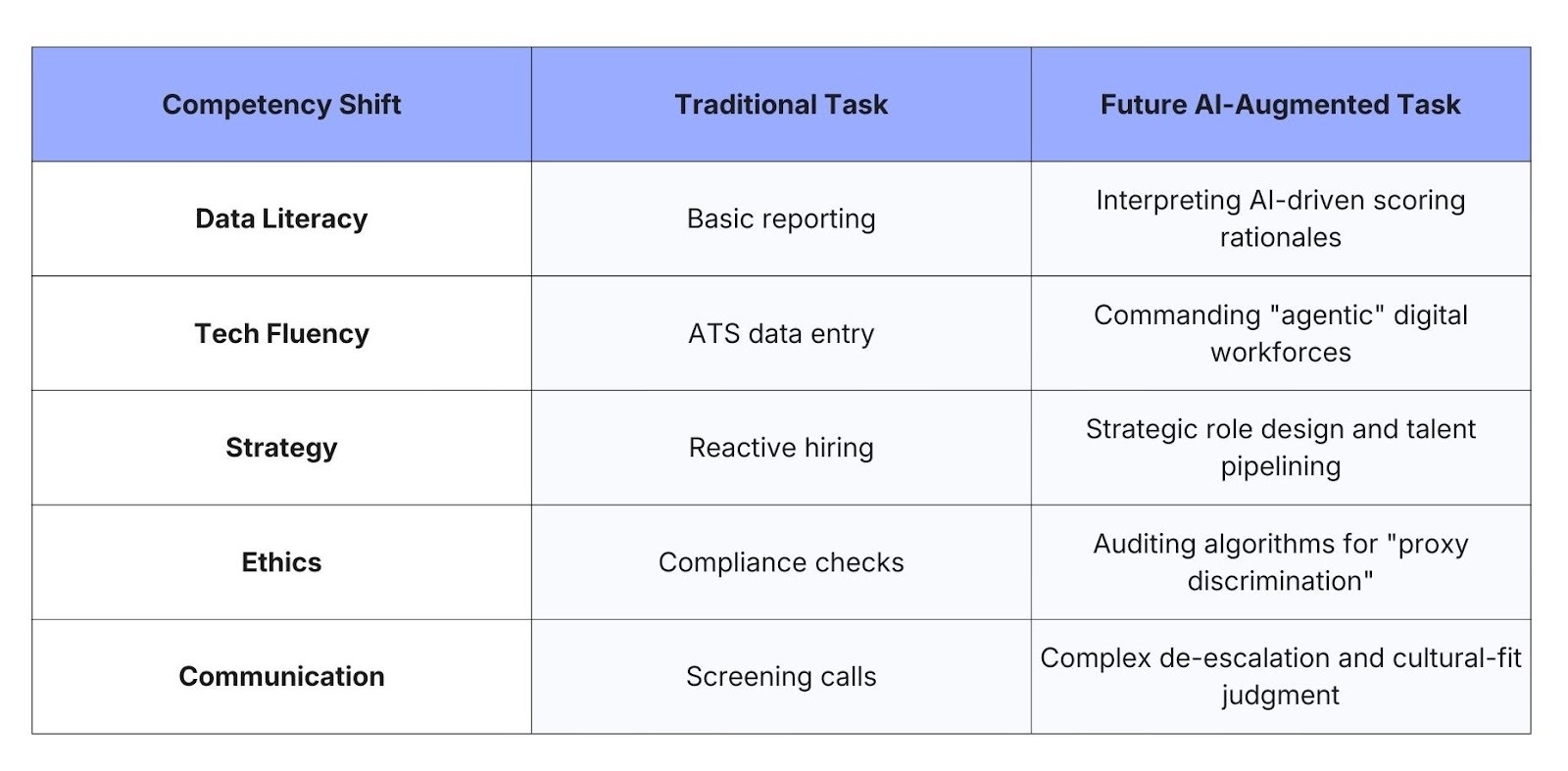
As artificial intelligence handles the transactional elements of hiring—such as resume screening and scheduling—recruiters are moving into roles that require high-level interpretation and relationship building. Gartner predicts that by 2026, recruiters must possess the skills to advise on talent strategy and role design for hard-to-fill skill needs while also building long-term relationships with hard-to-access prospects.

The human-centric premium

Despite widespread adoption, 93% of hiring managers emphasize the continued importance of human involvement. Human judgment is critical for translating data-backed candidate recommendations into nuanced decisions about cultural add, long-term potential, and strategic fit. Furthermore, in 2025, workers with specific AI skills, such as prompt engineering, command a 56% wage premium, reflecting the value of humans who can effectively orchestrate these tools.

Operationalizing ROI: enterprise case studies

The theoretical benefits of AI in recruitment are confirmed by a growing body of enterprise-level case studies that demonstrate measurable returns on investment.

  • Emirates NBD: By utilizing AI-driven video assessments, the bank saved 8,000 recruiter hours and $400,000 in less than a year, while improving the quality of hire by 20% and reducing time-to-offer by 80%.
  • Hilton Hotels: Predictive AI for seasonal staffing reduced emergency hires by over 30%, saving significant recruitment costs and improving guest satisfaction by aligning employee availability with predicted demand.
  • Siemens: The integration of AI into executive recruitment led to a 40% reduction in time-to-fill and a 30% improvement in the quality of hire based on strategic and cultural alignment.
  • Teleperformance: Using AI screening tools, the company reviewed over 250,000 candidates annually without increasing recruiter headcount, while significantly improving diversity.
  • Humanly restaurant chain study: High-volume automated screening reduced time-to-interview by 7–11 days and doubled candidate show rates.

Implementation framework: achieving scalable, ethical AI ROI

Successful implementation of artificial intelligence in recruitment requires a rigorous balance between efficiency and ethics, moving from experimental pilots to integrated infrastructure.

Strategic recommendations for talent leaders

  1. Prioritize integration over tool sprawl: To avoid diminishing ROI, organizations should choose fewer tools that integrate directly with their ATS and core workflows. "Tool sprawl" leads to broken data trails and duplicated manual work.
  2. Formalize governance early: Policies should define which tools are approved, how data is protected, and where human review is mandatory. Formalizing these rules is the foundation for confident adoption and reduces "shadow IT".
  3. Separate assistance from decision ownership: Operational AI (scheduling, note-taking) should be fully embraced, but "Judgment AI" (ranking, scoring) must be supervised and validated as high-stakes.
  4. Embrace skills-based assessment: Shift from credentials to competencies. Using automated platforms for technical benchmarking allows for a more consistent and bias-resistant evaluation of true ability.
  5. Audit for transparency: Organizations must clarify how AI is used in the hiring process. Providing candidates with transparency and, if possible, a choice to opt-out builds trust and mitigates the risk of legal challenges.

The evolution of recruitment in 2025 and beyond is defined by the strategic orchestration of high-speed automation and high-nuance human judgment. By leveraging AI to handle repetitive, data-intensive tasks, organizations can transform their talent acquisition functions from operational bottlenecks into powerful, data-driven engines of growth and innovation.

The convergence of technologies like blockchain for security, VR for immersion, and agentic AI for proactive orchestration represents a new "Recruitment 2.0" where the focus returns to human potential, enabled—not replaced—by the most advanced technological assistants ever developed. By 2027, proficiency in these tools will be a standard requirement for 75% of hiring processes, marking the final stage in the transition of AI from a "nice-to-have" novelty to critical hiring infrastructure.

Psychometric Assessments

What is psychometric testing and how to use it in hiring

In today’s competitive hiring landscape, engineering managers and recruiters are constantly seeking innovative ways to assess candidates beyond traditional resumes and interviews. Psychometric testing has emerged as a powerful tool to evaluate a candidate's cognitive abilities, personality traits, and behavioral tendencies. This data-driven approach not only enhances the recruitment process but also ensures more objective and comprehensive assessments of potential hires. With HackerEarth's psychometric tests, organizations can make informed, bias-free decisions that are based on reliable data and predictive insights.

What is psychometric testing?

Psychometric testing refers to standardized assessments designed to measure a candidate's mental capabilities and behavioral style. These tests offer deep insights into an individual's suitability for a role by evaluating their cognitive abilities, personality traits, and potential for success in specific job functions. Unlike traditional interviews, psychometric tests provide objective data that can help predict a candidate's future performance and cultural fit within an organization.

Why it matters in modern recruitment

In an era where hiring decisions are increasingly data-driven, psychometric testing offers several advantages:

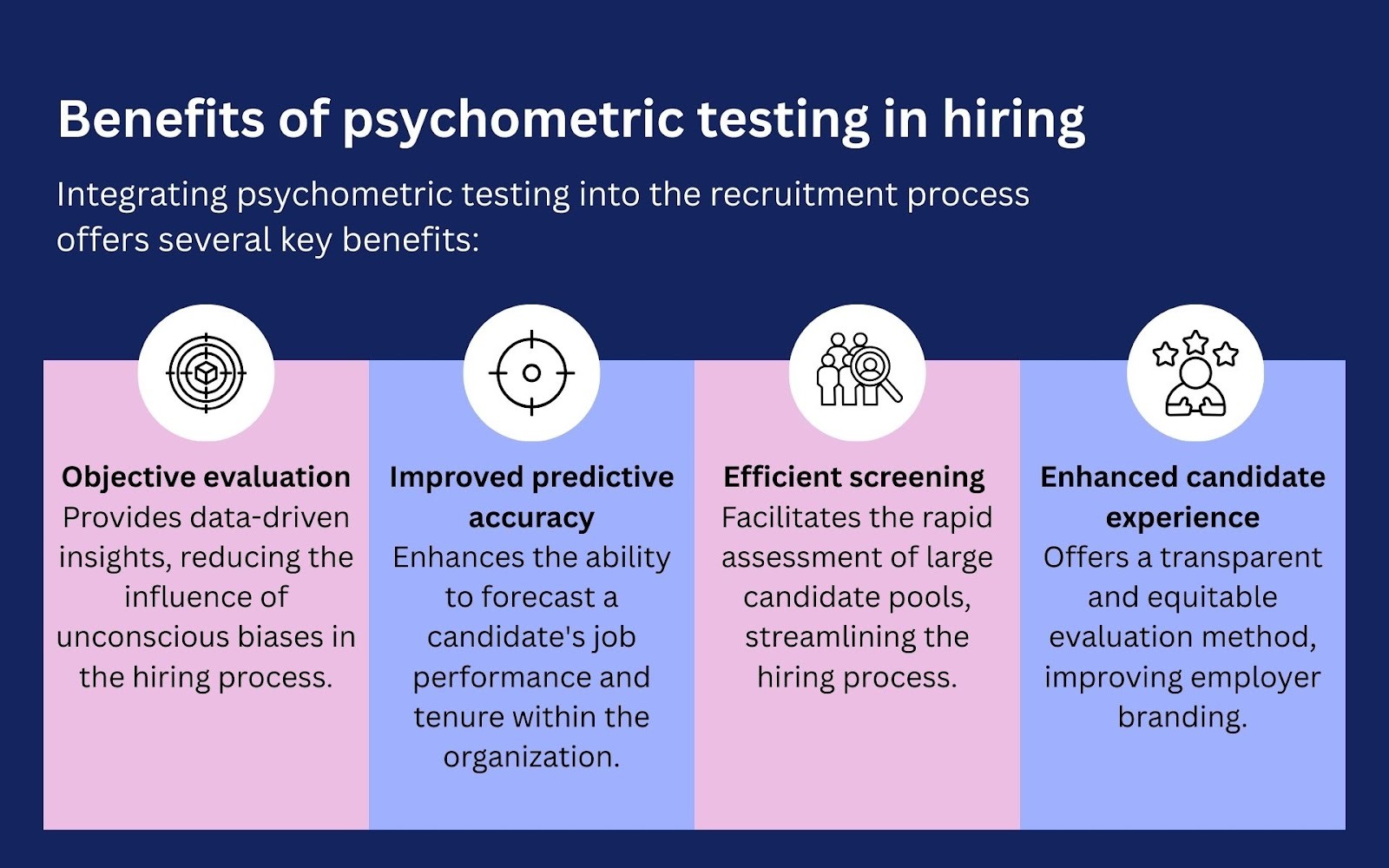
  • Objective evaluation: Reduces reliance on subjective judgments, minimizing biases in the hiring process.
  • Predictive validity: Offers insights into a candidate's potential job performance and long-term success.
  • Scalability: Allows for efficient assessment of large volumes of candidates, particularly in tech hiring and campus recruitment.
  • Enhanced candidate experience: Provides candidates with a fair and transparent evaluation process.

Types of psychometric tests

Psychometric tests can be broadly categorized into four main types, each serving a distinct purpose in the recruitment process. HackerEarth offers a suite of psychometric tests, including the following:

Aptitude tests

Aptitude tests assess a candidate's cognitive abilities and potential to perform specific tasks. Common subtypes include:

  • Numerical reasoning: Evaluates the ability to work with numbers and interpret data.
  • Verbal reasoning: Assesses understanding and reasoning using concepts framed in words.
  • Logical reasoning: Measures the ability to identify patterns and logical sequences.

Personality tests

Personality tests aim to identify consistent patterns in a candidate's thoughts, feelings, and behaviors. These assessments help determine cultural fit and predict how a candidate might respond to various work situations. HackerEarth's personality tests are designed to assess how well candidates align with your organization’s values and the demands of specific job roles.

Situational judgment tests (SJTs)

SJTs present candidates with hypothetical, job-related situations and ask them to choose the most appropriate response. These tests assess decision-making and problem-solving skills in real-world contexts. HackerEarth’s SJTs are tailored to evaluate candidates’ practical abilities to handle real-world challenges specific to the role they’re applying for.

Role-specific skill tests

Particularly relevant in technical hiring, these tests evaluate a candidate's proficiency in specific skills required for the role. For example, coding assessments for software developers or domain-specific tests for data analysts. HackerEarth provides specialized role-based skill assessments, ensuring that you evaluate candidates on the exact competencies required for success in their job role.

How psychometric tests work in recruitment

The integration of psychometric tests into the recruitment process typically follows these steps:

  • Candidate experience: Candidates complete the assessments online, often as part of an initial application or after a preliminary screening.
  • Test structure: Tests are designed to be role-specific, ensuring relevance to the position in question.
  • Scoring and interpretation: Results are analyzed to provide insights into the candidate's abilities and fit for the role.
  • Integration with ATS: Many Applicant Tracking Systems (ATS) now integrate psychometric assessments, allowing for seamless incorporation into existing workflows.

Streamlining hiring with HackerEarth

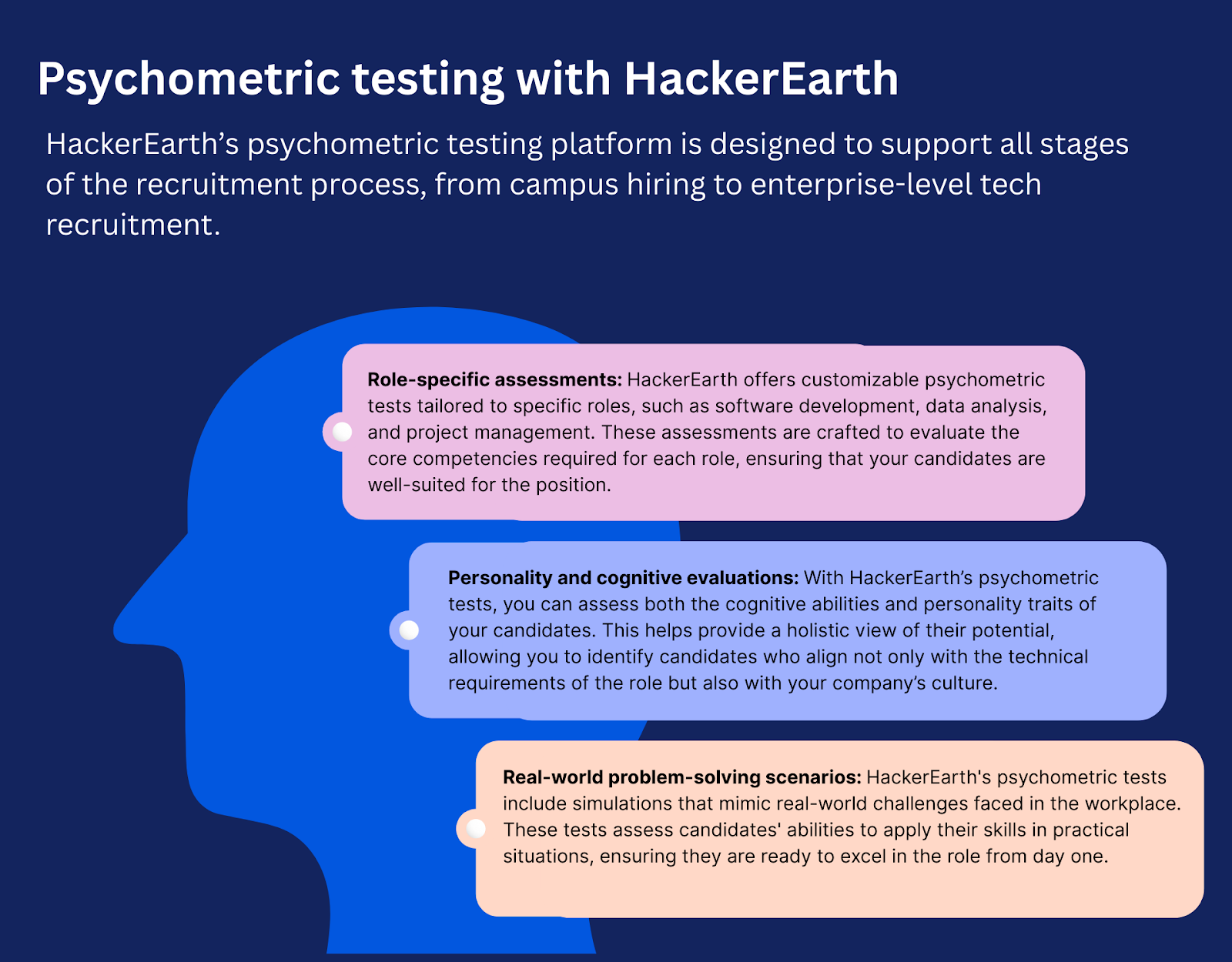
With HackerEarth’s psychometric tests, recruiters can easily integrate the results directly into their Applicant Tracking Systems (ATS) for quick analysis and decision-making. This integration enhances the overall recruitment efficiency, particularly for large-scale hiring processes like campus recruitment or tech hiring.

Challenges and limitations

While psychometric testing offers numerous advantages, there are potential challenges to consider:

  • Misuse without context: Interpreting test results without considering the candidate's background and experience can lead to inaccurate conclusions.
  • Over-reliance on assessments: Relying solely on psychometric tests without incorporating interviews and other evaluation methods may overlook important candidate attributes.
  • Cultural bias: Some tests may inadvertently favor candidates from certain cultural backgrounds, potentially leading to biased outcomes.

Best practices for using psychometric tests in hiring

To maximize the effectiveness of psychometric testing, consider the following best practices:

  • Align with job role and competencies: Ensure that the tests are tailored to the specific requirements of the role.
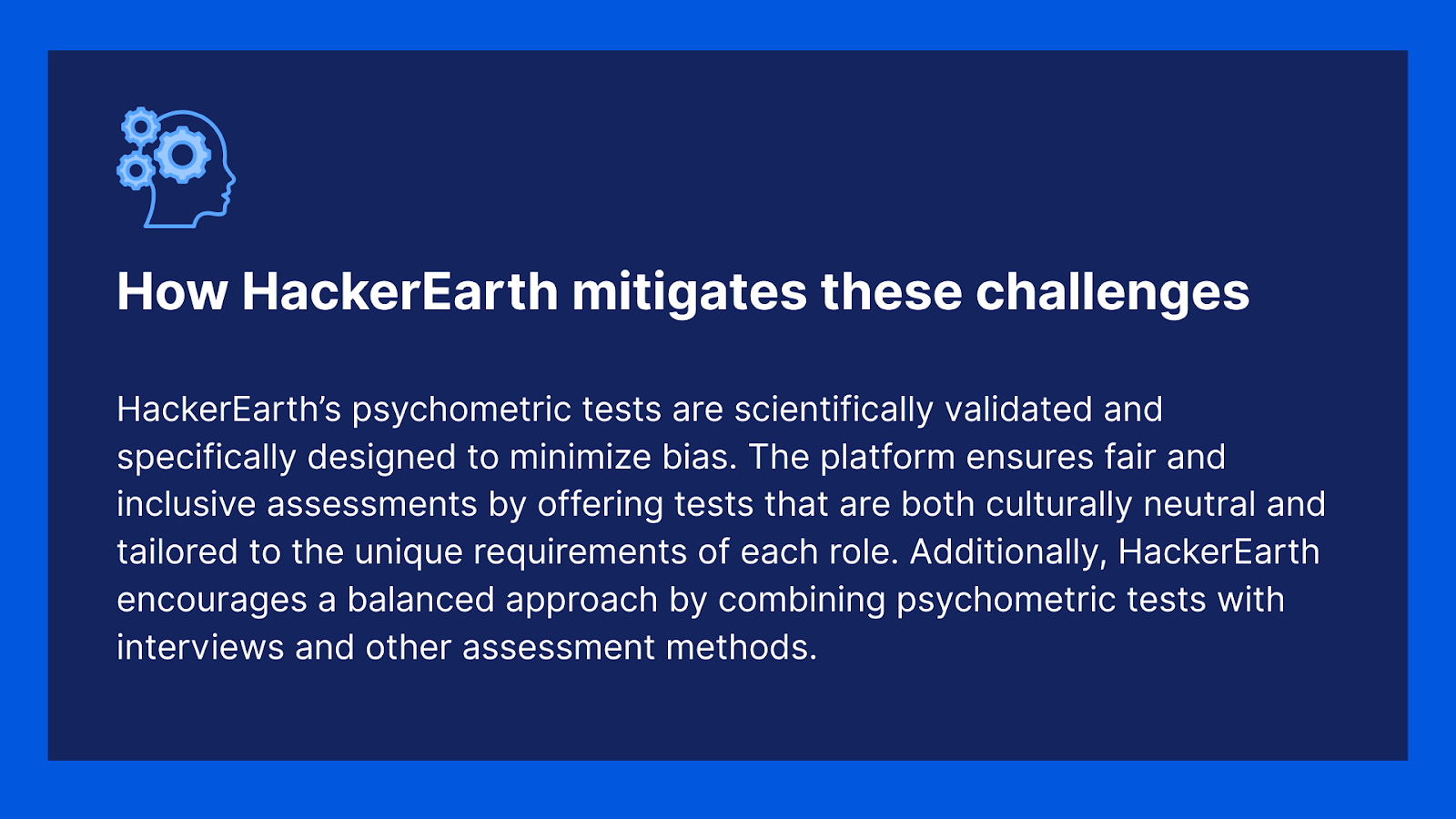
  • Use validated, reliable assessments: Select tests that have been scientifically validated and are known for their reliability. HackerEarth’s psychometric assessments meet these criteria, ensuring you get accurate and actionable results.
  • Ensure fairness and inclusivity: Choose assessments that are free from cultural biases and are accessible to all candidates.
  • Provide feedback to candidates: Offer constructive feedback to candidates based on their test results, promoting transparency and trust.

Conclusion

Incorporating psychometric testing into the hiring process enables organizations to make more informed, objective, and effective recruitment decisions. By understanding and leveraging the various types of psychometric assessments, engineering managers and recruiters can enhance their ability to identify candidates who are not only technically proficient but also align with the organization's culture and values. For those in the tech industry, platforms like HackerEarth provide specialized tools to streamline this process, offering role-specific assessments and comprehensive analytics to support data-driven hiring decisions. With HackerEarth's psychometric tests, recruiters can ensure that their hiring decisions are objective, accurate, and aligned with the needs of their organization.

8 best candidate sourcing tools in 2026: an expert evaluation guide

Introduction: the new reality of talent acquisition

The recruitment landscape in 2026 is defined by a significant paradox. While seven out of ten recruiters report that hiring volume is increasing and anticipate even more roles in the coming year, the fundamental challenge has shifted dramatically. The primary difficulty is no longer simply finding candidates; it is efficiently screening and ensuring the quality of those candidates. Recruiting teams report being overwhelmed, spending valuable time managing complex systems and administrative tasks rather than engaging directly with potential employees.

A major force driving this transformation is the global transition to a skills-first architecture, replacing outdated credential filters (like specific degree requirements) with competency-based matching. This skills-based approach, powered by modern AI, has already demonstrated tangible success, expanding talent pools by 3–5 times and improving workforce diversity by an average of 16% in early adopting organizations. This report provides an expert framework and detailed comparison of the top eight sourcing platforms engineered to navigate this complex, skills-first, and AI-driven era.

1. What is a candidate sourcing tool? 

Defining the sourcing layer

Candidate sourcing tools are specialized platforms designed to proactively identify, locate, and initiate engagement with passive candidates—talent who are not actively applying for jobs. Their core function is pipeline filling and talent community creation, operating at the very top of the hiring funnel.

Differentiating sourcing tools from core HR tech

To achieve operational efficiency and measurable return on investment (ROI), it is essential to distinguish sourcing tools from the other primary components of the TA technology stack: the Applicant Tracking System (ATS) and the Candidate Relationship Management (CRM) platform.

  • Applicant Tracking System (ATS): The ATS is focused on managing active applicants through the latter stages of recruitment, from application review to offer letter and compliance. Communication within an ATS is typically transactional (e.g., interview invites or rejection emails). It focuses on structured hiring workflows, compliance, and process tracking.
  • Recruiting CRM/Sourcing Tool: These systems focus on the earlier stages of attraction, engagement, and nurturing. They are engineered to build long-term relationships with potential talent before a job opening even exists. Communication is ongoing, personalized, and aims to strengthen the employer brand through content sharing and continuous engagement.

The true value of modern sourcing technology is realized when the sourcing tool/CRM layer integrates seamlessly with the ATS. Without strong integration, the efficiency gained from proactively finding candidates is negated by the administrative burden of manual data transfer. The inability to flow sourced data directly and cleanly into the ATS for tracking, compliance, and workflow management forces recruiters back into time-consuming administrative work. Therefore, the strength of ATS integration is not merely a feature, but the single greatest determinant of long-term sourcing tool ROI and operational scalability in 2026.

2. How AI, skills intelligence, and governance are reshaping sourcing 

The platforms dominating the market today rely heavily on three core technological advancements: intelligent automation, semantic search, and robust governance features.

Intelligent automation and the predictive future

AI investment is rapidly expanding in recruitment, but its primary utility remains augmentation. AI handles the data-heavy lifting of finding and screening candidates, automating administrative tasks such as scheduling, screening, and drafting initial outreach. This liberation allows recruiters to elevate their function, focusing on strategic counsel and complex decisions.

Data is the crucial foundation for every modern recruiting decision. Predictive sourcing tools leverage this data to go beyond simple historical tracking. Predictive analytics help TA leaders forecast hiring needs and, more importantly, anticipate which sourced candidates are most likely to succeed in a role. Furthermore, the rise of Agentic AI allows platforms to take over entire workflows, managing automated, personalized email sequences that can achieve response rates up to three times higher than traditional manual outreach.

Semantic search and skills intelligence

The shift to skills-first hiring is technically enabled by semantic search. Unlike traditional keyword matching, which relies on rigid buzzwords, semantic search improves recruiting by interpreting the underlying meaning and context within a candidate's profile. This allows platforms to find stronger matches by connecting candidates based on transferable skills and experiences, even if they lack the exact job title keywords.

This richer, contextual understanding has several profound benefits: it increases hiring speed by delivering fewer irrelevant results, expands discovery by surfacing hidden talent beyond traditional filters, and directly supports modern, forward-looking hiring strategies by highlighting candidates with adjacent skills and growth potential who can quickly adapt to changing industry demands.

Governance, risk, and diversity (DEI)

As AI plays a larger role in initial filtering, governance and bias mitigation have become critical pillars of platform evaluation. When designed responsibly, AI promotes equitable hiring by focusing on objective skills and potential over traditional pedigree. Semantic search inherently helps reduce bias risk because its consideration of broader context avoids the unintentional exclusion caused by narrow keyword filters. This focus on objective criteria has produced quantifiable results: companies like Unilever reported a 16% increase in diversity hires after implementing AI-driven processes.

However, the success of expanded talent pools relies entirely on the quality and objectivity of the subsequent evaluation step. Semantic search can expand the talent pool by 3–5x , but these newly surfaced candidates—who may not fit traditional resumes—still require objective verification of their competence. If the sourcing tool's advanced AI matching is not immediately followed by an objective, standardized assessment, the system fails to solve the critical quality challenge identified by recruiters. Therefore, for technical roles, integrating an objective qualification platform is an absolute necessity within the modern TA stack.

3. The enterprise evaluation framework for choosing a sourcing tool

Selecting a high-cost enterprise sourcing tool is fundamentally a vendor risk management exercise focused on future scalability, compliance, and measurable efficiency gains.

Essential evaluation pillars

  1. Database Scale and Specificity: The platform must aggregate talent from multiple sources to build a comprehensive, searchable database. For technical roles, this means covering niche communities; for broad roles, it means unmatched volume.
  2. Predictive and Filtering Power: Recruiters must look beyond basic Boolean functionality. Top platforms offer advanced features like AI-powered scoring, predictive analytics for hire success probability, and detailed granular filters (some tools boast over 300 filter options).
  3. Outreach Automation and Personalization: The tool must provide sufficient contact credits (emails, InMails) and sophisticated automation sequence builders capable of high personalization to ensure strong response rates.
  4. Integration and Data Flow: As established, integration is non-negotiable. The chosen tool must seamlessly sync data with core Applicant Tracking Systems (ATS) and CRMs to ensure unified analytics, reduce manual data entry, and streamline the candidate journey.
  5. Diversity and Fairness Features: The platform must demonstrate a commitment to bias mitigation, offering features that support standardized evaluation and provide verifiable analytics for tracking internal diversity goals.
  6. Scalability and Support: For rapidly scaling organizations, selecting a solution that is global-ready, mobile-friendly, and backed by robust, often 24/7, SLA-backed customer support is paramount.

Strategic pricing and negotiation insights

A key challenge in the AI recruiting software market is pricing opacity; despite being a market exceeding $661 million, many vendors default to "contact for pricing" models. Annual costs vary wildly, generally ranging from $4,800 per user per year to custom enterprise contracts that can climb past $90,000 annually.

Most enterprise software relies on a per-seat licensing model, meaning costs multiply rapidly with team size. Because pricing is often negotiated, enterprise buyers should utilize internal leverage (such as growth projections or timing purchases for vendor quarter-ends) to achieve significant savings. Industry data indicates that successful contract negotiations often result in discounts averaging between 11% and 16% off the initial sticker price.

5. Strategic comparison: key insights and the sourcing tool matrix

The modern TA leader understands that technology effectiveness is maximized not through selecting a single, all-encompassing tool, but through strategically layering complementary platforms. A successful strategy requires combining a broad search engine with niche automation, and crucially, an objective skills verification layer.

This strategic layering approach addresses the quality challenge directly. Sourcing tools focus on finding the candidate, and their AI is geared toward initial matching—the first hurdle. However, relying solely on a sourcing tool’s match score before an interview introduces risk of bias or misalignment. The optimal workflow uses the sourcing engine to fill the funnel and the assessment engine (like HackerEarth) immediately after to verify the candidates against objective, skills-first criteria. The seamless data transition between these two layers is the key to maximizing the efficiency of the entire recruitment process.

6. Tool vs manual sourcing: when to use which

The introduction of intelligent sourcing tools does not eliminate the human element; rather, it demands a sophisticated hybrid workflow.

Defining hybrid sourcing workflows

Hybrid models are those where automation handles bulk, repetitive operations, and human sourcers provide the crucial context, judgment, and relationship-building expertise. AI handles transactional, low-value work—finding profiles, scheduling, and basic outreach drafting. This strategic distribution of labor allows recruiters to focus on high-impact work that machines cannot replicate, such as assessing cultural fit, navigating complex negotiations, and building deep candidate relationships.

When selecting candidates, human judgment remains irreplaceable in interpreting nuanced information and contextual factors that AI might miss. The successful sourcer's skill set shifts from being a "database expert" to a "strategic relationship architect" and a "data interpreter." They must leverage predictive data and manage complex human interactions, requiring significant investment in continuous training for the TA team.

Common mistakes to avoid

The most frequent error in adopting new sourcing technology is an over-reliance on automation without sufficient human oversight. This often manifests in two ways:

  1. Automation Without Context: Fully automated workflows can fail when judgment is required. Generic, automated outreach sequences, for instance, lead to poor candidate experience and low response rates. Personalized, human review is essential before initiating high-stakes outreach.
  2. The Data Trap and Bias: Using AI screening without proper governance risks perpetuating existing biases if the underlying training data is not audited and diverse. Without a standardized, objective evaluation step immediately following the AI match, the system may simply amplify bias under the guise of efficiency.

7. Strategic implementation: how to choose the right tool for your context

The process of choosing a sourcing tool requires internal diagnosis based on team size, budget, specific role type, and existing technical stack integration capabilities.

Contextual decision flow

Decision-makers should map their primary hiring needs against the core strengths of the available platforms.

Rigorous pilot evaluation (vendor selection)

To ensure the significant investment yields results, a sourcing tool evaluation must follow a data-driven vendor selection process.

  1. Define Scope and Metrics: Clearly establish measurable metrics (e.g., increased response rate, decreased time-to-hire for niche roles, accuracy of AI matching). Ensure role requirements are structured to leverage skills intelligence effectively.
  2. Execution and Data Collection: Run a structured pilot for a defined period (typically 4 to 12 weeks). Collect comprehensive data across sources, measuring both efficiency (time saved on administrative tasks) and efficacy (candidate quality and conversion rates).
  3. Stakeholder Feedback and Analysis: Collect qualitative feedback from end-users (recruiters on usability) and hiring managers (on the quality of candidates submitted). Analyze trends in the data to identify bottlenecks and validate results.
  4. Integration Check: Rigorously test the integration with the existing tech stack (ATS, assessment tools). Verify that the system enhances the candidate experience and that data flows seamlessly for streamlined, compliant back-end management.

Conclusion

The definition of a top candidate sourcing tool transcends simple database size. The best platforms are characterized by intelligent AI augmentation, a commitment to skills-first architecture, predictive analytics, and robust governance features. While platforms like LinkedIn Recruiter, SeekOut, and Gem are essential for filling the pipeline and nurturing relationships, they fundamentally address the challenge of finding talent.

However, the core quality and screening challenge facing TA leaders today requires a layered solution. The most successful technical organizations will leverage these powerful sourcing engines to generate qualified interest, but they will rely on a dedicated skill validation partner to ensure objectivity and quality at scale. HackerEarth provides the essential qualification layer, transforming the high volume of sourced profiles into a verified pool of skilled talent, thereby ensuring that the substantial investment in sourcing technology translates directly into high-quality, efficient hiring outcomes.

Frequently asked questions (FAQs)

What are the best candidate sourcing tools?

The "best" tool depends entirely on the organization's context. For maximum reach and volume, LinkedIn Recruiter is the standard. For deep niche, complex searches, and diversity reporting, SeekOut and Entelo are the market leaders. For pipeline building and automated outreach, Gem and HireEZ are highly effective. For objective technical qualification, HackerEarth is an essential partner.

What is the difference between sourcing software and an ATS?

An Applicant Tracking System (ATS) manages active applicants, compliance, and structured workflow from the moment of application through hiring. Sourcing software (or a recruiting CRM) focuses on the pre-application stage, focusing on proactive engagement, attraction, and long-term relationship nurturing with passive candidates.

How do AI sourcing tools reduce bias?

AI can reduce unconscious human biases by implementing skills-first matching and semantic search, which evaluate candidates based on objective experience and potential rather than rigid pedigree. The use of structured, standardized assessments (as provided by HackerEarth) reinforces fairness by comparing every candidate against the same high standard.

Can sourcing tools replace recruiters?

No. AI and sourcing tools serve as augmentation, not replacement. These tools automate the transactional, low-value work (data analysis, scheduling, screening), allowing recruiters to focus on strategic, high-value tasks. The human recruiter remains central to assessing cultural fit, building deep candidate relationships, and navigating complex negotiations.