Meta title: AI interviewers in 2026: how they work for recruiters (54 chars) Meta description: AI interviewers conduct structured candidate screening using AI. Learn how they work, where they fit, and their limits for recruiters in 2026. (143 chars) Read time: 8 minutes Primary keyword: AI interviewer
AI interviewers in 2026: how they work for recruiters
An AI interviewer is software that conducts structured candidate screening using artificial intelligence, without requiring a live human interviewer at the first stage. For recruiters managing high applicant volumes, an AI interviewer can ask consistent role-relevant questions, capture responses, and produce comparable evaluation data across candidates. HackerEarth's OnScreen is one example of an AI interviewer built specifically for technical hiring.
This article explains what an AI interviewer does, where it fits in a recruiter's workflow, where it underperforms, and what compliance considerations apply in 2026.
What is an AI interviewer?
An AI interviewer uses artificial intelligence to conduct structured candidate screening and evaluation. Instead of relying solely on live human interviewers at the first round, AI interview platforms:
- Ask consistent, role-relevant questions
- Adapt follow-up questions based on candidate answers
- Apply the same evaluation rubric to every candidate
- Reduce repetitive scheduling and first-round work for recruiters
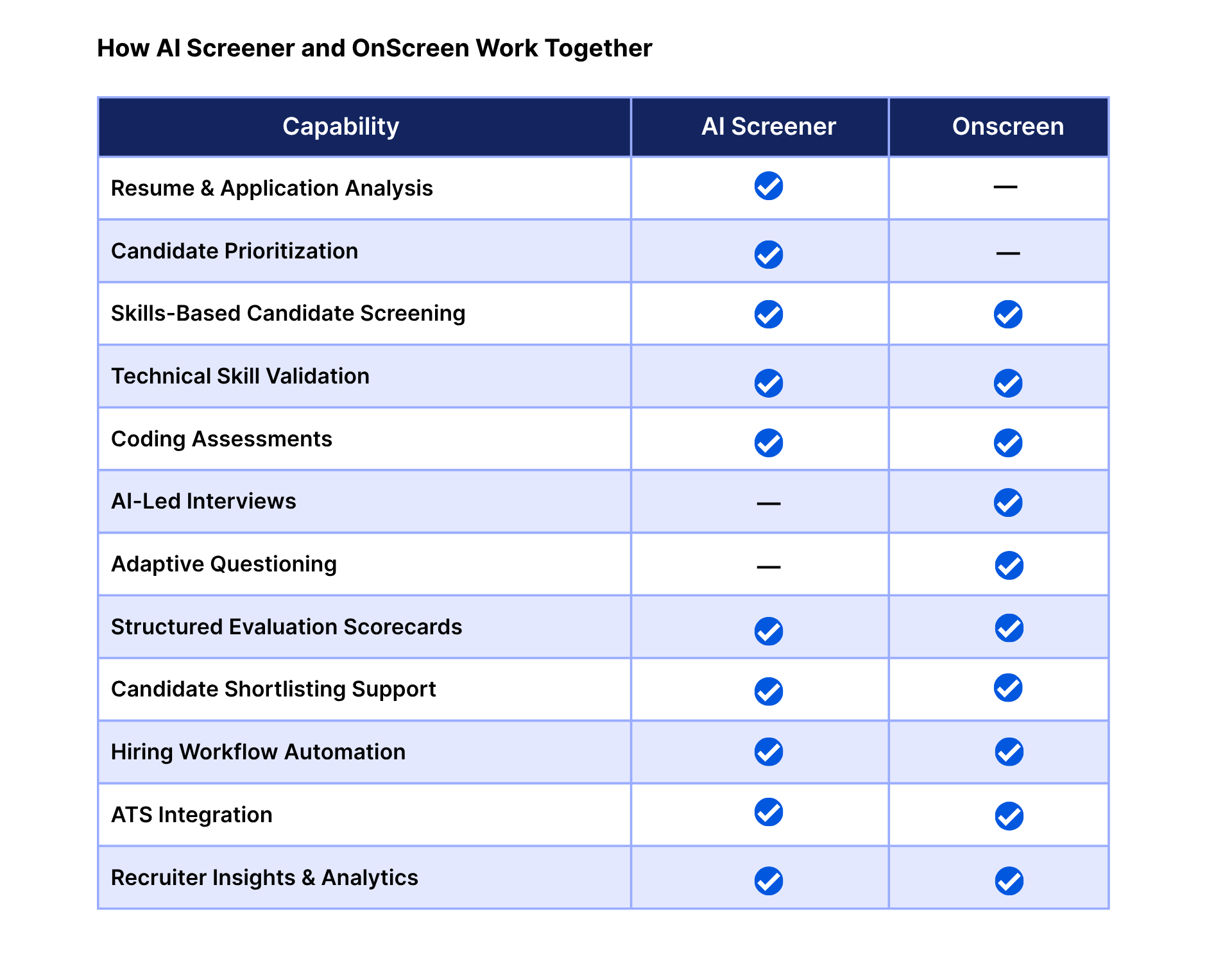
For example, HackerEarth's OnScreen conducts role-calibrated technical conversations and follows a structured flow so candidates are evaluated against the same criteria.
How an AI interviewer works
Implementations vary, but most AI interviewers share a few core capabilities relevant to recruiters.
Structured and adaptive evaluations
AI interview platforms use adaptive questioning, where a candidate's response shapes the next question. The structured flow means each candidate is scored against the same rubric — evaluation that doesn't vary by interviewer mood or fatigue.
Role-calibrated technical conversations
Many AI interviewers are designed for technical hiring. OnScreen, for example, runs role-calibrated technical conversations that adjust to the role and seniority level being hired for. This focus helps ensure technical competencies are assessed consistently across a candidate pool.
Consistent, rubric-applied scoring
A core advantage of an AI interviewer is consistency. Applying the same evaluation rubric to every candidate produces scoring that is more consistent across candidates than human-led screens. AI systems carry their own forms of bias — they don't eliminate it — but they remove the candidate-to-candidate variation that comes from interviewer fatigue, rapport effects, or inconsistent question sets. See SHRM's guidance on AI in employment decisions for context on how this trade-off is typically framed.
Video and engagement features
Many AI interviewers include video components to make the experience feel more conversational. OnScreen uses a video avatar to deliver questions while maintaining a consistent evaluation flow.
Benefits of an AI interviewer for recruiters
An AI interviewer can change a recruiter's workflow in a few specific ways.
Faster screening at scale
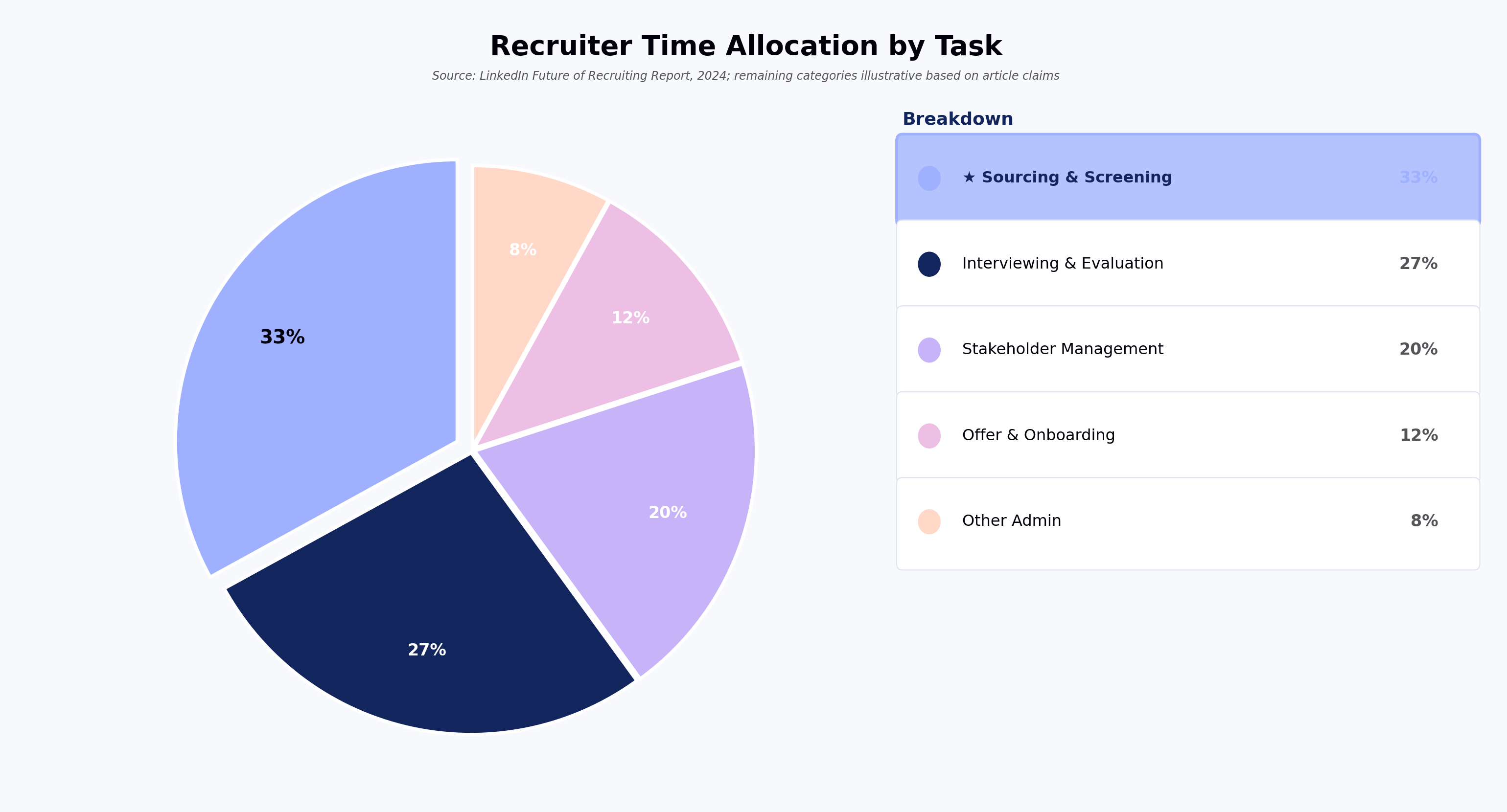
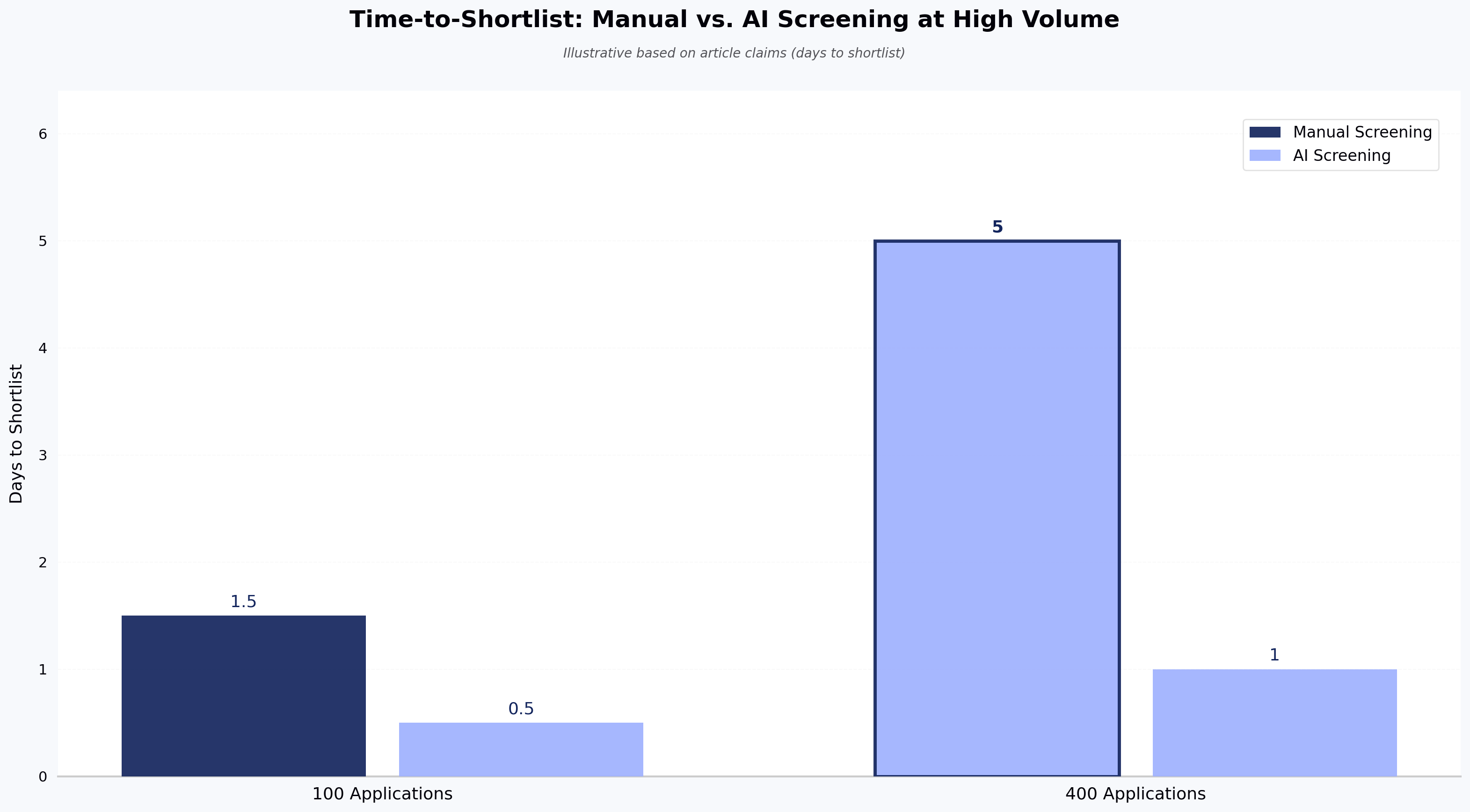
An AI interviewer handles first-round technical screening so recruiters spend less time on scheduling and repetitive evaluation. One HackerEarth enterprise customer screened more than 2,000 candidates in a single weekend using OnScreen — a scale that is difficult to reach with human-led first rounds.
As Pawan Kuldip at Discover Dollar put it, OnScreen helped compress hiring cycles "from three to four weeks" down to a much shorter window for technical screening.


Consistent evaluation across candidates
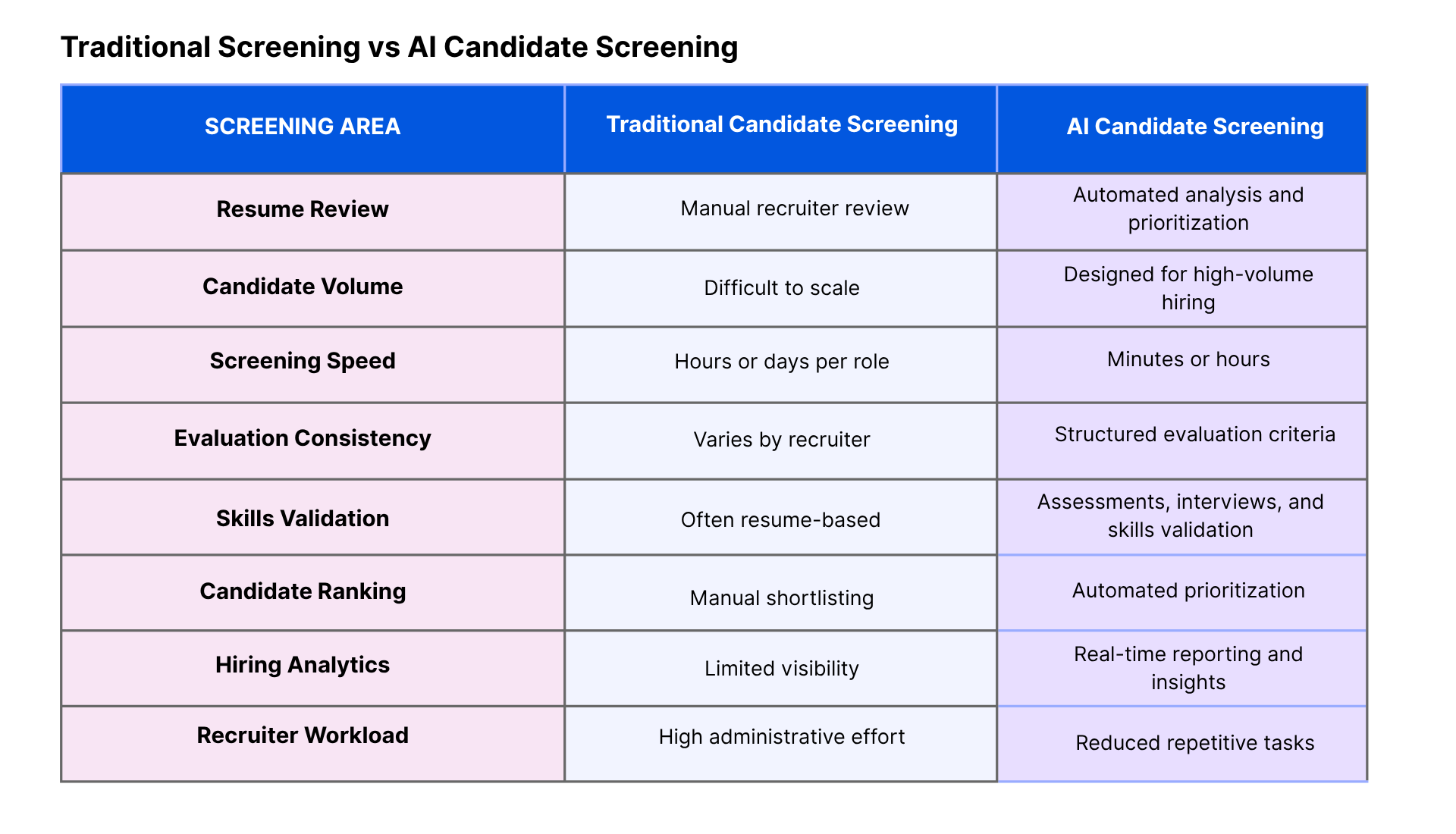
Every candidate answers comparable questions and is scored against the same rubric. This produces fairer side-by-side comparisons than ad-hoc human screens, where question sets and scoring criteria often drift between interviewers.
Better technical assessment quality
With curated question sets and structured rubrics, an AI interviewer can surface specific technical strengths and gaps. Candidate responses are captured for hiring-team review, so decisions are based on the actual transcript rather than recall.
More flexible candidate scheduling
Because the AI interviewer is available asynchronously, candidates can complete a screen outside business hours. This is useful for currently-employed candidates and across time zones, and reduces scheduling load on recruiters.
Where an AI interviewer fits in your hiring process
An AI interviewer works best when integrated into a workflow that still includes human judgment at key stages. It is well-suited to:
- Initial screening of large applicant pools
- Standardizing technical evaluation before human interviews
- Producing comparable evaluation data across candidates
- Reducing recruiter time spent on scheduling and first-round logistics
Human oversight matters. Hiring teams should review transcripts, calibrate AI scoring against their own benchmarks, and make final hiring decisions. An AI interviewer is not a substitute for human interviews on cultural fit, team dynamics, or leadership assessment.
Where AI interviewers underperform
A balanced view matters here, because AI interviewers are not the right tool for every hire.
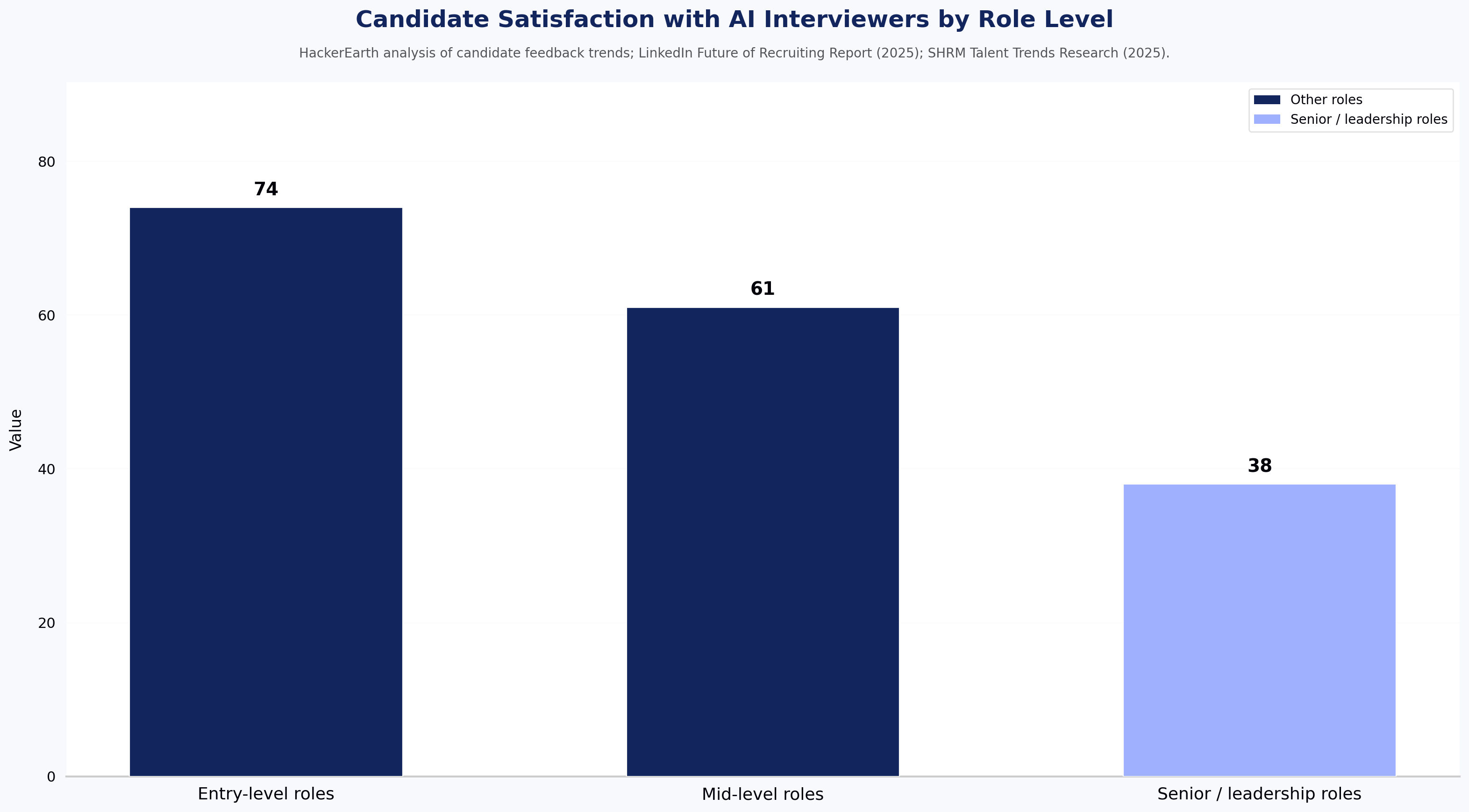
- Senior leadership hiring. Executive and senior leadership roles depend on judgment about strategic thinking, stakeholder management, and organizational fit — areas where an AI interviewer adds limited signal.
- Highly creative or open-ended roles. Roles where the assessment is about taste, originality, or portfolio judgment are poorly served by structured rubrics.
- Low-volume niche searches. When you're hiring one or two specialists, the calibration cost of an AI interviewer often exceeds the time saved.
- Regulated jurisdictions. Under NYC Local Law 144, employers using automated employment decision tools must complete an independent bias audit and provide candidate notice. The EU AI Act classifies AI hiring systems as high-risk, with conformity, transparency, and human-oversight obligations that took effect in 2025–2026. Recruiters in these jurisdictions need to confirm vendor compliance before deploying an AI interviewer.
Peer-reviewed research from MIT and others on algorithmic fairness in hiring reinforces the same point: AI interviewers can reduce some forms of variation but introduce different risks that require active management.
Common questions recruiters ask about AI interviewers
Are AI interviewers less biased than human interviewers? They carry different bias, not less bias. An AI interviewer applies the same rubric to every candidate, which removes the variation caused by interviewer fatigue, rapport, or inconsistent questioning. But AI systems inherit bias from training data and rubric design, so they require ongoing audit — including the bias audits required under NYC Local Law 144.
Do candidates actually prefer AI interviewers, or do they tolerate them? The honest answer is mixed. Asynchronous scheduling and consistent question sets are real benefits candidates cite. But candidates report lower satisfaction when AI interviews are used for senior roles or when there is no clear path to a human conversation. Treat AI interviewers as a first-round tool, not the whole process.
Do AI interviewers replace human interviewers? No. They automate structured first-round assessment. Final hiring decisions, cultural fit conversations, and leadership evaluation still belong with humans.
When should we not use an AI interviewer? For senior leadership, low-volume specialist hires, highly creative roles, and in jurisdictions where you have not yet completed the required bias audit or AI Act conformity steps.
Choosing an AI interviewer
When evaluating AI interviewer tools, the questions worth asking are:
- Does the vendor publish a bias audit consistent with NYC Local Law 144?
- What does the rubric look like, and can your team calibrate it?
- What does the vendor disclose about training data and model limits?
- Can your hiring team review full transcripts, not just scores?
- Does the role-calibration match the technical depth you actually hire for?
For technical hiring teams, HackerEarth's OnScreen is built for role-calibrated technical conversations and integrates with HackerEarth Assessments and the broader skills intelligence workflow.
Next steps
Schedule a demo of HackerEarth OnScreen to see how an AI interviewer fits into a technical hiring workflow — including how it handles role calibration, transcript review, and bias-audit documentation. ```